
As Indonesia observes National Teacher’s Day on November 25, the nation turns its collective gaze toward honoring the indispensable contributions of educators who shape the intellectual and moral foundation of society. Beyond traditional academic circles, this commemorative date serves as a powerful reminder of a lesser-known historical reality: many of Indonesia’s most prominent national heroes, revolutionary leaders, and organizational founders first walked into classrooms not as political agitators, but as humble teachers.
Long before they galvanized mass movements, drafted foundational political declarations, or led military campaigns against colonial powers, these figures dedicated themselves to eradicating the widespread illiteracy deliberately imposed upon the native population by Dutch colonial rule. Operating under severe resource constraints, systemic discrimination, and constant colonial surveillance, these visionaries utilized education as the primary vehicle for national awakening. The subjects they imparted ranged from basic literacy and arithmetic to modern sciences, history, religion, and vocational skills. Examining the pedagogical backgrounds of these eight historical figures illuminates how their early experiences as educators directly influenced their later political philosophies and the broader trajectory of Indonesia’s independence movement.
The Colonial Education Landscape and the Imperative of Teaching
During the late 19th and early 20th centuries, the Dutch East Indies administration maintained a rigidly stratified educational system. Access to formal European-style schools was largely restricted to European children, select members of the indigenous aristocracy, and a tiny fraction of the native elite needed for low-level bureaucratic administration. The vast majority of the indigenous population remained uneducated, effectively locked out of social mobility and modern governance.
Recognizing that political emancipation was impossible without cognitive liberation, a generation of visionary nationalists realized that establishing independent educational institutions was an urgent political necessity. Teaching became an act of resistance. By sharing knowledge, these future leaders laid the groundwork for a unified national identity that transcended ethnic, linguistic, and regional divisions.
- General Sudirman: From MULO Classrooms to Military Command
Long before he earned legendary status as the Supreme Commander of the Indonesian National Armed Forces (TNI) during the Indonesian National Revolution, General Sudirman served as an educator. Historical records from the Yogyakarta Provincial Culture Office note that Sudirman completed his education at the MULO (advanced primary school level) without holding a formal teaching diploma.
Under the regulations of that era, individuals could enter the teaching profession provided they actively upgraded their pedagogical knowledge. Sudirman pursued private tutoring sessions with his former instructors from MULO Wiworotomo. Through intense dedication, he mastered both teaching theory and practice in a relatively short span. By 1936, he returned to Cilacap to teach at a Muhammadiyah elementary school, later advancing to teach at the HIS Muhammadiyah while actively mentoring the Hizbul Wathan scouting organization.
In the classroom, Sudirman’s pedagogical method extended far beyond rote memorization. He integrated moral philosophy into his lessons, utilizing parables of the prophets and traditional wayang (puppet theater) narratives to instill ethical grounding in his students. Despite receiving nominal financial compensation, Sudirman demonstrated unwavering commitment, eventually rising to the position of school principal before transitioning to military leadership.
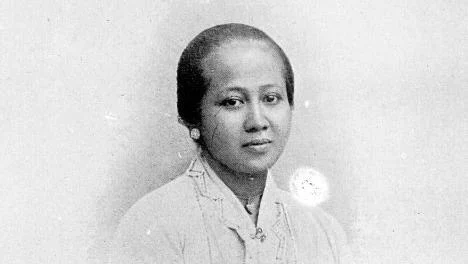
- RA Kartini: Pioneering Indigenous Women’s Education
Raden Adjeng Kartini remains an enduring symbol of women’s emancipation, driven by a profound commitment to educational equity. Observing the glaring disparities in learning opportunities between boys and girls under colonial rule, Kartini leveraged her proficiency in the Dutch language—acquired during her time at the Europeesche Lagere School (ELS)—to critically analyze colonial society.
Following her formal schooling, Kartini maintained an intellectual network through correspondence with Dutch sympathizers and continued her studies independently. Her ambition to uplift indigenous women materialized in the establishment of a modest local school. There, she imparted foundational skills, including reading, writing, handicraft creation, and domestic arts.
Kartini’s pedagogical efforts represented a radical challenge to traditional and colonial constraints, positing that the socio-economic advancement of the indigenous populace fundamentally relied on educating women, who served as the primary educators within the household.
- KH Ahmad Dahlan: Laying the Institutional Foundation of Modern Islamic Education
KH Ahmad Dahlan, founder of the reformist Islamic organization Muhammadiyah, divided his life between rigorous scholarship and grassroots teaching. His intellectual journey involved studying under prominent clerics domestically and in the Hejaz (Saudi Arabia), including his father, Kyai Abu Bakar, and renowned scholars such as Kyai Soleh Darat.
Upon returning from Mecca, Ahmad Dahlan engaged in formal teaching at the Kweekschool (Teacher Training School) in Jetis and the OSVIA in Magelang. Recognizing the structural inadequacies of both traditional religious schools and Western colonial institutions, he pioneered a synthesized educational model. In 1911, he initiated classes on the veranda of his home, starting with just eight students. Within six months, enrollment expanded to twenty.
Ahmad Dahlan personally procured basic instructional materials, including blackboards, chalk, desks, and chairs. This modest home-tutoring initiative evolved into the formal educational network of Muhammadiyah, institutionalizing a dual-curriculum system that integrated contemporary secular sciences with comprehensive Islamic instruction.
- Soekarno: The Engineer Turned Instructor at Ksatrian Institut
Indonesia’s first president, Soekarno, is widely remembered for his oratorical brilliance and statecraft, but his professional background included a brief tenure as a formal educator. A graduate of the Technische Hoogeschool (TH) Bandung—now the Institut Teknologi Bandung (ITB)—Soekarno earned his degree in civil engineering, specializing in road and water resource construction (weg en waterbouwkunde).
Through his association with nationalist figure Ernest Douwes Dekker, Soekarno accepted an invitation to teach at the newly established Ksatrian Institut in Bandung. Tasked with instructing students in Mathematics and History, Soekarno utilized his academic background to foster critical thinking among indigenous youth, demonstrating that technical competence and historical consciousness were vital components of national self-reliance.
- KH Hasyim Asy’ari: Traditional Scholarship and Anti-Colonial Resistance
As the founder of Nahdlatul Ulama (NU) and the architect of Pesantren Tebuireng, KH Hasyim Asy’ari stands as a towering figure in Islamic education in Indonesia. His scholarly pedigree included extensive studies under prominent Indonesian ulama and years of advanced theological training in Mecca and Madinah under scholars such as Sheikh Mahfudz al-Tirmisi.
Before establishing Pesantren Tebuireng in 1899, Hasyim Asy’ari achieved the distinction of teaching at the Masjidil Haram in Mecca. His pedagogical approach emphasized deep textual analysis, spiritual discipline, and communal solidarity. Beyond the classroom, his educational authority translated into decisive political leadership, most notably issuing the historic "Resolusi Jihad" (Resolution of Jihad) on October 22, 1945. This edict mobilized thousands of santri (Islamic boarding school students) to actively participate in the armed defense of the newly proclaimed Republic of Indonesia against returning Allied and Dutch forces.
- HOS Tjokroaminoto: The Master Architect of Nationalist Thought
Hadji Oemar Said (HOS) Tjokroaminoto earned the moniker "Guru Bangsa" (Teacher of the Nation) not through a conventional classroom career, but by mentoring an entire generation of future Indonesian leaders. A graduate of the Opleiding School voor Inlandsche Ambtenaren (OSVIA) in Magelang, Tjokroaminoto briefly worked in civil administration before dedicating his life to political organizing and education.
Tjokroaminoto posited that colonial subjugation could only be dismantled if the colonized population achieved intellectual emancipation. To this end, he opened his residence in Peneleh, Surabaya, as a boarding house and intellectual salon for young political activists. Under his roof, figures with vastly differing ideological leanings—including nationalist Soekarno, communist leaders Alimin, Musso, and Semaoen, and Islamist ideologue Kartosuwiryo—lived, debated, and refined their political philosophies. His mentorship demonstrated how informal pedagogical spaces could successfully incubate competing revolutionary ideologies under a shared anti-colonial umbrella.
- Ki Hadjar Dewantara: Institutionalizing National Education
No discussion of Indonesian educational history is complete without acknowledging Ki Hadjar Dewantara, formally recognized as the Father of National Education. Born Suwardi Suryaningrat into a Javanese aristocratic family, he studied at the Europeesche Lagere School (ELS) and attended the STOVIA medical training school before dedicating his life to journalism and political activism.
Exiled by the Dutch colonial administration for his sharp anti-colonial writings, Dewantara used his time in the Netherlands to study educational theory, earning a European teaching certificate (Europese Akte). Upon his return, he founded the National Onderwijs Instituut Taman Siswa (Taman Siswa teaching institution) on July 3, 1922.
Taman Siswa represented a direct ideological assault on the discriminatory colonial school system. The institution operated on the principle of independent learning, emphasizing cultural identity, nationalism, and character development over colonial subjugation. Dewantara’s enduring pedagogical philosophy is encapsulated in his foundational maxim: Ing ngarsa sung tuladha (When in front, a leader should set a good example), ing madya mangun karsa (In the middle, a leader should inspire and build initiative), and tut wuri handayani (Behind, a leader should give moral support and encouragement). Today, this philosophy remains the guiding creed of Indonesia’s Ministry of Education.
- Tan Malaka: Radical Pedagogy for the Working Class
Tan Malaka, often styled as the "Father of the Republic" by admirers and historians, began his public life as a trained educator. He completed his studies at the Inlandsche Kweekschool voor Onderwijzers (Native Teacher Training School) in Fort de Kock (Bukittinggi) in 1913 before securing a government scholarship to study at the Rijkskweekschool in Haarlem, the Netherlands.
Returning to the Dutch East Indies with an advanced understanding of European educational methodologies, Tan Malaka chose to deploy his skills directly among marginalized laborers. He worked as a teacher for the children of contract plantation workers in the tobacco estates of Deli, East Sumatra.
In this capacity, Tan Malaka witnessed firsthand the brutal socio-economic disparities between European plantation owners and indigenous coolies. His classroom instruction was intertwined with social critique, laying the groundwork for his later transition into radical journalism, labor organizing, and anti-imperialist political theory. His writings consistently argued that true national liberation required the total dismantling of capitalist and feudal exploitation through mass intellectual empowerment.
Analytical Implications for Contemporary Indonesian Education
The historical convergence of teaching and nation-building in Indonesia offers significant implications for contemporary educational policy. Modern sociological analyses of Indonesia’s independence struggle frequently emphasize military engagements and elite diplomatic negotiations, yet archival evidence underscores that the ideological cohesion required to sustain a revolution was forged in classrooms, boarding schools, and informal study circles.
The dual role played by figures like Sudirman, Kartini, Ahmad Dahlan, Soekarno, Hasyim Asy’ari, Tjokroaminoto, Ki Hadjar Dewantara, and Tan Malaka highlights several structural truths:
- Education as Liberation: For early 20th-century Indonesian leaders, pedagogy was never viewed as a purely technical exercise; it was an inherently political act aimed at restoring human dignity and cognitive sovereignty.
- Pluralism in Methodology: The historical landscape featured diverse educational philosophies—ranging from Islamic reformism (Ahmad Dahlan and Hasyim Asy’ari) and nationalist cultural revival (Ki Hadjar Dewantara) to Western-style technical instruction (Soekarno) and socialist labor education (Tan Malaka). This ideological pluralism ultimately enriched the intellectual fabric of the nascent republic.
- The Moral Dimension of Teaching: Across all ideological divides, these historical educators placed heavy emphasis on character formation, moral integrity, and social responsibility—values that contemporary educational reformers continue to advocate as essential counterweights to technocratic standardization.
As Indonesia navigates the complexities of the 21st-century global knowledge economy, revisiting the pedagogical roots of its founding figures serves as both a historical tribute and a policy reminder. National Teacher’s Day thus transcends a routine ceremonial observance; it functions as an institutional prompt to reevaluate the societal status, professional training, and ideological mission of educators in sustaining democratic governance and national resilience.

