
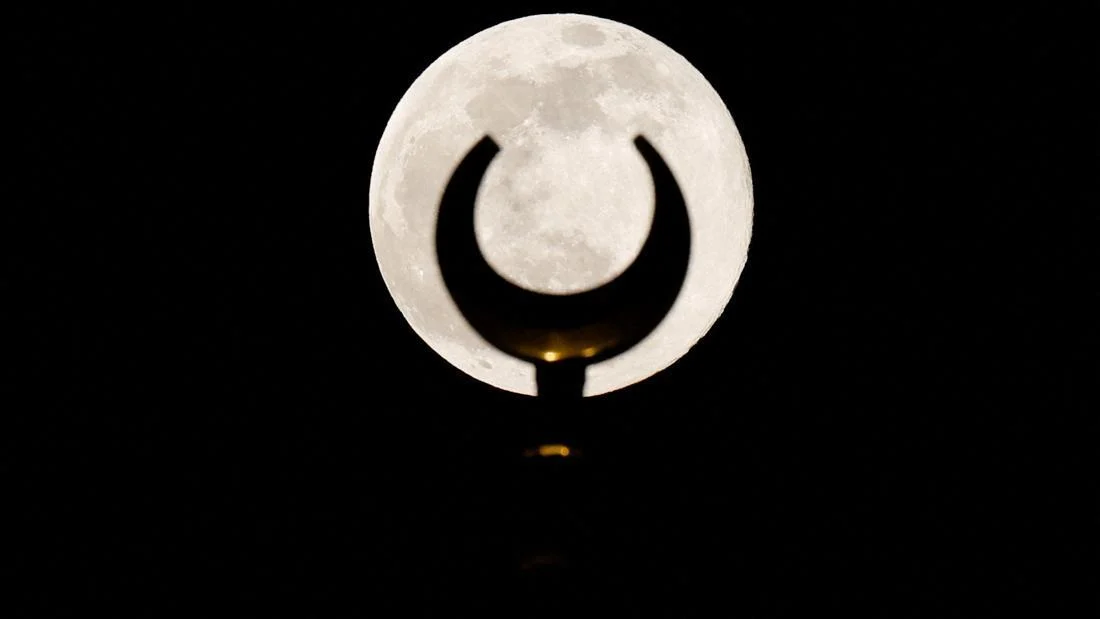
On the night of November 24 and 25, 2026, the world witnessed a remarkable astronomical phenomenon as the "Beaver Supermoon" graced the night sky, casting a brilliant glow over iconic urban landscapes and historical landmarks across the globe. From the sacred mosques of Saudi Arabia to the bustling financial districts of Manhattan and Karachi, the event captured the collective imagination of millions, serving as a reminder of the consistent, awe-inspiring nature of our lunar neighbor.
The Science Behind the Beaver Supermoon
The term "Supermoon" is not an official scientific classification but a popular astronomical term used to describe a full moon that coincides with perigee—the point in the moon’s elliptical orbit where it is closest to Earth. When these two conditions align, the moon appears significantly larger and brighter than a standard full moon, often increasing in apparent size by up to 14% and brightness by approximately 30%.
The moniker "Beaver Moon" originates from the folklore of Native American tribes and early North American colonial traditions. According to the Old Farmer’s Almanac, November was the time of year when beavers became particularly active in preparing their lodges for the winter months. Additionally, it was the prime season for setting beaver traps to ensure a supply of warm furs for the impending cold. While the name is traditional, the 2026 iteration was particularly notable for its clarity and the atmospheric conditions that allowed for high-contrast viewing in major metropolitan areas.
A Global Chronology of the Event
The visual impact of the Beaver Supermoon was magnified by its interaction with human architecture, creating silhouettes that photographers and amateur stargazers have documented extensively.
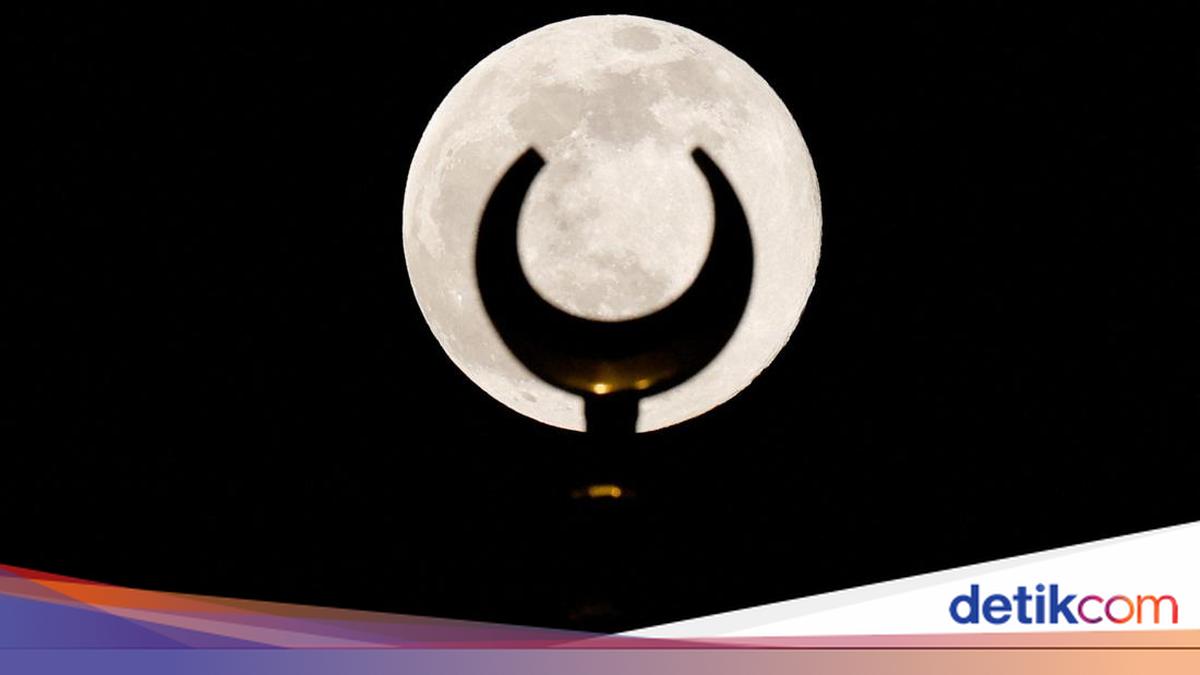
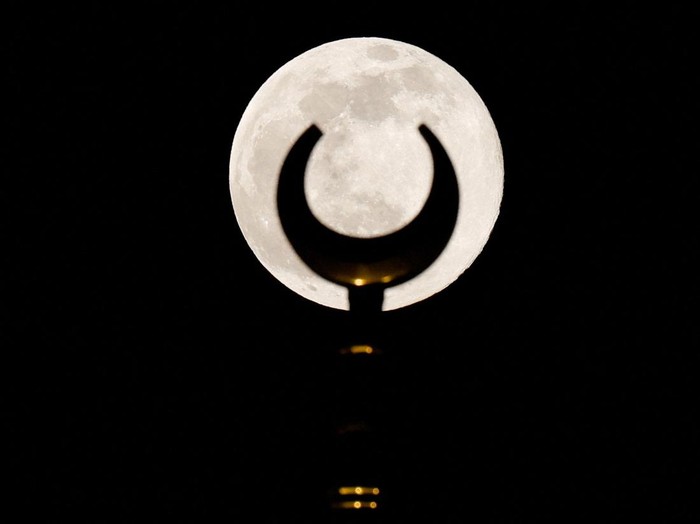
In the early stages of the event, observers in the Middle East were among the first to witness the moon’s ascent. In the holy city of Mecca, Saudi Arabia, the lunar disc rose with striking luminosity, positioned precisely behind the crescents atop mosque minarets, creating a poignant contrast between the ancient architecture and the celestial body.
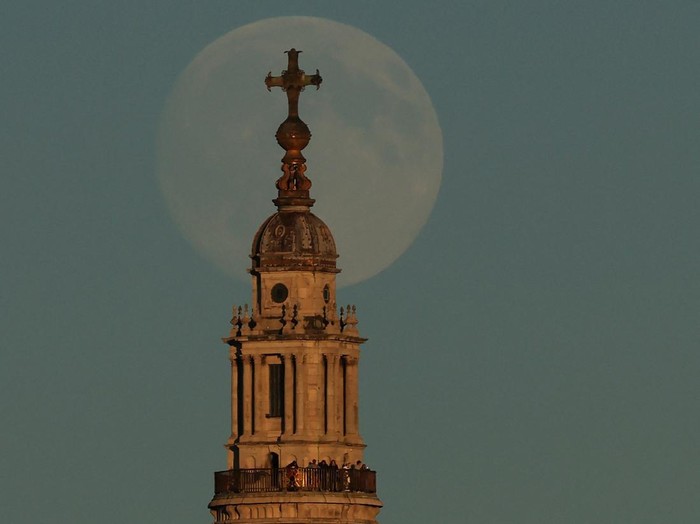
As the rotation of the Earth continued, the moon made its appearance over the European continent. In London, the atmosphere was clear, allowing onlookers at the St. Paul’s Cathedral to capture the moon rising behind the iconic dome. The composition provided a stark reminder of how historical landmarks serve as fixed markers against which the movement of the heavens is measured.
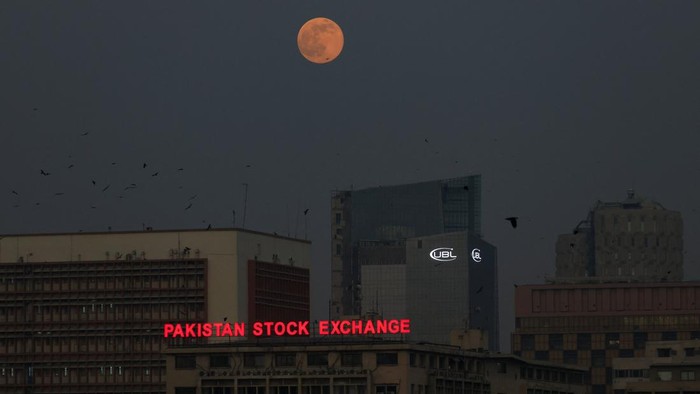
Further east, in Karachi, Pakistan, the moon took on a distinct golden-to-orange hue as it hung over the skyline, including the Pakistan Stock Exchange. This phenomenon, known as "atmospheric reddening," occurs when the moon is near the horizon, and its light must pass through a thicker layer of the Earth’s atmosphere, which scatters shorter blue wavelengths and leaves the warmer red and orange light to reach the observer’s eye.
The display concluded its tour across the major global hubs in the United States, where the moon appeared to wedge itself between the spire of the Chrysler Building and the mass of the Empire State Building in Manhattan. This alignment, frequently pursued by urban photographers, highlighted the interplay between modern steel structures and the natural light of the night sky.
Astronomical Significance and Orbital Mechanics
For the scientific community, the 2026 Beaver Supermoon provided an excellent opportunity for public engagement and education. Astronomers emphasize that while the term "Supermoon" is not formally recognized by the International Astronomical Union (IAU), the event serves a vital purpose in stimulating interest in space science.
The perigee of the moon is not constant. Because the moon’s orbit is not a perfect circle, the distance from Earth varies from approximately 363,300 kilometers at perigee to 405,500 kilometers at apogee. The Beaver Supermoon of 2026 occurred near the closest point of the current lunar cycle, making it one of the most significant lunar events of the calendar year.
Furthermore, the moon’s position in its orbit affects more than just visual brightness. Tides on Earth are influenced by the gravitational pull of the moon. During a supermoon, the increased proximity leads to higher-than-average "perigean spring tides." While these are generally not cause for alarm, coastal communities are often advised to monitor tidal levels during these windows, as they can occasionally exacerbate minor flooding in low-lying, susceptible areas.
Public Engagement and Cultural Impact
Social media platforms and news outlets were flooded with high-resolution imagery from the event. In Dubai, the visual spectacle prompted thousands of residents to gather on balconies and in public parks. The ubiquity of high-end smartphone cameras has democratized the observation of such events; where once only those with professional telescopes could capture clear images of the lunar surface, today, average citizens can document the moon’s craters and features with relative ease.
"Events like this serve as a universal language," said an independent researcher focusing on public astronomy outreach. "Regardless of geopolitical boundaries, the moon is a shared experience. When we see it rising over the skyline of a city like New York or a religious site in the Middle East, it highlights our shared presence on this planet."
Broader Implications and Future Observations
The 2026 Beaver Supermoon is part of a series of lunar events that highlight the importance of dark sky preservation. In many of the cities where the moon was best viewed, light pollution remains a significant barrier to amateur astronomy. The success of this year’s viewing in urban centers was largely attributed to localized atmospheric conditions—a temporary thinning of cloud cover—rather than a reduction in artificial lighting.

Looking ahead, the scientific community is already tracking the next major lunar events. The 2027 calendar promises several similar alignments, which are essential for ongoing studies regarding lunar impact cratering and the moon’s geological history. NASA’s Artemis program, which aims to return humans to the lunar surface, has increased the urgency for high-quality, ground-based data, and public interest generated by events like the Beaver Supermoon is often the first step in cultivating the next generation of aerospace engineers and scientists.
Expert Analysis: The Intersection of Urbanism and Astronomy
Urban planners have increasingly begun to consider the "viewing corridor" in city development. As skyscrapers continue to rise, the ability to view celestial events from the street level becomes more restricted. The images from the 2026 event, particularly those in Manhattan and Dubai, demonstrate how urban density dictates our relationship with the sky.
"The way we frame the moon between buildings is a human attempt to impose order on the cosmos," noted an urban studies analyst. "When the moon rises behind a landmark, it validates the landmark’s importance and reinforces the city’s place within the larger cosmic geography."
Conclusion
The Beaver Supermoon of November 2026 will be remembered not only for its visual grandeur but for its ability to pause the fast-paced nature of modern life. As the moon continues its predictable, ancient path, these moments of celestial brilliance provide a necessary perspective on the fragility and beauty of our position in the solar system. For those who missed the event, the cycle of the lunar orbit ensures that future opportunities for such observation are guaranteed, provided that the atmosphere remains clear and the curiosity of the human spirit continues to look upward.
The event concluded without any reported incidents, leaving only a trail of photographic archives that will serve as a digital record of the night the world turned its eyes toward the sky to witness the Beaver Supermoon. As of Wednesday, November 25, the moon has begun its transition back toward its standard orbital phases, leaving behind a global community of observers who were, for a few hours, united by the singular, glowing presence of the moon.

