

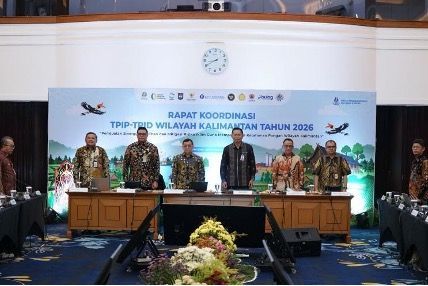
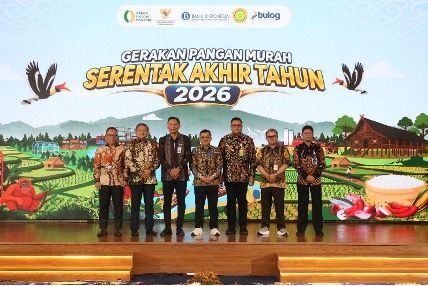
The national strategy to secure food stability and mitigate climate risks reached a critical milestone as central and regional stakeholders convened for the final sessions of the Food Inflation Control Movement (GPIPS). The high-level coordination meeting of the Central and Regional Inflation Control Teams (Rakor TPIP-TPID) for the Kalimantan Region, held on November 20, 2026, laid the groundwork for an aggressive, synchronized rollout of the Joint Cheap Food Movement (Gerakan Pangan Murah Serentak, or GPM). This pivotal gathering was followed by a subsequent strategic meeting on November 21, 2026, officially themed "Strengthening Recovery Synergy and Climate Risk Mitigation to Consolidate Regional Food Security in Kalimantan."
As Indonesia approaches the high-demand holiday season of Christmas and New Year (Nataru), the concerted policy push aims to arrest surging food inflation, particularly for staple commodities like rice. Driven by a coalition of key government agencies, central bank officials, and regional administrators, the overarching initiative seeks to harmonize short-term price stabilization measures with long-term structural resilience across the resource-rich island of Kalimantan.
High-Level Stakeholder Alignment and Collaborative Framework
The consecutive coordination meetings drew prominent economic and logistical policymakers from across the republic. Attendees included Bank Indonesia (BI) Assistant Governor Rudy Brando Hutabarat, Deputy Coordinating Minister for Economic Affairs Ferry Irawan, Deputy for Food Availability and Stabilization at the National Food Agency (Bapanas) Inspector General Hermawan, Chief Secretary of the Meteorology, Climatology, and Geophysical Agency (BMKG) Guswanto, and the Head of the Center for Agricultural Socio Economic and Policy Studies at the Ministry of Agriculture, Sumedi. Furthermore, representatives from the Ministry of Home Affairs, the National Disaster Management Agency (BNPB), various related ministries, and regional governments across all Kalimantan provinces actively participated to ensure cross-sectoral execution.
This robust multi-agency participation underscores the gravity of the food inflation challenge, which requires a blend of monetary policy oversight, fiscal intervention, logistical optimization, and meteorological foresight. By leveraging the traditional framework known as the 4K approach—Price Affordability, Supply Availability, Distribution Smoothness, and Effective Communication—the task force aims to keep national inflation within the targeted corridor of 2.5 plus-minus 1 percent.

Climate Vulnerabilities and the Five Strategic Domains for 2027
A primary catalyst for the Kalimantan-focused meetings is the severe ecological and climate pressure facing the region’s agricultural productivity. Environmental data presented during the sessions highlighted the acute impact of climate anomalies on domestic food supply chains. By October 2026, strong El Niño conditions continued to exert pressure, triggering approximately 35,000 hotspots and resulting in roughly 57,000 hectares of burned land across Kalimantan. These environmental disruptions severely impaired local farming outputs, threatening regional food self-sufficiency and necessitating immediate, robust intervention.
Despite these headwinds, tangible progress has been recorded following the previous year’s strategic resolutions. Key achievements include the active utilization of the Klik SPHP digital application, the physical expansion of food warehouses and kiosks, enhanced roles for Regional-Owned Enterprises (BUMD) in facilitating inter-regional trade cooperation (KAD), the distribution of modern agricultural machinery, and optimized logistical connectivity forged in partnership with state logistics entities PT Pos Indonesia and PT Pelayaran Nasional Indonesia (PELNI).
Looking ahead to 2027, the Rakor successfully formulated five strategic domains designed to comprehensively fortify regional food security in Kalimantan. These forward-looking directives have been formally encapsulated in the Gawi Sabumi Pangan Kalimantan agreement. A cornerstone of this agreement is the systematic strengthening of the Cheap Food Movement (GPM) anchored by the 3T operational principles: Timely (Tepat Waktu), On-Location (Tepat Lokasi), and Targeted (Tepat Sasaran). Implementation of these domains is scheduled to roll out progressively from the final quarter of 2026 through the entirety of 2027.
Immediate Price Stabilization: The GPM Serentak and Rice Market Intervention
While structural reforms pave the way for long-term resilience, immediate economic pressures demand urgent short-term remedies. Bank Indonesia Assistant Governor Rudy Brando Hutabarat emphasized that current policy efforts are heavily weighted toward the rapid stabilization of rice prices. Volatile food inflation at the national level has persistently breached the 5 percent threshold year-on-year (yoy). Compounding this baseline pressure is the historical seasonal surge in demand for staple goods as households prepare for the year-end holidays.
"Rice is an indispensable basic necessity for the public. The vast majority of household expenditures are dedicated to consumption, with rice representing one of its largest portions. Therefore, we must maintain stable and affordable rice prices, especially ahead of Christmas and New Year when demand traditionally spikes," stated Rudy Brando Hutabarat in an official release. He reiterated that these synchronized operations reflect an unwavering commitment to anchoring inflation expectations within the targeted macroeconomic band.
In immediate support of these stabilization goals, Bapanas and state logistics enterprise Perum BULOG have committed to expanding both the quota and the distribution volume of the Food Supply and Price Stabilization (SPHP) rice program by an additional 100,000 tons. Bapanas Deputy Inspector General Hermawan outlined that the accelerated market operations will focus intensely on regions experiencing the most acute price hikes, particularly targeting urban markets across Java, Sumatra, and Kalimantan over the subsequent six weeks.
The distribution strategy mandates prioritized placement in traditional markets located within Consumer Price Index (CPI) cities and their surrounding districts. Technical alignment sessions have established streamlined logistics flows for BULOG’s rice distribution, with Bank Indonesia’s regional departments tasked with rigorous monitoring. Beyond rice, BULOG’s stabilization inventory has been bolstered to include essential commodities such as MinyaKita cooking oil, granulated sugar, and chicken eggs. Simultaneously, ID FOOD has scaled up regional sugar reserves, while the Ministry of Agriculture and related supply networks have optimized the influx of volatile horticultural items, specifically chili peppers and shallots.
Orchestrating Sinergi: From National Policy to Regional Market Execution
The operational success of the synchronized Cheap Food Movement relies heavily on seamless national orchestration paired with agile execution at the grassroots level. Bank Indonesia’s Domestic Regional Representative Offices (KPwDN), working in tandem with Regional Inflation Control Teams (TPID), have systematically broadened the footprint of GPM operations. These interventions target designated CPI monitoring markets and regions exhibiting high price volatility, leveraging close partnerships with local administrations, food-focused BUMDs, private distributors, and wholesale merchants.
To ensure long-term market balance without disrupting private trade channels, regional food BUMDs are actively deployed as official off-takers. This mechanism guarantees consistent farm-gate demand while securing steady wholesale supplies for local retail vendors.
The day-to-day coordination mechanism is designed for maximum operational responsiveness. Regional TPIDs submit daily operational proposals outlining proposed GPM schedules, specific commodity types, targeted volumes, designated locations, and execution frequencies. These localized requests are collated by Bank Indonesia’s Regional Department and synchronized with Bapanas, BULOG, ID FOOD, and partner agencies. Once cleared, regional divisions of BULOG and ID FOOD mobilize immediate physical distribution to the designated points of sale.
For highly perishable commodities such as chili peppers, the Ministry of Agriculture utilizes established networks of local horticultural champions (champion aneka cabai). This decentralized approach allows GPM operators to source fresh produce directly from the nearest active production centers, cutting out unnecessary supply chain layers and preserving product quality.
Broader Economic Implications and Outlook
The comprehensive implementation of the GPIPS framework and the nationwide execution of the GPM Serentak carry profound implications for Indonesia’s macroeconomic stability heading into 2027. By addressing the dual vulnerabilities of structural climate degradation in agricultural hubs like Kalimantan and short-term seasonal price shocks, the government and central bank are effectively neutralizing potential inflation spikes that could otherwise erode purchasing power.
Stabilizing volatile food items not only protects lower- and middle-income households from cost-of-living pressures but also anchors broader consumer inflation expectations. As logistical bottlenecks continue to clear through enhanced inter-regional trade routes and modernized digital distribution tools, the agricultural sector is better positioned to withstand future climate anomalies. Ultimately, these synchronized policy measures aim to ensure that regional markets remain well-supplied, consumer prices stay predictable, and the public can transition into the new economic year with assured food security.

