
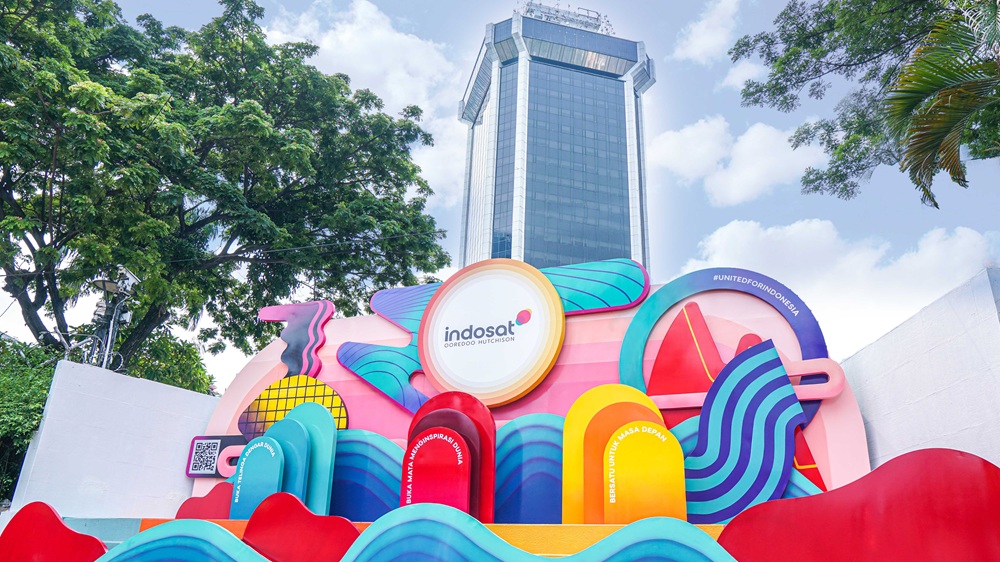
Ooredoo Hutchison Perkuat Fundamental Bisnis di Tengah Dinamika Telco
The telecommunications sector in Indonesia has long faced a persistent stigma, with critics frequently labeling it a "sunset industry." This pessimistic view stems primarily from the steady decline of conventional revenue streams, such as traditional voice calls and short message services (SMS), which have been largely supplanted by over-the-top internet messaging and communication applications. Furthermore, intense price competition and aggressive data package discounting among cellular operators have historically led some market analysts to argue that the traditional growth space for mobile network providers is rapidly contracting.
However, a comprehensive analysis of the third-quarter financial and operational reports for 2026 paints a radically different picture. Driven by Indosat Ooredoo Hutchison (IOH) alongside its industry peers, the Indonesian telecommunications market continues to demonstrate robust resilience, strategic reinvention, and solid business fundamentals. Rather than withering away, the sector is experiencing a profound structural evolution, shifting its primary focus from raw volume and price wars to value creation, high-quality customer acquisition, and advanced digital technologies like artificial intelligence (AI) and cloud computing.
Main Facts and Market Landscape in Q3 2026
By the end of the third quarter of 2026, major Indonesian telecommunications operators—namely Indosat Ooredoo Hutchison, Telkomsel, and XLSMART—collectively managed a massive base of over 312 million active mobile subscriptions. This immense footprint underscores the indispensable role that mobile connectivity plays in the daily lives of Indonesian citizens and the broader national economy.
During this period, Indosat Ooredoo Hutchison successfully maintained robust core connectivity fundamentals, highlighted by consistent revenue growth, enhanced profitability, and the strategic rollout of artificial intelligence initiatives designed to act as new engines of growth. In the broader competitive landscape of Q3 2026, Indosat recorded a year-on-year (YoY) revenue growth rate that outpaced its two primary competitors. Moreover, during the first nine months of 2026 (9M26), the company posted solid profit growth driven by the successful optimization of its customer base and rigorous operational network efficiencies.
The market resilience displayed by these operators serves as a direct rebuttal to the sunset industry narrative. Indonesia’s favorable demographic structure—heavily dominated by a tech-savvy, digitally active, and productive age demographic—coupled with surging internet adoption rates and evolving digital lifestyles, ensures that telecommunications networks remain the foundational bedrock of modern economic activity.
Evolution of the Industry: From Volume Wars to Value Creation
The contemporary telecommunications ecosystem in Indonesia has fundamentally moved away from the unsustainable volume-driven strategies of the past. Years ago, market competition was largely defined by a race to flood the market with cheap starter packs and engage in destructive pricing wars that eroded industry margins. Today, the strategic paradigm has shifted toward value creation and long-term customer retention.
Industry competitiveness is no longer measured solely by raw geographical coverage or sheer subscriber counts, but rather by an operator’s capacity to deliver differentiated, high-value services that align precisely with the sophisticated digital demands of modern users. This strategic pivot has allowed operators to protect their bottom lines even while undergoing necessary housekeeping measures, such as the mass purging of inactive subscriber identity module (SIM) cards.
Throughout the third quarter of 2026, the three dominant telecommunications players in Indonesia all underwent structural customer base adjustments. These corrections were the direct result of deliberate administrative efforts to clean up dormant numbers and concentrate resources on productive, high-value consumers.
Customer Base Dynamics and Retention Analysis
An analytical look at customer metrics for Q3 2026 reveals distinct patterns of subscriber management across the three major providers.
Indosat Ooredoo Hutchison demonstrated the most resilient customer retention rates in the industry. Managing a total subscriber base of 91.5 million users, Indosat absorbed the smallest year-on-year correction among the major players, registering a minor contraction of just 3.3 percent—equivalent to roughly 3.1 million customers. On a quarterly basis, Indosat’s user base shifted by a remarkably stable 2.0 percent, highlighting strong brand loyalty and effective retention strategies.
Meanwhile, Telkomsel maintained its position as the undisputed market leader in terms of sheer scale, commanding a robust subscriber base of 151.1 million users. Over the course of the period, Telkomsel adjusted its user metrics by approximately 4.1 percent year-on-year, translating to a reduction of 6.5 million inactive or low-value accounts, while dropping a marginal 1.6 percent compared to the preceding quarter.
XLSMART, which manages an active base of approximately 70 million users, reported a more contrasting performance dynamic between its annual and quarterly figures. On a year-on-year basis, XLSMART’s subscriber base experienced a correction of 12.1 percent, or roughly 9.6 million numbers, reflecting its aggressive structural cleanup. However, demonstrating strong rebound capabilities, XLSMART emerged as the only major operator to reverse this trend on a quarterly basis, posting a positive growth rate of 0.9 percent compared to Q2 2026.
Surging Average Revenue Per User (ARPU) and Monetization
The true economic health of Indonesia’s telecommunications sector is most transparently reflected in the consistent upward trajectory of Average Revenue Per User (ARPU). The steady rise in ARPU indicates that contemporary mobile consumers are increasingly reliant on data-heavy digital services, consume greater bandwidth, and show a clear willingness to pay premium prices for superior network reliability and value-added offerings.
The Q3 2026 financial disclosures highlighted this healthy monetization trend across all major operators:
- Indosat Ooredoo Hutchison: Recorded an impressive ARPU of Rp46,000, marking a substantial 15.0 percent increase year-on-year while maintaining absolute stability compared to the previous quarter.
- XLSMART: Claimed the highest ARPU in the domestic industry at Rp47,500, representing a remarkable 22.1 percent year-on-year surge, propelled largely by sophisticated pricing mix optimizations and targeted data packaging.
- Telkomsel: Achieved an ARPU of Rp44,900, representing a steady 3.5 percent year-on-year increase, despite experiencing a minor 2.4 percent quarterly adjustment.
This widespread expansion in ARPU decisively proves that the deliberate reduction in subscriber numbers resulting from prepaid registration crackdowns and cleanup campaigns has not harmed financial performance. Instead, it has purged dead weight from the networks, leaving behind a highly productive consumer base that continuously generates sustainable revenue streams.
Diversification and New Growth Engines: AI, Cloud, and Data Centers
While aggressively optimizing their core connectivity businesses, forward-looking operators like Indosat Ooredoo Hutchison are actively expanding their corporate horizons into next-generation digital technologies. In a bid to future-proof their operations against market saturation, these companies are positioning artificial intelligence, cloud computing, and enterprise-grade data centers as vital new engines of revenue growth.
This strategic diversification mirrors a global transformation within the telecommunications sector, where traditional network providers are successfully evolving into comprehensive technology companies, commonly referred to as "techcos." By moving beyond the commoditized pipes of basic connectivity, operators are capturing high-value enterprise contracts.
Through the deployment of advanced AI infrastructure and scalable cloud solutions, Indosat is systematically targeting key market segments, including large enterprises, government institutions, and various industrial sectors that require high-performance computing power, industrial automation, and deep data analytics capabilities. This dual approach—maintaining highly profitable core connectivity while scaling up advanced digital services—illustrates a mature business model capable of weathering long-term industry cycles.
Broader Implications for Indonesia’s Digital Economy
The recent performance metrics recorded in the third quarter of 2026 carry profound implications for the broader trajectory of Indonesia’s digital economy. With a combined base of over 312 million active mobile subscriptions managed by the country’s top three operators, the telecommunications sector remains the beating heart of the nation’s technological advancement.
As Indonesia accelerates its national digital transformation agenda, the demand for resilient, high-speed, and secure telecommunications infrastructure will only intensify. The ability of operators to successfully transition from volume-driven price discounters to value-focused technology leaders ensures that the industry will remain financially robust, attractive to institutional investors, and capable of funding the next generation of technological infrastructure.
Ultimately, the performance of Indosat Ooredoo Hutchison and its peers in late 2026 thoroughly dismantles the outdated notion of the telecommunications sector as a dying industry. By embracing artificial intelligence, optimizing customer value, and modernizing business models, Indonesia’s telco giants have proven that they are not merely surviving the digital age—they are actively engineering its future.

