
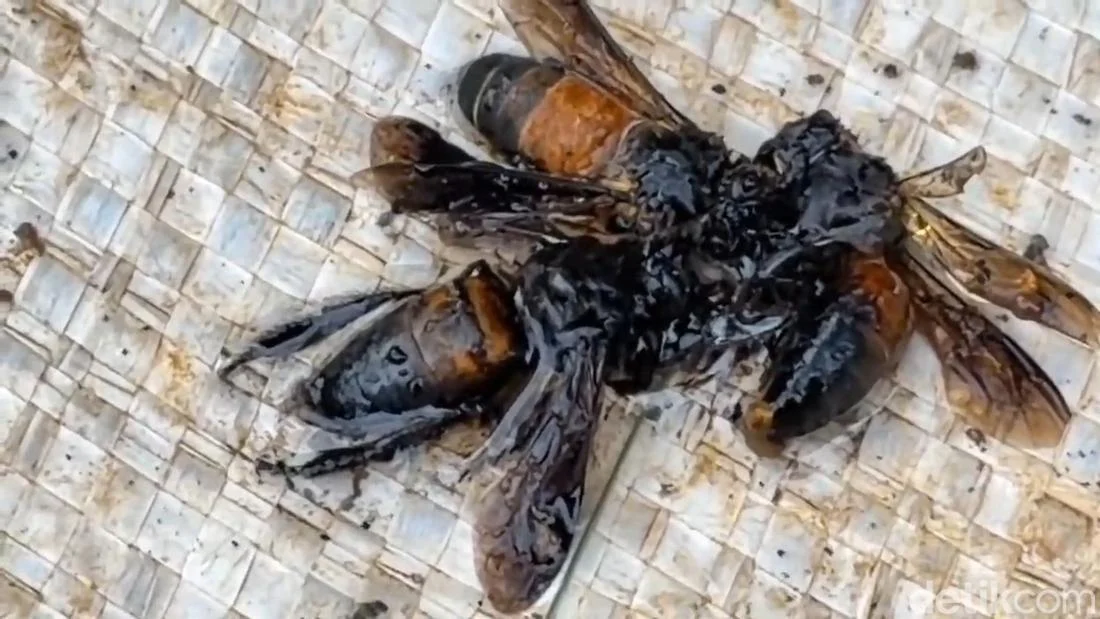
Tragedy struck the rural community of Jimbaran Village, located within the Puspo Subdistrict of Pasuruan Regency, East Java, when a 65-year-old local resident lost his life following a severe and unexpected attack by a swarm of wasps. The victim, identified as Supandi, was returning home after completing a routine daily chore of gathering fodder for his livestock when the incident occurred. While human encounters with stinging insects are not entirely uncommon in tropical agricultural regions, the fatal outcome of this particular episode has renewed public concern regarding the aggressive behavior of certain wasp species and the lethal physiological consequences of multiple stings. Local authorities, healthcare providers, and community leaders have since turned their attention to understanding the exact sequence of events and educating the public on the critical dangers posed by venomous insect swarms.
The Chronology of the Incident
The sequence of events leading to Supandi’s untimely death unfolded on a quiet afternoon as the elderly farmer made his way back from the fields. According to preliminary reports gathered from local witnesses and family members, Supandi had spent several hours collecting grass in a hilly, vegetated area near his village—an activity he performed regularly to support his livestock.
As he traversed a pathway carrying his harvested bundle of grass, Supandi inadvertently disturbed a hidden colony of wasps residing either in the dense foliage or within a nearby tree hollow. Unlike solitary foragers, colonial wasps are notoriously defensive of their nests and can be provoked by vibrations, sudden movements, or the proximity of passersby. Without warning, the swarm descended upon the elderly man, inflicting numerous stings across his upper body and extremities.
Despite managing to escape the immediate vicinity of the nest and stumbling back toward the direction of his home, Supandi was already exhibiting signs of severe physical distress. Family members and neighbors who rushed to his aid upon discovering his condition noted that he was struggling to breathe and complaining of intense localized pain accompanied by rapid physical deterioration. Although immediate efforts were made to assist him and transport him for medical evaluation, the rapid systemic spread of the venom proved catastrophic. Supandi succumbed to his injuries shortly after the attack, leaving his family and the local community in deep mourning.
Understanding the Medical Mechanics of Wasp Venom
To comprehend why a swarm attack can rapidly escalate from a painful ordeal to a fatal medical emergency, medical experts point to the specific biological characteristics of the insect. Dr. Tri Maharani, an emergency medicine specialist and clinical toxicology consultant, emphasized a vital distinction that is frequently misunderstood by the general public: the fundamental difference between wasps and bees regarding venom delivery mechanisms and physiological impacts.
Dr. Maharani explained that wasps possess specialized venom sacs containing complex toxic compounds. When a person is subjected to multiple stings from a colony of wasps—often defined clinically as more than two stings—the sheer volume of injected toxins leads to a condition known as envenomation. This process introduces potent biochemical agents into the human bloodstream, triggering localized inflammatory reactions, systemic toxicity, and, in severe cases, multi-organ failure.
Specifically, the toxins housed within wasp venom sacs are capable of inducing acute lung edema and acute kidney injury. Acute lung edema refers to a critical medical condition characterized by the abnormal accumulation of fluid within the pulmonary alveoli, the tiny air sacs of the lungs. This fluid buildup severely impairs the exchange of oxygen and carbon dioxide, resulting in acute respiratory distress and leaving the victim gasping for air. Simultaneously, acute kidney injury represents a sudden, rapid decline in renal function over a matter of hours or days, compromising the body’s ability to filter waste products and maintain fluid and electrolyte balance.
The combination of pulmonary failure and renal impairment places an overwhelming burden on the cardiovascular system. The strain frequently culminates in acute heart failure and, ultimately, cardiac arrest. This physiological cascade explains why victims of severe wasp attacks can deteriorate and pass away in a remarkably short timeframe, even if they initially manage to walk away from the site of the attack.
Distinguishing Wasps from Bees
Public confusion often surrounds the categorization of stinging insects, with terms like "bee" and "wasp" used interchangeably in everyday conversation. However, from an entomological and toxicological perspective, their behavioral patterns and physical attributes diverge significantly. Both insects belong to the order Hymenoptera, but their anatomical machinery for defense differs entirely.
Bees, unlike wasps, generally do not possess venom sacs designed for repeated offensive strikes in the same manner. A honeybee, for instance, features a barbed stinger that becomes lodged in human skin. When the bee attempts to fly away after stinging, the stinger and its attached venom apparatus are torn from its body, resulting in the eventual death of the insect. Consequently, a single bee can typically deliver only one sting.
The primary clinical concern associated with bee stings is allergic hypersensitivity rather than mass systemic envenomation. For individuals with specific allergies, even a single bee sting can trigger an immune system overreaction leading to anaphylactic shock—a life-threatening condition marked by a sudden drop in blood pressure and airway constriction. However, when multiple bees sting a person simultaneously, the cumulative effect can still be dangerous, though the physiological pathway differs from the direct organ toxicity driven by the venom sacs of aggressive wasp colonies.
Wasps, conversely, possess smooth stingers that do not detach during an attack. This anatomical feature allows a single wasp to sting repeatedly without sustaining fatal injury to itself. When an entire colony is disturbed, dozens or even hundreds of wasps can inflict multiple stings on a single victim, injecting massive quantities of venom directly into the subcutaneous tissue and circulatory system. This massive influx of toxins bypasses the threshold of simple allergic reactions and drives the systemic envenomation syndrome highlighted by toxicologists.
Broader Public Health Implications and Environmental Factors
The fatal incident in Pasuruan highlights a growing intersection between human activity and wildlife habitats in rural Indonesia. As agricultural expansion, deforestation, and rural settlement development continue to overlap with natural ecosystems, human encounters with venomous wildlife—including snakes, spiders, and stinging insects—remain a persistent hazard for outdoor workers.
Farmers, laborers, and foragers are particularly vulnerable to these encounters. Many rural residents carry out their daily routines in remote areas where wasp colonies can establish nests undisturbed for months. Factors such as seasonal changes, agricultural burning, and shifts in local weather patterns can also influence insect behavior, sometimes making colonies more irritable or altering their foraging ranges.
Public health officials stress that community awareness and preparedness are critical components in mitigating the risks posed by stinging insects. Rural populations are increasingly being urged to recognize the warning signs of wasp activity, such as increased defensive circling or visible nest structures in trees, roofs, and agricultural fields. Furthermore, communities are advised to exercise extreme caution when clearing land, harvesting crops, or moving through dense undergrowth.
Medical Response and First Aid Protocols
When an individual is attacked by a swarm of wasps, immediate and correct medical intervention can mean the difference between life and death. Emergency medical guidelines recommend several critical steps for managing insect stings in the field:
- Immediate Evacuation: The highest priority is to move the victim away from the immediate vicinity of the nest to prevent further stings. Wasps release alarm pheromones when stinging, which can summon additional members of the colony to the attack site.
- Safe Removal of Stingers: If any stingers or insect remains are visible on the skin, they should be removed promptly by scraping them off gently with a flat edge, such as a credit card or the dull side of a knife. Squeezing the area with fingers or tweezers should be avoided, as this can force more venom from residual sacs into the skin.
- Symptom Monitoring: Victims must be closely observed for signs of systemic reaction, including difficulty breathing, swelling of the lips, tongue, or throat, dizziness, rapid pulse, or confusion.
- Emergency Hospitalization: Anyone who has sustained multiple stings—particularly more than two wasp stings—should be transported to the nearest medical facility immediately, regardless of whether they feel well initially. Because conditions like acute kidney injury and pulmonary edema can develop progressively as the venom circulates, professional medical monitoring and supportive care are essential to manage vital signs and prevent organ failure.
Community and Official Response in Pasuruan
Following the tragic death of Supandi, local community leaders in the Puspo Subdistrict have initiated informal safety briefings for farmers and outdoor laborers. Neighbors have been encouraged to report large wasp nests located near pathways or agricultural lands to local authorities or trained pest control volunteers who can safely neutralize the colonies during nighttime hours when the insects are less active.
Local health clinics in the region have also been reminded to remain vigilant for symptoms of envenomation, ensuring that emergency protocols for managing acute allergic reactions, respiratory distress, and renal complications are readily deployable. While such fatal encounters remain relatively rare statistical anomalies compared to other occupational hazards in farming communities, the severity of the clinical outcome serves as a stark reminder of the potent dangers hidden within the rural landscape.
As families and communities in Pasuruan grieve the loss of Supandi, the incident stands as a sobering case study for medical professionals and public safety advocates alike. By fostering a deeper understanding of the physiological mechanisms of wasp venom, improving emergency response readiness, and heightening environmental awareness among rural workers, authorities hope to prevent similar tragedies from recurring in the future.

