
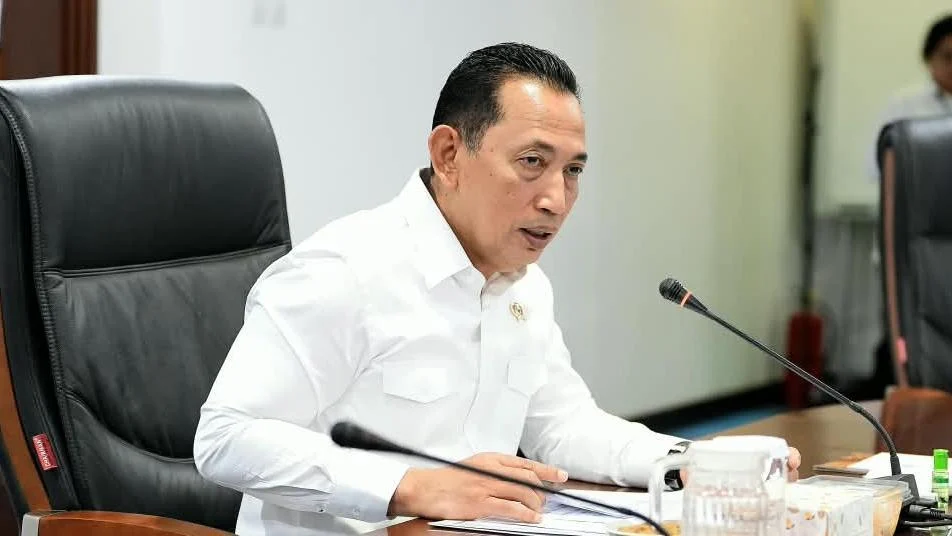
The garage of Indonesia’s National Police Chief, General Listyo Sigit Prabowo, offers a study in stability that contrasts sharply with the often-volatile asset fluctuations frequently observed among high-ranking public officials. According to the latest data from the Corruption Eradication Commission’s (KPK) Laporan Harta Kekayaan Penyelenggara Negara (LHKPN), the General’s vehicular assets have remained remarkably static since he ascended to his current position in 2020. While the broader composition of his wealth has seen significant growth—specifically in liquid assets—his choice of transportation has remained rooted in two Toyota Fortuner SUVs, a configuration that has not seen a single addition or subtraction in half a decade.
The Static Garage: A Five-Year Snapshot
General Listyo Sigit Prabowo’s automotive portfolio is characterized by simplicity. As of his most recent filing for the 2025 reporting period, the National Police Chief lists exactly two vehicles under his name. Both vehicles are Toyota Fortuner models, a brand and model that has become ubiquitous among Indonesian officials due to its rugged capability and reliability.
The specific breakdown of these assets, which has appeared consistently in every public filing since 2020, is as follows:
- A 2018 Toyota Fortuner, acquired through personal efforts, valued at IDR 320 million.
- A 2019 Toyota Fortuner, also acquired through personal efforts, valued at IDR 350 million.
Combined, these two vehicles represent a total automotive asset value of IDR 670 million. What makes this figure particularly noteworthy is the absence of depreciation or acquisition activity. In the automotive market, vehicles typically suffer from depreciation over five years; however, for the purpose of LHKPN reporting, officials often maintain the original acquisition value or a fixed appraisal value unless a sale or replacement occurs. The fact that these specific entries have remained unchanged across the reporting cycles of 2020, 2021, 2022, 2023, 2024, and 2025 suggests a deliberate choice to retain these assets rather than engage in the frequent upgrading often seen in the public sector.
Comparative Stability in Real Estate
The consistency in the garage is mirrored by the stability of the General’s real estate holdings. Since 2020, the valuation of his land and building assets has remained fixed at IDR 6.15 billion. This portfolio consists of three specific properties located in the Tangerang and East Jakarta regions.
In the context of Indonesian asset disclosure, maintaining a constant valuation for real estate over a five-year period is relatively rare, as property values in the Greater Jakarta area generally appreciate due to market demand and inflation. This stability suggests that the properties have not been subjected to major renovations, nor have they been traded for higher-value assets, indicating a conservative approach to asset management by the Police Chief.
The Growth Trajectory: Cash and Liquid Assets
While the "hard assets"—cars and property—have remained stagnant, the liquid portion of General Sigit’s portfolio has undergone a radical transformation. This contrast highlights a shift in his financial strategy, moving away from capital-intensive asset accumulation toward liquidity and cash reserves.
The most striking data point in the recent LHKPN report is the 742.74 percent increase in "Cash and Cash Equivalents" over the five-year period. In 2020, the General reported cash holdings totaling IDR 869,735,000. By the time of the 2025 filing, this figure had surged to IDR 7,329,596,369.
This dramatic rise represents the primary engine of growth for his total net worth. Furthermore, his "Other Movable Assets" have also seen a steady climb, increasing by 22.56 percent over the same half-decade. When these figures are aggregated, the total reported wealth of the National Police Chief has risen from IDR 8,664,735,000 in 2020 to IDR 15,344,596,369 in 2025—a total net increase of approximately 77.09 percent.
Contextualizing the LHKPN Process
The LHKPN is a cornerstone of the Indonesian government’s transparency initiative, designed to monitor the wealth of public officials and ensure that their financial growth remains within the bounds of legitimate income. For the National Police Chief, the scrutiny surrounding his filings is inherently higher than that of other officials, given the institution’s high public profile and the ongoing mandates for reform within the police force.
Public experts often emphasize that the LHKPN serves two functions: transparency and accountability. By keeping his asset portfolio relatively simple and maintaining the same vehicles for years, General Sigit avoids the complexities and potential questions that arise from frequent asset turnover. However, the substantial increase in cash assets provides a new focal point for public interest. Financial analysts note that such a jump in liquid assets, while legally accounted for, often invites questions regarding the source of income—whether it stems from salary, bonuses, divestment of non-reported assets, or interest-bearing instruments.
Implications for Public Accountability
The stability of the General’s vehicle fleet serves as a symbolic marker of his tenure. In a professional environment where vehicle upgrades are common perks of office, the retention of two Fortuners from the pre-2020 era sends a message of consistency. However, the shift toward a significantly larger cash position reflects a broader trend in high-net-worth financial management, where officials move toward liquidity as their careers progress.
From a governance perspective, the disclosure of these assets is mandatory. The KPK’s role is to verify that these increases in cash reserves correlate with the official’s known income and legitimate business activities. As of the latest reporting, there have been no red flags or investigative inquiries launched regarding these filings, suggesting that the growth in liquid assets is viewed by oversight bodies as consistent with the expected compensation and financial lifecycle of a high-ranking state official.
Comparative Analysis: The "Fortuner" Culture
It is worth noting that the choice of the Toyota Fortuner is not incidental. In Indonesia, the Fortuner is widely regarded as the "official vehicle" of choice for high-ranking bureaucrats and law enforcement officers. It balances the need for a commanding road presence with the practicality of maintenance and parts availability. By sticking to this specific model, the Police Chief avoids the optics of luxury vehicle ownership—such as European marques—which are often scrutinized by the public as potential signs of excessive wealth or status seeking.
The fact that these vehicles have not been updated since 2020 also suggests a lack of interest in "conspicuous consumption." In an era where the Indonesian public is increasingly sensitive to the lifestyles of state officials, the decision to maintain a stable, non-luxury fleet is a tactical choice in public relations. It positions the official as someone whose financial growth is managed through prudent savings (as evidenced by the cash growth) rather than through the constant acquisition of depreciating luxury goods.
Future Reporting Cycles
As General Listyo Sigit Prabowo continues his service, future LHKPN filings will be scrutinized for two key trends:
- Vehicle Replacement: Will the 2018 and 2019 models finally be retired, or will the "stable garage" continue indefinitely?
- Liquidity Management: Will the cash reserves continue to grow at the same pace, or will they be re-allocated into real estate or other investment vehicles?
The transparency of these reports allows the public to track these shifts. For now, the story of the General’s garage is one of consistency. It provides a baseline of stability that contrasts with the significant upward trend of his total wealth, offering a clear, quantifiable record of his financial standing. As the Indonesian government continues to push for greater fiscal transparency, the adherence to these reporting standards by top-level officials remains a critical metric for maintaining public trust.
Ultimately, the data from the 2025 LHKPN paints a picture of a public official who has successfully navigated five years of leadership with a financial footprint that is increasingly liquid yet anchored by a consistent, modest, and unchanging automotive base. Whether this trend toward high liquidity continues or shifts into long-term asset investment will remain a point of interest for those observing the personal financial trajectory of Indonesia’s top law enforcement official.

