
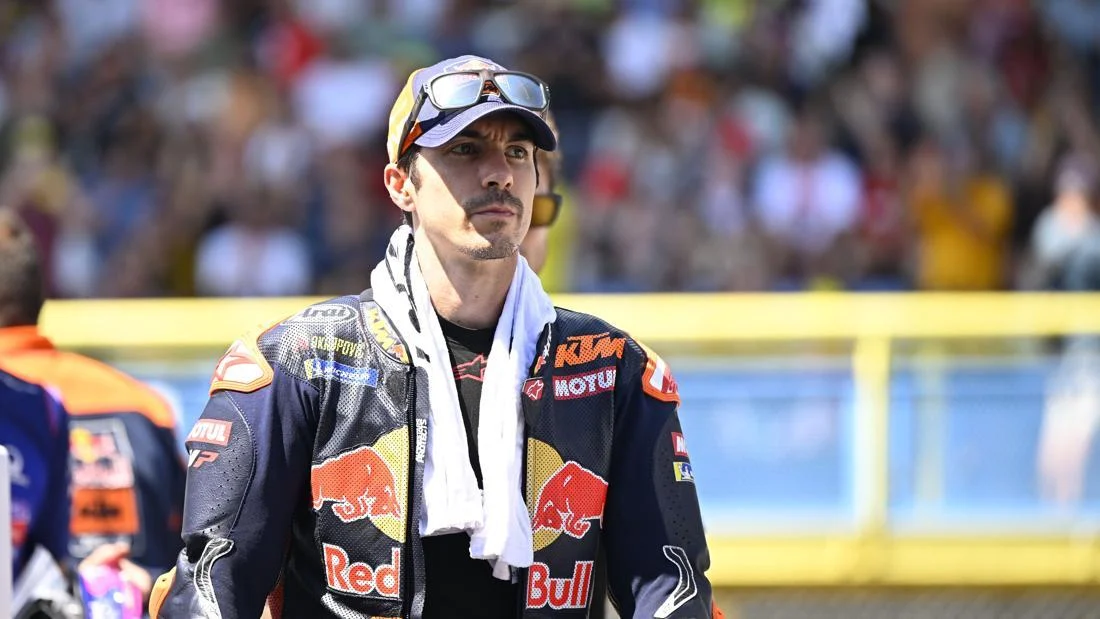
The curtain has prematurely fallen on the MotoGP career of Maverick Vinales, marking a somber conclusion to a journey that once promised world championship glory. The Spanish rider has officially withdrawn from the season-ending Valencia Grand Prix, an announcement that serves as the final chapter in a professional tenure defined by both remarkable flashes of brilliance and prolonged periods of instability. With his seat at Tech3 KTM set to be occupied by Pol Espargaro for the season finale, Vinales now finds himself at a career crossroads, with no clear path forward for the 2027 season and beyond.
The Anatomy of a Decline: Injury and Conflict
The catalyst for this departure is rooted in a severe shoulder injury sustained during the German Grand Prix in July. While initially viewed as a setback that could be managed through rehabilitation, the injury proved more resilient than anticipated. Following multiple failed attempts to return to the grid, Vinales underwent further surgical procedures, which significantly hampered his physical capacity and competitive edge.
The relationship between the rider and his team, Tech3 KTM, became increasingly strained during this recovery phase. Reports indicate a growing friction between Vinales’ insistence that he was fit to race and the team’s medical assessment, which deemed him physically unprepared for the rigors of elite motorcycle racing. This misalignment led to public disagreements, reflecting the immense pressure on both parties as KTM attempted to finalize its rider roster for the coming years.
A Chronology of a Career in Flux
To understand the gravity of Vinales’ exit, one must look at the trajectory of his career over the past decade.
- 2017–2019: The Peak Years: Vinales enjoyed his most consistent success during his stint with Yamaha, finishing third in the MotoGP World Championship standings in both 2017 and 2019. During this period, he was widely considered one of the top three riders in the sport, consistently challenging for race wins and podiums.
- 2021: The Turning Point: The relationship with Yamaha began to fracture in 2021. The situation reached a breaking point in Austria, when Vinales was suspended and eventually departed the team mid-season following allegations that he intentionally attempted to damage his engine during a race.
- 2022–2023: The Transition: Following his departure from Yamaha, Vinales sought to revitalize his career with Aprilia. However, the anticipated synergy never fully materialized, leading to an amicable separation as both parties failed to achieve the desired results.
- 2024: The Final Chapter: The move to Tech3 KTM was intended to be a fresh start. There were even internal discussions regarding a potential promotion to the factory KTM team as a lead rider. However, the persistent shoulder issues and subsequent loss of competitive form ultimately led the manufacturer to look in a different direction.
The Shift in the KTM and Tech3 Landscape
The implications of Vinales’ departure are immediate and ripple across the 2027 MotoGP grid. KTM has finalized a major overhaul of its rider lineup. The factory KTM team will be anchored by Alex Marquez and Fabio Di Giannantonio, two riders who have demonstrated consistent form and growth in recent seasons.
Meanwhile, Tech3 has opted for a significant strategic pivot by signing Luca Marini and Senna Agius. This decision highlights the team’s desire for stability and a focus on long-term development, a stark contrast to the volatility that marked the latter half of the 2024 season with Vinales. For Vinales, the exclusion from the 2027 factory lists effectively closes the door on a primary ride in the premier class.
Statistical Legacy: The Numbers Behind the Talent
Vinales concludes his MotoGP tenure with 10 Grand Prix victories, a testament to his raw speed and technical proficiency. His career statistics place him among the most successful riders of his generation in terms of sheer talent, even if the consistency required for a world title remained elusive.
His average finish and podium conversion rates during his peak years (2017-2019) were among the highest in the paddock. However, the decline in performance metrics following his 2021 exit from Yamaha illustrates the difficulty of maintaining elite status in a sport that demands both physical peak and total mental synchronization with the machine.
Official and Industry Perspectives
While official statements from KTM management have remained diplomatic, emphasizing the need for a healthy and fully prepared rider, the industry sentiment suggests that the decision was as much about logistics as it was about performance.
"We wish Maverick the best in his recovery," a spokesperson for the team noted in a brief release. "The decision to move forward with other riders was based on the necessity of having a clear, long-term roadmap for the team’s development."
Vinales himself has addressed the situation with a mix of frustration and pragmatic humor. While acknowledging the physical toll of his recent injuries, he has expressed a desire to remain in the MotoGP paddock, even if it means transitioning into a freelance role. He has jokingly suggested that he could function as a "pay-per-ride" specialist, quoting a fee of 100,000 euros per race—a remark that highlights both his confidence in his remaining skills and the uncertainty of his current professional status.
Analysis: The Challenges of the Modern MotoGP Era
The Vinales situation serves as a poignant case study on the hyper-competitive nature of modern MotoGP. The sport has evolved into an environment where a rider is only as valuable as their last season’s data. With the field becoming increasingly tight—often separated by mere fractions of a second—any drop in physical performance or morale can lead to an rapid exit from the factory-backed tiers.
Furthermore, the "factory rider" model has become more demanding. Teams no longer view riders merely as athletes, but as integral parts of a multi-million-euro R&D process. When a rider like Vinales struggles with injury, they not only lose the ability to compete for podiums but also hinder the team’s ability to gather critical data for bike development. This creates a feedback loop that often results in the premature termination of contracts.
Future Outlook and Retirement Implications
As the 2024 season concludes in Valencia, the sport says goodbye to one of its most enigmatic characters. Whether Vinales will secure a test rider role for 2027—a position that would keep him within the industry—remains the only viable path for his continued professional involvement in the sport.
His legacy will likely be debated by fans and analysts for years. Was he a rider who suffered from a lack of support, or a talent whose inconsistency prevented him from reaching the pinnacle of the sport? Regardless of the verdict, his 10 victories and his capacity to challenge the sport’s legends remain an indelible part of the MotoGP history books.
For now, the paddock looks toward the future. The arrival of new talent, combined with the reshuffling of veteran riders like Marquez and Di Giannantonio, signals a new era for the KTM brand. As for Vinales, the road ahead is uncertain, but his impact on the sport—both through his triumphs and his struggles—has left a significant mark on the competitive landscape of grand prix motorcycle racing. As the engines fall silent in Valencia, the focus shifts to how the teams will adapt in the absence of one of the sport’s most debated figures.

