
The legal and political landscape in Indonesia faces a significant tremor as former National Police Chief, General Listyo Sigit Prabowo, declined to attend a high-profile ethics hearing convened by the Police Ethics Commission. The hearing was intended to address serious allegations involving the unauthorized surveillance of President Prabowo Subianto. According to official statements from the National Police spokesperson, Inspector General Johnny Eddizon Isir, the refusal was formally documented, resulting in the adjournment of the proceedings. The commission has rescheduled the hearing for Monday, November 30, 2026, marking a critical juncture in the internal accountability processes of the national security apparatus.
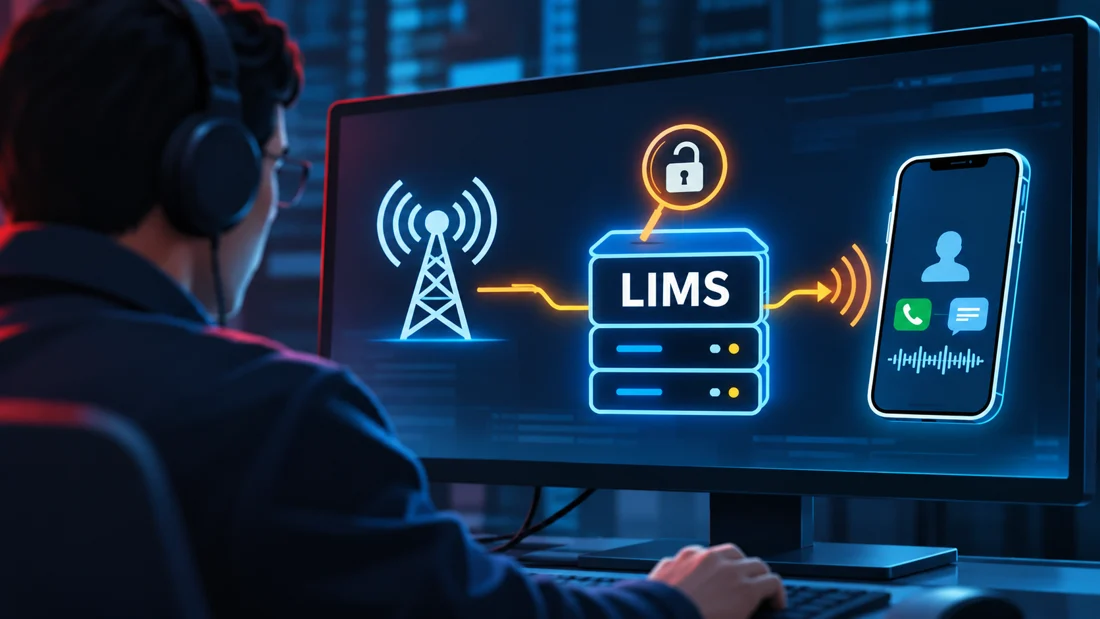
At the heart of this controversy lies the Lawful Interception Management System (LIMS), a sophisticated technological framework designed to assist law enforcement in maintaining national security. While LIMS is a standard tool for combating serious crimes, the allegations suggest that the system was misappropriated for political espionage, bypassing the rigorous legal checks and balances required for its operation.
Understanding the Lawful Interception Management System (LIMS)
LIMS is not merely a monitoring tool; it is a complex infrastructure designed to manage the interception of telecommunications data. As defined by the European Telecommunications Standards Institute (ETSI), lawful interception is the legally sanctioned process by which telecommunications operators provide communication data to authorized law enforcement agencies.
The architecture, governed by standards such as ETSI TS 104 007, encompasses a multi-layered process. It involves the management of legal authorization, the precise targeting of individuals, the actual collection of communications, and the secure delivery of intercepted information to a centralized monitoring facility. According to the European Parliamentary Research Service (EPRS), these systems can capture two primary types of data: the Content of Communication (CC), which includes voice and text, and Intercept-Related Information (IRI), which consists of metadata such as location, timestamps, and contact lists.
The technical power of LIMS lies in its integration at the network level. Unlike invasive spyware, which requires installation on a target’s mobile device, LIMS operates directly through the telecommunications infrastructure. This allows for seamless surveillance without the knowledge of the target, provided the system is managed by those with administrative access to the network nodes.
The Mechanics of Interception: How LIMS Functions
The operational lifecycle of a lawful interception request is strictly regulated by law. Typically, a law enforcement agency must submit a formal request supported by a court order or a specific legal mandate, identifying the target and the duration of the surveillance. Once this legal verification is completed, the system is activated to tap into the target’s communication stream.
The data captured is divided into two distinct streams. The Content of Communication (CC) captures the actual voice calls, SMS, or digital messages. The Intercept-Related Information (IRI) provides the crucial context: who the target is talking to, how long they speak, and, crucially, their geographic location derived from cellular tower triangulation. Because this process occurs at the service provider level, it is largely invisible to the end user. The sophistication of these systems means that they can be used effectively to monitor high-value targets, provided that the authorization protocols are strictly followed.
Chronology of the Alleged Misuse
The investigation into the misuse of LIMS began following a whistleblower report submitted by a police official on October 30, 2026. Preliminary findings by the Bareskrim (Criminal Investigation Agency) revealed a systematic abuse of power. Investigators allege that specific high-ranking officers, including the former Chief of Police, bypassed standard protocols by inputting telephone numbers into the LIMS server without any supporting police reports or legal warrants.
The scope of the surveillance was reportedly extensive. Bareskrim investigators discovered that the target list included the President of the Republic of Indonesia, prominent cabinet ministers, political figures, media representatives, civil society leaders, and several influential business executives.
By late October 2026, as the internal investigation began to intensify, the suspects allegedly attempted to cover their tracks. Forensic teams discovered evidence suggesting that commands were issued to delete the files containing the intercepted data and to wipe the system logs to prevent further tracing of the activity.
Following the initial report, Bareskrim launched a comprehensive investigation, interviewing 10 witnesses and three expert witnesses. The agency secured significant physical evidence, including 11 mobile phones, an iPad, and four flash drives, which are currently being analyzed for data remnants and unauthorized access patterns.
The Charged Individuals and Legal Implications
The scandal has resulted in a list of high-ranking police officials being named as suspects. The group is led by former National Police Chief General Listyo Sigit Prabowo. Other key figures implicated in the LIMS surveillance scandal include:
- General Listyo Sigit Prabowo, former National Police Chief.
- Inspector General Ahrie Sonta Nasution, former Head of the Legal Division (Kadivkum).
- Inspector General Eko Hadi Santoso, former Director of Narcotics Crimes at Bareskrim.
- Inspector General Slamet Uliandi, former Head of Information and Communication Technology (Kadiv TIK).
The complexity of the situation is compounded by additional charges of treason (makar) leveled against the same group. The list of suspects for the treason investigation includes the four aforementioned officers, as well as Police Commissioner Iman Imanuddin and Brigadier General Tedjo Kusumo. The combination of illegal surveillance on the head of state and allegations of treason represents one of the most severe crises of confidence within the Indonesian National Police in recent history.
Institutional Impact and Public Trust
The refusal of General Listyo Sigit to attend the ethics hearing has sparked a wider debate regarding accountability and the rule of law. Within the police force, the incident has prompted urgent calls for a reform of the oversight mechanisms governing surveillance technologies.
Industry experts argue that while LIMS is essential for national security, the "dual-use" nature of the technology necessitates an independent judicial oversight body to monitor its usage. Currently, the concentration of power within the hands of a few high-ranking officers creates a single point of failure that can be exploited for political ends.
The broader implications for the Indonesian government are profound. The surveillance of a sitting President by his own law enforcement apparatus suggests a deep-seated fracture in the security establishment. As the legal process moves toward the scheduled hearing on November 30, the public and international observers will be watching closely to see if the police institution can maintain the integrity of its own internal disciplinary proceedings.
The case also underscores the urgent need for robust data protection laws that explicitly define the limits of state surveillance. In an era where digital footprints are ubiquitous, the ability of state actors to access private communications without judicial review poses a direct threat to the democratic process.
As the Bareskrim continues its forensic examination of the seized devices, the findings are expected to shed more light on the motivations behind the surveillance. Was this a localized breach of protocol, or was it a coordinated effort to undermine the political transition? The answers to these questions will not only determine the fate of the accused officers but will also shape the future of civil-military and civil-police relations in Indonesia.
The ongoing proceedings represent a pivotal test for the National Police’s commitment to transparency. By addressing the abuse of LIMS head-on, the institution seeks to restore public trust, yet the defiance shown by the former Chief of Police indicates that the path to accountability may be long and fraught with institutional resistance. As the nation awaits the next hearing, the incident remains a stark reminder of the dangers of unchecked surveillance capabilities in the hands of those entrusted with the public interest.

