
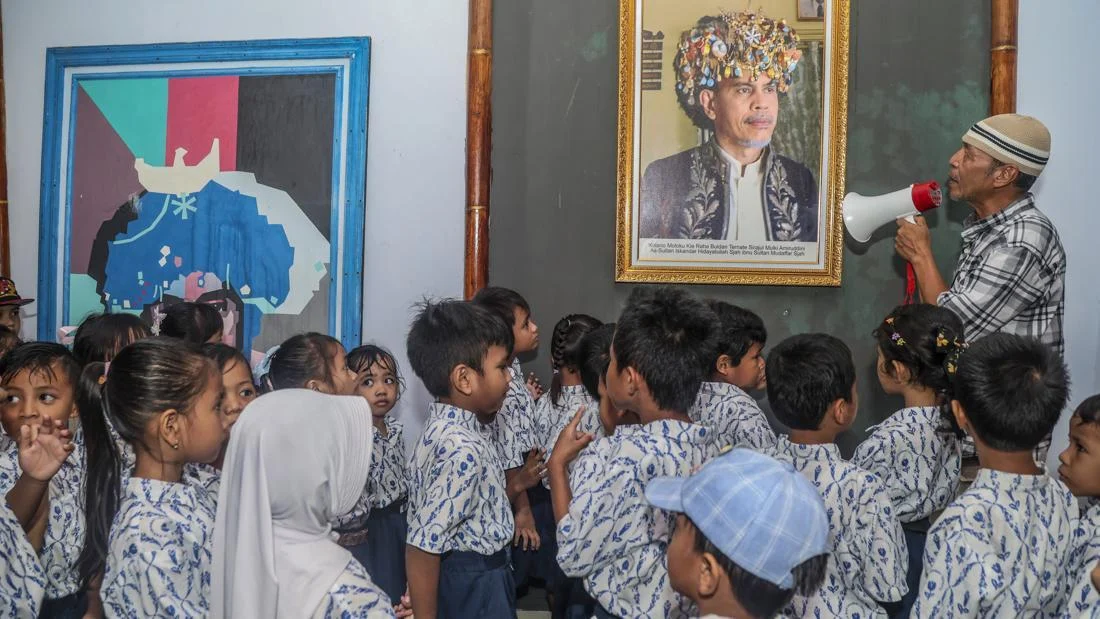
Early childhood education has increasingly embraced experiential learning models that extend beyond traditional classroom walls, allowing young learners to interact directly with their surrounding environment, history, and cultural heritage. In a notable initiative aimed at fostering local cultural identity from an early age, approximately 190 early childhood education (PAUD) students from various schools across Ternate embarked on an educational field trip to the historical Museum Sultan Iskandar Muhammad Djabir Sjah, located within the majestic Kedaton Kesultanan Ternate in North Maluku. The excursion, conducted on Thursday, November 26, 2026, brought together young children, their teachers, and parents in an immersive outdoor learning environment designed to introduce them to the rich history, royal artifacts, and enduring cultural legacy of the Ternate Sultanate.
The field trip represents a growing pedagogical trend in Indonesian early childhood development, which emphasizes contextual learning over abstract instruction. By physically stepping into a centuries-old royal compound and examining authentic historical relics, the children were provided with a tangible connection to the heritage of their region. Guided by traditional customs officers and cultural interpreters of the Kesultanan Ternate, the students explored the museum’s extensive collection, which chronicles the glorious past of one of the archipelago’s most influential historical sultanates.
Chronology of the Educational Excursion
The educational visit unfolded through a carefully structured itinerary aimed at accommodating the developmental needs and attention spans of preschool-aged children. The event commenced in the morning, as the cohort of 190 students, accompanied by their respective educators and supervising parents, arrived at the Kedaton Kesultanan Ternate complex.
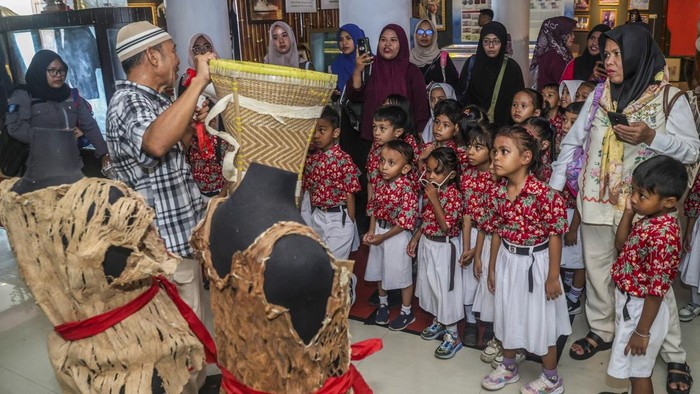
Upon arrival, the children were divided into smaller, manageable groups to ensure that the learning experience remained engaging, safe, and comprehensible. Traditional custom guides, dressed in customary attire, welcomed the young visitors and led them into the Museum Sultan Iskandar Muhammad Djabir Sjah. Inside the museum, the guides employed a storytelling approach, translating complex historical narratives into simple, accessible language suitable for young minds.
Throughout the tour, the students were introduced to various artifacts that form the backbone of Ternate’s royal history. In one of the interactive sessions, guides showed the children framed historical photographs, including portraits of former rulers such as Sultan Ternate Hidayat Mudaffar Sjah. The children also observed traditional regalia, ancient weaponry, royal garments, and historical documents that highlight the sultanate’s historical prominence in maritime trade, diplomacy, and the spread of Islam in Eastern Indonesia.
The outdoor learning session concluded in the early afternoon, following a series of interactive question-and-answer segments designed to reinforce what the children had observed. Teachers and parents reported that the children exhibited high levels of enthusiasm throughout the visit, displaying genuine curiosity toward the artifacts and historical explanations provided by the adat (customary) guides.
Background Context of the Ternate Sultanate and Museum
To fully understand the significance of this educational visit, it is essential to examine the historical weight carried by the Kedaton Kesultanan Ternate. Situated on a hill overlooking the waters of North Maluku, the Ternate Sultanate was historically one of the most powerful political and economic entities in the Maluku Islands, widely known during the colonial era as the "Spice Islands." At the height of its power in the 15th to 17th centuries, the sultanate’s influence extended across vast territories, encompassing parts of Sulawesi, Mindanao, and the Papuan islands, largely driven by the lucrative trade in cloves.
The Kedaton (palace), designed by the Dutch architect Lodewijk Willem Thoor Horsten and built in 1812 by Sultan Muhammad Ali, serves as an architectural masterpiece and a living symbol of North Maluku’s royal heritage. Within this complex lies the Museum Sultan Iskandar Muhammad Djabir Sjah, named after one of the sultanate’s most respected modern leaders. The museum houses a vast repository of historical treasures that preserve the memory of the sultanate’s sovereignty, diplomatic relations with European powers, and traditional governance structures.
Exposing young children to such a site is a deliberate effort to bridge the generational gap in heritage preservation. In an era dominated by digital media and globalized popular culture, local institutions face the challenge of keeping regional histories alive among the younger demographic. By introducing these historical narratives during the formative preschool years, educators hope to instill a foundational sense of pride and belonging tied to the students’ geographical and cultural roots.
Pedagogical Framework and Stakeholder Perspectives
The inclusion of out-of-school learning in the early childhood curriculum aligns with modern educational philosophies, such as experiential and place-based education. Child development experts widely agree that children between the ages of four and six absorb environmental cues, social values, and cultural norms rapidly. Introducing historical concepts through visual and tactile experiences—such as viewing royal garments and listening to stories of past rulers—enhances cognitive retention and emotional engagement.
Teachers and school administrators involved in the Ternate excursion emphasized that the event was planned not merely as a recreational field trip, but as a core component of the character-building curriculum. By interacting with cultural guides and observing the solemnity of the royal grounds, the children were subtly taught important values such as respect for history, appreciation of diversity, and reverence for local leadership traditions.
Parents who accompanied their children played an equally crucial role in supporting the initiative. Many parents noted that the field trip provided an excellent opportunity for family bonding while simultaneously educating the adults on aspects of local history that they might not have explored in depth. The active participation of parents created a collaborative educational ecosystem involving schools, families, and cultural custodians.
Furthermore, the involvement of the traditional apparatus of the Kesultanan Ternate underscores the sultanate’s ongoing commitment to community engagement and cultural education. The royal institution has increasingly opened its doors to educational institutions, positioning the Kedaton not just as a historical monument, but as an active educational resource for the contemporary population of North Maluku.
Broader Implications for Cultural Preservation and Education
The successful execution of the educational visit to the Museum Kesultanan Ternate carries several broader implications for regional education policies and cultural preservation strategies in Indonesia.
First, it highlights the viability and importance of integrating local content (muatan lokal) into early childhood education. While national curricula provide standardized frameworks, incorporating localized historical and cultural milestones ensures that children grow up with a grounded understanding of their immediate surroundings. This localized approach acts as a cultural safeguard against the homogenizing effects of globalization.
Second, the initiative demonstrates the potential for synergy between educational institutions and cultural heritage management bodies. Museums and historical sites often struggle with visitor engagement, particularly among younger demographics. By intentionally designing programs tailored for PAUD students, cultural sites like the Kedaton Kesultanan Ternate can cultivate future generations of heritage advocates who value and protect historical landmarks.
Finally, the event serves as a blueprint for other regions across the Indonesian archipelago. Indonesia’s rich tapestry of ethnic groups, traditional kingdoms, and indigenous histories offers limitless opportunities for experiential learning. Replicating similar programs in other historical centers can transform traditional museums from quiet, static exhibition spaces into dynamic centers of community learning and cultural transmission.
As the 190 young students returned to their respective classrooms following their excursion to the Kedaton Kesultanan Ternate, they carried with them more than just memories of a day spent outside school. They brought home the foundational seeds of cultural awareness, connecting their identities to a proud historical legacy that has shaped North Maluku for centuries. Through such initiatives, the preservation of local heritage is secured not through rigid academic memorization, but through the vibrant, inquisitive eyes of the next generation.

