
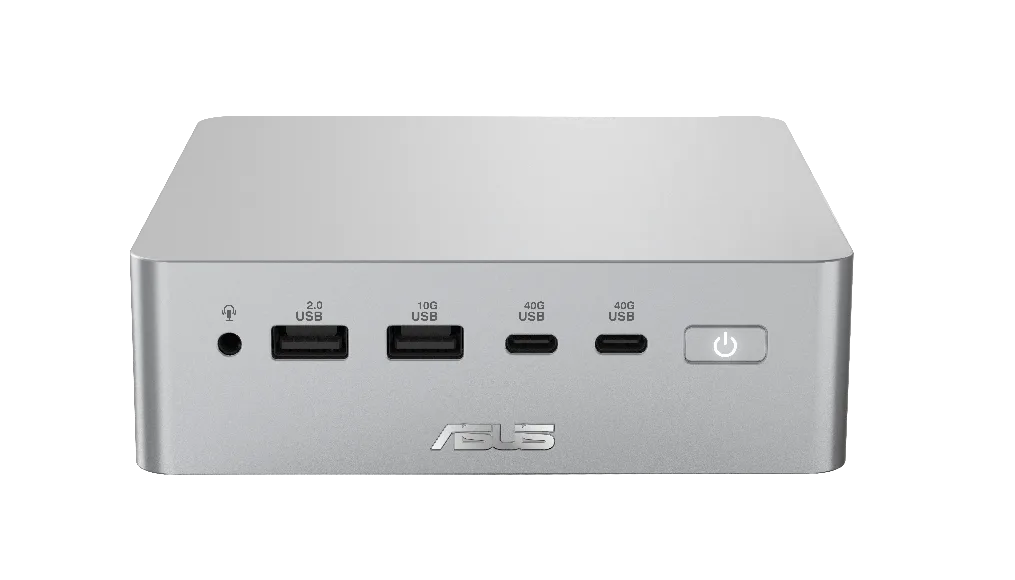
The landscape of professional computing is undergoing a seismic shift as ASUS officially unveils the Ascent QN10, the world’s first Mini PC powered by the cutting-edge Snapdragon® X2 Elite platform. This launch marks a pivotal intersection between ultra-compact hardware design and high-performance artificial intelligence, signaling a departure from traditional reliance on remote cloud infrastructure. With an integrated Neural Processing Unit (NPU) capable of delivering up to 80 TOPS (Trillions of Operations Per Second), the Ascent QN10 is engineered to handle complex Large Language Model (LLM) inferencing directly on the device, offering a new benchmark for speed, privacy, and power efficiency in the corporate and creative sectors.
The Evolution of the Mini PC Form Factor
The history of the Mini PC has long been defined by a compromise: users typically traded raw performance for space-saving aesthetics. Historically, small-form-factor (SFF) desktops struggled with thermal throttling and limited headroom for high-end components. ASUS has shattered this paradigm with the Ascent QN10, which occupies less than 0.7 liters of volume. To put this into perspective, the device is roughly 86 percent smaller than standard desktop towers, which typically occupy upwards of 5 liters of space.
This reduction in physical footprint does not come at the cost of capability. The transition to the Snapdragon X2 Elite architecture allows for a more efficient thermal envelope. By utilizing a system-on-chip (SoC) design that integrates CPU, GPU, and NPU cores, ASUS has effectively condensed the power of a workstation into a chassis that fits comfortably on a crowded studio desk or within a modular office workstation. This design philosophy caters to the modern "clean desk" movement, where minimalism meets high-octane professional utility.
Unpacking the 80 TOPS NPU Advantage
The core of the Ascent QN10’s disruptive potential lies in its NPU. The industry standard for AI-ready PCs has been rapidly evolving, but the 80 TOPS capability of the Snapdragon X2 Elite puts the Ascent QN10 at the forefront of the "AI PC" movement. In traditional computing environments, AI tasks—such as voice recognition, real-time language translation, or video enhancement—often require a constant, high-bandwidth connection to a cloud server. This model introduces latency and potential security vulnerabilities.
By shifting these workloads to the "edge"—directly on the hardware—the Ascent QN10 enables instantaneous response times. For developers, this means the ability to run LLMs locally for coding assistance without sending sensitive proprietary code to a third-party server. For creatives, it allows for seamless background removal in video production or resolution upscaling in real-time without the "lag" associated with cloud-based processing. The privacy implications are profound; because the data never leaves the local machine, businesses can maintain stringent compliance with data protection regulations, such as GDPR or HIPAA, more easily than with cloud-based alternatives.
A Chronology of the AI PC Revolution
The road to the ASUS Ascent QN10 began with the industry-wide recognition that cloud computing was hitting a wall regarding bandwidth and privacy.
- Q3 2023: Qualcomm introduces the Snapdragon X Elite, laying the groundwork for high-performance ARM-based Windows computing.
- Early 2024: The industry observes a surge in generative AI adoption, leading to increased demand for dedicated AI hardware.
- Mid 2024: ASUS internal R&D initiates the "Ascent" project, aimed at integrating the upcoming Snapdragon X2 Elite into an ultra-compact, enterprise-ready chassis.
- Q4 2024: The official unveiling of the Ascent QN10, marking the first global deployment of the X2 Elite platform in a Mini PC format.
This timeline reflects a rapid acceleration in hardware development, where the time-to-market for AI-optimized silicon has been compressed to meet the urgent needs of the enterprise market.
Technical Specifications and Performance Metrics
The Ascent QN10 is built to sustain high-intensity multitasking. While the NPU handles the AI-specific operations, the CPU architecture is optimized for power efficiency, ensuring that the system remains cool even under sustained load. The device supports modern high-speed memory standards and utilizes ultra-fast storage interfaces, reducing bottlenecking during data-heavy operations.
Beyond the raw processing power, ASUS has focused on "ecosystem readiness." The device is fully optimized for Windows-based AI environments, ensuring that software developers can deploy their models using industry-standard frameworks. The integration of high-bandwidth connectivity, specifically WiFi 7 and Bluetooth® 6.0, ensures that the device is future-proofed for the next generation of high-speed, low-latency peripheral communication and network synchronization.
Security Architecture: A Triple-Layer Approach
In the enterprise sector, hardware security is no longer an optional feature; it is a fundamental requirement. The Ascent QN10 employs a comprehensive "chip-to-cloud" security strategy. By integrating hardware-level protections, the device ensures that the operating system remains isolated from potential threats.
The inclusion of fTPM 2.0 (firmware-based Trusted Platform Module) serves as the first line of defense, encrypting user credentials and sensitive keys at the hardware level. This is complemented by the Microsoft Pluton security processor, which provides a hardened environment that is deeply integrated into the CPU architecture. This design prevents attackers from intercepting data between the CPU and the TPM, effectively neutralizing common physical and remote identity-theft techniques. Even in the event of a system compromise, these layers ensure that the core identity and security modules remain intact, facilitating a secure recovery process for IT administrators.
Broader Economic and Industrial Implications
The introduction of the ASUS Ascent QN10 is expected to ripple across several sectors. For the corporate enterprise, the move toward edge-based AI computing could lead to significant reductions in cloud service subscription costs. By offloading AI tasks to local hardware, companies can optimize their bandwidth usage and reduce the recurring expenses associated with cloud-based API calls.
Furthermore, the rise of the "AI Mini PC" is likely to influence the next wave of remote work infrastructure. As employees require more robust computing capabilities at home, the Ascent QN10 provides a solution that is both portable and powerful. It bridges the gap between the mobile convenience of a laptop and the stability of a desktop, potentially changing how IT departments provision hardware for a distributed workforce.
Analysts note that this transition is indicative of a broader trend: the "democratization" of AI processing power. Where previously only massive data centers possessed the compute capacity to run advanced models, the Ascent QN10 brings that power to the individual user’s desk. This is expected to foster a new wave of localized software development, where developers prioritize efficiency and speed, leveraging the NPU’s specialized architecture to build more responsive and private-by-design applications.
Conclusion: The Future of the Desktop
The ASUS Ascent QN10 is more than just a hardware refresh; it is a statement of intent for the future of personal and professional computing. By successfully miniaturizing a high-performance, AI-centric platform, ASUS has addressed the primary pain points of the modern digital landscape: the need for speed, the demand for privacy, and the desire for a minimalist workspace. As the industry continues to pivot toward edge computing, the Ascent QN10 stands as a significant milestone, proving that the future of computing is not necessarily in the cloud, but right on the edge of the user’s fingertips. The integration of enterprise-grade security and next-generation connectivity ensures that this device is not merely a tool for today, but a foundational component for the AI-driven work environments of tomorrow.

