
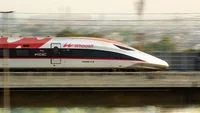
The Indonesian government is accelerating efforts to achieve a definitive resolution to the financial burdens surrounding the Jakarta-Bandung High-Speed Railway, widely known as Whoosh. The Badan Pengelola Investasi Daya Anagata Nusantara (BPI Danantara) has officially announced its target to finalize the comprehensive debt restructuring process for the mega-project by early next year. This strategic milestone is seen as a critical step toward shielding the national budget from ongoing fiscal pressures while ensuring the long-term operational viability of Southeast Asia’s first high-speed rail network.
According to the management of Danantara, the complex financial obligations and associated liabilities of the project are currently undergoing a formal transfer phase from the sovereign investment body to the Ministry of Finance. This transition serves as a foundational pillar designed to support the Rencana Kerja dan Anggaran Perusahaan (RKAP) or corporate work plan and budget for 2027, clearing the runway for the execution of the final restructuring framework.
Strategic Transition and High-Level Coordination
Chief Operating Officer (COO) of Danantara, Dony Oskaria, who also serves within the governance framework of Badan Pengelola BUMN (BP BUMN), provided insights into the ongoing mechanics of the transfer during a formal working meeting with Commission VI of the House of Representatives (DPR RI) in Jakarta. He emphasized that the administration is eager to close this chapter permanently so that the Kereta Cepat Indonesia China (KCIC) consortium no longer constitutes a lingering systemic financial dilemma for state-owned enterprises.
The finalization process involves intense cross-ministerial coordination. Dony highlighted that the management team scheduled a high-level strategic meeting with the Coordinating Minister for Infrastructure and Regional Development, Agus Harimurti Yudhoyono (AHY). The primary agenda of this discussion is to lock in the final details regarding the transfer mechanism, paving the way for the ultimate migration of the project’s financial responsibilities directly under the purview of the Ministry of Finance.
"This process is already very close to being finalized, and we hope it can be completed soon so that KCIC no longer becomes a persistent issue," Dony stated during the parliamentary hearing. He added that following the coordination with Minister AHY, the entire administrative and financial ownership paradigm will transition smoothly.
Due Diligence and Regulatory Groundwork
The broader roadmap for handling the Whoosh project’s debt liabilities and equity shifts involves intricate legal and financial evaluations. Previously, the Director General of Treasury at the Ministry of Finance, Evita Manthovani, outlined that the government is actively wrapping up the liability handling scheme alongside the transfer of shares held by PT Pilar Sinergi BUMN Indonesia (PSBI)—the Indonesian state-owned consortium member in the Whoosh project.
This comprehensive maneuver relies heavily on rigorous due diligence, encompassing both valuation assessments and legal scrutiny. Government agencies anticipate that this due diligence phase will reach completion by December 2026. The findings derived from these evaluations will subsequently form the bedrock for strengthening a forthcoming Presidential Regulation (Perpres) specifically tailored to govern the systemic handling of the Whoosh project.
During an official press briefing on the state budget (APBN KiTa), Evita noted that the Ministry of Finance continues to maintain close coordination with BP BUMN, Danantara, and other relevant sectoral ministries. The overarching goal is to ensure that the transfer of PSBI shares and the corresponding legal audits proceed without administrative bottlenecks.
Crucially, the government has maintained a dual-pronged commitment: safeguarding uninterrupted operational services for passengers while meticulously managing the financial servicing obligations in a manner that remains structurally isolated from destabilizing the broader state budget (APBN).
Background Context and Chronology of the Whoosh Project
The Jakarta-Bandung High-Speed Railway project has traveled a long and complex path since its inception. Conceived as a flagship infrastructure partnership between Indonesia and China, the project aimed to drastically cut travel time between the capital city of Jakarta and the West Java provincial capital of Bandung from roughly three hours to a mere 45 minutes, spanning a distance of approximately 142 kilometers.
Construction officially commenced following a groundbreaking ceremony in early 2016, with high expectations for rapid completion. However, the project encountered numerous hurdles, ranging from extensive land acquisition challenges and topographic complexities to unforeseen construction delays exacerbated by the global COVID-19 pandemic. These factors collectively led to significant cost overruns, pushing the initial financial estimates upward and necessitating additional loan agreements to bridge the funding gaps.
Despite these headwinds, commercial operations for Whoosh officially launched in October 2023, marking a historic milestone in regional transportation infrastructure. Passenger enthusiasm remained robust throughout its initial operational phases, with the service carving out a vital role in daily commuter and business transit between the two major urban hubs. Nevertheless, the debt servicing obligations tied to the massive construction loans—primarily sourced through international financing—remained a persistent structural challenge for the state-owned enterprises involved in the PSBI consortium, prompting the current wave of state-led restructuring initiatives.
Fact-Based Analysis of Economic and Fiscal Implications
The decision by Danantara and the Ministry of Finance to absorb and restructure the Whoosh project debt carries significant macroeconomic and fiscal implications for Indonesia. By migrating the financial liabilities away from the operational corporate entities and directly under the oversight of the Ministry of Finance, the government is effectively deploying a centralized sovereign debt management strategy.
This move prevents operational bottlenecks within state-owned enterprises like PT Kereta Api Indonesia (KAI) and other members of the PSBI consortium, protecting their individual balance sheets from impairments that could otherwise constrain their capacity to invest in other vital domestic public transport networks. Furthermore, handling the liabilities through a dedicated regulatory framework—bolstered by the upcoming Presidential Regulation—underscores a disciplined approach to fiscal risk mitigation.
Market analysts and economic observers note that while absorbing infrastructure debt inherently increases sovereign exposure, doing so under a strictly managed, transparent, and legally vetted framework provides much-needed clarity to investors and rating agencies. It signals that the Indonesian government maintains a proactive posture toward managing legacy infrastructure liabilities, ensuring that flagship projects deliver long-term economic multipliers without compromising fiscal prudence or the integrity of the national budget.
As Danantara moves toward the realization of its early-next-year target, all eyes will remain on the upcoming inter-ministerial resolutions and the finalization of the due diligence report this December. The successful execution of this restructuring will not only stabilize the immediate financial landscape of the Jakarta-Bandung railway but also establish a crucial precedent for how large-scale, cross-border strategic infrastructure projects are managed and sustained in Indonesia’s evolving economic landscape.

