

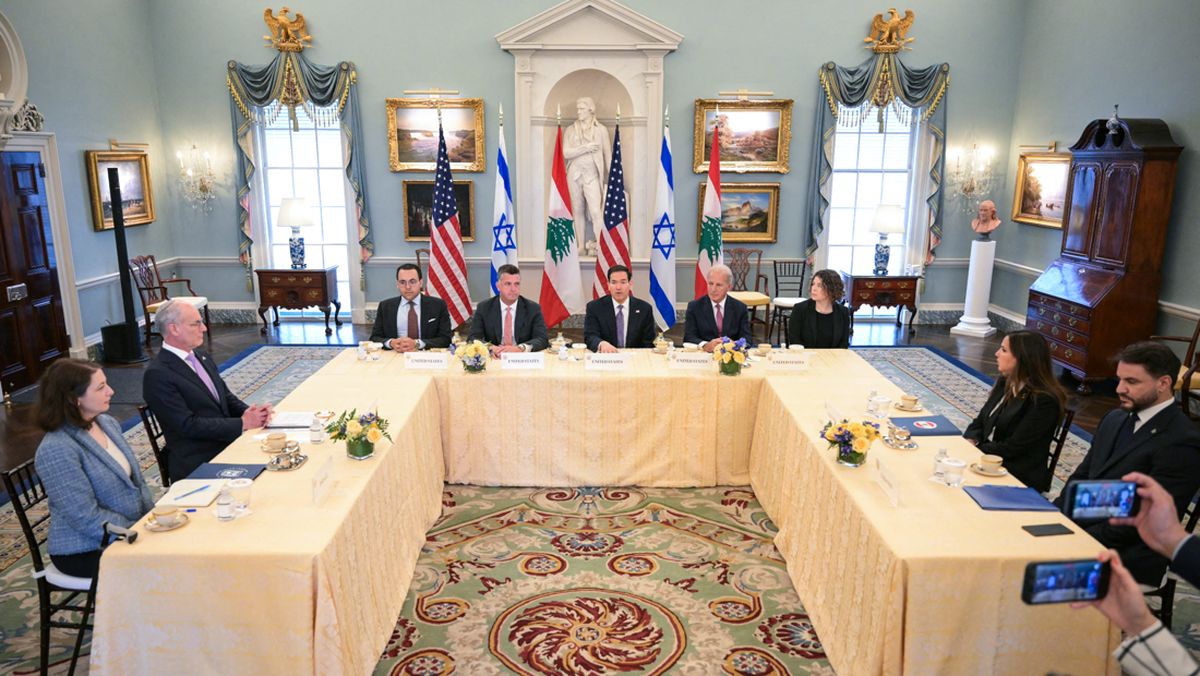
In a significant diplomatic breakthrough, representatives from Lebanon and Israel convened for direct, high-level negotiations in Washington on Tuesday, April 14, following a series of preliminary talks described as productive by mediators. This marks the first such direct dialogue between the two nations at a high level since 1993, facilitated by the United States and involving their respective ambassadors to the U.S. The discussions are taking place against a backdrop of long-standing animosity, unresolved border disputes, and recent escalations, notably the breakdown of a 2024 ceasefire agreement and a retaliatory surge following the assassination of a key figure in 2026.
A History of Protracted Conflict and Sporadic Dialogue
The relationship between Lebanon and Israel has been defined by decades of conflict, intermittent warfare, and a conspicuous absence of formal diplomatic ties. Since the establishment of Israel in 1948, Lebanon, hosting a significant Palestinian refugee population, has found itself repeatedly embroiled in the broader Arab-Israeli conflict. Major military engagements include Israel’s 1978 Litani Operation, its full-scale invasion in 1982 which led to a prolonged occupation of southern Lebanon, and the devastating 2006 Lebanon War. Despite these hostilities, there have been rare moments of direct engagement, such as the 1949 Armistice Agreements and the short-lived 1983 May 17 Agreement, which was never ratified by Lebanon. The 1993 talks, to which the current negotiations are being compared, were part of the multilateral track of the Madrid Peace Conference, aiming to address regional issues beyond bilateral peace treaties. Those discussions, though direct, failed to yield lasting resolutions, underscoring the profound challenges inherent in any attempt to bridge the chasm between the two adversaries. The current resumption of high-level dialogue, after such a prolonged hiatus, therefore carries immense symbolic weight and is seen as a cautious step towards de-escalation, even if comprehensive peace remains a distant prospect.
The contested border, often referred to as the "Blue Line" demarcated by the United Nations following Israel’s withdrawal from southern Lebanon in 2000, remains a flashpoint. While largely respected, numerous points of contention persist, leading to frequent low-level skirmishes and accusations of violations from both sides. The presence and influence of Hezbollah, a powerful Shiite political party and armed group in Lebanon, further complicate the security landscape. Formed in the early 1980s with Iranian backing to resist Israeli occupation, Hezbollah has evolved into a formidable military and political force, effectively operating as a state within a state in parts of Lebanon. Its extensive arsenal and cross-border operations have consistently been cited by Israel as a primary security threat, leading to a complex web of deterrence and retaliation that frequently threatens to spiral into wider conflict.
The Shadow of Past Agreements: The 2024 Ceasefire and Escalation
The immediate impetus for these renewed diplomatic efforts stems from a deeply volatile period marked by the collapse of a critical 2024 ceasefire agreement. This accord, brokered by international mediators in the wake of significant cross-border hostilities, had sought to de-escalate tensions and establish a framework for stability in southern Lebanon. Its primary stipulations required Israeli forces to withdraw fully from specified areas in southern Lebanon and, crucially, for Hezbollah to end its military presence in the same region, effectively creating a demilitarized zone. The agreement was hailed at the time as a fragile but necessary step to prevent a full-blown war, reflecting international pressure on both parties to exercise restraint.
However, the 2024 ceasefire proved to be short-lived and largely ineffective. According to multiple reports and official statements, Israel never fully withdrew its forces as mandated, maintaining a continued, albeit sometimes covert, military presence and conducting reconnaissance missions. Concurrently, Israel continued to carry out nearly daily incursions and targeted strikes within Lebanese territory, ostensibly to counter Hezbollah activities or prevent arms transfers. These actions, perceived by Lebanon and Hezbollah as blatant violations of the ceasefire, steadily eroded trust and heightened the risk of renewed conflict.
The situation dramatically deteriorated following the assassination of Ali Khamenei on March 1, 2026. While the specific details surrounding Khamenei’s identity and the circumstances of his death are not fully elaborated in the initial report, such an event, if involving a senior figure within Hezbollah or its allied factions, would be a major catalyst. Indeed, the article states that "Hezbollah did not retaliate until the assassination of Ali Khamenei on March 1, 2026." This indicates a significant retaliatory campaign by Hezbollah in the aftermath of the assassination, likely involving missile attacks, drone incursions, or other forms of cross-border aggression. This escalation fundamentally shattered the remnants of the 2024 ceasefire, pushing the region to the brink of a wider conflict and making the need for renewed diplomatic engagement all the more urgent. The Washington talks are thus an attempt to pull back from the precipice, addressing the very issues that led to the ceasefire’s failure and the subsequent surge in violence.
A Diplomatic Opening: The Washington Negotiations
The decision to hold direct, high-level talks in Washington represents a pivotal moment, signaling a shared, albeit tenuous, recognition by both governments of the necessity for dialogue, even in the absence of trust. A U.S. State Department official, speaking on condition of anonymity due to the sensitivity of the negotiations, confirmed the unprecedented nature of the engagement. "The governments of Israel and Lebanon are currently engaged in open, direct, and high-level diplomatic discussions, the first since 1993, facilitated by the United States," the official stated. The choice of Washington as the venue underscores the critical role of the United States as a primary mediator in the Israeli-Lebanese dynamic, leveraging its diplomatic weight and influence to bring the two sides to the table. The involvement of the respective ambassadors to the U.S. lends a degree of formality and seniority to the discussions, indicating that both nations are taking these talks seriously.
The U.S. official further elaborated on the scope of the discussions: "These talks will encompass the continuation of dialogue regarding how to ensure the long-term security of Israel’s northern border, as well as supporting the Lebanese government’s determination to restore full sovereignty over its territory." This dual focus highlights the core security concerns driving Israel’s engagement and the fundamental issue of state authority and control that preoccupies the Lebanese government. For Washington, facilitating these talks aligns with its broader foreign policy objectives of promoting stability in the Middle East, preventing regional conflicts, and maintaining its strategic alliances. The U.S. understands that unchecked escalation between Lebanon and Israel could have destabilizing ramifications across the entire region, potentially drawing in other state and non-state actors.
Core Agendas and Deep Divisions
The primary agenda items for the negotiations are multifaceted and deeply contentious: ensuring the security of weapons, the disarmament of Hezbollah, and the exploration of a broader peace agreement. These objectives, while seemingly straightforward, expose the fundamental and starkly contrasting positions held by the two parties. For Israel, the disarmament of Hezbollah is paramount, viewed as an existential security imperative. Hezbollah’s extensive rocket arsenal, estimated to comprise tens of thousands of projectiles, and its highly trained fighters pose a direct and immediate threat to Israeli population centers and military installations. The 2006 war, in which Hezbollah launched thousands of rockets into Israel, solidified this perception.
However, Hezbollah’s status within Lebanon is complex. It is not merely an armed militia but also a significant political and social force, with seats in parliament and a vast network of social services. Its weapons are often seen by a segment of the Lebanese population, particularly its Shiite base, as a legitimate deterrent against Israeli aggression and a necessary component of national defense in the absence of a strong, unified Lebanese state army capable of protecting the country. This internal Lebanese dynamic makes any external demand for Hezbollah’s disarmament incredibly sensitive and politically challenging for the Lebanese government.
Israeli Prime Minister Benjamin Netanyahu has previously articulated his government’s firm stance, emphasizing "total disarmament of Hezbollah" as a prerequisite for any lasting stability and pushing for a comprehensive, long-term peace agreement. This position is deeply rooted in Israel’s security doctrine, which prioritizes preemptive action and deterrence against perceived threats. Achieving a broader peace agreement would necessitate mutual recognition, delineation of all borders, and resolution of other historical grievances, a monumental task given the current political climate.
Israel’s Security Proposals: The Three-Zone Plan
To address its security concerns in southern Lebanon, Israel has put forward a detailed proposal envisioning the division of southern Lebanon into three distinct security zones. This plan reflects a desire to create a layered defense system that would physically separate Israeli communities from Hezbollah’s operational zones and gradually empower the Lebanese state to assert its authority.
-
Zone One: Intensive Israeli Military Presence: This zone would extend approximately 8 kilometers (about 5 miles) from the Israeli border northward. Under Israel’s proposal, this area would be subjected to an "intensive Israeli military presence" until Hezbollah is completely dismantled or disarmed. The rationale behind this is to create a deep buffer that would prevent Hezbollah from launching direct attacks from close range and allow Israeli forces to conduct continuous counter-terrorism operations. This proposal is reminiscent of the "security zone" Israel maintained in southern Lebanon from 1985 to 2000, a period marked by constant conflict and significant Lebanese resistance. Re-establishing such a zone, even temporarily, would be highly contentious and likely met with fierce opposition from Lebanon, which views any Israeli military presence on its soil as a violation of its sovereignty and an act of aggression.
-
Zone Two: Gradual Handover to Lebanese Military: Extending northward from Zone One up to the Litani River, this area would be designated as a zone for "Israeli operations that are gradually handed over to the Lebanese military." This implies a phased withdrawal of Israeli forces as the Lebanese Armed Forces (LAF) demonstrate their capacity and willingness to control the territory and prevent Hezbollah’s re-establishment. The Litani River has historically been a significant demarcation point in discussions about southern Lebanon’s security, often proposed as a line beyond which Hezbollah’s military activities should be curtailed. The success of this zone would depend entirely on the LAF’s ability to effectively police the area, a challenge complicated by Hezbollah’s deep integration into the Lebanese social and political fabric.
-
Zone Three: Full Lebanese Army Responsibility: The third zone, situated north of the Litani River, would be entirely the responsibility of the Lebanese army. This would include the crucial task of "disarming Hezbollah" within this territory. This component of the proposal places a significant burden on the Lebanese state, requiring it to undertake actions against a powerful non-state actor that wields considerable influence and maintains an extensive military infrastructure. The Lebanese army, while a professional force, often operates with limited resources and faces internal political constraints that make direct confrontation with Hezbollah exceedingly difficult, if not impossible, without risking a civil conflict.
Israeli officials have also floated the general idea of rebuilding a "buffer zone" in southern Lebanon, a concept deeply controversial given the historical context and the heavy human cost associated with Israel’s previous occupation. Such proposals fundamentally challenge Lebanon’s sovereignty and are seen by many Lebanese as an attempt to impose Israeli security interests on Lebanese territory without due regard for national integrity.
Hezbollah’s Counter-Demands and the 2024 Accord
In stark contrast to Israel’s demands for disarmament and security zones, Hezbollah’s primary condition for any agreement is Israel’s full withdrawal from southern Lebanon. This demand is framed within the context of the unfulfilled 2024 ceasefire agreement, which explicitly required Israeli forces to pull back from Lebanese territory. Hezbollah argues that its continued military presence is a direct response to Israel’s occupation and ongoing violations of Lebanese sovereignty. For Hezbollah, Israeli withdrawal is not merely a tactical demand but a matter of national dignity and resistance.
The 2024 agreement, which required both Israeli forces to withdraw from southern Lebanon and Hezbollah to cease its presence in the region, represents a critical reference point for Hezbollah’s current stance. From Hezbollah’s perspective, Israel’s failure to adhere to its side of the bargain—namely, a complete withdrawal—nullifies any reciprocal obligation on Hezbollah’s part. This creates a fundamental impasse: Israel demands disarmament first, citing security concerns, while Hezbollah demands Israeli withdrawal first, citing sovereignty and past agreements. This "chicken and egg" dilemma is at the heart of the current negotiations’ difficulty.
The group’s leverage in these negotiations is derived from its military capabilities and its perceived role as the primary defender of Lebanon against Israeli aggression. Any perceived capitulation on its part regarding disarmament without a clear, verifiable Israeli withdrawal would likely be viewed as a betrayal by its supporters and could undermine its political legitimacy within Lebanon.
The US as Mediator: Interests and Challenges
The United States, as the primary mediator, faces a formidable task. Its interests extend beyond merely brokering a temporary truce; Washington seeks to foster long-term stability, prevent regional conflagrations, and uphold its role as a key diplomatic actor in the Middle East. The U.S. has significant security assistance programs with Lebanon’s military, aiming to bolster the LAF’s capabilities and strengthen the legitimate state institutions. Concurrently, it maintains a robust strategic alliance with Israel, supporting its security needs. Balancing these often-conflicting interests while maintaining credibility with both parties is a delicate act.
The challenges for American diplomacy are immense. The deep-seated mistrust, the historical grievances, and the diametrically opposed core demands of disarmament versus withdrawal present significant hurdles. Furthermore, the internal political dynamics in both Lebanon and Israel—with powerful domestic constituencies and coalition governments—limit the flexibility of their negotiators. For the U.S., success in these talks would not only prevent a potential regional war but also demonstrate the efficacy of its diplomatic engagement in a highly complex geopolitical arena. Failure, however, could lead to a renewed cycle of violence, further destabilizing an already fragile region and potentially diminishing U.S. influence.
Broader Regional Implications
The outcome of these negotiations carries profound implications for broader regional stability. A successful de-escalation could set a precedent for managing other flashpoints in the Middle East, while a failure could ignite a wider conflict. The involvement of non-state actors like Hezbollah, and their ties to regional powers such as Iran, mean that any major escalation between Lebanon and Israel could quickly draw in other players. Iran, a key patron of Hezbollah, closely monitors developments along the Israeli-Lebanese border, viewing Hezbollah as a crucial element of its regional "axis of resistance." Any significant shift in the balance of power or security arrangements could trigger reactions from Tehran, further complicating the geopolitical landscape.
Conversely, a sustained period of calm and even incremental progress towards a modus vivendi could create space for addressing other pressing issues in Lebanon, particularly its severe economic and political crises. A stable southern border would alleviate one major source of external pressure, potentially allowing the Lebanese government to focus more intently on internal reforms and economic recovery, which are desperately needed.
Challenges and Outlook for a Lasting Resolution
The current negotiations, while historically significant, are merely the first cautious steps on a long and arduous path. The chasm between Israel’s demands for Hezbollah’s total disarmament and Lebanon’s, and particularly Hezbollah’s, insistence on Israeli withdrawal as a prerequisite, remains formidable. The memory of the failed 2024 ceasefire agreement and the recent escalation post-2026 assassination cast a long shadow, highlighting the fragility of any diplomatic breakthrough.
For a lasting resolution, both sides would need to demonstrate unprecedented flexibility and a willingness to compromise on core demands, perhaps through a phased approach or a robust international monitoring mechanism. This would require not only diplomatic skill but also significant political courage from leaders on both sides to persuade their respective constituencies of the necessity of concessions. The prospects for a comprehensive peace agreement, given the current deep-seated animosities and the complex interplay of state and non-state actors, appear remote. However, the very act of direct dialogue, after decades of silence and conflict, offers a glimmer of hope that a framework for managing the conflict and preventing future escalations might, at least, be within reach. The world watches closely as these historic talks unfold, understanding that their success or failure will reverberate far beyond the borders of Lebanon and Israel.

