
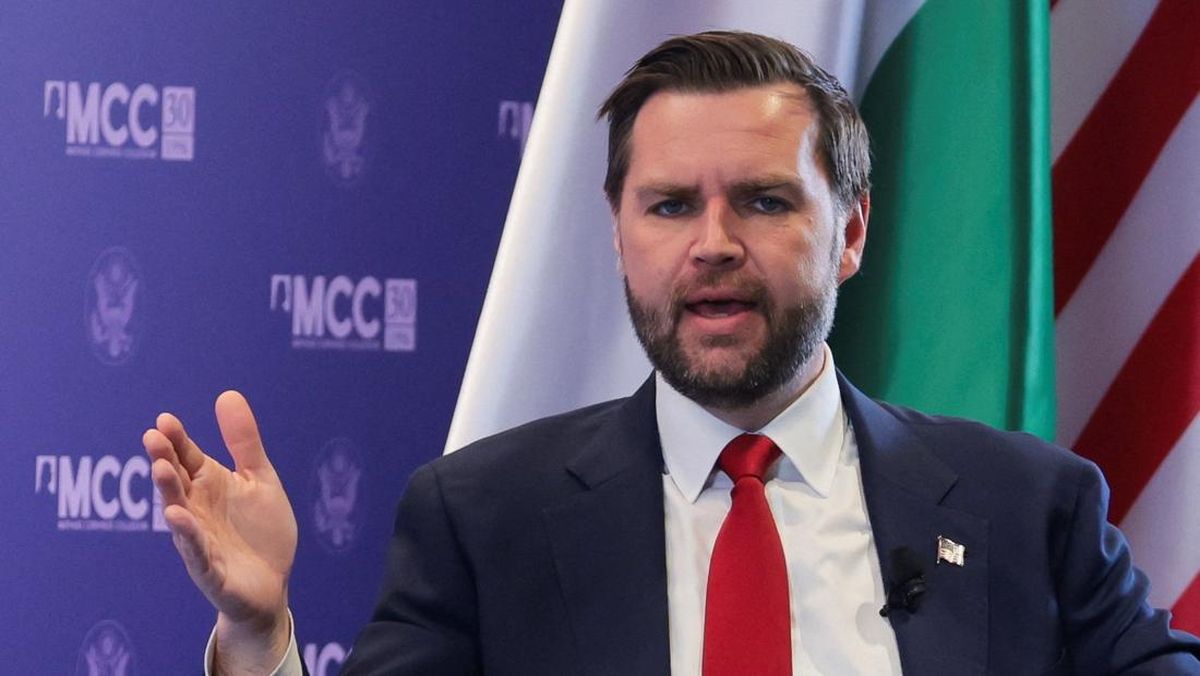
US Vice President JD Vance has candidly acknowledged the profound and enduring distrust between the United States and Iran, cautioning that such deep-seated animosity cannot be resolved through a single diplomatic overture. His remarks, delivered at a Turning Point USA event on Tuesday, April 14, follow the collapse of the first direct peace negotiations between the two nations since the 1979 Islamic Revolution, highlighting the immense challenges inherent in de-escalating one of the world’s most volatile geopolitical rivalries. The initial round of talks, which concluded on Sunday, April 12, after an exhaustive 21 hours of face-to-face deliberation, failed to yield a breakthrough, primarily due to Iran’s staunch refusal to accede to key US demands, most notably a complete cessation of its nuclear program. This diplomatic impasse has been further complicated by President Donald Trump’s subsequent announcement of a blockade in the strategically vital Strait of Hormuz, a move designed to exert maximum pressure on Tehran to return to the negotiating table.
Acknowledging Deep-Seated Distrust
Speaking to a receptive audience at the Turning Point USA event, a prominent conservative youth organization, Vice President Vance articulated the formidable chasm of mistrust separating Washington and Tehran. "Of course, there is a lot of distrust between Iran and the United States. You will not be able to solve that problem overnight," Vance stated, as quoted by Reuters. His words underscore a pragmatic understanding of the historical baggage and complex contemporary issues that have fueled decades of antagonism. The Vice President’s presence at the conservative gathering provided a platform to address a domestic audience on the intricacies of foreign policy, particularly concerning a nation long perceived as a primary adversary. Despite the immediate failure of the talks, Vance expressed an unexpected degree of optimism regarding the eventual prospects for a resolution. "I feel very optimistic about our current position," he affirmed, suggesting a belief in the long-term efficacy of the current administration’s diplomatic and coercive strategies, even in the face of initial setbacks. This optimism, however, contrasts sharply with the immediate realities of failed negotiations and escalating tensions.
The Stalled Diplomatic Overture
The unprecedented direct talks held on Sunday, April 12, represented a pivotal moment in the fraught history of US-Iran relations. For the first time since the revolutionary upheaval of 1979, senior representatives from both nations sat across a table, engaging in prolonged, direct dialogue. The 21-hour marathon session, meticulously arranged after a period of intense back-channel communications, was hoped to forge a path towards de-escalation following a significant outbreak of hostilities that commenced on February 28. These hostilities, which saw an escalation of military and proxy engagements across the region, had pushed both nations to the brink, prompting urgent calls for diplomatic intervention from international bodies and concerned allies.
However, the intensive negotiations ultimately faltered. Central to the American delegation’s demands was Iran’s complete and verifiable cessation of its nuclear enrichment program, alongside stricter international oversight. Washington also sought assurances regarding Iran’s ballistic missile development and its support for regional proxy groups, which the US views as destabilizing forces. Tehran, for its part, reportedly presented its own set of conditions, including the immediate lifting of all US sanctions, a guarantee against future US withdrawal from any agreement, and an end to what it perceives as aggressive military posturing in the Persian Gulf. The chasm between these positions proved insurmountable in the initial round, leading to the delegates parting ways without a joint statement or a clear path forward, thus marking the first official direct talks since the revolution as a diplomatic failure.
A History of Acrimony: The US-Iran Conundrum
The current state of US-Iran relations is deeply rooted in a complex and often violent history spanning more than four decades. The 1979 Islamic Revolution, which overthrew the US-backed Shah Mohammad Reza Pahlavi, fundamentally reshaped the geopolitical landscape of the Middle East. The subsequent hostage crisis at the US embassy in Tehran cemented an enduring antagonism. Throughout the 1980s and 1990s, relations remained hostile, punctuated by incidents such as the Iran-Contra affair and various proxy conflicts.
The early 21st century brought renewed focus on Iran’s nascent nuclear program. Concerns about its potential military dimension led to international sanctions and increased diplomatic pressure. A landmark moment arrived with the 2015 Joint Comprehensive Plan of Action (JCPOA), a multilateral agreement between Iran and the P5+1 nations (China, France, Russia, United Kingdom, United States, plus Germany) that saw Iran limit its nuclear activities in exchange for sanctions relief. However, the JCPOA’s future was jeopardized when the Trump administration unilaterally withdrew from the agreement in May 2018, reimposing and intensifying sanctions under a "maximum pressure" campaign. This withdrawal was a critical inflection point, leading to Iran gradually scaling back its commitments to the deal, increasing uranium enrichment, and reducing cooperation with international inspectors.
The period leading up to the February 28 conflict was characterized by escalating tensions in the Persian Gulf, including attacks on oil tankers, drone incidents, and retaliatory strikes. While the exact trigger for the "war" mentioned in the article remains unelaborated, it likely refers to a significant escalation of these existing flashpoints, possibly involving direct confrontations or a series of highly destructive proxy attacks that demanded immediate de-escalation efforts. This backdrop of prolonged hostility, failed agreements, and recent military engagements underscores the profound difficulty in bridging the trust deficit that Vice President Vance highlighted.
The Strategic Chokepoint: Strait of Hormuz
The Strait of Hormuz, a narrow waterway connecting the Persian Gulf to the open ocean, is arguably the most critical oil chokepoint in the world. Approximately 20% of global petroleum consumption and a third of the world’s liquefied natural gas (LNG) transits through this strait. Its strategic importance makes it a frequent flashpoint in US-Iran tensions. Iran has repeatedly threatened to close the strait in response to perceived threats or sanctions, a move that would have catastrophic implications for global energy markets.
Following the breakdown of talks on Sunday, President Trump’s announcement of a blockade in the Strait of Hormuz represents a significant escalation of economic pressure. While the specifics of this blockade remain to be fully detailed, it is understood to be aimed at preventing Iran’s continued clandestine oil exports, which have been a crucial source of revenue for Tehran amidst stringent international sanctions. Since the outbreak of hostilities on February 28, Iran has reportedly been covertly exporting millions of barrels of oil to various Asian countries, circumventing sanctions and bolstering its economy. Simultaneously, Tehran had closed the Strait of Hormuz to ships affiliated with the United States and Israel, further disrupting global shipping and contributing to a surge in world oil prices and an energy crisis in several nations.
The dual actions – Iran’s partial closure and clandestine exports, followed by the US-imposed blockade – have created a precarious situation. The price of Brent crude oil, for instance, has already soared by over 15% since the February 28 escalation, reaching levels not seen in years, impacting consumer prices globally and threatening economic stability. The Strait of Hormuz thus remains not only a critical economic artery but also a central, highly contentious issue in any negotiations between the two adversaries.
Nuclear Ambitions at the Forefront
At the heart of the US-Iran diplomatic deadlock lies Tehran’s nuclear program. Following the US withdrawal from the JCPOA, Iran incrementally surpassed the deal’s limits on uranium enrichment purity and stockpiles. International Atomic Energy Agency (IAEA) reports have consistently confirmed Iran’s advanced progress, with enrichment levels reportedly reaching 60% purity, a significant step closer to weapons-grade material (typically around 90%). While Iran maintains its nuclear program is exclusively for peaceful purposes, primarily power generation and medical isotopes, many international observers, including the US and its allies, remain deeply skeptical, fearing a latent weapons capability.
The demand for a "full halt" to Iran’s nuclear program, as presented by the US delegation, implies a return to, or even stricter adherence than, the limits imposed by the original JCPOA, possibly even calling for a complete dismantlement of certain facilities or a moratorium on enrichment. Iran’s rejection of this demand underscores its sovereign claim to peaceful nuclear technology and its leverage in negotiations. The ongoing IAEA monitoring, though reduced in scope by Iranian actions, remains crucial for international transparency. However, without a renewed diplomatic framework, the risk of Iran further expanding its nuclear activities, potentially shortening its "breakout time" (the time needed to produce enough fissile material for a single nuclear weapon), remains a paramount concern for global non-proliferation efforts.
International Reactions and Regional Stability
The escalating tensions and the failure of direct talks between the US and Iran have reverberated across the international community, eliciting a mixture of concern and strategic maneuvering. European powers, signatories to the JCPOA, have consistently advocated for a return to diplomacy and the preservation of the nuclear deal. They are likely to express disappointment at the talks’ collapse and urge both sides to de-escalate and resume negotiations, fearing the broader destabilizing effects on a region already beset by numerous conflicts.
Russia and China, both permanent members of the UN Security Council and key trading partners with Iran, maintain complex positions. While they may publicly call for restraint and diplomatic solutions, their interests often diverge from those of the US. Russia, in particular, has strong geopolitical ties with Iran, especially concerning the Syrian conflict, and may view increased US pressure as an opportunity to solidify its influence. China, a major consumer of Iranian oil, will be particularly concerned by the Strait of Hormuz blockade and its potential impact on global energy prices and supply chains.
Regional actors, especially the Gulf Arab states (such as Saudi Arabia and the UAE) and Israel, are acutely sensitive to developments in US-Iran relations. While some may welcome aggressive US stances against Iran, others might fear the potential for broader regional conflict, which could disrupt their own economies and security. Israel, which views Iran’s nuclear program as an existential threat, is likely to support strong US demands, though it might also harbor concerns about any potential agreement that does not fully dismantle Iran’s nuclear capabilities. The ongoing instability directly impacts regional trade, investment, and the prospects for long-term peace.
The Path Forward: Optimism Amidst Obstacles
Despite the immediate failure, Vice President Vance’s expression of optimism suggests that the US administration views the initial talks as merely the beginning of a protracted diplomatic process. President Trump’s subsequent announcement of a second round of negotiations, tentatively scheduled for Thursday, April 16, in Islamabad, Pakistan, reinforces this perspective. The choice of Islamabad as a neutral venue signals a continued commitment to dialogue, albeit under different circumstances.
Notably, President Trump has indicated that he will not personally participate in this second round, a departure from the first round where Vice President Vance led the US delegation. The absence of the President could be interpreted in several ways: it might be a tactical decision to empower lower-level negotiators, allowing for more flexibility; it could also be a reflection of the perceived low chances of immediate success, thus protecting presidential prestige. The composition of the new US delegation will be closely watched for clues about the administration’s revised strategy.
The path forward remains fraught with significant obstacles. Iran’s unwavering stance on its nuclear program and the lifting of sanctions, coupled with the US’s firm demands and the coercive measure of the Strait of Hormuz blockade, creates a high-stakes environment. Any future agreement would likely require substantial concessions from both sides, a demonstration of political will that has historically been elusive. The role of international mediators and the sustained engagement of other global powers will be crucial in bridging the deep divides and fostering an environment conducive to genuine compromise.
Economic Fallout and Geopolitical Stakes
The intertwined economic and geopolitical implications of continued US-Iran tensions are vast and far-reaching. The volatility in global oil markets, triggered by the Strait of Hormuz disruptions and the latest blockade announcement, has already demonstrated its capacity to impact economies worldwide. Sustained high oil prices can stifle economic growth, exacerbate inflation, and disproportionately affect energy-dependent nations. The shipping industry also faces increased costs and security risks, leading to potential disruptions in global supply chains.
Geopolitically, the standoff risks further entrenching a dangerous cycle of escalation and retaliation in the Middle East, potentially drawing in regional and global powers. The failure to secure a diplomatic resolution could embolden hardliners in both Washington and Tehran, leading to more aggressive policies and a diminished role for international law and institutions. The broader implications for nuclear non-proliferation are also significant; if diplomacy fails to curb Iran’s nuclear ambitions, it could set a dangerous precedent for other nations contemplating similar paths. The strategic game being played between the US and Iran extends beyond their bilateral relationship, influencing alliances, trade routes, and the overall stability of the international order.
In conclusion, Vice President Vance’s acknowledgment of deep distrust reflects the complex reality of US-Iran relations. While optimism for an eventual resolution persists, the immediate failure of direct talks, coupled with the escalating pressure tactics involving the Strait of Hormuz, underscores the monumental challenges ahead. The world watches anxiously as both nations navigate this perilous diplomatic terrain, with the stakes for global energy security, regional stability, and nuclear non-proliferation remaining exceptionally high.

