
Every evening, as the sun dips below the horizon of the Southeast Asian rainforests, one of the world’s most intelligent primates begins a nightly ritual that is as much an engineering feat as it is a biological necessity. Orangutans do not merely find a sturdy branch to rest upon; they construct sophisticated, multi-layered "beds" high in the canopy, complete with foundations, mattresses, and even accessories such as pillows, blankets, and roofs. This behavior, which has long fascinated primatologists, provides a window into the complex cognitive world of great apes and offers critical clues about the evolutionary origins of human sleep patterns and brain development.
The process of nest construction is a deliberate and learned skill, typically occurring at heights ranging from 11 to 20 meters above the forest floor. The selection of the site is the first step in this architectural process, requiring the orangutan to identify a tree with sufficient structural integrity to support its significant body weight. Once a primary fork or stable cluster of branches is identified, the orangutan begins the "foundation" phase. This involves bending and sometimes breaking thick primary branches toward a central point, weaving them together to create a sturdy frame. This lattice-work is not haphazard; it is designed to distribute the animal’s weight evenly, ensuring the nest remains stable throughout the night, even in the face of high winds or heavy tropical rains.
The Engineering of Comfort: Foundation and Accessories
Once the structural foundation is secure, the orangutan moves to the "lining" or "mattress" phase. This involves gathering smaller, leafy twigs and layering them over the coarse foundation. By meticulously stacking these softer materials, the primate creates a cushioned surface that rivals the ergonomics of human bedding. Observations have shown that orangutans are highly selective about the types of foliage they use, often preferring leaves that are soft yet resilient.
Beyond basic comfort, some individuals exhibit an extraordinary level of "luxury" in their builds. Researchers have documented orangutans creating "pillows" by bunching up leafy clusters to support their heads. During the rainy season, they may weave together large-leafed branches to form a makeshift roof or "umbrella" to stay dry. In cooler temperatures or to ward off insects, they have been seen using leafy branches as "blankets," draping them over their bodies. This ability to manipulate the environment to serve specific, non-immediate needs—such as future comfort or thermal regulation—is a hallmark of high-level cognitive functioning and executive planning.
Evolutionary Chronology and the Great Ape Divergence
The habit of building complex sleeping platforms is not unique to orangutans but is a trait shared by all great apes, including chimpanzees, bonobos, and gorillas. Evolutionary biologists estimate that this behavior first emerged in the common ancestor of great apes approximately 14 to 18 million years ago. This marked a significant departure from the sleeping habits of "lesser" primates, such as monkeys and baboons, which typically sleep sitting upright on branches or huddling in rocky crevices.
The shift from precarious "branch-sitting" to secure "nest-building" is believed to be a pivotal moment in primate evolution. By moving their sleeping sites to more secure, stable platforms, ancestral great apes were able to enter deeper stages of sleep without the risk of falling. This transition allowed for longer periods of Rapid Eye Movement (REM) sleep, which is crucial for memory consolidation, emotional regulation, and complex learning. Consequently, the development of the nest may have been a primary driver in the expansion of the great ape brain, providing the physiological recovery time necessary to support higher intelligence.
Comparative Sleep Quality and Cognitive Surplus
Data collected from various field studies indicate that orangutans enjoy a quality of sleep that far surpasses that of other non-ape primates. Compared to baboons, which must remain semi-alert to predators and the risk of losing their balance, orangutans sleep longer, more deeply, and experience fewer interruptions. A typical orangutan may sleep for up to 10 or 12 hours a day, with their nests providing a safe haven from terrestrial predators like tigers or clouded leopards, as well as protection from moisture and ground-dwelling insects.
This high-quality rest is directly linked to their cognitive abilities. A well-rested brain is more capable of problem-solving and social navigation. In recent experimental settings, the intelligence of orangutans has been further illuminated through their social memory and attention spans. In one notable study, adult great apes demonstrated a significantly higher capacity for remembering complex tasks—such as the construction of a block tower—when the action was performed by a human as opposed to a mechanical claw. Artificial intelligence-driven analysis of these interactions suggests that orangutans pay closer attention to "social" or "intentional" agents, indicating a sophisticated understanding of agency and social dynamics that is likely bolstered by their consistent, high-quality sleep cycles.
The Question of Dreams: At the Threshold of Consciousness
One of the most enduring mysteries in primatology is whether orangutans experience dreams. While definitive proof remains elusive due to the difficulty of monitoring brain activity in wild or even semi-captive settings, the circumstantial evidence is compelling. Because orangutans exhibit sleep patterns that closely mirror those of humans—including the physiological markers of REM sleep—it is highly probable that they experience some form of mental imagery during rest.
In humans, dreaming is a byproduct of the brain processing the day’s events, emotions, and sensory inputs. Given that orangutans possess complex emotional lives and high-level problem-solving skills, it is logical to infer that their brains undergo similar nocturnal processing. The "luxurious" nature of their nests suggests a desire for a psychological state of security, which is a prerequisite for the deep sleep required for dreaming. As researchers continue to explore the nuances of primate neurobiology, the possibility that an orangutan "dreams" of the forest, social interactions, or even the engineering of their next nest becomes increasingly plausible.
Conservation Implications and the Tapanuli Orangutan
The importance of these nests extends beyond biology into the realm of conservation. For species like the Tapanuli orangutan (Pongo tapanuliensis), the rarest of all great apes, the availability of specific nesting trees is a matter of survival. Found only in the Batang Toru forest of North Sumatra, the Tapanuli orangutan relies on the integrity of the peat swamp and highland forests to maintain its lifestyle. When forests are fragmented by logging, mining, or infrastructure projects, the orangutans lose not just their food sources, but their "bedrooms."
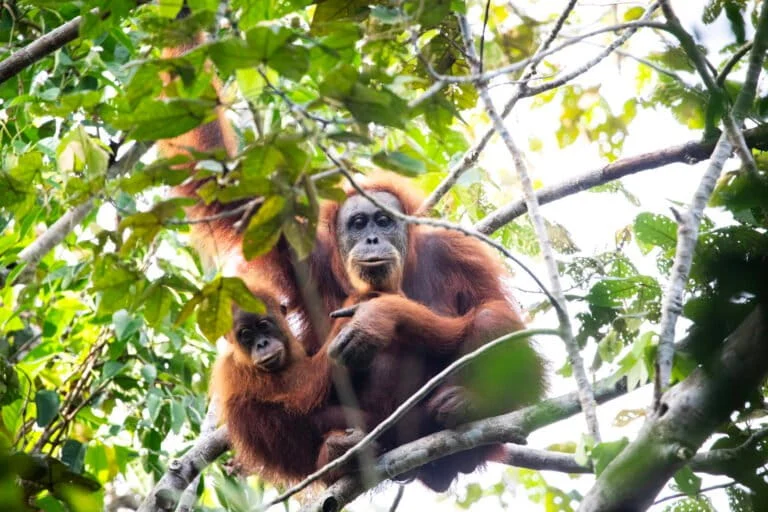
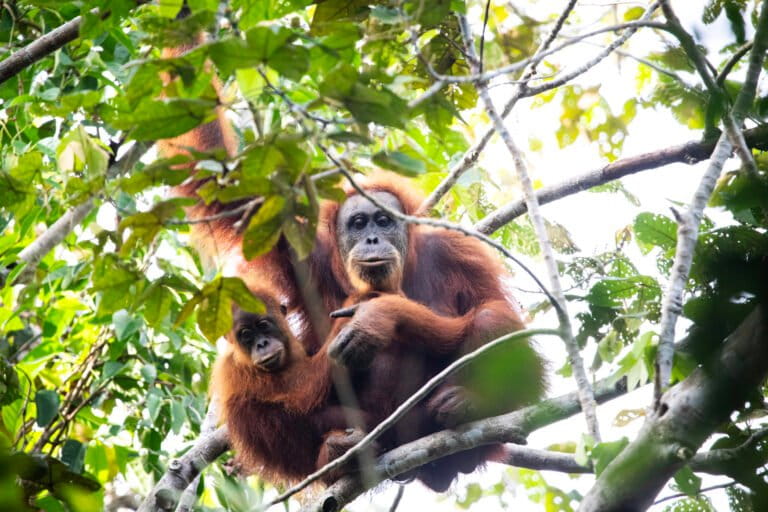
Environmental advocates and researchers, such as those from Mongabay Indonesia, have emphasized that the loss of nesting sites can lead to sleep deprivation and increased stress in orangutan populations, which in turn lowers their immune systems and reproductive success. The presence of a mother and her offspring in a nest—as seen in recent sightings in the Lumut Maju forest of North Tapanuli—is a sign of a healthy, functioning ecosystem. Protecting these habitats is not just about saving a species; it is about preserving a 14-million-year-old tradition of arboreal architecture.
Analysis: The Link Between Rest and Innovation
The study of orangutan nests offers a profound lesson in the relationship between physical environment and mental capacity. The ability to build a stable, comfortable, and protected home every single night requires a "cognitive map" of the forest and a technical understanding of materials. This "innovation of comfort" likely provided the evolutionary foundation for the eventual human development of permanent shelters and beds.
Furthermore, the social aspect of this behavior—where young orangutans spend years observing and mimicking their mothers’ nest-building techniques—highlights the importance of cultural transmission. If the forests disappear, the "knowledge" of how to build these complex structures could be lost, representing a cultural extinction alongside a biological one.
In conclusion, the nightly labor of the orangutan is far more than a survival tactic. It is a sophisticated expression of intelligence that bridges the gap between the animal kingdom and human civilization. While we may never fully know what an orangutan sees when it closes its eyes in a nest of woven branches and soft leaves, the complexity of their beds and the sharpness of their minds suggest a rich internal world. Behind their closed eyes lies a consciousness that, in its need for rest, safety, and perhaps even dreams, is not so different from our own. Protecting the silent, swaying "bedrooms" of the canopy is essential to ensuring that one of nature’s greatest thinkers continues to have a place to rest and dream for millions of years to come.
