
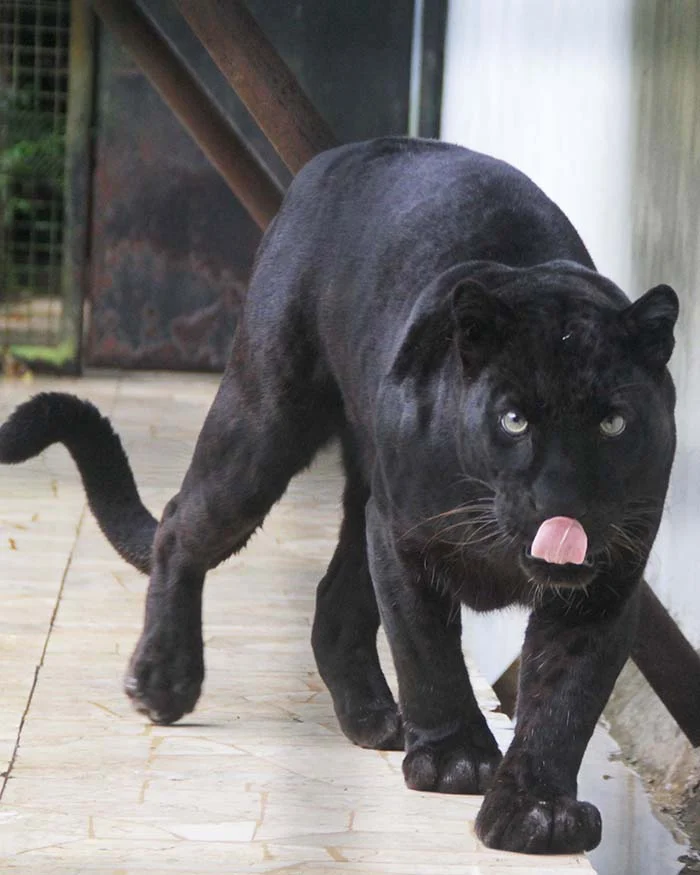
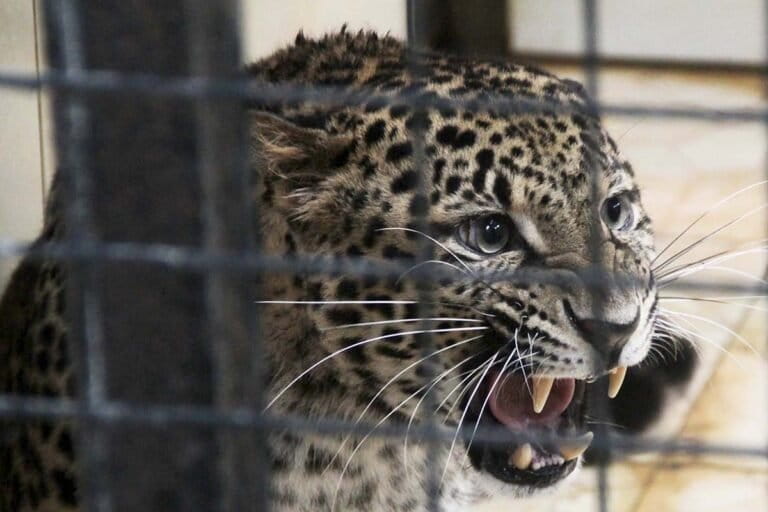
The successful documentation of the Javan leopard (Panthera pardus melas) in the forests of Mendolo Village, located in the Lebakbarang District of Pekalongan Regency, Central Java, marks a significant milestone in regional conservation efforts. This visual confirmation, captured by a camera trap installed by local farmer Rohim—a member of the Paguyuban Petani Muda Mendolo—validates long-standing anecdotal accounts from local residents regarding the presence of this elusive, critically endangered predator. The discovery serves as empirical evidence of the biological importance of the Mendolo forest ecosystem and provides a focal point for ongoing discussions regarding habitat preservation, wildlife corridors, and the role of community-led conservation in modern Indonesian forestry.
Chronology of the Discovery
The effort to document the presence of the Javan leopard began as a community-driven initiative. For years, farmers and forest users in Mendolo had reported physical evidence of the species, such as distinct claw marks on tree trunks and scat samples, yet lacked concrete visual proof. Rohim, acting on behalf of the local agricultural collective, initiated a monitoring project by deploying a camera trap in a strategic location within the forest interior.
After approximately one month of continuous monitoring, the camera trap yielded high-resolution footage of the leopard, effectively ending the period of speculation. The capture of these images in September 2026 transformed local oral history into scientific data. According to the records, the device successfully recorded the presence of the leopard, providing researchers and local stakeholders with the first definitive confirmation of the predator’s residency in this specific corridor of the Pekalongan highland forests.
The Javan Leopard: A Symbol of Ecological Health
The Javan leopard is the only extant large cat species on the island of Java. Classified as "Critically Endangered" by the IUCN, its population has suffered drastically due to habitat fragmentation, illegal hunting, and the depletion of its natural prey base. The Javan leopard acts as an apex predator, and its presence is widely considered a "bio-indicator"—a living barometer of the health and stability of the forest ecosystem.
The ecosystem in Mendolo is characterized by its connectivity to broader landscapes, including the Gunung Lumping area. The survival of the leopard is intrinsically linked to the availability of sufficient prey, such as muntjacs, wild boar, and smaller mammals, as well as the presence of undisturbed canopy cover. The recent footage confirms that the Mendolo forest still possesses the structural integrity required to support such a high-trophic-level predator, which necessitates a substantial home range to hunt and reproduce.
Expert Analysis and Biodiversity Context
Kurnia Ahmadin, a biodiversity researcher with the conservation group SwaraOwa, emphasized that the sighting is both a positive indicator and a warning signal. During his assessment of the site on September 12, 2026, Ahmadin noted that the persistence of the leopard in Mendolo is contingent upon the entire food web. If the leopard is present, it implies that lower-tier species—the prey animals—are still thriving. However, this delicate balance is currently under pressure from several anthropogenic factors.
The primary concern raised by researchers is the impact of habitat fragmentation. In the context of Central Java, where forest cover is often interrupted by agricultural expansion, road infrastructure, and rural settlement, the leopard faces the constant threat of "islandization." When forests become disconnected, populations of large mammals become genetically isolated, increasing the risk of inbreeding and local extinction. Furthermore, the encroachment of human activity into these corridors, particularly through the expansion of access roads, disrupts the movement of arboreal species like the Javan gibbon (Owa), which shares the same habitat.
The Role of Community-Led Conservation
The case of Mendolo Village highlights a shift in the philosophy of conservation in Indonesia. Historically, conservation was often perceived as a top-down mandate imposed by government agencies. In Mendolo, however, the local community has taken a proactive role. Since 2022, the group SwaraOwa has worked in collaboration with the villagers to transition from extractive forest practices to sustainable management.
Notably, some of the younger members of the community, who were previously engaged in hunting or the collection of songbirds, have been integrated into the conservation monitoring program. This shift is rooted in a shared realization: the decline of wildlife—initially observed through the scarcity of birds—was a direct precursor to the degradation of the forest itself. By monitoring the leopard, these local farmers are effectively protecting their own livelihoods, as the leopard serves as a protector of the forest ecosystem upon which their agricultural activities (such as coffee and honey production) depend.
Threats and Mitigation Strategies
Despite the positive news of the sighting, the report from Mendolo underscores critical vulnerabilities. Illegal night hunting remains a pervasive threat. When hunters target primary game, the depletion of the prey base forces predators to shift their behavior, occasionally leading to human-wildlife conflict, such as the predation of livestock. To date, no such conflict has been reported in Mendolo, a testament to the current health of the ecosystem and the vigilance of the community.
However, the risk remains. Experts suggest that to ensure the long-term survival of the Javan leopard in this region, the following measures are essential:
- Corridor Protection: Maintaining and restoring canopy connectivity between Mendolo and surrounding forest blocks is paramount to allow for the genetic exchange of leopard populations.
- Law Enforcement: Strengthening patrols against illegal hunting, particularly at night, to protect both the leopards and their prey.
- Sustainable Land Use: Encouraging agroforestry practices that mimic natural forest structures, thereby providing buffers for wildlife while maintaining agricultural output for the local population.
- Research and Monitoring: Scaling the camera trap network to estimate population density and identify critical movement patterns of the leopards.
The Path Forward
The discovery in Mendolo is not merely a localized event but a microcosm of the broader challenges facing Javanese biodiversity. The fact that a farmer’s camera trap could provide such significant data underscores the untapped potential of "citizen science." By empowering local communities, conservationists can gain eyes on the ground in areas that are often inaccessible to formal research teams.
Looking ahead, the collaboration between the villagers of Mendolo and organizations like SwaraOwa serves as a model for landscape-level conservation. The survival of the Javan leopard requires a landscape that can accommodate both human development and wild spaces. As the forest continues to provide for the people, and the people continue to monitor the forest, the hope is that the leopard—the ghost of the Javanese wilderness—will remain a permanent fixture of the Mendolo landscape.
The government and relevant stakeholders, including the forestry department and local environmental agencies, are expected to utilize this data to formalize protection status for the area, ensuring that development projects—particularly road expansions—undergo rigorous environmental impact assessments. The goal is to avoid the "fragmentation trap," ensuring that the Mendolo forest remains a viable, interconnected habitat rather than a shrinking refuge.
Ultimately, the Javan leopard’s presence in Pekalongan is a testament to the resilience of nature. It serves as a reminder that biodiversity is not solely the responsibility of policymakers, but a collective effort involving those who live on the front lines of the forest edge. With continued monitoring and community support, the Mendolo forest can serve as a sanctuary for one of the most enigmatic predators in the world, securing its place in the ecological future of Java.
