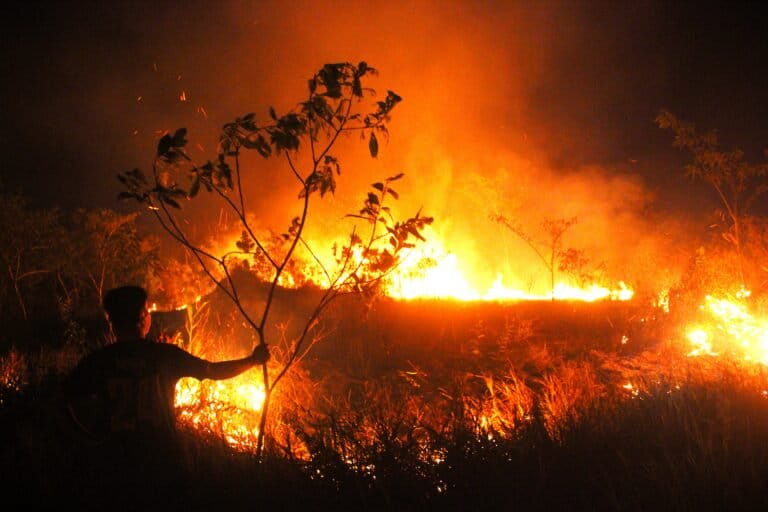
The escalating crisis of forest and land fires (karhutla) in Indonesian Borneo has reached a critical tipping point, posing an existential threat to the island’s orangutan population. As vast swaths of peatland and tropical forest succumb to flames, the primary victims are the critically endangered Pongo pygmaeus, whose habitat is being systematically erased. Between June and early September 2026, satellite data revealed a staggering 124,655 fire hotspots across Kalimantan, with an alarming 88.6% of these incidents occurring directly within the established ranges of wild orangutans.
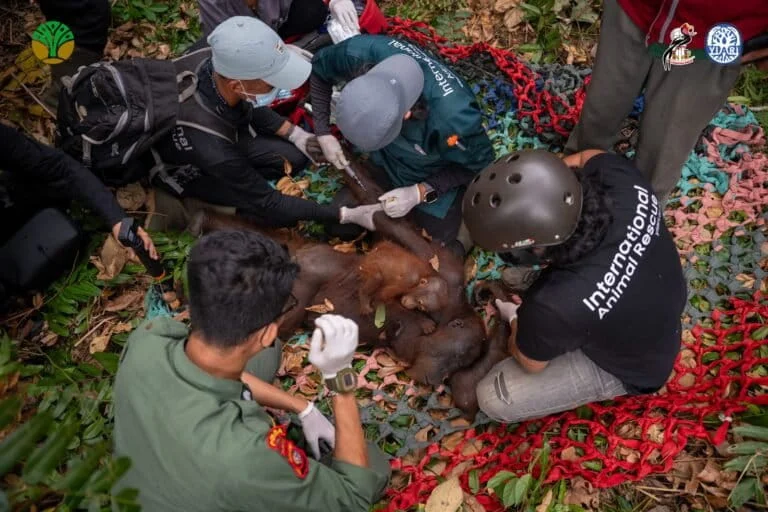
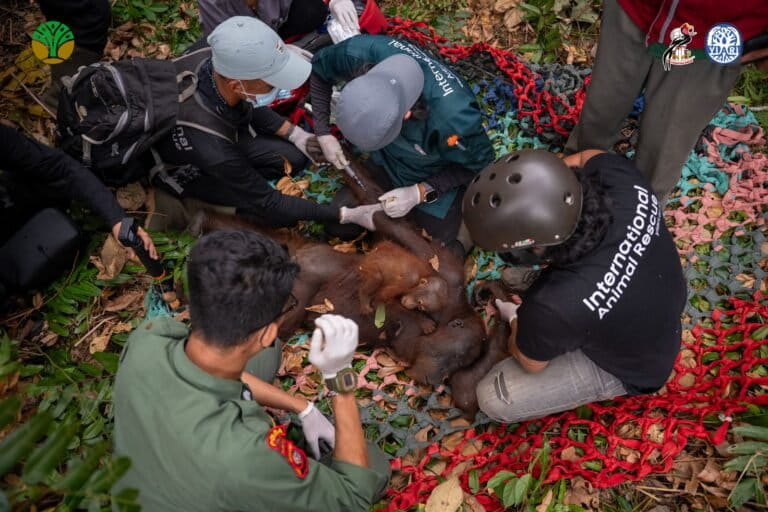
This environmental catastrophe has forced conservation groups, including the Yayasan Inisiasi Alam Rehabilitasi Indonesia (Yiari), into a state of emergency. Operations on the ground have shifted from long-term monitoring to desperate, life-saving rescue missions. The case of Sampurna, an orangutan rescued in the village of Sungai Awan Kiri, Ketapang, West Kalimantan, serves as a poignant symbol of the wider tragedy. Sampurna is but one of nine orangutans rescued by Yiari teams in less than a month, a statistic that underscores the intensity of the current fire season.
A Chronology of Environmental Devastation
The surge in fire activity began modestly in June, but quickly spiraled out of control as the dry season intensified. According to data provided by Geopix, which analyzed information from the Indonesian Ministry of Forestry’s SiPongi+ system, the month of June recorded 3,493 hotspots, of which 55.7% were located in orangutan habitats. By July, despite a slight decrease in total count to 1,876, the proportion of fires within these protected areas rose to 75.1%.
The situation reached a catastrophic level in August. With the onset of peak dry conditions, 63,615 hotspots were detected across Kalimantan, with 57,094—or 89.8%—striking the very forests that orangutans rely on for survival. The trend did not abate as September began. In the first five days of the month alone, 55,671 hotspots were logged, nearly matching the entirety of the August tally. This rapid acceleration suggests that the fire management infrastructure is being overwhelmed, leaving wildlife and local communities to bear the brunt of the disaster.
The Human-Wildlife Conflict Cycle
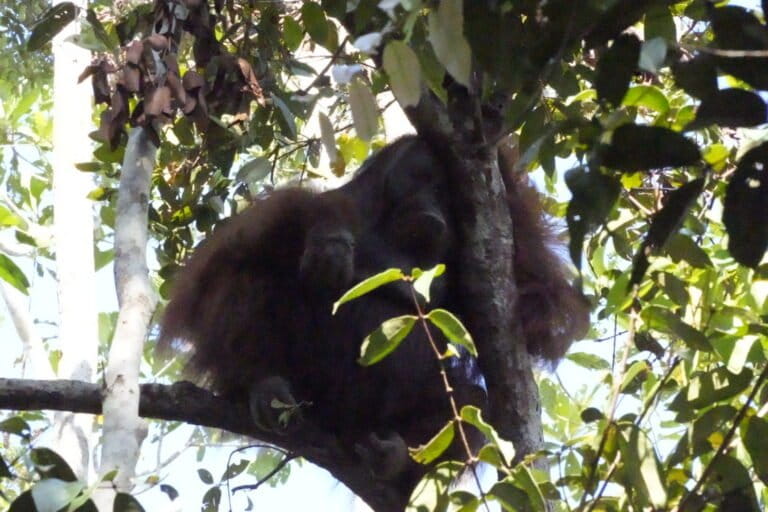
The destruction of these forests creates a ripple effect that extends beyond biodiversity loss. As forest fragmentation occurs, orangutans are stripped of their natural food sources and nesting sites. Driven by hunger and the encroaching heat, these primates are often pushed into agricultural areas or human settlements.
Silverius Oscar Unggul, Chairman of Yiari, emphasizes that the tragedy is cyclical and self-defeating. "The practice of land clearing through fire, when left uncontrolled, inevitably destroys the habitat," Unggul stated. "When orangutans are displaced, they enter human-tended crops, leading to direct conflict with residents. This creates a scenario where both the local farmers, who suffer economic losses from crop destruction, and the orangutans, who face starvation or death, become victims of the same unsustainable practices."
The socio-economic burden on the state is immense. Government resources are currently stretched thin, balancing the requirements for active fire suppression, wildlife rescue operations, medical triage for injured animals, and the eventual, costly process of habitat restoration.
Subspecies Vulnerability: The Pongo pygmaeus wurmbii Crisis
Analysis of the hotspot data indicates that not all orangutan populations are affected equally. The subspecies Pongo pygmaeus wurmbii, which inhabits the central regions of the island, has been hit the hardest. From June through early September, a total of 99,717 hotspots were recorded within the range of P. p. wurmbii, compared to 6,826 for P. p. pygmaeus and 3,852 for P. p. morio.
Geographically, Central Kalimantan stands out as the epicenter of the crisis, having recorded 52,703 hotspots during the reporting period. West Kalimantan followed closely with 51,629. The intensity of these fires in Central Kalimantan is particularly concerning for the survival of the wurmbii subspecies, which faces a precarious future if its remaining core habitats continue to be fragmented by repeated burning.
Coordinated Rescue and Medical Intervention
In response to the escalating situation, the Ministry of Forestry, through the Balai Konservasi Sumber Daya Alam (BKSDA) of West Kalimantan, has partnered with NGOs like Yiari to launch intensive rescue efforts. To date, this collaboration has successfully evacuated 23 orangutans. Beyond the great apes, the rescue teams have also saved numerous other species affected by the smoke and flames, including nine pangolins, three slow lorises, a proboscis monkey, a civet, and a gray langur.
The teams remain on 24-hour alert, conducting continuous monitoring of fire-affected areas. However, experts warn that rescue is a temporary bandage on a gaping wound. The trauma caused by displacement, coupled with respiratory issues from prolonged exposure to toxic haze, often results in long-term health complications for these animals, even after they are safely relocated.
Beyond the Flames: Policy and Enforcement Requirements
The current crisis has renewed calls for systemic change in forest management and environmental law enforcement. Critics argue that the existing regulatory framework is insufficient to deter the recurring practice of burning for land conversion, whether by smallholders or large-scale industrial interests.
Annisa Rahmawati, a Senior Wildlife Campaigner, argues that once the immediate crisis is contained, the government must prioritize a "no-compromise" approach to legal accountability. "After this crisis ends, there is a decades-old homework assignment that remains unfinished: breaking the cycle of forest fires through firm law enforcement against any corporation or individual found negligent in preventing these fires," she asserted.
A Call for Data-Driven Conservation
The scientific community is also urging the Indonesian government to conduct a comprehensive post-fire survey of both habitat quality and population density. The current Population and Habitat Viability Assessment (PHVA) for Bornean orangutans is now approximately a decade old, and experts believe it no longer reflects the reality of the post-fire landscape.
Key recommendations for the government include:
- Emergency Action Plan: Developing an immediate recovery plan that includes habitat restoration and the protection of wildlife corridors.
- Updated PHVA: Conducting a nationwide survey to update the PHVA, providing a baseline for new conservation policies.
- Strict Monitoring: Utilizing advanced remote sensing technology to identify high-risk zones before they ignite, rather than reacting only after smoke is detected.
- Accountability Mechanisms: Strengthening the investigative capacity to hold parties responsible for fire outbreaks, regardless of their status or economic influence.
The Bornean orangutan, listed as Critically Endangered on the IUCN Red List, is fighting for its survival. As the island continues to endure extreme heat and fire, the loss of these forests does not just represent the destruction of timber and land; it represents the silencing of a keystone species and the permanent loss of ecological integrity for the entire region. The urgency of the current situation cannot be overstated; for the orangutans of Kalimantan, the time for decisive action is not in the next fiscal quarter—it is now.