
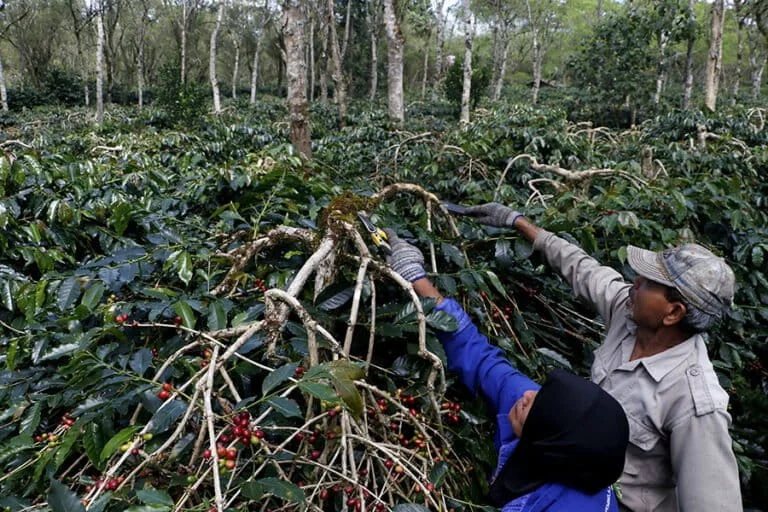
For billions of people across the globe, the day does not truly begin until the first sip of coffee. This morning ritual, characterized by the comforting aroma of roasted beans, is the final stage of a complex and increasingly fragile agricultural journey. Behind every cup lies the labor of millions of smallholder farmers who begin their work at dawn, meticulously tending to a crop that requires a precise and delicate balance of temperature, rainfall, and humidity. However, this environmental equilibrium is rapidly unraveling. The escalating climate crisis is no longer a distant theoretical threat; it is actively reshaping the geography of coffee cultivation, casting a shadow over the future of the industry in Indonesia and across the world’s "Bean Belt."
Scientific projections regarding the impact of global warming on coffee are increasingly dire. Within the next 25 years, research estimates suggest that approximately 80% of the land currently used to grow Arabica coffee—the variety prized for its complex flavor profiles—will be severely impacted by climate change. Both Arabica and its hardier cousin, Robusta, are facing a projected 50% decline in productivity as suitable cultivation areas vanish. Some wild coffee species, which serve as critical genetic reservoirs for breeding resilient varieties, are at risk of extinction, unable to adapt to the unprecedented pace of environmental shifts.
The Indonesian Experience: A Paradox of Expansion and Decline
Indonesia, one of the world’s leading coffee producers, offers a sobering case study of this ecological disruption. In the Enrekang Regency of South Sulawesi, a region famed for its high-quality beans, a troubling trend has emerged. Between 2021 and 2023, coffee production in the area plummeted by 8.8%. Paradoxically, this decline occurred even as the total land area dedicated to coffee plantations increased by approximately 6.7%. This data underscores a harsh reality: expanding the footprint of agriculture cannot compensate for a climate that no longer supports the crop’s biological needs.
During this same period, Enrekang witnessed a drastic reduction in annual rainfall. Coffee is a notoriously sensitive plant; even minor fluctuations in soil moisture or ambient humidity can derail the delicate process of flowering and fruit set. When the rains fail or arrive at the wrong time, the coffee cherries—the fruit containing the beans—fail to develop properly, leading to "empty" harvests. Furthermore, the rising temperatures have invited new challenges in the form of pests and diseases. Warmer weather accelerates the life cycles of insects like the coffee berry borer and facilitates the spread of fungal infections such as coffee leaf rust (Hemileia vastatrix), which can decimate entire estates.
The crisis manifests differently across Indonesia’s diverse archipelago. In the province of Jambi, farmers of Liberica coffee—a variety known for its tolerance of peatlands—are facing a more insidious threat: saltwater intrusion. As sea levels rise and weather patterns shift, brackish water is infiltrating the coastal soil, causing the coffee trees to wither and die slowly. This highlights that the climate crisis is not merely a matter of heat; it is a multifaceted assault on the soil chemistry and hydrology that have supported coffee for centuries.
A Chronology of Vulnerability and Economic Pressure
The current crisis is the culmination of decades of incremental environmental stress. To understand the gravity of the situation, one must look at the timeline of coffee’s climatic sensitivity:
- 1990s–2000s: Initial studies began to note the migration of coffee pests to higher altitudes as temperatures rose, signaling the beginning of the "thermal squeeze" for Arabica farmers.
- 2010s: Severe outbreaks of coffee leaf rust in Central and South America served as a global wake-up call regarding the link between erratic weather and crop disease.
- 2020–2023: The International Coffee Organization (ICO) reported a global production dip of 1.7%, even as demand for the beverage continued to climb by 2% to 2.5% annually.
- 2024 and Beyond: Projections indicate that without massive intervention, the "Coffee Paradox"—high demand coupled with shrinking supply—will lead to extreme price volatility and the potential disappearance of specialty origins.
This economic imbalance is felt most acutely at the base of the supply chain. Globally, approximately 125 million people depend on coffee for their livelihoods. Roughly 25 million of these are smallholder farmers who produce 80% of the world’s coffee. In a staggering display of economic inequality, many of these farmers receive less than one U.S. dollar for every half-kilogram of coffee they sell—a price that often fails to cover the rising costs of climate adaptation, such as irrigation systems or organic fertilizers.
The Human Toll: Gender Disparity and Farmer Realities
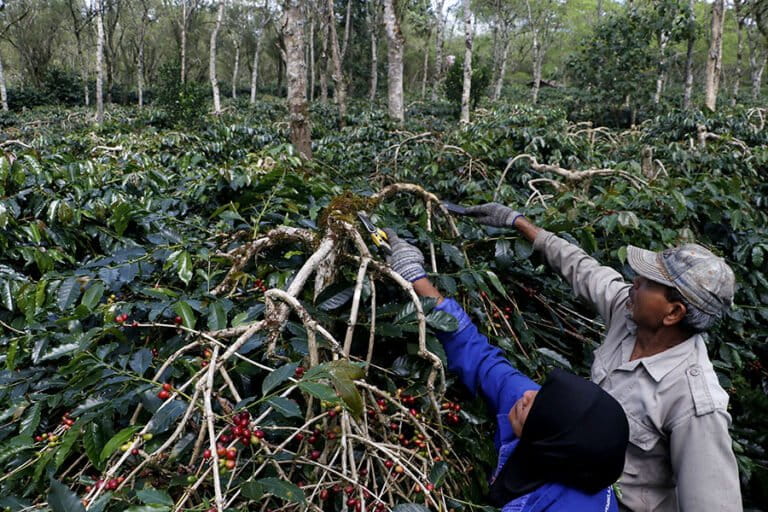
The coffee industry is heavily supported by female labor, which accounts for nearly 70% of the workforce in cultivation and harvesting. Despite their central role, women face significant systemic barriers, with only 20% to 30% holding leadership roles or owning the land they toil upon. As yields drop and incomes vanish due to climate-induced crop failures, women and children in farming communities are often the first to suffer from food insecurity and reduced access to education.
The stories from the field in Indonesia put a human face on these statistics. Agus, a veteran coffee farmer in Enrekang, reports that his recent harvests have been cut by half. "The weather is no longer something we can read," he notes, echoing the sentiments of many who once relied on traditional ecological knowledge to time their planting. Nursam Arifuddin, a Robusta farmer, describes a similar struggle with unpredictable seasons that leave the trees confused, flowering out of sync with the rains.
This instability ripples through the entire "downstream" economy. In Makassar, Agil Valentino, a local coffee shop owner, has begun to feel the pinch. He reports increasing difficulty in sourcing consistent supplies of Enrekang beans. For a small business owner, the scarcity of a signature product is a significant threat to customer loyalty and operational costs. "We have regular customers who come specifically for these beans, but if the farmers can’t produce, we are forced to look elsewhere or raise prices," Valentino explains.
Analysis of Implications: A Structural Shift in the Global Market
The implications of these trends suggest a fundamental shift in the global coffee market. If 80% of Arabica production is indeed compromised by 2050, coffee may transition from a ubiquitous daily commodity to a luxury item accessible only to the wealthy.
From a market perspective, the "supply-demand gap" identified by the ICO is likely to trigger several structural changes:
- Variety Shifting: Roasters may increasingly blend Arabica with Robusta or seek out "forgotten" species like Coffea stenophylla, which shows higher heat tolerance.
- Geographic Migration: Coffee cultivation will likely move to higher latitudes or higher altitudes, potentially leading to further deforestation as farmers clear virgin forests in cooler mountain regions to replace lost lowland plots.
- Technological Dependency: Adaptation will require significant investment in "climate-smart" agriculture, including drought-resistant hybrids and precision irrigation. However, without financial reform, smallholders will be unable to afford these technologies, leading to further consolidation of the industry by large corporate plantations.
Official Responses and the Path Forward
Government agencies and international bodies have begun to react, though many experts argue the pace of action is insufficient. The Indonesian government has promoted social forestry programs and encouraged the use of shade trees—a practice known as agroforestry—to lower temperatures within coffee groves and improve biodiversity. Organizations like the Specialty Coffee Association (SCA) and World Coffee Research (WCR) are also funneling resources into genomic research to identify climate-resilient traits in the coffee DNA.
However, technical solutions alone are not enough. There is a growing consensus among policy analysts that the global pricing mechanism for coffee must be overhauled. If farmers are to invest in the survival of the crop, they must be paid a living wage that accounts for the environmental risks they bear. The current "C-price" (the global benchmark for commodity coffee) rarely reflects the true cost of sustainable production in a changing climate.
The crisis of coffee is, in essence, a microcosm of the broader climate emergency. It demonstrates how a globalized industry, built on the labor of the vulnerable and the stability of the natural world, can be pushed to the brink by environmental negligence. As the world warms, the morning cup of coffee serves as a bittersweet reminder: the flavors we cherish are inextricably linked to the health of the planet. Without radical intervention in both climate policy and agricultural economics, the "bean belt" may soon become a "rust belt," leaving millions of farmers in poverty and the world’s most popular beverage a memory of a more stable era.

