
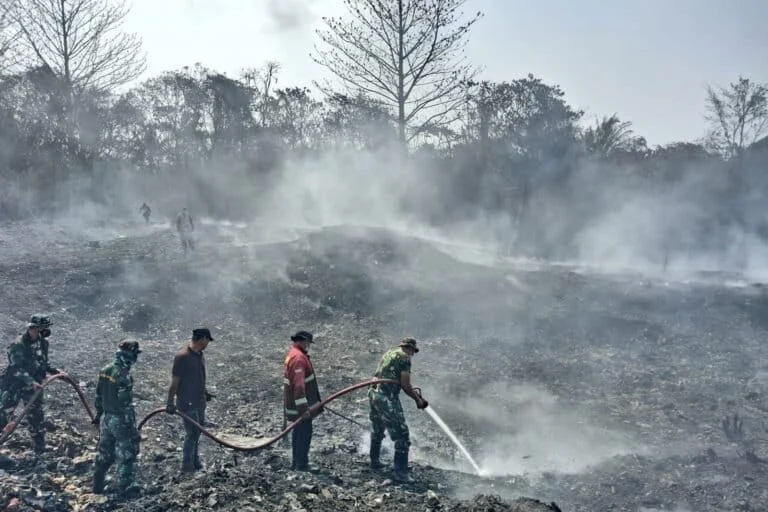
The province of North Maluku is currently grappling with a severe environmental and humanitarian crisis as a series of devastating forest and land fires have swept across its islands. From the vast sago forests of Leleseng in North Halmahera to the clove-rich plantations of Taliabu, the scale of destruction recorded between September and October 2026 has surpassed historical precedents. As flames consume critical food sources and damage vital watersheds, local communities and environmental experts are calling for an immediate overhaul of the region’s disaster mitigation strategies.
The crisis, characterized by an unprecedented surge in hotspots, has exposed deep vulnerabilities in the regional government’s emergency response infrastructure. With thousands of hectares of productive land turned to ash, the socio-economic repercussions for the local populace—many of whom rely on subsistence farming and small-scale agroforestry—are projected to be long-lasting and profound.
A Chronology of the 2026 Fire Surge
The trajectory of the fire crisis in North Maluku did not emerge overnight. Data from the Ministry of Forestry’s SiPongi monitoring system provides a clear, concerning timeline of the escalation. In June 2026, the region recorded 52 hotspots, a figure that remained relatively manageable. However, as the dry season intensified, the number of detected anomalies skyrocketed. By September, the figure had surged to 3,113, and it continued to climb throughout October, reaching 3,696 detections.
These figures, which exclude consistent thermal anomalies from industrial zones and active volcanoes, represent a significant departure from standard seasonal trends. While a brief period of precipitation in mid-October offered a fleeting respite, the reprieve was short-lived. By October 20, the number of hotspots began to rise once again, with the regions of North Wasile in East Halmahera and Northwest Taliabu emerging as the primary epicenters of the disaster.
For elders like Lewi Persaji, the head of the local adat (customary) community in Leleseng, the current situation is unprecedented. Persaji, who recalls a severe nine-month drought in the 1990s, notes that the current devastation far outweighs any historical fire event he has witnessed in his lifetime. The loss of approximately 100 hectares of sago forests—the primary staple crop and livelihood for the community—represents a direct threat to the survival of the village.
The Human and Economic Cost
The impact of these fires extends far beyond the immediate loss of timber or foliage; it strikes at the core of the regional economy. In the village of Nggele on Taliabu Island, local government records indicate that 132.5 hectares of land have been decimated, with 8,381 clove trees—a significant cash crop—lost to the flames. Similar scenes have unfolded in Buli, East Halmahera, where fire has consumed plantations of pineapple, cloves, and nutmeg.
Said Marsaoly, a representative from the Salawaku Institute, has highlighted the gendered dimension of this disaster. In many of these communities, women are the primary operators of the local produce trade, particularly in the sale of pineapples. The destruction of these crops eliminates their independent income streams, forcing families into sudden economic precarity. Beyond the loss of agriculture, Marsaoly expressed grave concerns regarding the degradation of local watersheds. The destruction of forest cover surrounding natural springs threatens the long-term water security of residents, a secondary impact that could prove more costly than the initial fire damage.
Infrastructure Challenges and Response Limitations
The response to the crisis has been hampered by a confluence of logistical failures and geographical obstacles. Fehby Alting, the head of the Regional Disaster Management Agency (BPBD) of North Maluku, has acknowledged that the agency is struggling against significant handicaps. "The lack of water sources, insufficient tanker trucks, and a shortage of high-capacity water pumps have severely limited our ability to suppress the flames," Alting stated.
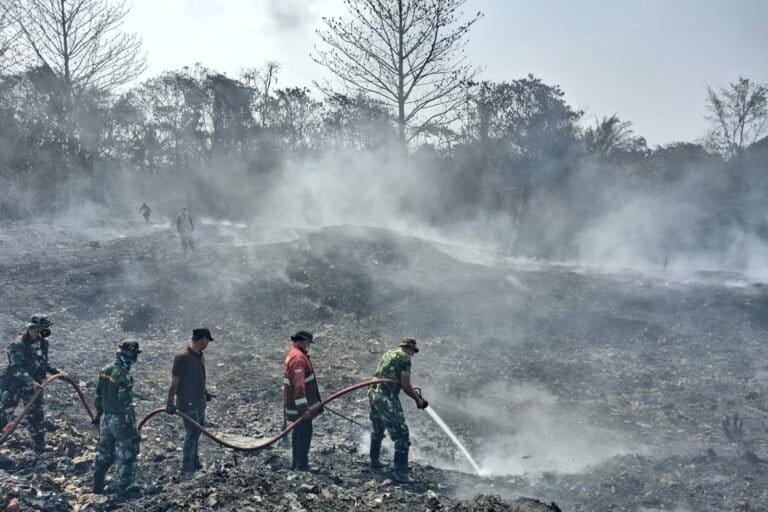
Furthermore, the rugged, mountainous terrain of North Maluku makes ground-based firefighting efforts perilous and often ineffective. Coupled with high-velocity winds that have fanned the flames across difficult-to-reach ridges, the BPBD has been forced to recommend aerial firefighting measures. While the government did conduct cloud seeding operations for weather modification in September and October, the effectiveness of these efforts remains under formal evaluation, as they have yet to produce the sustained rainfall necessary to quench the fires entirely.
Socio-Political Perspectives and Expert Analysis
The crisis has sparked a debate regarding the proactive nature of government intervention. Herman Oesman, a sociologist at the University of Muhammadiyah North Maluku, argues that the early data from June should have served as a clear warning sign. "The steady rise in hotspots starting in June provided a clear indicator of what was to come. There should have been a much more aggressive, coordinated, and early response from the provincial government," Oesman noted.
The environmental watchdog WALHI (Indonesian Forum for the Environment) has taken a more critical stance. Astuti N. Kilwouw, Executive Director of WALHI North Maluku, has pointed to the encroachment of fires into the Aketajawe Lolobata National Park as a failure of conservation management. Kilwouw has formally requested that the government conduct an open and transparent investigation into the origins of the fires. Specifically, she is calling for the cross-referencing of satellite hotspot data with land concession maps and reports of new land clearing.
"We need to know whether these fires are purely climatic or if they are being fueled by human activity related to land clearing," Kilwouw said. "The government must provide a mechanism for citizens to report suspicious activity and ensure that data is transparently shared with the public."
Environmental Implications and Future Resilience
The fires in North Maluku are symptomatic of a broader regional vulnerability to climate variability, exacerbated by land-use changes. When forests are cleared or burned, the soil loses its capacity to retain water, leading to increased runoff and the drying up of local springs. In the long term, this cycle of degradation risks turning fertile agroforestry zones into arid, unproductive land.
For the residents of Leleseng and Buli, the immediate priority is survival, but the long-term challenge is restoration. Recovering a mature sago grove or a productive clove plantation is not a matter of weeks, but of years or decades. The loss of these resources threatens to force a demographic shift, as younger generations may be forced to migrate to urban centers in search of work if the agricultural base of their home villages cannot be rehabilitated.
As the smoke begins to clear in some areas, the focus must shift to a more resilient framework for the future. This includes:
- Enhanced Early Warning Systems: Integrating real-time satellite monitoring with local village-level reporting to identify fire starts before they reach a critical mass.
- Resource Decentralization: Equipping village-level disaster response teams with basic, specialized firefighting equipment, reducing reliance on centralized, slow-moving provincial assets.
- Restoration Programs: Prioritizing the reforestation of watersheds to ensure that the water security of the interior is not permanently compromised.
- Policy Review: Investigating the intersection of industrial land concessions and the frequency of fire events to ensure that corporate interests are not prioritizing profit at the expense of local environmental safety.
The disaster in North Maluku serves as a stark reminder of the fragile balance between human livelihood and the natural environment. As the region moves toward the end of the year, the combination of environmental damage, economic loss, and the strain on public infrastructure will require a sustained and multi-faceted recovery effort. Whether this event acts as a catalyst for systemic change in disaster management or remains a recurring seasonal tragedy will depend on the willingness of the provincial and national governments to address the root causes of these fires with the transparency and urgency that the situation demands.

