
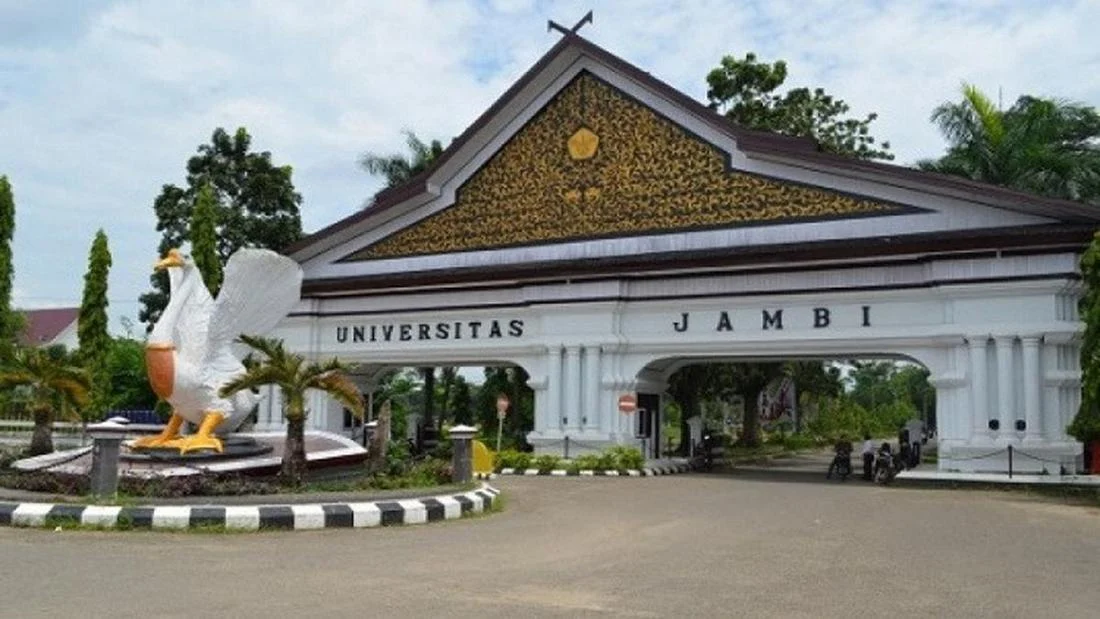
Universitas Jambi, one of the prominent state higher education institutions in Sumatra, has officially extended the registration period for its 2026 Independent Admission Selection (Seleksi Mandiri) based on the National Selection Test (UTBK) values or the Western Region State University Independent Selection (SMMPTN-Barat) scores. Prospective students who have participated in the previous national entrance exams now have a final window of opportunity to secure a seat at the university, with the application portal remaining active until July 26, 2026. This admission pathway is particularly significant this year as the university introduces a tiered Institutional Development Contribution (IPI) structure, which includes several programs with a zero-rupiah fee, aimed at increasing accessibility for diverse socio-economic backgrounds.
The admission process is conducted entirely online through the university’s dedicated portal at pmb.unja.ac.id. By utilizing existing scores from the UTBK-SNBT or the SMMPTN-Barat 2026, the university has streamlined the selection process, removing the need for additional entrance examinations. This strategy is designed to reduce the physical and psychological burden on applicants while maintaining a merit-based selection criteria that relies on standardized national testing data.
Chronology and Key Deadlines for the 2026 Admission Cycle
The 2026 independent selection cycle at Universitas Jambi (Unja) follows a rigorous timeline designed to ensure that the transition into the new academic year remains on schedule. Following the conclusion of the national-level SNBP and SNBT tracks, the independent path serves as the final gateway for thousands of aspiring students.
- Registration Period: Open now through July 26, 2026.
- Data Verification and Scoring: Conducted immediately following the closure of the registration window, where the university’s academic board validates the uploaded UTBK and SMMPTN-Barat certificates.
- Announcement of Results: Scheduled for July 28, 2026.
- Registration and Document Submission: Successful candidates will be required to complete their administrative registration through the official portal at regis.unja.ac.id starting in late July.
This tight turnaround between the application deadline and the announcement of results highlights the university’s shift toward a data-driven admission system that leverages existing national databases to expedite the enrollment process.
Strategic Mechanism: Selection Based on National Standardized Scores
The decision to use UTBK and SMMPTN-Barat scores for the independent track is a strategic move by the Universitas Jambi leadership. By adopting this mechanism, Unja aligns itself with the national "Merdeka Belajar" (Freedom to Learn) initiative, which emphasizes efficiency and fairness in education. Applicants are required to pay a registration fee of Rp 325,000, which grants them the ability to select up to two study programs.
The core requirement involves the digital submission of score certificates. This ensures that only those who have undergone the rigorous national testing environment are eligible, thereby maintaining the academic quality of the incoming cohort. For many students who narrowly missed the cutoff for the national SNBT selection, this independent path offers a second chance to enter a high-quality state university using their existing performance metrics.
Institutional Development Contribution (IPI) and Faculty Quotas
One of the most critical aspects of the 2026 independent selection is the transparency regarding the Institutional Development Contribution (IPI), commonly known as "uang pangkal." According to Official Announcement No. 614/DST/UN21/TM.00/2026, signed by the Vice Rector for Academic Affairs, the IPI varies significantly across the 71 available study programs. Notably, Unja has designated several programs with an IPI of Rp 0, a move intended to support vocational and specific scientific fields that are vital for regional development.
Faculty of Economics and Business
The Faculty of Economics and Business (FEB) remains one of the most competitive divisions within Unja. For the 2026 cycle, the IPI for diploma programs is set at a relatively affordable rate compared to bachelor’s degrees.
- D3 Accounting: IPI Rp 1,000,000 (Quota: 34)
- D3 Marketing Management: IPI Rp 1,000,000 (Quota: 38)
- D3 Taxation: IPI Rp 1,000,000 (Quota: 20)
- D4 Regional Finance: IPI Rp 2,000,000 (Quota: 28)
- D4 Government Management: IPI Rp 2,000,000 (Quota: 27)
- S1 Accounting: IPI Rp 10,000,000 (Quota: 15)
- S1 Digital Business: IPI Rp 5,000,000 (Quota: 4)
- S1 Islamic Economics: IPI Rp 10,000,000 (Quota: 36)
- S1 Development Economics: IPI Rp 10,000,000 (Quota: 24)
- S1 Entrepreneurship: IPI Rp 5,000,000 (Quota: 9)
- S1 Management: IPI Rp 10,000,000 (Quota: 12)
Faculty of Law and Social Sciences
The Faculty of Law offers programs that are traditionally high in demand, reflected in the steady IPI across its bachelor’s offerings.
- S1 Legal Studies: IPI Rp 7,000,000 (Quota: 30)
- S1 Government Studies: IPI Rp 7,000,000 (Quota: 10)
- S1 Political Science: IPI Rp 7,000,000 (Quota: 26)
Faculty of Medicine and Health Sciences
As expected, the medical and health programs carry the highest IPI, reflecting the high cost of clinical facilities and laboratory equipment required for these disciplines.
- S1 Medicine: IPI Rp 200,000,000 (Quota: 7)
- S1 Pharmacy: IPI Rp 17,000,000 (Quota: 6)
- S1 Nursing: IPI Rp 20,000,000 (Quota: 53)
- S1 Public Health: IPI Rp 10,000,000 (Quota: 32)
- S1 Psychology: IPI Rp 24,000,000 (Quota: 11)
- S1 Nutrition: IPI Rp 10,000,000 (Quota: 3)
- S1 Environmental Health: IPI Rp 10,000,000 (Quota: 7)
Faculty of Teacher Training and Education
This faculty offers the widest variety of programs, ranging from language studies to physical education, with IPI fees designed to be accessible for future educators.
- S1 Elementary School Teacher Education (PGSD): IPI Rp 10,000,000 (Quota: 32)
- S1 English Education: IPI Rp 10,000,000 (Quota: 19)
- S1 Indonesian Language and Literature Education: IPI Rp 7,500,000 (Quota: 22)
- S1 History Education: IPI Rp 3,000,000 (Quota: 16)
- S1 Biology Education: IPI Rp 3,000,000 (Quota: 19)
- S1 Physics Education: IPI Rp 3,000,000 (Quota: 39)
- S1 Chemistry Education: IPI Rp 3,000,000 (Quota: 42)
- S1 Mathematics Education: IPI Rp 5,000,000 (Quota: 29)
- S1 Archeology: IPI Rp 5,000,000 (Quota: 30)
- S1 Performing Arts (Drama, Dance, Music): IPI Rp 3,000,000 (Quota: 11)
Faculty of Agriculture and Animal Husbandry
In a move to support the local economy of Jambi, which is heavily reliant on the agricultural sector, several programs in these faculties have very low or even zero IPI fees.
- D3 Agribusiness: IPI Rp 0 (Quota: 14)
- D3 Animal Health: IPI Rp 0 (Quota: 54)
- D3 Fishery Product Technology: IPI Rp 0 (Quota: 19)
- S1 Forestry: IPI Rp 3,000,000 (Quota: 20)
- S1 Agrotechnology: IPI Rp 3,000,000 (Quota: 37)
- S1 Fisheries Resource Management: IPI Rp 2,000,000 (Quota: 92)
Faculty of Science and Technology
The Faculty of Science and Technology (FST) provides essential technical programs, with several vocational diplomas offering zero IPI to encourage enrollment in industrial chemistry and analytical fields.
- D3 Chemical Analysis: IPI Rp 0 (Quota: 20)
- D3 Industrial Chemistry: IPI Rp 0 (Quota: 16)
- S1 Informatics: IPI Rp 7,500,000 (Quota: 4)
- S1 Information Systems: IPI Rp 10,000,000 (Quota: 3)
- S1 Mining Engineering: IPI Rp 11,000,000 (Quota: 4)
- S1 Civil Engineering: IPI Rp 10,000,000 (Quota: 8)
Official Response and Institutional Philosophy
University officials have emphasized that the IPI structure is not merely a financial requirement but a tool for institutional sustainability and growth. The revenue generated from these contributions is reinvested into laboratory upgrades, library expansions, and student services. The Vice Rector for Academic Affairs noted that the presence of "Rp 0 IPI" programs is a deliberate policy to ensure that vocational education remains an attractive and viable option for students from all economic backgrounds.
"We want to ensure that Universitas Jambi remains an inclusive institution," a representative from the academic bureau stated. "By providing zero-rupiah options in fields like Animal Health and Agribusiness, we are directly contributing to the workforce needs of our province while removing financial barriers for talented students."
Broader Impact and Implications for Higher Education
The 2026 independent selection at Unja reflects a broader trend in Indonesian higher education where state universities (PTN) are given more autonomy in their "Mandiri" tracks. The move toward using national standardized scores (UTBK) for independent admission is seen by education analysts as a way to increase transparency. In previous years, independent tracks were often criticized for a lack of clarity in selection criteria. By pegging admission to UTBK scores, Unja provides a clear, merit-based benchmark that can be easily understood by the public.
Furthermore, the significant quota for programs like Fisheries Resource Management (92 seats) suggests that the university is pivoting toward the sustainable management of natural resources, a key priority for the Jambi region. Conversely, the extremely limited quotas for programs like Medicine (7 seats) and Informatics (4 seats) in the independent track highlight the immense competition and the high standards required for these specialized fields.
For prospective students, the July 26 deadline represents more than just a date; it is the final opportunity to enter the state university system for the 2026 academic year. As the cost of education continues to rise nationally, the availability of programs with zero institutional fees at a reputable university like Unja provides a vital safety net for the national education ecosystem.
Prospective applicants are urged to double-check their documents and ensure that their UTBK or SMMPTN-Barat certificates are valid and clearly legible before the portal closes. With the announcement of results coming just two days after the deadline, the 2026 selection process stands as one of the most efficient cycles in the university’s history.

