
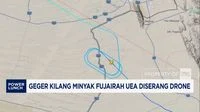
A drone strike targeted a critical oil facility in Fujairah, United Arab Emirates, on Monday night, May 4, 2025, igniting a substantial fire that sent plumes of smoke into the sky over the strategically vital energy hub. The attack, reportedly carried out by unmanned aerial vehicles (UAVs), represents a significant escalation in regional hostilities, threatening global oil supplies and exacerbating already tense geopolitical dynamics in the Arabian Gulf. Emergency services were immediately dispatched to the scene within the Fujairah Oil Industry Zone (FOIZ), battling the blaze for several hours before bringing it under control, though initial reports indicated extensive damage to infrastructure.
Incident Details and Immediate Response
The attack commenced around 10:30 PM local time on Monday, May 4, 2025, according to preliminary reports from local authorities. Multiple drones were observed approaching the facility from an undisclosed direction before at least one struck a storage tank or associated processing unit within the sprawling Fujairah complex. The resulting explosion triggered a massive fire, with flames visible from miles away, prompting immediate activation of the UAE’s emergency response protocols. Firefighting crews from Fujairah Civil Defense, supported by industrial fire brigades from nearby facilities, worked through the night to contain the inferno. Local media outlets, including CNBC Indonesia, were among the first to report on the incident, highlighting the severity and the strategic implications of the target. While specific details on casualties remained unconfirmed in the immediate aftermath, initial indications suggested no fatalities, though property damage was considerable. The affected area was swiftly secured, and an investigation was launched by Emirati authorities to ascertain the precise nature of the attack, the type of drones used, and their origin. Navigation warnings were issued for maritime traffic in the vicinity, and air traffic over the area was temporarily rerouted.
Fujairah: A Strategic Gateway for Global Energy
The Emirate of Fujairah holds an indispensable position in the global energy landscape, making it a frequent point of interest for geopolitical analysts and a potential target in regional conflicts. Located on the east coast of the UAE, outside the Strait of Hormuz, Fujairah serves as a critical bypass for crude oil exports from the Arabian Gulf. It is home to the Fujairah Oil Industry Zone (FOIZ), one of the world’s largest commercial bunkering and oil storage hubs. The port boasts extensive storage capacity for crude oil and refined products, multiple oil terminals, and connections to major pipelines, including the Abu Dhabi Crude Oil Pipeline (ADCOP), which transports crude from Abu Dhabi’s onshore oilfields directly to Fujairah for export, bypassing the Strait of Hormuz.
In 2023, Fujairah’s oil storage capacity exceeded 14 million cubic meters (approximately 88 million barrels), a figure that has steadily grown over the past decade. Its bunkering market typically handles millions of tons of fuel oil annually, serving thousands of vessels transiting through the region. This strategic importance means any disruption in Fujairah can have ripple effects across global energy markets, impacting shipping routes, insurance premiums, and oil prices. The port’s role as a key gateway for oil to reach international markets without navigating the narrow and often contested Strait of Hormuz makes it a high-value asset, and consequently, a high-risk target in times of regional instability.
A History of Regional Attacks and Escalating Tensions
This latest drone attack on Fujairah is not an isolated incident but rather fits into a disturbing pattern of escalating assaults on energy infrastructure and civilian targets across the Arabian Peninsula. The region has witnessed a surge in drone and missile attacks over the past few years, primarily attributed to Iran-backed Houthi rebels in Yemen and other affiliated groups.
- 2019 Fujairah Tanker Attacks: In May and June 2019, several commercial oil tankers anchored off Fujairah were targeted by limpet mines, causing damage and raising fears of broader conflict. While no group immediately claimed responsibility, Western nations and Saudi Arabia pointed fingers at Iran, which denied involvement.
- 2019 Abqaiq-Khurais Attacks: The most significant attack on Saudi Arabian oil infrastructure occurred in September 2019, when drones and missiles struck the Abqaiq oil processing facility and the Khurais oil field. These attacks halved Saudi Arabia’s oil output temporarily, causing a massive spike in global oil prices. The Houthis claimed responsibility, but the sophistication of the weapons suggested Iranian involvement, a claim Tehran denied.
- 2022 Abu Dhabi Attacks: In January 2022, Houthi rebels launched drone and missile attacks on Abu Dhabi, striking an ADNOC fuel depot and causing explosions that killed three people. This marked a rare direct attack on the UAE’s capital and led to increased vigilance and enhanced air defense measures. Subsequent attacks targeted various locations, including the Al Dhafra air base, home to U.S. and French forces.
- Ongoing Border Skirmishes: Throughout 2023 and early 2024, Saudi Arabia continued to face intermittent drone and missile attacks from Yemen, targeting civilian airports, oil facilities, and residential areas, albeit with varying degrees of success due to improved air defenses.
These incidents underscore a persistent threat from non-state actors equipped with increasingly sophisticated unmanned systems, capable of striking deep into sovereign territory. The attacks are often perceived as proxies in a broader regional power struggle between Iran and its allies, and Saudi Arabia and the UAE, often supported by Western powers. The targeting of economic lifelines like oil facilities aims to inflict economic pain, demonstrate reach, and pressure adversaries into political concessions.
Attribution and Official Reactions
As of early Tuesday, May 5, 2025, Emirati authorities had not yet formally attributed responsibility for the Fujairah attack. However, the modus operandi—a drone strike against critical energy infrastructure—strongly pointed towards familiar actors in the region. Speculation immediately centered on the Houthi rebels in Yemen, given their history of targeting UAE assets, particularly after the UAE’s withdrawal of most of its ground forces from Yemen in 2020, while still remaining a key member of the Saudi-led coalition. Other possibilities, though less frequently invoked for direct attacks on the UAE, include Iran-backed militias in Iraq or even a direct Iranian operation, though such a move would represent a significant and risky escalation.
The UAE Ministry of Foreign Affairs and International Cooperation issued a strong condemnation, labeling the attack a "terrorist act" and a "flagrant violation of international law." A statement from the Ministry emphasized that "such cowardly acts will not deter the UAE from its commitment to regional peace and stability, nor will they undermine its robust economic infrastructure." The UAE reiterated its right to self-defense and vowed to bring the perpetrators to justice. Security services confirmed that a comprehensive investigation was underway, involving forensic analysis of drone debris and flight paths, to pinpoint the launch site and responsible party.
International reactions were swift and largely condemnatory. The United States, through its Department of State, denounced the attack, reaffirming its commitment to the security of its partners in the region. A spokesperson stated, "We stand with the UAE in condemning this outrageous act of aggression and will continue to support their efforts to defend their territory and interests." Similar condemnations came from the United Kingdom, France, and Germany, highlighting the destabilizing nature of such attacks on global energy security. The Secretary-General of the United Nations called for immediate de-escalation and urged all parties to exercise maximum restraint, emphasizing the need for dialogue to resolve regional disputes. Saudi Arabia, a close ally and frequent target itself, expressed its full solidarity with the UAE, condemning the attack as a direct threat to regional and international stability and economy.
Economic Repercussions and Market Volatility
The drone attack on Fujairah immediately sent jitters through global oil markets. While the full extent of the damage and its impact on oil exports and bunkering operations were still being assessed, initial reports of a major fire at such a critical facility were enough to trigger a surge in crude oil prices. Brent crude futures jumped by over 3% in early trading following the news, reflecting concerns about potential supply disruptions. WTI futures also saw a significant increase.
Analysts noted that while the UAE possesses robust emergency response capabilities and alternative export routes, prolonged disruption at Fujairah could have a tangible impact. The port’s strategic location outside the Strait of Hormuz makes it crucial for mitigating risks associated with potential disruptions within the strait. Any compromise to its operational capacity would force more shipping to transit the narrow waterway, increasing insurance premiums for tankers and potentially leading to higher freight costs. Maritime insurance rates for vessels operating in the Arabian Gulf had already been elevated due to previous attacks, and this incident was expected to push them further upwards.
Beyond crude oil, Fujairah’s role as a bunkering hub means disruptions could affect thousands of ships requiring refueling, leading to delays and increased operational costs for global shipping lines. The broader economic impact could include a temporary dampening of investor confidence in regional energy projects, potentially delaying foreign direct investment in the UAE and surrounding Gulf states. However, the UAE’s strong economic fundamentals and its swift response to past incidents suggest a high degree of resilience, aiming to minimize long-term market volatility.
Geopolitical Ramifications and Regional Security Challenges
The attack on Fujairah carries profound geopolitical ramifications, threatening to unravel fragile regional detentes and escalate broader conflicts. The UAE has been actively involved in regional diplomatic efforts, including engagement with Iran, in an attempt to de-escalate tensions. This attack, regardless of its specific attribution, serves as a stark reminder of the persistent security challenges in the Gulf.
The incident highlights the growing sophistication and proliferation of drone technology among non-state actors. Cheap, easily acquired, and difficult to detect, drones offer a low-cost, high-impact asymmetric warfare capability. Countering these threats requires advanced air defense systems, intelligence gathering, and international cooperation to interdict supply chains for such weaponry. The UAE has invested heavily in air defense capabilities, including American-made Patriot missile systems and Terminal High Altitude Area Defense (THAAD) batteries, designed to intercept ballistic missiles. However, low-flying, slow-moving drones present a different challenge, often requiring specialized counter-UAV systems.
This event will undoubtedly prompt further discussions among Gulf Cooperation Council (GCC) members about enhancing collective security frameworks and intelligence sharing to mitigate future threats. It also puts pressure on international powers, particularly the United States, to reassess their security commitments and strategies in the region. An escalation could trigger a wider conflict, disrupt global energy markets more severely, and endanger international shipping lanes, with devastating consequences for the global economy. The stability of the Arabian Gulf remains inextricably linked to global economic security, and incidents like the Fujairah attack underscore the delicate balance of power and the ever-present potential for miscalculation or deliberate escalation. The international community faces a renewed imperative to support diplomatic solutions and strengthen regional security cooperation to prevent further destabilization.
Investigation and Future Outlook
Emirati authorities have initiated a thorough investigation into the drone attack, with technical teams collecting evidence, analyzing flight patterns, and examining debris to identify the origin and type of unmanned aerial vehicles used. Such investigations are crucial for official attribution, which will inform the UAE’s response strategy. Depending on the findings, the UAE may pursue diplomatic avenues, impose sanctions, or consider retaliatory measures, in coordination with its allies.
In the immediate term, security around critical infrastructure across the UAE, particularly energy facilities and ports, will be significantly heightened. This will likely involve increased patrols, enhanced surveillance, and a review of existing air defense protocols against low-altitude drone threats. The incident also serves as a potent reminder of the need for robust cybersecurity measures, as drone attacks can sometimes be complemented by cyber intrusions aimed at disrupting operations or intelligence gathering.
The broader outlook for regional stability remains precarious. While diplomatic efforts continue, the cycle of attacks and counter-attacks risks drawing the region into a more direct and devastating conflict. The international community, particularly major energy consumers, will be closely monitoring developments, urging restraint and working to prevent any further escalation that could severely impact global energy supplies and economic stability. The Fujairah attack underscores that the Arabian Gulf, despite its vast wealth, remains a flashpoint of geopolitical tension, where the actions of state and non-state actors alike can have far-reaching global consequences.

