
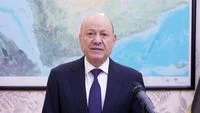
Yemen’s President, Rashad al-Alimi, leader of the internationally recognized Presidential Leadership Council (PLC), announced a concerted effort by his administration, with crucial support from Saudi Arabia, to resume oil exports by Monday, July 20. This ambitious target comes as the war-torn nation grapples with a severe economic crisis exacerbated by a persistent blockade on oil shipments imposed by the Houthi movement. Al-Alimi underscored his government’s commitment to stability, stating that it has demonstrated "a high degree of control and restraint" in recent times, a direct reference to the complex and often volatile security landscape in Yemen. Conversely, the Houthi group has maintained its defiant posture, affirming that the blockade on oil exports serves as a retaliatory measure against alleged provocations attributed to Saudi Arabia, further deepening the intractable dispute over the nation’s vital natural resources.
Background to a Protracted Conflict and Economic Collapse
The conflict in Yemen, now in its ninth year, began in late 2014 when the Houthi movement seized control of the capital, Sana’a, and subsequently much of the country’s north. This led to the intervention of a Saudi Arabia-led coalition in March 2015, supporting the then-exiled government of President Abdrabbuh Mansur Hadi. The conflict quickly devolved into a multifaceted proxy war, drawing in regional powers and devastating Yemen’s already fragile economy and infrastructure. Before the conflict, oil and gas exports constituted the primary source of revenue for the Yemeni government, accounting for roughly 70% of state income and over 90% of export earnings. The Marib and Shabwa governorates, largely under the control of the internationally recognized government, house the country’s most significant oil and gas fields and export terminals, making their operation critical to the state’s financial viability.
The war has effectively fractured Yemen’s economy, leading to a humanitarian catastrophe described by the United Nations as one of the world’s worst. Millions face severe food insecurity, lack access to basic services, and are displaced. The ability of the internationally recognized government to generate revenue, particularly from oil exports, is paramount to funding essential public services, paying civil servant salaries, and stabilizing the Yemeni rial. The current Houthi blockade on oil exports directly undermines these efforts, plunging the nation deeper into financial despair.
The Presidential Leadership Council and its Mandate
In April 2022, a significant political shift occurred within the anti-Houthi camp with the formation of the Presidential Leadership Council (PLC). President Hadi transferred his powers to this eight-member council, chaired by Rashad al-Alimi, a former interior minister. The move, largely seen as a Saudi-backed initiative, aimed to unify anti-Houthi factions, enhance negotiating leverage, and provide a more cohesive front against the Houthi movement. The PLC’s mandate includes managing the state’s affairs, achieving peace, and restoring stability. Al-Alimi’s statement about exercising "high control and restraint" reflects the PLC’s strategic approach to avoid further escalation while pursuing economic recovery. This restraint is particularly notable given the Houthi’s repeated attacks on critical infrastructure, which could easily provoke a stronger military response. The PLC seeks to project an image of responsible governance, distinguishing itself from the Houthi’s aggressive tactics, while also signaling to international partners its commitment to a diplomatic resolution.
Houthi Justification and Demands
The Houthi movement has consistently justified its blockade on oil exports as a response to what it terms "alleged provocations" by Saudi Arabia and the internationally recognized government. Their primary demands revolve around securing the payment of salaries for civil servants in Houthi-controlled areas from national oil revenues, as well as the complete lifting of the Saudi-led coalition’s blockade on Houthi-controlled ports and Sana’a airport. The Houthis argue that Yemen’s oil resources should benefit all Yemenis, not solely the government they oppose, and view the current export attempts as a misappropriation of national wealth.
Since late 2022, the Houthis have launched a series of drone and missile attacks targeting oil terminals in government-controlled areas, specifically those in Shabwa and Hadramout governorates, including the Qana port and al-Dabba port. These attacks effectively halted crude oil shipments, depriving the PLC government of billions of dollars in potential revenue. The Houthi leadership has warned international shipping companies against engaging with the government’s oil export activities, threatening further attacks. This aggressive stance is part of their broader strategy to pressure the Saudi-led coalition and the PLC into acceding to their political and economic demands, particularly concerning revenue sharing and humanitarian access.
A Timeline of Escalations and Stalled Peace Efforts
The journey to the current impasse over oil exports is marked by a series of critical events:
- 2014-2015: Houthi takeover of Sana’a, followed by the Saudi-led intervention.
- 2018: Stockholm Agreement, a UN-brokered deal focusing on Hodeidah port and prisoner exchanges, offered a glimmer of hope but saw limited implementation.
- April 2022: A UN-brokered truce, the first nationwide ceasefire in years, brought a significant reduction in hostilities. It aimed to facilitate humanitarian aid, open roads, and initiate comprehensive peace talks. This truce was extended twice.
- August-October 2022: The truce began to fray over disputes, primarily related to the payment of civil servant salaries in Houthi areas and the opening of specific roads. The Houthis accused the government and coalition of failing to meet their commitments.
- October 2022: The UN truce officially expired after the Houthis refused to agree to a further extension, citing unmet demands.
- October-November 2022: Following the truce’s collapse, the Houthis launched drone attacks on the al-Dabba oil terminal in Hadramout and the Qana port in Shabwa, both under government control, preventing crude oil loading and exports. These attacks caused significant damage and created an environment of fear for international shipping.
- Early 2023: Omani mediation efforts intensified, aiming to revive the truce and facilitate broader peace talks between Saudi Arabia and the Houthis. While these talks showed some promise, a breakthrough on the core issues, including oil revenue sharing, remained elusive.
- July 2023: President al-Alimi announces the intention to resume oil exports by July 20, signaling a determination to overcome the Houthi blockade and restore critical state revenue.
Profound Economic Implications of the Oil Blockade
The cessation of oil exports has had devastating economic consequences for the internationally recognized government and the Yemeni population. Without oil revenues, the government struggles to pay public sector salaries, maintain essential services, and stabilize the national currency. This revenue shortfall directly impacts its ability to fund critical humanitarian programs and respond to the ongoing crisis. Before the conflict, Yemen produced approximately 150,000 to 200,000 barrels of crude oil per day, primarily from Marib and Shabwa. While current production capacity is significantly reduced due to infrastructure damage and security concerns, even a fraction of this output could inject hundreds of millions of dollars annually into the government’s coffers.
The blockade exacerbates the already dire humanitarian situation. The lack of government revenue leads to increased inflation, making basic necessities unaffordable for millions. Fuel shortages, often manipulated by black markets, cripple transportation and essential services like hospitals and water pumping stations. The Yemeni rial continues to depreciate against foreign currencies, further eroding purchasing power. This economic strangulation fuels poverty, food insecurity, and health crises, pushing more Yemenis to the brink of starvation and increasing reliance on international aid, which itself faces funding shortfalls. The current situation creates a vicious cycle where economic instability fuels conflict, and conflict prevents economic recovery.
International Reactions and Calls for De-escalation
The international community has consistently expressed deep concern over the escalating tensions and the humanitarian impact of the oil blockade. The United Nations Special Envoy for Yemen, Hans Grundberg, has repeatedly called for an end to military escalations, including attacks on oil infrastructure, and urged all parties to engage constructively in negotiations. UN officials emphasize that the resumption of oil exports under a clear mechanism that benefits all Yemenis is crucial for economic stability and building trust for a broader political settlement.
Saudi Arabia and the coalition supporting the PLC have reiterated their condemnation of Houthi attacks on oil facilities, viewing them as acts of economic terrorism that undermine peace efforts and prolong the humanitarian crisis. They have pledged continued support for the PLC’s efforts to restore state functions and economic stability. International partners like the United States, the United Kingdom, and the European Union have echoed these sentiments, stressing the importance of protecting civilian infrastructure and ensuring the free flow of commerce. They often call for a comprehensive and inclusive political solution that addresses the root causes of the conflict, with many nations supporting UN-led peace initiatives and humanitarian aid efforts. These statements often underscore the need for all parties to respect international law and work towards a peaceful resolution that secures Yemen’s sovereignty and stability.
Geopolitical Context and Broader Implications
The dispute over Yemen’s oil exports is deeply embedded in the broader geopolitical rivalry between Saudi Arabia and Iran. Saudi Arabia views the Houthi movement as an Iranian proxy threatening its southern border security and regional influence. Iran, in turn, denies directly arming the Houthis but expresses political support. The control over Yemen’s economic resources, particularly oil, is a significant leverage point in this regional struggle. The instability in Yemen also has implications for global energy markets, as the country borders the Bab el-Mandeb strait, a crucial chokepoint for international maritime trade, including oil shipments. While Yemen’s oil output is relatively small on a global scale, any escalation in the region that threatens shipping lanes could send ripples through the global economy.
The Houthi’s ability to disrupt oil exports from government-controlled areas demonstrates their continued military capability and their intent to use economic warfare as a tool for political gain. This strategy poses a significant challenge to Saudi Arabia’s efforts to stabilize its southern neighbor and secure its own strategic interests. The protracted nature of the conflict and the ongoing economic warfare make any swift resolution difficult, prolonging the humanitarian crisis and further destabilizing the Arabian Peninsula.
Analysis of Prospects for Resumption and Peace
The PLC’s stated intention to resume oil exports by July 20 represents a determined stance to reclaim economic sovereignty and alleviate the financial strain on its administration. However, the success of this endeavor hinges critically on security guarantees and the willingness of the Houthis to de-escalate. Without a robust international monitoring mechanism or a significant breakthrough in Omani-mediated peace talks, any attempt to resume exports risks provoking further Houthi attacks.
The path forward likely involves intense diplomatic efforts to bridge the gap between the Houthi’s demands for salary payments and revenue sharing, and the PLC’s need to control its primary revenue source. A potential solution could involve an internationally supervised mechanism for managing oil revenues, ensuring transparency and equitable distribution to fund public services across all of Yemen, including Houthi-controlled areas. Such a mechanism could build trust and serve as a stepping stone towards a more comprehensive political agreement. However, deep-seated mistrust and conflicting political agendas make such a compromise challenging to achieve. The resumption of oil exports is not merely an economic issue; it is a critical component of any future peace agreement, as it directly addresses the financing of the state and the welfare of its citizens. Failure to resolve this issue risks entrenching the economic division of Yemen, prolonging the conflict, and deepening the humanitarian catastrophe for millions.
Conclusion
President Rashad al-Alimi’s announcement to resume oil exports by July 20 marks a critical juncture in Yemen’s protracted conflict. While the internationally recognized government, backed by Saudi Arabia, seeks to restore vital state revenue and stabilize the economy, the Houthi movement remains steadfast in its blockade, viewing it as a legitimate response to perceived provocations and a means to press its demands for revenue sharing. The ongoing dispute over Yemen’s oil resources not only exacerbates an already dire humanitarian crisis but also reflects the deep-seated political and economic divisions that continue to plague the nation. Resolving the impasse over oil exports is not merely an economic necessity but a crucial step towards fostering trust, de-escalating tensions, and laying the groundwork for a lasting and inclusive peace in Yemen. The international community’s continued engagement and diplomatic pressure will be essential in navigating this complex challenge and preventing further escalation that could plunge the country deeper into instability.

