
The human relationship with the atmosphere is defined by an ancient, persistent desire to predict and control the elements. For millennia, civilizations have developed folk wisdom, adages, and heuristics to interpret the sky, seeking to anticipate shifts in conditions that could threaten harvests or travel. However, as meteorological science has advanced, many of these long-standing beliefs have been revealed as either incomplete or entirely erroneous. By examining the biological, physical, and atmospheric realities of our environment, we can separate useful folklore from persistent misinformation.
The fallacy of cold weather as a cause of illness
A central tenet of common health advice is the assertion that exposure to cold temperatures is a direct catalyst for respiratory infections. This belief, often articulated as a warning to wear a coat to "catch a cold," misidentifies the root cause of seasonal illness. While statistics consistently show a surge in influenza, rhinovirus, and COVID-19 cases during winter months, the correlation is not one of direct causation between low temperatures and viral infection.
Biological evidence suggests that viruses are the sole agents responsible for these illnesses. According to recent findings published in the medical microbiology field, cold temperatures function as a catalyst by altering the environment in which viruses operate rather than by acting as an infectious agent itself. During winter, individuals shift their behavior, spending significantly more time in confined, heated indoor spaces. This shift facilitates the rapid transmission of airborne pathogens. Furthermore, the use of central heating systems frequently lowers indoor humidity, leading to the dehydration of nasal and throat mucosa. Dry, compromised mucous membranes are less effective at trapping viral particles, thereby increasing the host’s susceptibility to infection.

Physiological responses also play a role. When cold air is inhaled, the local temperature within the nasal cavity drops, triggering vasoconstriction. This process restricts blood flow to the lining of the nose, which can temporarily impede the effectiveness of the local immune response. While this creates a biological vulnerability, it does not constitute a direct infection. The widespread prevalence of illnesses in winter is a multifaceted phenomenon involving seasonal social behaviors, humidity levels, and the natural life cycles of respiratory viruses, rather than the temperature of the air itself.
Reevaluating the geography of lightning strikes
The adage that "lightning never strikes the same place twice" serves as a cultural metaphor for the rarity of specific events, yet it is fundamentally at odds with electrical discharge physics. Lightning is an electrostatic discharge between a cloud and the ground, and it is governed by the principles of electrical resistance and path-finding. It seeks the path of least resistance to ground, which is often—though not exclusively—determined by the elevation and conductivity of the target.
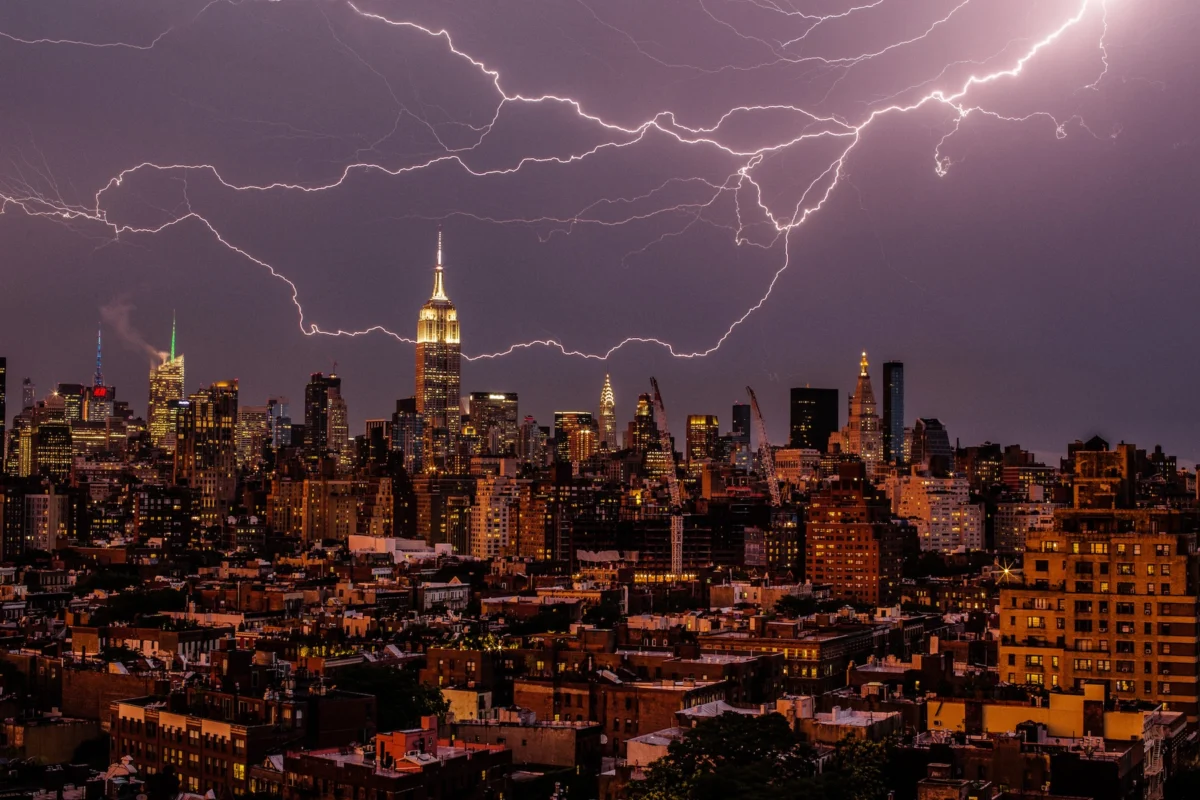
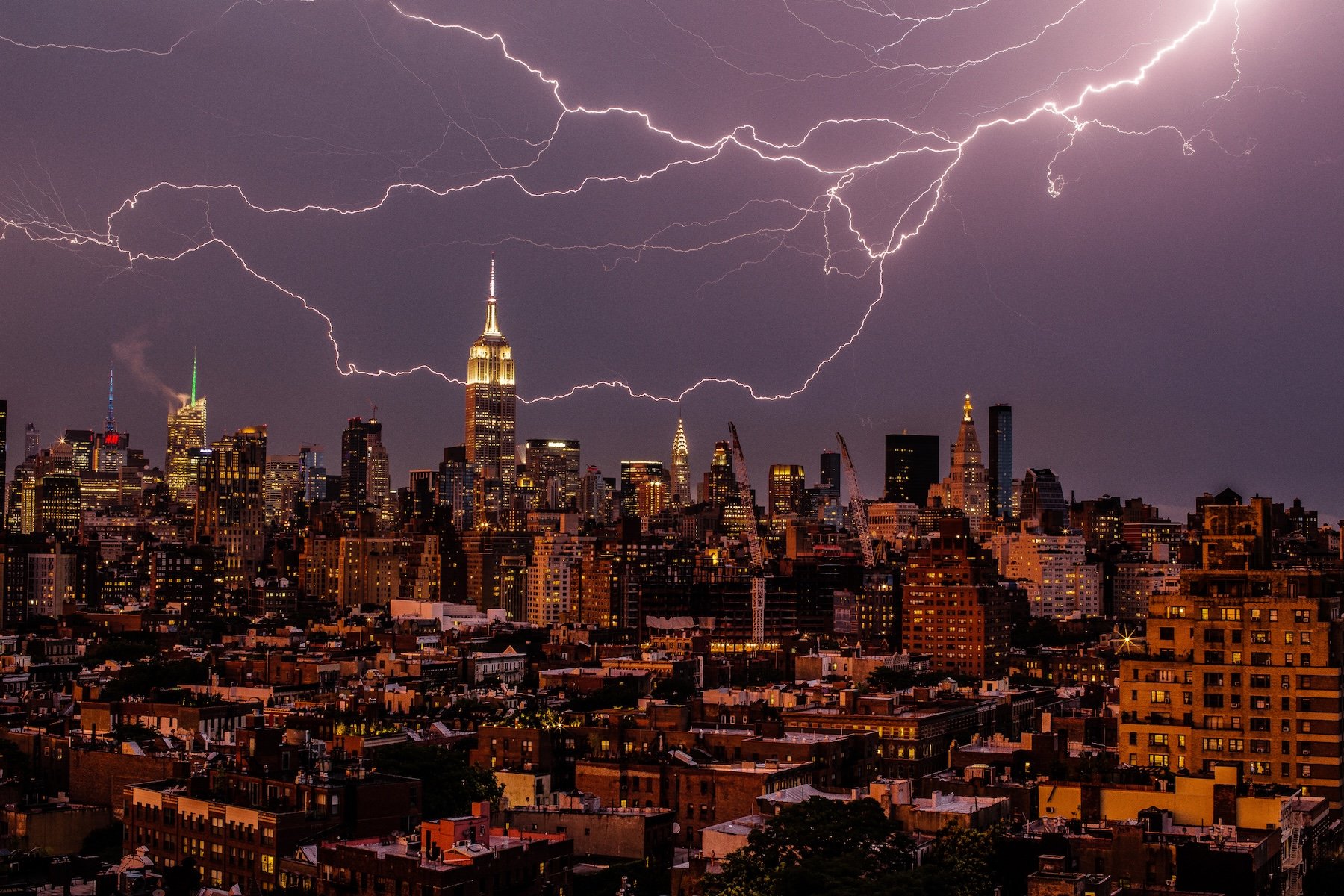
Statistical data from major urban centers provide concrete evidence against the "once-only" myth. The Empire State Building in New York City, for instance, functions as a frequent conductor for atmospheric electricity due to its height and steel-frame construction. Emergency management records indicate that the structure is struck by lightning approximately 25 times per year. Similarly, the CN Tower in Toronto acts as a lightning rod for its surrounding area, recording an average of 75 strikes annually.
These figures illustrate that geography and engineering are the primary determinants of strike frequency. Lightning rods are designed to capture these discharges, providing a low-resistance path to the ground to prevent structural damage or fire. This technology effectively neutralizes the danger of repeated strikes, proving that such events are not only possible but common for tall, grounded structures. While the National Oceanic and Atmospheric Administration (NOAA) notes that lightning can occasionally strike lower or less conductive points, the tendency for it to repeatedly hit prominent objects remains a well-documented physical phenomenon.
Atmospheric pressure and the science of the red sky
The rhyme "Red sky at night, sailor’s delight; red sky in the morning, sailors take warning" is one of the oldest recorded pieces of meteorological folklore, appearing in the Gospel of Matthew. Unlike many weather myths, this adage holds a degree of scientific validity, provided it is applied within the correct geographical and atmospheric context.
The appearance of a red sky at sunrise or sunset is caused by the scattering of sunlight by dust, aerosols, and water vapor in the atmosphere. When the sun is low on the horizon, its light travels through a thicker layer of the atmosphere. Particles of a specific size scatter blue light more effectively, allowing the longer-wavelength red light to pass through and color the sky. This phenomenon occurs in the presence of stable, high-pressure systems.
The reliability of the red-sky prediction depends entirely on the prevailing wind patterns of a given region. In the mid-latitudes—a zone spanning roughly 30 to 60 degrees in both the Northern and Southern Hemispheres—the "prevailing westerlies" are the dominant wind current. Because these winds move weather systems from west to east, a red sky at sunset indicates that a high-pressure system (associated with fair weather) is to the west and is moving toward the observer. Conversely, a red sky at dawn indicates that the high-pressure system has already passed to the east, potentially leaving the region open to approaching low-pressure weather systems from the west.
However, this logic breaks down in the tropics and other regions where weather patterns are dictated by localized convective systems rather than the migration of large-scale, high-pressure cells. In these areas, the color of the sky provides little to no utility in forecasting weather shifts. Consequently, the sailor’s adage is an early example of regional climate modeling, valid only where atmospheric circulation follows predictable, eastward-moving trends.

Broader implications for modern weather literacy
The persistence of these myths highlights a broader challenge in public science communication. Weather affects every facet of human life, from agricultural planning and energy grid management to individual health and safety. When outdated or incorrect information governs public perception, it can lead to inefficient decision-making.
For example, the persistent belief that cold weather is the primary driver of illness may lead to the neglect of other critical health interventions, such as increasing indoor humidity or improving ventilation in public buildings. Similarly, misunderstanding the nature of lightning strikes could lead to complacency regarding shelter during severe weather, as individuals might erroneously believe that because an area has been struck before, it is now "safe" or "unlikely" to be hit again.
From a meteorological standpoint, the movement toward data-driven, localized forecasting has largely replaced the need for folk heuristics. Modern satellite imagery, Doppler radar, and high-resolution numerical weather prediction models allow for hyper-local accuracy that was unimaginable even a century ago. Yet, these tools are most effective when paired with an educated public that understands the underlying physical processes.
The transition from traditional, anecdotal weather wisdom to empirical science represents a significant advancement in human survival strategies. While folk adages provided a framework for survival for our ancestors, they are no longer the primary source of actionable intelligence. Recognizing the difference between a meteorological myth and a physical reality is essential for navigating an increasingly complex global climate. As we continue to study the atmosphere, the focus remains on distilling complex physics into information that can protect human health and infrastructure, ensuring that the legacy of observation continues to evolve alongside our scientific capabilities.

