
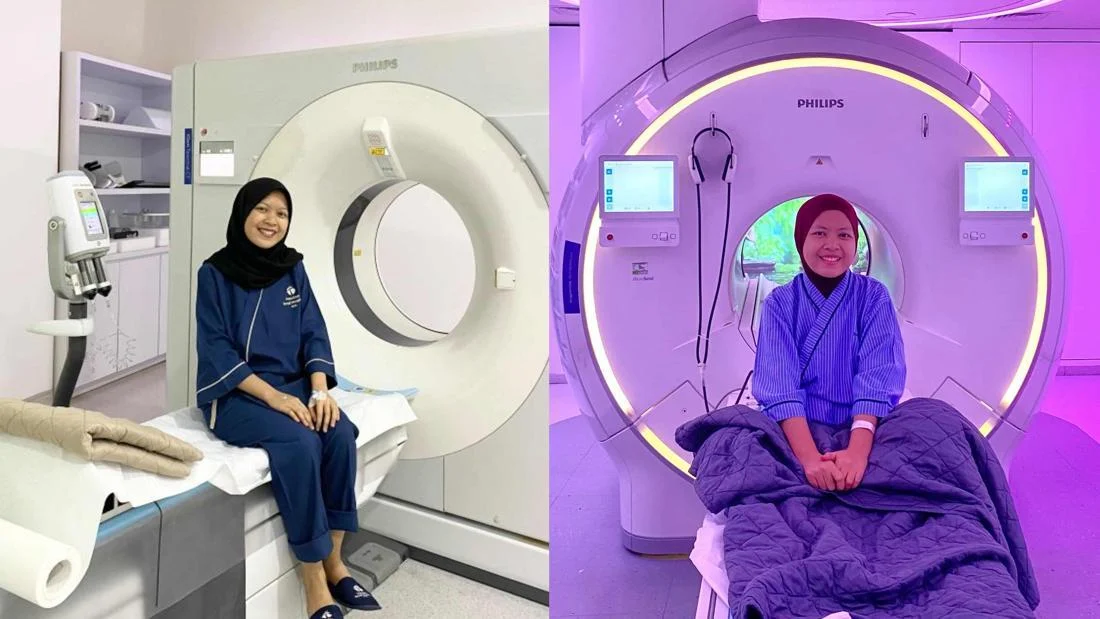
The narrative of Halimatus Sjadiah, a 34-year-old resident of Tangerang, Indonesia, has recently captured widespread public attention. Her candid documentation of her four-year journey battling stage 3 ovarian cancer has served as a sobering reminder of the silent nature of this malignancy and the importance of early detection. Sjadiah, known affectionately as "Ima," has navigated a grueling medical odyssey that has seen her move from initial diagnosis to remission, subsequent relapse, and the rare, complex development of brain metastasis. Her story highlights the reality that ovarian cancer, often dubbed the "silent killer," does not discriminate by age and necessitates a profound level of resilience and systemic support.
A Chronology of a Four-Year Battle
The medical journey for Ima began in 2022, when she was in her early 30s. At the time of her initial diagnosis, the disease had already progressed to stage 3. The period between 2022 and 2023 was marked by intensive treatments aimed at achieving remission, a goal she successfully attained in 2023. However, the nature of advanced ovarian cancer often involves a high risk of recurrence. By 2026, Ima faced a significant medical setback: a relapse characterized by the metastasis of the cancer to her brain.
This development required a drastic escalation in her treatment plan. In May 2026, she underwent a critical neurosurgical procedure to remove a tumor located in her brain, marking her third major surgery since the inception of her diagnosis. Her comprehensive treatment record is a testament to the intensity of the disease, including 33 sessions of radiation therapy, 18 rounds of targeted therapy, and 26 cycles of chemotherapy. As of late 2026, she continues to undergo ongoing evaluation to manage the post-surgical recovery and monitor the efficacy of her treatment regimen.
The Deceptive Nature of Ovarian Cancer Symptoms
One of the most critical aspects of Ima’s story is her reflection on the early warning signs that were overlooked. Retrospectively, she noted that the symptoms were subtle and non-specific, leading her to dismiss them initially. Among the primary indicators was persistent abdominal distension—a common symptom often mistaken for weight gain or bloating—accompanied by a constant sensation of fullness or discomfort.
Medical experts have long emphasized that ovarian cancer symptoms are frequently vague, which contributes to the high rate of late-stage diagnoses. According to clinical data, common indicators include:
- Abdominal Bloating and Distension: A persistent increase in abdominal size.
- Urinary Changes: Increased frequency or urgency of urination due to pelvic pressure.
- Gastrointestinal Distress: Chronic constipation or unexplained changes in bowel habits.
- Systemic Symptoms: Unexplained fatigue, loss of appetite, and unintended weight loss.
- Reproductive Irregularities: Irregular or abnormal menstrual cycles.
Ima’s experience confirms the clinical reality that these symptoms, when considered in isolation, are often attributed to benign conditions. It was only after a formal diagnosis was established that she could map these manifestations back to the underlying malignancy, underscoring the vital need for women to seek medical consultation if such symptoms persist for more than two to three weeks.
The Complication of Brain Metastasis
The spread of ovarian cancer to the brain is an infrequent but severe complication. While ovarian cancer typically spreads within the peritoneal cavity (the abdomen and pelvis), metastasis to the central nervous system occurs in a small percentage of cases. When Ima began experiencing persistent, intractable headaches in early 2026, her proactive decision to consult a neurologist was a turning point.
Diagnostic imaging, specifically an MRI, confirmed the presence of a tumor. Following a multidisciplinary consultation, she underwent a PET scan to assess the extent of the disease before proceeding to surgery on May 6, 2026. The pathology report post-surgery confirmed that the brain tumor was indeed a metastasis of her primary ovarian cancer. The speed of her recovery—waking up without the need for ICU monitoring and resuming nutrition shortly thereafter—demonstrated both the precision of modern neurosurgical intervention and her own physical fortitude.
The Role of Support Systems and Mental Resilience
Beyond the clinical statistics, Ima’s journey emphasizes the psychosocial dimensions of cancer treatment. She has been vocal about the "ups and downs" of her experience, noting that four years of continuous treatment is a heavy psychological burden. She credits her survival not only to medical intervention but also to a robust support system comprising her parents, family, and a broader community of well-wishers.
The impact of her sharing her story on social media has created a digital community for other patients navigating similar paths. This interaction highlights the role of peer support in medical outcomes. Research in psycho-oncology consistently suggests that patients who feel supported and connected to others experiencing similar health crises often exhibit higher levels of treatment adherence and better quality of life indices.
Implications for Public Health and Awareness
Ima’s case serves as a critical case study for public health officials regarding awareness and screening. Currently, there is no standardized, highly effective population-based screening test for ovarian cancer, such as a mammogram for breast cancer or a Pap smear for cervical cancer. Consequently, awareness of symptoms remains the most effective tool for early intervention.
The Need for Proactive Healthcare
Medical professionals urge women, particularly those in their 30s and 40s, to remain vigilant about their health. The "silent" nature of ovarian cancer means that it often reaches an advanced stage before diagnosis. The implications of this are significant:
- Earlier Diagnosis Saves Lives: When detected at stage 1 or 2, the five-year survival rate for ovarian cancer is significantly higher than when detected at stage 3 or 4.
- Multidisciplinary Care: Ima’s case highlights the necessity of integrated care teams, involving gynecologic oncologists, neurosurgeons, radiologists, and mental health professionals.
- Advocacy and Education: Stories like Ima’s are essential in shifting the cultural narrative around reproductive health, encouraging women to listen to their bodies and advocate for themselves when something feels "not quite right."
Looking Forward: A Message of Persistence
As of September 2026, Ima remains focused on her ongoing treatment. Her message to others facing similar struggles is one of quiet determination and gratitude. She attributes her ability to endure the exhausting cycles of chemotherapy and the anxiety of waiting for post-operative evaluations to a combination of personal willpower and a steadfast faith.
The broader lesson from her story is that the "4-year battle" is not merely about surviving cancer; it is about the sustained effort required to maintain quality of life while navigating chronic illness. As she continues to await further evaluations regarding her brain health, her narrative remains a beacon of transparency, illustrating the brutal reality of cancer while simultaneously emphasizing the strength required to face it head-on.
The medical community continues to monitor such cases closely, using the data provided by patient experiences to refine treatment protocols and improve the quality of life for those living with advanced-stage malignancies. While the future remains uncertain for many in similar positions, the advocacy work performed by patients like Ima provides invaluable insight into the human element of oncology, reminding the public that behind every clinical statistic is an individual fighting for their health, one day at a time.

