
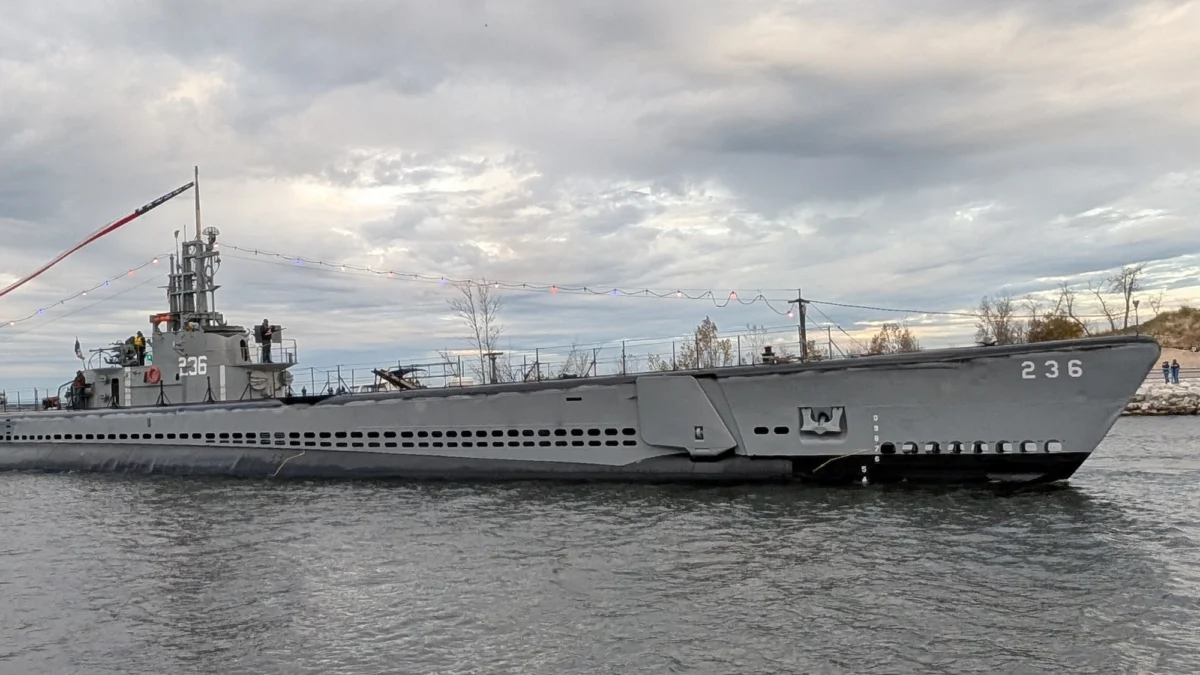
The USS Silversides, a highly decorated Gato-class submarine that served as a cornerstone of the United States Navy’s Pacific fleet during World War II, has officially returned to its permanent berth at the USS Silversides Submarine Museum in Muskegon, Michigan. The vessel’s homecoming on October 31 concluded a complex three-month maritime operation that saw the submarine transported across Lake Michigan to a Wisconsin dry dock for its most extensive structural preservation effort in over half a century. The return of the vessel marks the successful completion of a $3.5 million maintenance initiative designed to ensure the structural integrity of the hull for future generations of historians and visitors.
The 312-foot submarine, which earned 12 battle stars for its service in the Pacific theater, underwent a rigorous assessment during its time in Wisconsin. Marine engineers and restoration specialists meticulously inspected the lower hull, which had been subjected to decades of environmental exposure in the Great Lakes. While experts were surprised by the relative resilience of the steel plating, the scope of the project remained significant. The restoration involved the installation of reinforced steel plating to the underside of the vessel and comprehensive repairs across its internal and external systems.
A Chronology of Service and Preservation
The history of the USS Silversides (SS-236) is one defined by rapid construction and immediate deployment. Launched on August 21, 1941, at the Mare Island Navy Yard in California, the submarine was completed within a single year—an impressive feat of wartime industrial mobilization. Following the attack on Pearl Harbor, the Silversides was deployed to the Pacific, where it became one of the most successful submarines of the conflict.
The operational record of the Silversides is distinguished by its aggressive patrol history. Throughout the war, the vessel completed 14 combat patrols, sinking 23 enemy ships and amassing a total of over 90,000 long tons of shipping destroyed. The submarine’s armament—which included ten 21-inch torpedo tubes, a 4-inch deck gun, and an array of anti-aircraft weaponry—made it a versatile asset in contested waters.
Following the cessation of hostilities, the vessel was decommissioned in 1946. However, its service did not end there; the Navy transitioned the submarine into a reserve training ship based in Chicago, where it remained for decades. It was eventually decommissioned permanently and, in 1987, found its way to the Great Lakes Naval Memorial & Museum. The establishment of the dedicated USS Silversides Submarine Museum in Muskegon provided a permanent home for the relic, though the challenges of maintaining a 300-foot-plus steel structure in a freshwater environment have remained a constant hurdle for curators.
Archaeological Discovery During Restoration
The dry dock period provided an unexpected opportunity for maritime archeology. While stripping away layers of oxidation and performing structural integrity tests, technicians identified a flood valve stamped with the name "Trigger" and an accompanying serial number. Historical analysis confirmed that the component originated from the USS Trigger (SS-237), a sister ship to the Silversides that was lost in combat during the war.
The two submarines were constructed in sequence at the Mare Island facility, leading to a high degree of parts commonality. The discovery of a functional, original component from the lost vessel provides a tangible link between the two submarines. For naval historians, this finding underscores the interconnected nature of the Gato-class production line and offers a rare opportunity to study original components from a vessel that was otherwise erased from the active fleet records.
The Logistics of a Floating Museum
Transporting a submarine of this scale is a feat of modern naval logistics. The 15-hour voyage across Lake Michigan required careful coordination with maritime authorities to ensure the safety of the vessel and the integrity of the transit route. Scott Hardin, the vessel’s curator, described the process of removing the massive craft from the water as "surreal," noting that for the first time in 50 years, the entire profile of the submarine—including sections usually submerged in the harbor—was visible for inspection.
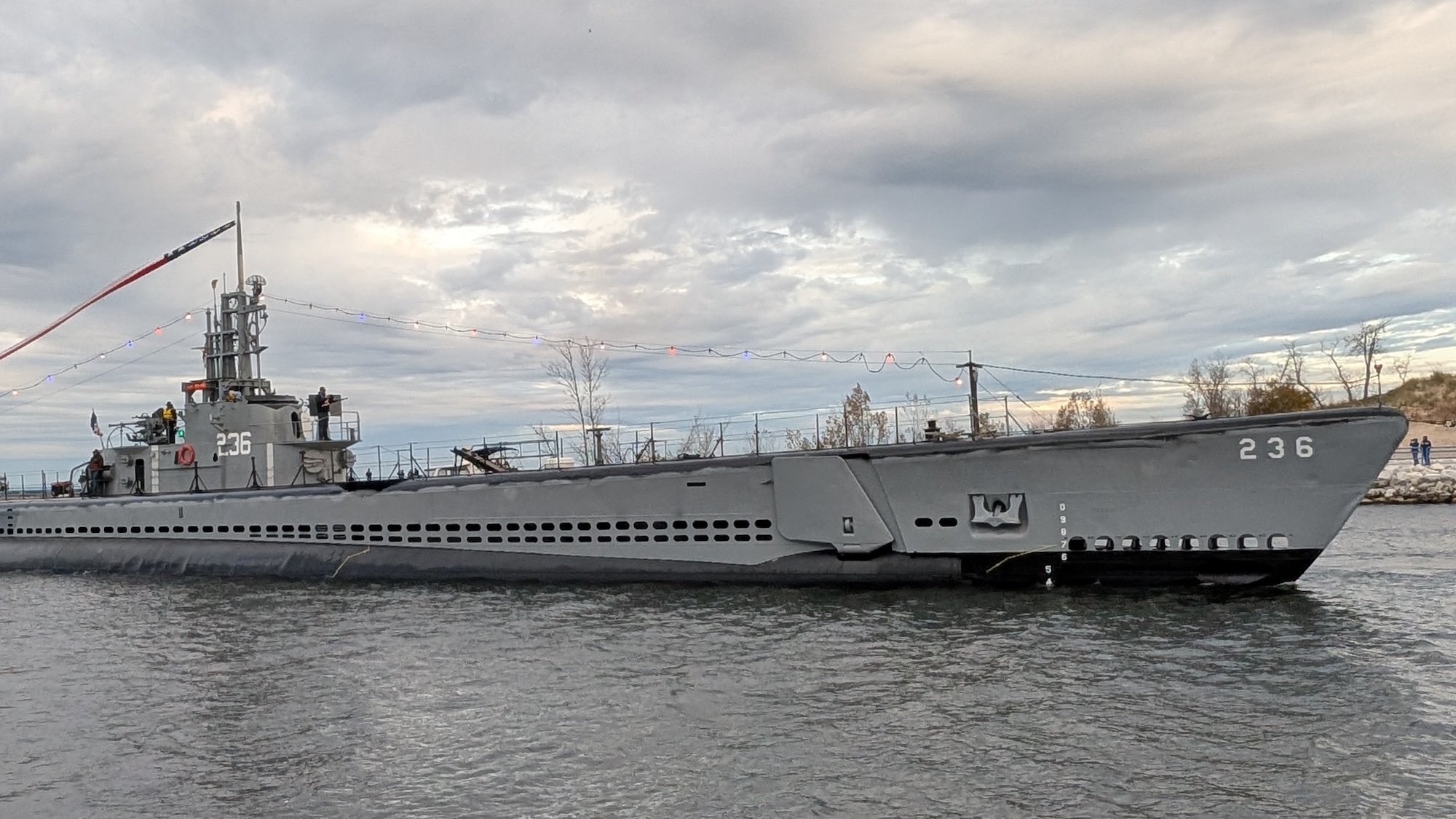
"Literally, from top to bottom, she got refurbished," Hardin remarked in a recent interview. The restoration process was not merely cosmetic; it was a structural necessity. The $3.5 million investment focused on preventing long-term corrosion that could have compromised the vessel’s ability to remain open to the public. As the Silversides ages, the cost of upkeep rises, requiring the museum to rely heavily on private donations and specialized engineering partnerships to stave off the natural decay that threatens iron-hulled ships.
Strategic Importance of Preserving WWII Material Culture
The preservation of the USS Silversides is part of a broader national conversation regarding the survival of artifacts from the Greatest Generation. As the number of living veterans from the Second World War continues to dwindle, the physical hardware of the era—tanks, aircraft, and submarines—serves as the primary medium for historical education.
"World War II vets in general are few and far between," Hardin observed. "What we have left from that generation are some of the machines that these guys used. It served the entire length of World War II. A man died on board, and it’s a piece of American history."
The preservation of the Silversides holds significance beyond mere nostalgia. The submarine serves as a primary source for naval architecture students and military historians alike. The Gato-class design represented the cutting edge of underwater warfare technology in the early 1940s, and maintaining the ship in a condition that reflects its operational state allows researchers to understand the environmental and mechanical realities faced by sailors during the Pacific campaign.
Financial Challenges and Future Outlook
Despite the successful completion of the dry dock repairs, the museum faces ongoing financial obligations. The $3.5 million cost of the recent restoration has left a significant gap in the institution’s operating budget. While the vessel is scheduled to reopen to the public on Saturday, November 7, following an interior cleaning, the museum has launched an urgent appeal for public donations to offset the debt incurred by the repairs.
The fundraising campaign, hosted through the official museum website, highlights the necessity of private support for public history. Without such efforts, institutions like the USS Silversides Submarine Museum would be unable to perform the necessary maintenance to keep these vessels from becoming hazardous or losing their structural integrity.
Looking ahead, the museum plans to implement a more aggressive preventative maintenance schedule. Lessons learned during the 2026 dry dock period will guide future preservation strategies, focusing on cathodic protection systems and specialized coatings that can better withstand the unique chemistry of Lake Michigan.
The successful return of the USS Silversides serves as a reminder of the fragility of historical monuments. Whether it is a flood valve from a lost sister ship or the reinforced steel plates of the hull itself, the preservation of the Silversides is a commitment to maintaining a direct line to the events that shaped the modern global order. For the community of Muskegon, the submarine remains not just a museum exhibit, but a local icon and a solemn monument to the sailors who operated it during the defining conflict of the 20th century. As the museum prepares to welcome visitors once more, the vessel stands as a testament to both the industrial ingenuity of the 1940s and the modern dedication required to keep that history afloat.

