
The global battle against malaria has seen remarkable success over the past several decades, with mortality rates plummeting across endemic regions. However, as traditional human-to-human transmission pathways are disrupted through better medical interventions and vector control, a more complex, zoonotic threat has emerged in Southeast Asia. Scientific researchers have recently confirmed the presence of Anopheles dirus and Anopheles scanloni mosquitoes in Indonesia, specifically in the Langkat Regency of North Sumatra. This discovery is pivotal, as these mosquito species are identified as potential vectors for Plasmodium knowlesi, a parasite that naturally infects long-tailed macaques (Macaca fascicularis) and pig-tailed macaques, but has increasingly begun to spill over into human populations.
The Zoonotic Shift: From Primates to People
Historically, malaria control programs have focused primarily on the Plasmodium falciparum and Plasmodium vivax parasites, which rely on human hosts to complete their life cycles. The emergence of P. knowlesi as a human pathogen—often referred to as the "fifth human malaria"—has complicated these efforts. Because P. knowlesi originates in primates, it cannot be eradicated simply by treating human patients.
The first human case of P. knowlesi malaria in Indonesia was formally documented in South Kalimantan in 2010. Since then, the epidemiological footprint of the disease has expanded, with sporadic reports emerging from various provinces across Kalimantan and Sumatra, including Aceh and North Sumatra. In 2017 alone, North Sumatra reported 377 cases of knowlesi malaria. Despite this rise in clinical cases, the specific mosquito species responsible for transmitting the parasite from monkeys to humans in the region remained a mystery until the recent breakthrough published in the journal Scientific Reports.
Chronology of a Breakthrough Discovery
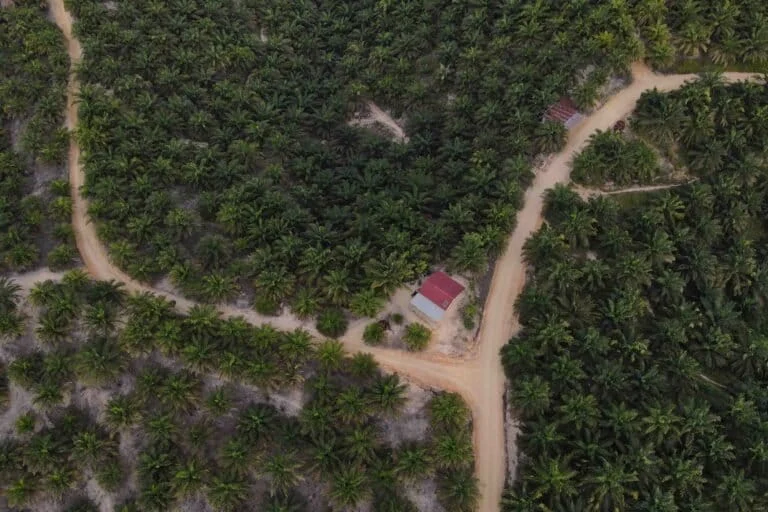
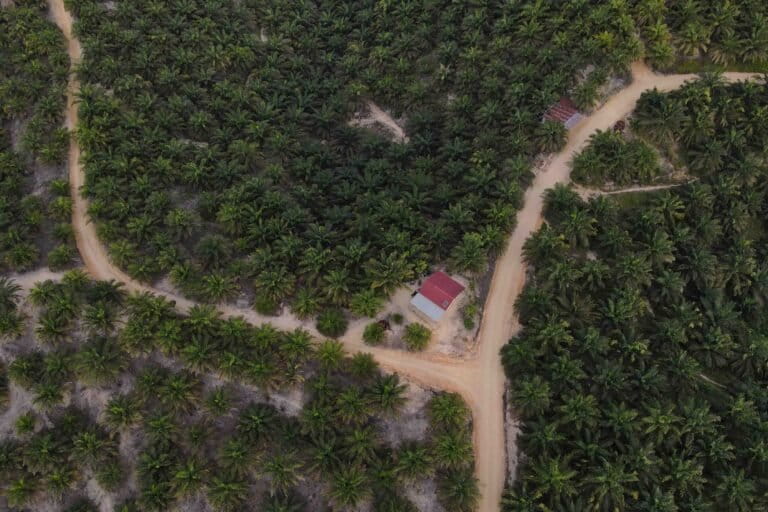
The research, conducted between July 2022 and June 2023, targeted the village of Ujung Bandar in the Salapian District of North Sumatra. This area was selected for its high-risk profile, characterized by its proximity to oil palm plantations, fragmented forest patches, and a history of human P. knowlesi infections.
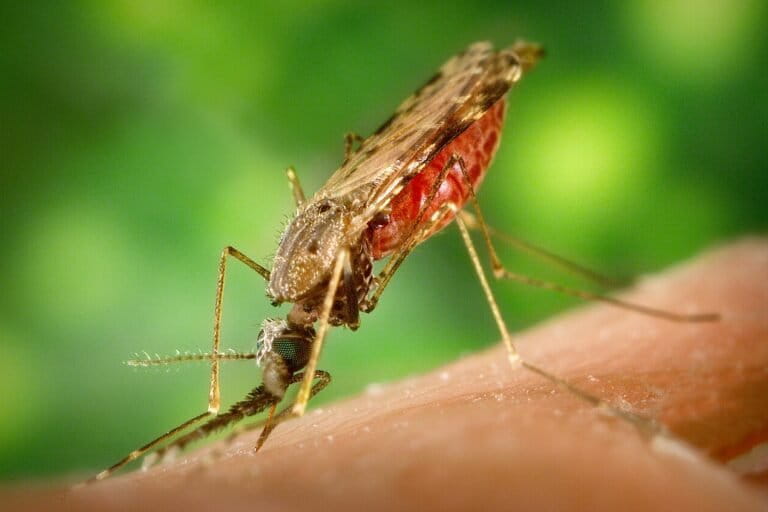
The methodology employed by the research team utilized the "human landing catch" technique, a rigorous, WHO-recommended standard for monitoring mosquito behavior. Field workers remained at designated sites from 6:30 PM to 6:00 AM, collecting mosquitoes as they attempted to land on human skin. Over the course of the study, 597 mosquitoes belonging to a complex group of vectors known for their role in monkey malaria transmission were collected.
Because these mosquitoes are morphologically near-identical—often described as "sibling species"—the researchers moved beyond traditional visual identification. Using advanced DNA barcoding, the team determined that 584 of the collected specimens were Anopheles dirus and 13 were Anopheles scanloni. This finding confirms the presence of these species in Indonesia for the first time, significantly expanding their known geographical range, which was previously limited to mainland Southeast Asia, including Thailand, Myanmar, and Vietnam.
Genetic Analysis: Mapping the Parasite Load
The implications of this study deepen when examining the internal biological contents of the captured insects. The researchers performed molecular screenings on the heads and thoraxes of the specimens to detect the presence of malaria parasites. Out of the 584 An. dirus mosquitoes, six tested positive for malaria DNA.
Most significantly, these six mosquitoes did not carry a single strain; they were harboring multiple parasites simultaneously. Three mosquitoes tested positive for P. knowlesi, while four also carried P. vivax, a common human malaria parasite. This dual-carriage suggests that An. dirus could act as a bridge vector, facilitating the transmission of both zoonotic and human-specific malaria in the same localized ecosystem.
It is important to note, however, that the detection of parasite DNA in a mosquito does not automatically confirm it is an active, infectious vector. The parasite must complete its development within the mosquito’s salivary glands to become transmissible. While the study labels An. dirus as a "potential vector," the findings provide the long-sought missing link in the transmission chain that has perplexed public health officials in North Sumatra for years.

The Complexity of Sibling Species
The identification of An. dirus and An. scanloni highlights a major hurdle in tropical disease management: the challenge of sibling species. While these mosquitoes look nearly identical under a microscope, their biological behaviors—such as their preference for specific environments, biting times, and susceptibility to various insecticides—can vary wildly.
If health authorities misidentify the dominant mosquito species in a region, they may implement vector control measures, such as indoor residual spraying or the distribution of insecticide-treated nets, that prove ineffective. For instance, if one species prefers to bite outdoors (exophagic) while another bites indoors (endophagic), a control strategy targeting only the home environment will fail to curb transmission. The discovery in Langkat serves as a warning that current malaria control protocols in Indonesia may need to be updated to account for the unique ecological niches occupied by these newly confirmed vectors.
Broader Public Health Implications
The socio-economic landscape of North Sumatra exacerbates the risk of zoonotic malaria. With a population exceeding 15 million, a significant portion of which resides in rural areas near plantations, human-wildlife interaction is frequent. As forests are cleared for agricultural development—specifically oil palm expansion—the natural habitat of long-tailed macaques is compressed. This forces monkeys into closer proximity with human settlements, creating a "hot zone" for pathogen spillover.
The findings have several critical implications for regional health policy:
- Revised Surveillance: Public health departments must integrate molecular diagnostic tools into routine surveillance. Relying on traditional morphological identification is no longer sufficient given the high probability of misidentification.
- Environmental Management: Understanding the ecology of An. dirus is essential. Since these mosquitoes are often found in shaded, forested areas or edge-of-forest habitats, land-use planning must consider the impact of deforestation on malaria transmission risk.
- Cross-Sectoral Collaboration: Addressing zoonotic malaria requires a "One Health" approach, involving not only human medical professionals but also wildlife biologists and agricultural experts. Monitoring the health of macaque populations and their interaction with human communities is as important as treating human patients.
Future Research and Official Response
While the findings from the Scientific Reports study are ground-breaking, the authors emphasize that this is merely the beginning. The research team has called for larger-scale studies to quantify the biting patterns and host preferences of these mosquitoes. Understanding whether An. dirus prefers human blood over primate blood, or if it is an opportunistic feeder, will be key to determining the actual rate of transmission to humans.
Furthermore, the discovery of P. vivax DNA alongside P. knowlesi in the same mosquito species suggests that the burden of malaria in Sumatra may be more complex than previously assumed. As global climate patterns shift and human expansion continues into previously untouched forest regions, the frequency of contact between humans and zoonotic reservoirs will likely increase.
The identification of these vectors in Indonesia represents a significant advancement in epidemiological understanding. It shifts the narrative from viewing P. knowlesi as a mysterious, sporadic threat to a manageable, albeit complex, public health challenge. By clarifying the "who" and the "how" of malaria transmission in the region, the scientific community has provided a vital roadmap for policymakers to refine their strategies, protect rural populations, and prevent a potential surge in zoonotic malaria cases in the years to come.
As the scientific community continues to analyze the role of An. dirus and An. scanloni, the focus must remain on integrating these findings into the national malaria elimination framework. The goal of a malaria-free Indonesia remains attainable, but only if the strategy evolves alongside the changing nature of the disease itself.

