
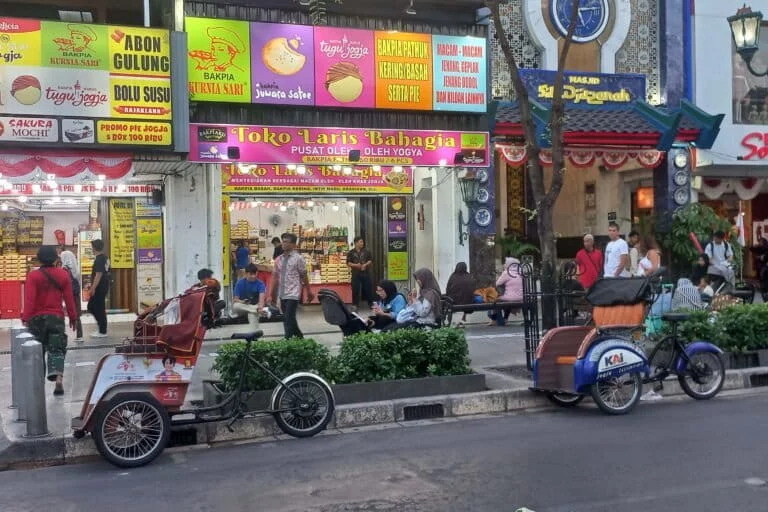
Under the scorching midday sun of Yogyakarta, the pavement radiates a heat that seems to mirror the mounting frustration of Ponijo, a 72-year-old pedicab operator. For years, he has navigated the narrow, historic arteries of the city, but his recent transition to an electric-assisted pedicab has turned his modest livelihood into a source of economic distress. The incident began with a sharp metallic snap—a sound that echoed from the drivetrain through the handlebars, signaling the catastrophic failure of the gear system in his government-issued electric pedicab. Stranded two kilometers from his destination, Ponijo was forced to rely on the solidarity of a fellow driver, Kamsi, who had to "stut" (push) the heavy, immobilized vehicle for 8.7 kilometers using his motorcycle to reach a specialized repair shop. This mechanical failure is not an isolated event; it is a symptom of a systemic breakdown in the city’s ambitious, yet poorly executed, transition to sustainable tourism transport.
A Grand Vision Met with Mechanical Failure
The initiative to transform Yogyakarta’s iconic Malioboro corridor into a "green tourism" zone is a flagship program under the regional government’s "Dana Keistimewaan" (Special Fund). The goal is to replace traditional combustion-engine pedicabs with 1,000 electric units, aiming for a cleaner, quieter, and more modern aesthetic for the tourist-heavy city. However, the reality on the ground tells a story of technological incompatibility and financial exploitation.
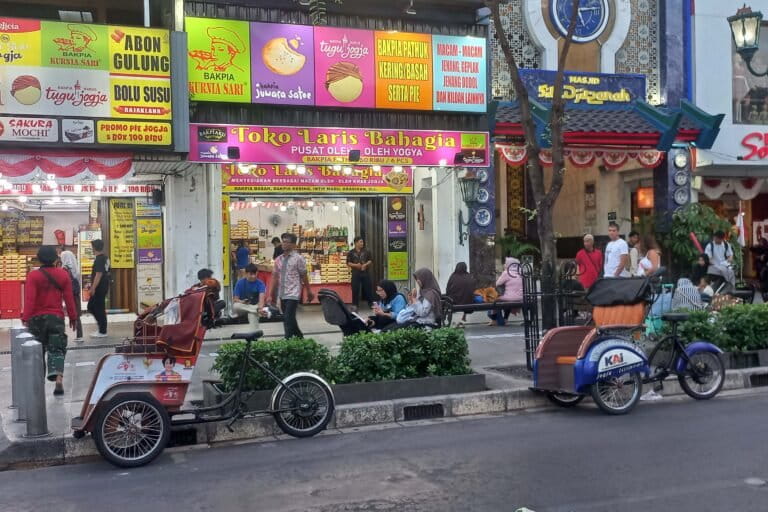
Currently, approximately 350 electric pedicabs are in operation. These units, sourced through various channels including government grants, university partnerships, and corporate social responsibility (CSR) initiatives, have faced severe reliability issues. Drivers frequently report burnt wiring, fragile chassis structures, and critically, a lack of infrastructure. With only one centralized charging station located at the Ketandan parking facility, drivers are often forced to operate under severe range anxiety, frequently leading to battery depletion far from home or work.
The Financial Burden of Battery Decay
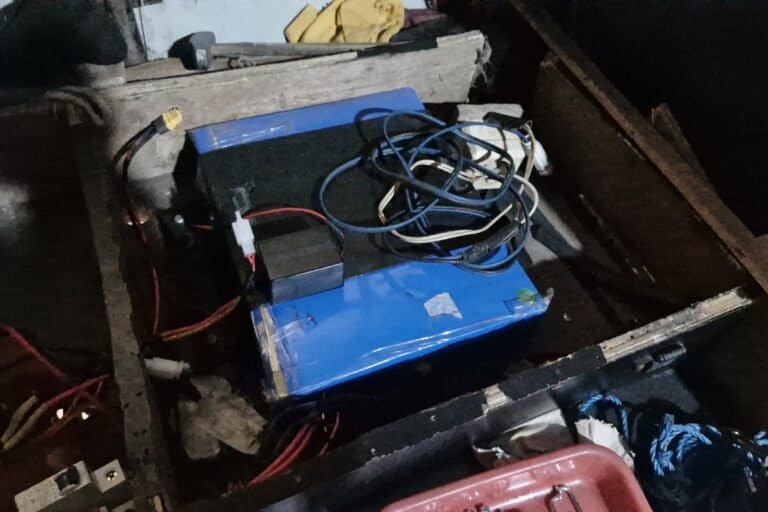
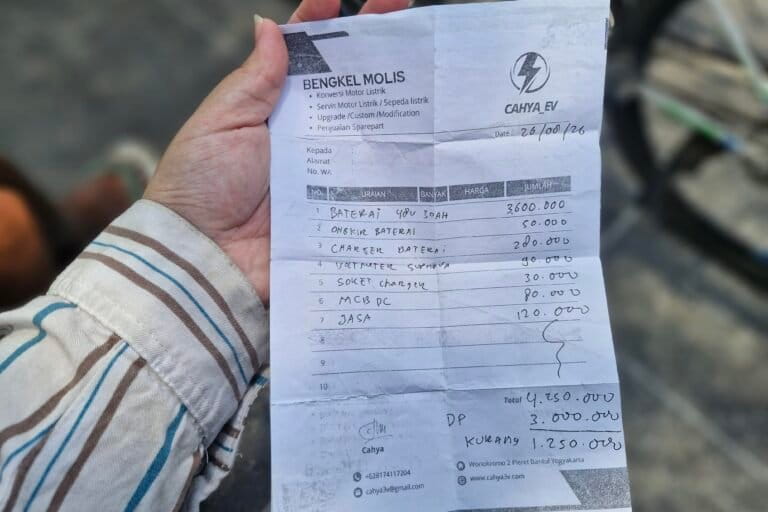
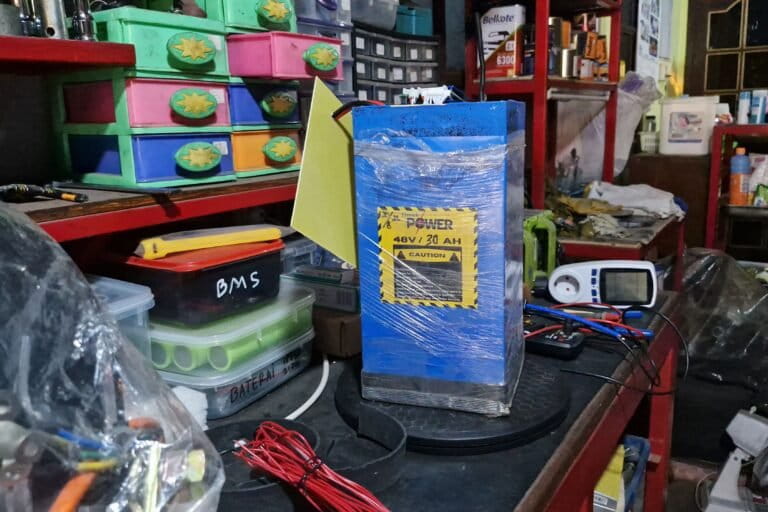
The most acute challenge facing operators like Ponijo is the astronomical cost of battery maintenance. Ponijo’s vehicle, powered by a 16-cell battery system, recently suffered a failure in seven of its cells. In an attempt to restore the vehicle to working order, he was quoted nearly IDR 10 million (approximately $630 USD) for a full replacement, with individual cells priced at IDR 350,000.
For a worker whose daily net earnings oscillate between IDR 60,000 and IDR 100,000, these costs are insurmountable. The result is that many drivers have been forced to leave their vehicles idle in workshops for months, often borrowing older, conventional units or relying on the kindness of colleagues to survive. This "green transition" has effectively tethered the city’s most vulnerable workers to a cycle of debt, as they bear the maintenance costs for equipment that was often provided as a "gift" without long-term financial support or service infrastructure.
Regulatory Ambiguity and the Waste Crisis
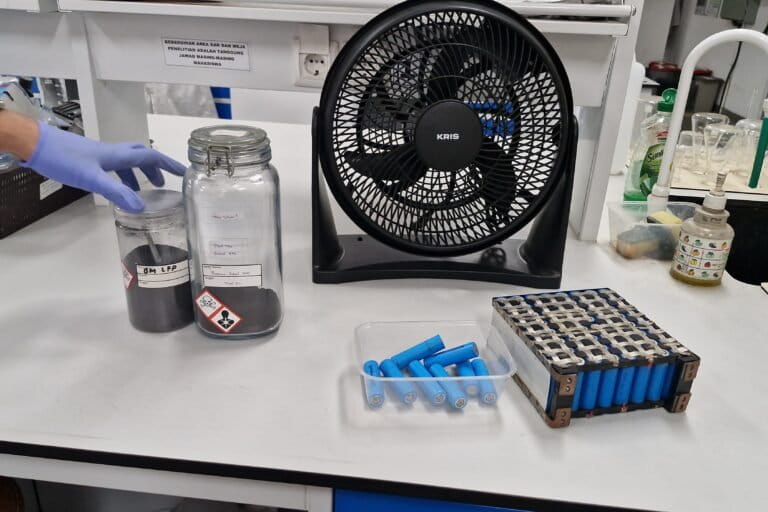
The environmental irony of the program is stark. While the project is marketed as an emission-reduction strategy, it has created an looming environmental hazard: the disposal of lithium-ion and sealed lead-acid (SLA) batteries. Despite the high volume of battery replacements, there is no established roadmap for the management of these toxic materials.
Agha Perdana Putro, Head of the Non-Route Transport Section at the Yogyakarta Transportation Agency, noted that the department is still coordinating with the Environment Agency regarding hazardous waste (B3) management. However, this claim has been met with skepticism. Very Tri Jatmiko, Head of Environmental Planning and Control at the Yogyakarta Environment Agency, stated that his department has not been involved in the planning process for the electric pedicab program. Currently, the city relies on small, localized drop-boxes intended for household-scale waste like fluorescent bulbs or small batteries—wholly inadequate for the heavy, chemical-laden battery packs used in electric vehicles.
Manufacturers, such as PT Langit Biru Indonesia and PT Yogya Presisi Teknikatama Industri, have also expressed frustration. They contend that as manufacturers, they are not responsible for the post-consumer lifecycle of the batteries. Without national or regional regulations mandating "Extended Producer Responsibility" (EPR), the industry remains in a state of paralysis, leaving the disposal of spent batteries to the discretion of individual owners, who often have no alternative but to discard them improperly.
The "Second Life" Potential
Experts suggest that the current crisis is a failure of policy, not technology. Dr. Indra Perdana of the Universitas Gadjah Mada (UGM) Department of Chemical Engineering argues that these batteries should not be treated as waste, but as a secondary resource. He advocates for a "second life" model, where batteries that have dropped below 80% health—making them inefficient for transport—can be repurposed for stationary energy storage, such as powering solar panel arrays or small electronics.
Furthermore, these batteries contain high concentrations of valuable metals like lithium, nickel, cobalt, and manganese. If properly processed through hydrometallurgical extraction, these components could be recycled into raw materials for new batteries. However, Indonesia currently lacks the domestic capacity to process the projected 120,000 tons of electric vehicle battery waste expected by 2030. Without a legislative framework similar to the European Union’s "New Battery Law," which mandates strict take-back programs, these resources—and their environmental risks—remain unmanaged.
Critique of the Green Transition Model
The social and environmental implications of the Yogyakarta electric pedicab program have drawn sharp criticism from environmental advocacy groups. WALHI (Friends of the Earth Indonesia) has questioned the logic of forcing an expensive, market-driven transition on an informal sector.
"The problem with transport in Yogyakarta is not the pedicabs, but the unchecked growth of private motorized vehicles," says Rizky Abiyoga of WALHI Yogyakarta. "By focusing on a symbolic change in the pedicab sector, the government is creating new forms of injustice for the poor while failing to address the root causes of urban congestion and pollution."
Furthermore, activists point out the hypocrisy of the "green" label. If the electricity used to charge these pedicabs is sourced from coal-fired power plants—which provide the bulk of Indonesia’s energy grid—the transition merely shifts the location of the emissions rather than eliminating them. Novita Indri of Trend Asia emphasizes that this is a "shallow" policy, lacking both an engineering analysis of the equipment and a socio-economic impact assessment for the drivers.
A Call for Systematic Reform
The plight of operators like Ponijo underscores the necessity for a fundamental rethink of Indonesia’s approach to energy transition. For a program to be truly sustainable, it must move beyond the delivery of hardware. It requires:
- Infrastructure Integration: Establishing comprehensive charging networks and dedicated maintenance hubs that offer subsidized repairs for low-income operators.
- Legislative Frameworks for Waste: Implementing mandatory EPR policies that hold manufacturers accountable for the entire lifecycle of their products, including the collection and recycling of batteries.
- Socio-Economic Safeguards: Ensuring that the transition does not result in a loss of income or increased debt for the informal workers who are the backbone of local tourism.
- Energy Decarbonization: Addressing the source of electricity used for charging, ensuring that the transition is truly green from generation to consumption.
As the government prepares for further expansion of the electric pedicab fleet, the experience of the last few years serves as a cautionary tale. Without a cohesive, transparent, and equitable policy, the "green" label risks becoming nothing more than a veneer, covering deeper systemic failures that burden the very people they are meant to assist. The transition must be measured not by the number of vehicles on the road, but by the sustainability of the lives of those who steer them.

