
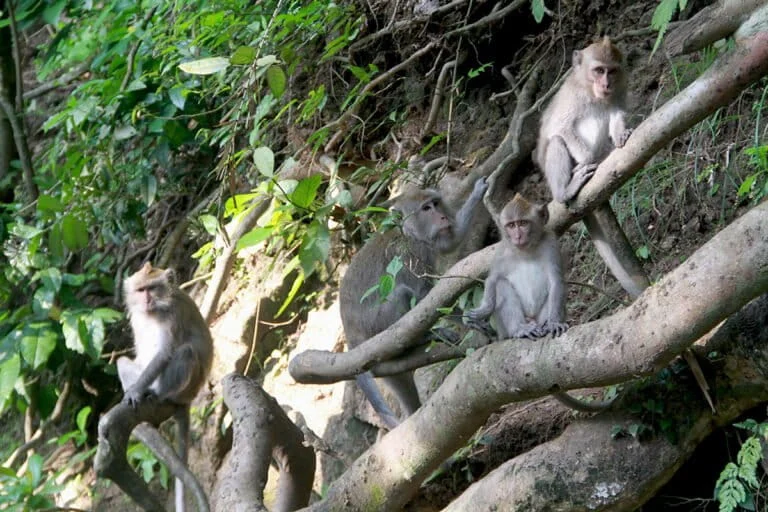
The intersection of human agricultural expansion and the natural habitat of the long-tailed macaque (Macaca fascicularis) has birthed a protracted, complex, and economically damaging struggle in rural Indonesia. For years, farmers in regions such as Tonjong, Central Java, have engaged in a daily, often futile, battle to protect their crops from these highly adaptive primates. While traditional deterrence methods—ranging from rudimentary scarecrows to the use of firecrackers—remain the standard response, researchers and conservationists argue that these measures are failing to address the root causes of the conflict, leading to a cycle of frustration, financial loss, and ecological instability.
The situation in Tonjong serves as a microcosm for a broader, national issue. Recent academic inquiries, including a study led by researcher Mihra Fauzia Mafaz, have highlighted that nearly 77 percent of residents in affected areas view the presence of these primates as a significant nuisance, while over 56 percent express genuine fear regarding their interactions with the animals. These figures represent more than mere annoyance; they reflect a decade-long degradation of livelihood security for smallholder farmers whose primary income sources—bananas, jackfruit, papaya, and cassava—are frequently decimated by raiding parties of macaques.
A Chronology of Conflict and Adaptive Behavior
The conflict is not a static phenomenon but an evolving one. Historical data and community testimonies suggest that the tension has been simmering for over ten years, intensifying as agricultural cycles dictate the availability of food. During the harvest season, the pressure on crops peaks, drawing macaques closer to human settlements. Furthermore, the dry season exacerbates the situation; as natural food sources in the forest diminish, the proximity of human-tended gardens provides an irresistible, high-calorie alternative.

The fundamental challenge, as observed by primatologists, is the remarkable cognitive flexibility of the long-tailed macaque. These primates are social, intelligent, and quick to habituate to human defensive tactics. When a farmer employs a scarecrow or utilizes a loud noise to drive away a foraging troop, the macaques eventually learn that these stimuli are not accompanied by physical harm. Once the association between the deterrent and a threat is broken, the animals return, often with increased boldness. This cycle of "attempted mitigation followed by rapid habituation" has rendered conventional, non-lethal deterrents largely ineffective over the long term.
The Ecological Perspective and Habitat Loss
While local communities frequently cite the lack of food in the forest as the primary driver for these incursions—with 86 percent of surveyed residents identifying hunger as the catalyst—the scientific reality is more nuanced. Current research lacks a definitive statistical correlation between specific instances of forest cover loss and the frequency of human-macaque interactions. The "missing data" problem is a significant hurdle in crafting effective policy.
To move beyond anecdotal evidence, experts advocate for a more rigorous scientific approach. This includes systematic mapping of land-cover changes and a comprehensive inventory of natural forage availability within the forest fringes. Without these data points, conservation strategies remain based on conjecture rather than ecology. The recommendation from researchers to reforest these areas with native, fruit-bearing trees is theoretically sound but faces a significant time-lag problem. Reforestation takes years to yield results, yet the economic pressure on farmers is immediate and constant.
Official Responses and the Need for Collaborative Management
The management of the long-tailed macaque is further complicated by its legal status. Despite being categorized by the International Union for Conservation of Nature (IUCN) as an endangered species, the primate does not currently receive comprehensive protected status in all jurisdictions within Indonesia. This regulatory gap creates uncertainty regarding how local agencies, such as the Natural Resources Conservation Agency (BKSDA), should intervene.
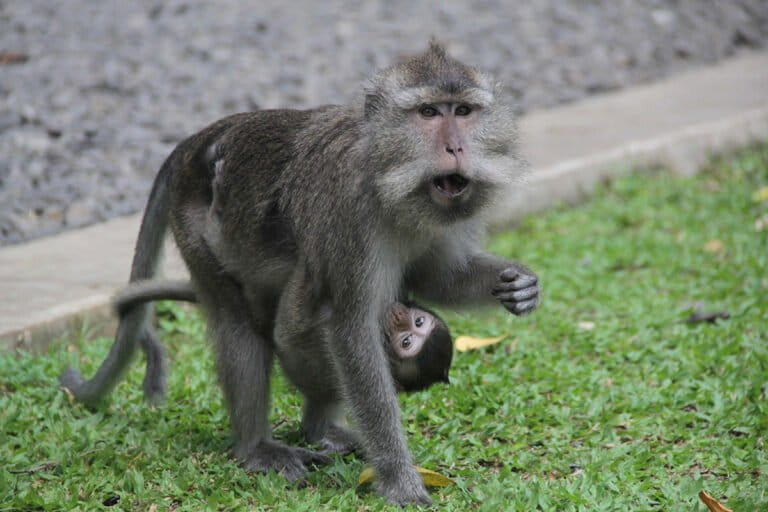
Inter-agency collaboration is essential. According to recent findings, the path forward requires a multi-pronged approach that bridges the gap between agricultural protection and wildlife conservation. This involves not only the BKSDA but also local agricultural departments to help design sustainable "buffer zones." These zones would ideally consist of vegetation that is less attractive to monkeys, serving as a biological barrier between the core forest and high-value crops.
The Efficacy of Active Deterrence
In the absence of a long-term ecological solution, farmers are often left with the choice of passive or active defense. Ilham Kurnia, Manager of The Long-Tailed Macaque Project, notes that passive measures—such as netting or fencing—are rarely sufficient to deter such agile animals. Instead, active human presence remains the most effective, albeit labor-intensive, solution.
Data from projects in regions like Simeulue suggest that active, structured patrolling of plantations can reduce crop damage by as much as 80 percent. This method requires a rigorous schedule, with patrols occurring every two hours during the peak activity times of dawn and dusk. While this approach is statistically successful, it poses a major socio-economic question: can a small-scale farmer, who must also manage planting, weeding, and household duties, realistically sustain such a patrol schedule? The physical and temporal burden of active monitoring suggests that without community-based cooperatives or government subsidies for labor, this "effective" method is likely unsustainable for the average family farm.
A National Crisis of Data and Policy
The scale of this conflict is further illustrated by a 2024 study conducted by Farid Rifaie and colleagues, which analyzed spatial patterns of human-macaque conflicts across Java. By comparing official records from the BKSDA with reports from online media outlets, the researchers identified hundreds of conflict incidents, with high concentrations in regions such as Wonogiri, Gunung Kidul, Sukoharjo, and Sukabumi.
The discrepancy between official reports and media accounts highlights a systemic issue: there is no centralized, standardized database for human-wildlife conflict. Without reliable data, policymakers are unable to prioritize interventions, allocate resources for human-wildlife conflict resolution, or determine the economic impact on rural household welfare. The lack of systematic data regarding the net financial loss—beyond the destruction of raw produce—means that the true cost of this conflict to the Indonesian agricultural sector remains unknown.
Implications and Future Directions
The implications of this ongoing struggle are far-reaching. If left unaddressed, the cycle of conflict risks leading to retaliatory actions by farmers, which could involve poisoning or illegal trapping, further threatening the population of the long-tailed macaque. Conversely, the continued financial drain on farmers risks driving them deeper into poverty, potentially leading to the abandonment of agricultural land and the subsequent loss of food security in local communities.
Moving forward, the strategy for mitigating these conflicts must transition from reactive, short-term tactics to proactive, landscape-level management. This requires:
- Standardized Reporting: Implementing a national reporting system for human-macaque conflicts to allow for evidence-based decision-making.
- Community-Led Conservation: Involving local farmers in the management of buffer zones and forest restoration, ensuring that they are stakeholders in the success of the wildlife habitat.
- Technological Innovation: Testing and scaling the use of non-lethal, technology-based deterrents that can supplement human patrols, such as motion-activated systems that provide a variable, unpredictable, and humane response to animal presence.
- Economic Support: Developing compensation or insurance schemes for farmers who suffer significant crop losses, which could alleviate the desperation that often leads to direct confrontation with wildlife.
The case of the long-tailed macaque in Indonesia serves as a vital reminder of the complexities of living in a shared landscape. As human populations expand and agricultural demands grow, the pressure on wildlife will only intensify. The solution does not lie in the total removal of one party from the landscape, but in the sophisticated management of the interface between them. Success will depend on the willingness of stakeholders to move beyond traditional, ineffective methods and adopt a scientific, collaborative, and, above all, long-term approach to coexistence. The survival of both the rural economy and the species itself rests on the ability to balance these competing needs with foresight and structural change.

