
The skies above the European continent experienced an unprecedented wave of security disruptions as a series of coordinated, false bomb threats targeted commercial aviation for the second time in a single week. The cascading alerts triggered emergency protocols, forced the scrambling of military fighter jets, and resulted in multiple flight diversions, leaving thousands of passengers stranded and aviation authorities on high alert. While subsequent investigations by law enforcement agencies confirmed that all threats were false alarms and no explosive devices were recovered, the recurring nature of the incidents has raised profound concerns regarding the vulnerability of European airspace and the psychological toll of psychological warfare on modern transportation systems.
The latest crisis unfolded on a Thursday morning, plunging international air corridors into chaos. According to comprehensive tallies compiled by major international news agencies including Reuters and AFP, at least 14 commercial flights operating across various European jurisdictions became the primary targets of the anonymous bomb warnings. This alarming spike followed a similarly disruptive incident just two days prior on Tuesday, which had affected roughly 10 flights and a cruise ship, compounding anxieties that commercial aviation was being systematically exploited to test emergency response readiness and strain regional security resources.
Comprehensive Chronology of the Thursday Security Incidents
The Thursday morning sequence of events began unfolding rapidly as air traffic control centers across multiple countries received simultaneous warnings regarding potential explosive devices onboard several inbound and outbound aircraft. The systematic nature of the threats quickly necessitated emergency measures, transforming routine commercial journeys into high-stakes security operations.
Among the most high-profile incidents involved an Aer Lingus flight operating route EI402 from Dublin to Rome. Flight tracking data from platforms such as Flightradar24 indicated that the Airbus A320 abruptly altered its trajectory near Paris, broadcasting an emergency squawk code. Acting under the directives of French authorities, the flight was diverted to the Evreux-Fauville Air Base, located approximately 100 kilometers west of the French capital. The Prime Minister’s office closely monitored the operation as the French Air and Space Force scrambled interceptor aircraft to escort the commercial liner safely to the military facility, where it underwent rigorous clearance checks.
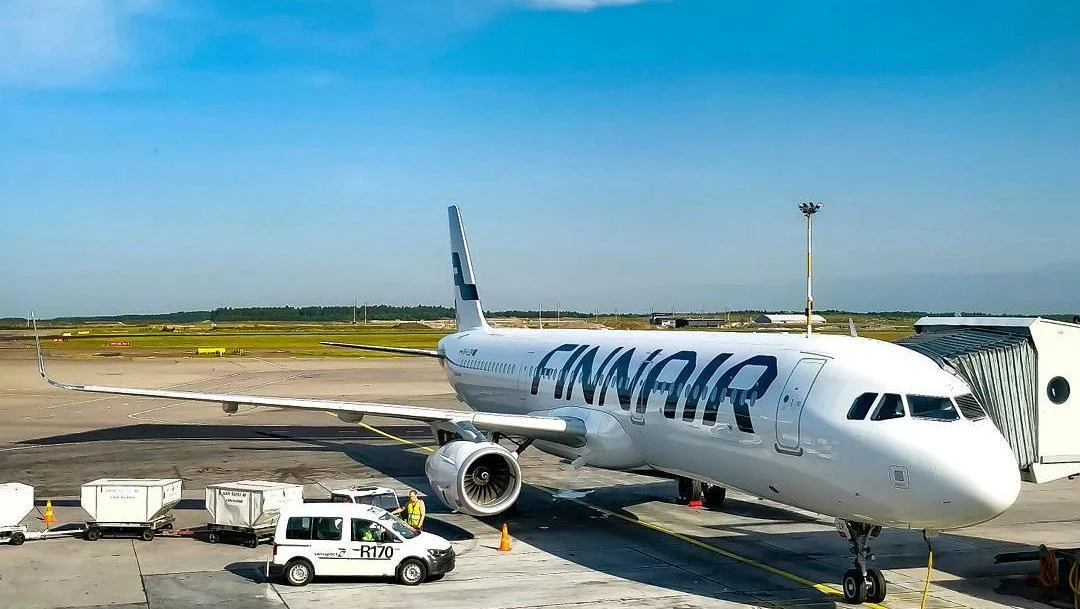
Simultaneously, Scandinavian carrier Finnair found itself embroiled in the security crisis. One of its flights originating from Helsinki, operated via charter partner Jettime, was forced to make an emergency landing in Vienna following a threat notification. Another Finnair service traveling from Helsinki to Rome was subjected to an aggressive interception protocol, with military fighter jets escorting the aircraft directly into the Italian capital, where specialized bomb disposal teams immediately surrounded the tarmac to inspect the cabin and cargo holds.
Further east, a LOT Polish Airlines flight originating from Warsaw requested and received emergency landing clearance at Brussels Airport after receiving suspicious communications. Belgian authorities confirmed the safe arrival of the aircraft, though they noted that standard operating procedures were deemed sufficient without requiring extraordinary secondary cordons.
The Balkan region also absorbed a significant share of the disruptions. Bulgarian aviation officials reported three emergency landings within their sovereign territory. The Ministry of Interior confirmed that two Ryanair services—originating from Copenhagen and Madrid respectively—touched down safely at Sofia Airport. A third flight, arriving from London, was actively diverted and successfully landed at Plovdiv, Bulgaria’s second-largest city.
In the Czech Republic, national police forces confirmed that four separate flights heading toward Prague were targeted by identical bomb threats within the same operational window. While the national police intelligence units classified the immediate credibility of the threats as low, authorities refused to adopt a complacent stance. In a public statement issued via official channels, Czech law enforcement emphasized that standard safety protocols were fully activated, ensuring that all necessary precautionary measures were executed with minimal disruption to overall airport operations and passenger flows. Upon landing, each of the four aircraft was directed to isolated stands to be meticulously swept by explosives-detection K9 units and bomb squads. Subsequent reports from the Czech news agency CTK confirmed that no hazardous materials were found.
The operational disruption extended into Eastern and Southern Europe. Romanian intelligence agencies coordinated the safe landing of a Wizz Air flight operating the Milan to Bucharest route, which prompted the immediate emergency evacuation of nearly 200 passengers upon touching down at Henri Coanda International Airport. Concurrently, Italian news agency ANSA reported similar threats directed toward two separate commercial flights scheduled to land at Milan Malpensa Airport, both of which managed to land without incident before being subjected to mandatory security screenings.
Escalating Pattern: The Preceding Disruptions of Tuesday and Monday
The Thursday crisis did not occur in an isolated vacuum; rather, it represented the culmination of a sustained, multi-day campaign of coordinated disruption. Just 48 hours prior, on Tuesday, a nearly identical wave of approximately 10 false threat alerts targeted European airspace. Aviation data registries compiled by monitoring groups such as The National indicated that at least seven commercial flights and a major cruise vessel received concurrent bomb warnings within a compressed timeframe.
During Tuesday’s events, Warsaw Chopin Airport was forced to implement temporary ground stops and airspace restrictions, while military air defense units in Italy were placed on high alert and scrambled assets to intercept targeted airliners. Budget carrier Ryanair absorbed the heaviest burden during the Tuesday wave, with at least four of its scheduled European routes compromised. Polish aviation authorities verified that two distinct threat warnings were specifically targeted at inbound aircraft bound for Warsaw, including a Scandinavian Airlines flight from Copenhagen and a LOT Polish Airlines connection departing from London Heathrow.
The psychological and operational strain had begun even earlier in the week. On Monday, a Wizz Air service flying the London-to-Sofia corridor was forced to execute an unscheduled mid-air diversion to Budapest, Hungary, after a threat was communicated to the flight deck while cruising at altitude. Within minutes of the alert, the Hungarian Air Force deployed combat-ready JAS-39 Gripen fighter jets to intercept and shadow the civilian airliner until it made a safe emergency landing on Hungarian soil.
Geopolitical Context and the Spectre of Hybrid Warfare
Although no sovereign government or non-state actor has formally claimed responsibility for the wave of false threats, the timing of the incidents has amplified existing geopolitical tensions across the European continent. Western security officials and intelligence agencies have increasingly accused foreign actors—specifically naming Russia and Iran—of orchestrating campaigns of "hybrid warfare," sabotage, and psychological subversion designed to destabilize civil infrastructure, overwhelm emergency services, and sow public panic within European Union member states.
Both Moscow and Tehran have consistently and categorically denied any involvement in orchestrating or encouraging these aviation hoaxes. Nevertheless, the systematic nature, precise timing, and cross-border synchronization of the threats strongly suggest a high degree of operational planning, intended to test the resilience of European air traffic management systems and cross-border intelligence-sharing mechanisms.
Broader Implications for Aviation Security and Economic Operations
The repetition of large-scale false alarms carries severe economic and operational ramifications for the global aviation industry. While safety remains the absolute priority, forcing dozens of commercial flights to divert, burn fuel reserves, schedule emergency maintenance, and undergo intensive security sweeps results in substantial financial losses for commercial carriers. Furthermore, the cascading delays inevitably ripple through international flight schedules, stranding tens of thousands of passengers at hubs across Europe.
Aviation security experts note that while modern protocols are robust enough to handle isolated incidents, persistent, wide-scale campaigns of false threats risk causing "alert fatigue" among ground crews and air traffic controllers. Maintaining uncompromising vigilance in the face of repeated hoaxes requires immense dedication from law enforcement, military personnel, and aviation authorities alike. As European intelligence agencies continue their joint investigations to trace the origin points of the digital communications and phone calls used to transmit the threats, governments face the ongoing challenge of reinforcing cyber and physical security frameworks to safeguard the skies against asymmetric disruptions.

