

The global pursuit of climate solutions has increasingly centered on carbon markets, a mechanism that promises to mitigate emissions through financial trade. However, for indigenous and local communities who have stewarded the world’s most biodiverse ecosystems for generations, these market-based approaches have become a source of contention rather than salvation. As the international community prepares for the 31st Conference of the Parties (COP31) scheduled for November 2026 in Antalya, Türkiye, a growing coalition of activists, environmental organizations, and local leaders is challenging the dominance of carbon trading. They argue that these schemes facilitate greenwashing, threaten land tenure, and exclude the very people who have consistently proven their effectiveness in preserving the planet’s remaining natural forests and coastal ecosystems.
The critique centers on the inherent flaws of "carbon offsets," where corporations and industrialized nations purchase credits to balance their emissions rather than reducing them at the source. According to Uli Arta Siagian, a lead campaigner for the Executive National Office of Walhi (Friends of the Earth Indonesia), the commodification of carbon is a dangerous distraction. "Trade in carbon is not a solution, but a profit-seeking project that exploits the climate crisis," Siagian stated during a public forum in Jakarta. He emphasized that current climate finance mechanisms, particularly those based on Results-Based Payments (RBP), suffer from a centralist bias that prioritizes state-level national emission targets over the rights and contributions of indigenous peoples at the local level.
The Legislative Landscape: Article 6.8 and the Path Not Taken
At the heart of the debate is Article 6.8 of the 2015 Paris Agreement, which outlines "Non-Market Approaches" (NMA) to climate action. Unlike carbon trading, which seeks to turn emissions reductions into a tradable commodity, Article 6.8 provides a framework for international cooperation that emphasizes technology transfer, capacity building, and financial support without the need for market-based transactions.

Despite its potential, Article 6.8 remains underutilized. As of late 2026, the UNFCCC registry lists seven NMA initiatives, none of which explicitly address the recognition of indigenous land tenure or the institutionalization of community-led forest governance. This omission is significant, as approximately 70% of the world’s best-preserved forest cover exists within territories managed by indigenous and local communities. For these groups, the lack of formal legal recognition of their land rights—often referred to as tenurial rights—leaves them vulnerable to displacement under the guise of "conservation" or "carbon sequestration" projects led by state entities or private investors.
Chronology of the Dispute and the Push for Reform
The tension between grassroots conservationists and the international carbon market has escalated over the past decade. While the 2015 Paris Agreement created the infrastructure for both market and non-market cooperation, the subsequent years saw a massive influx of private capital into "nature-based solutions" that often prioritized carbon accounting over human rights.
- 2015: The Paris Agreement is adopted, with Article 6.8 providing a non-market mandate.
- 2021–2022: Indonesia reports significant emission levels in the Forestry and Other Land Use (FOLU) sector, failing to meet the "unconditional" targets set in its national NDC.
- 2024: The First Biennial Transparency Report (BTR-1) reveals that FOLU emissions in Indonesia reached approximately 230 million tons of CO2 equivalent, significantly higher than required for climate-safe trajectories.
- 2025: Heightened advocacy from civil society groups regarding the risks of "carbon majors" using offset credits to bypass domestic emissions regulations.
- 2026: Preparation for COP31 intensifies, with Walhi and other coalitions demanding a clear separation between market-based trading and direct, non-market support for indigenous stewards.
The Economic and Environmental Risks of Market-Based Trading
The reliance on carbon markets carries severe systemic risks, particularly for countries with high rates of deforestation and land degradation. Riko Wahyudi, a researcher at the Research Center for Climate Change (RCCC) at the University of Indonesia, notes that the current FOLU sector performance poses a threat to Indonesia’s ability to meet its Nationally Determined Contributions (NDC). Under the rules of the Paris Agreement, every carbon credit sold internationally must be subject to "corresponding adjustments," meaning the selling country cannot count those reductions toward its own climate goals.
"If the country fails to suppress deforestation and fire-related emissions, participating in international carbon markets becomes a liability," Wahyudi explains. "The pressure to authorize and export credits could lead to a ‘double counting’ crisis or, worse, a situation where the state sacrifices its own emission reduction capacity for short-term financial gain."

Moreover, the complexity of these transactions creates a "bureaucratic wall." Funds intended for climate action often dissipate through multiple layers of intermediaries, rarely reaching the communities that perform the actual labor of restoration and protection. Critics argue that this system is inherently inequitable, as it rewards the entities responsible for carbon storage without providing direct, secure funding for the community institutions that prevent deforestation in the first place.
The Case for Non-Market Recognition
To address these inequities, Walhi has proposed a tripartite recognition model under the framework of Article 6.8. This model advocates for:
- Legal Recognition: Binding, formal recognition of indigenous and community land rights.
- Contribution Recognition: Official documentation of community-led environmental practices as legitimate climate mitigation and adaptation strategies.
- Access Recognition: Direct financial and technical support to communities, bypassing commercial market intermediaries.
This shift would require a move away from "carbon-only" indicators. Instead, success would be measured by biodiversity levels, food security metrics, and the strength of local governance institutions.
Government Perspectives and Marine Conservation
The Ministry of Marine Affairs and Fisheries (KKP) has recently signaled a shift toward this non-market philosophy, particularly regarding "Blue Carbon." Bernard C. Purba, an expert in marine and coastal ecosystem management, notes that Indonesia possesses a vast network of Other Effective Area-based Conservation Measures (OECM). These areas are managed by communities through traditional knowledge systems, such as the Sasi system in Maluku and Papua, Awig-Awig in Nusa Tenggara and Bali, and Panglima Laot in Aceh.
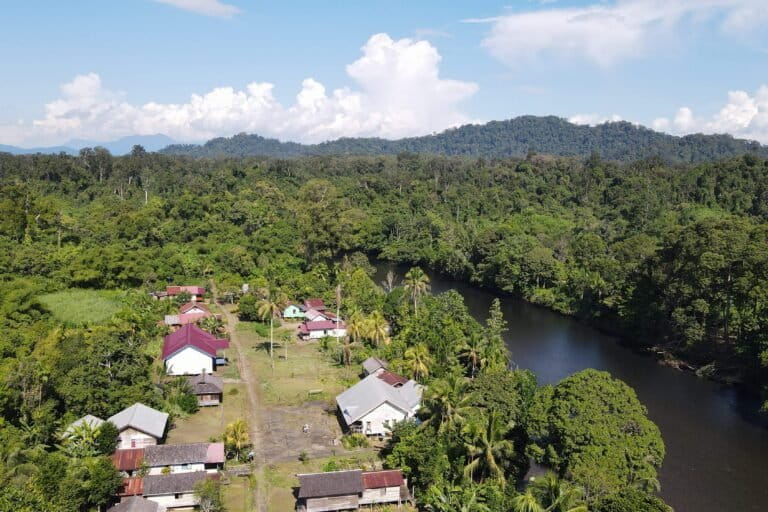
Data from the KKP identifies 650 potential OECM areas across the country. Of these, nearly 77% are managed by local communities or indigenous groups, covering over 5 million hectares. These systems have proven more resilient than state-imposed conservation zones because they are deeply rooted in the social fabric of the people who rely on them for survival. The KKP’s support for Article 6.8 as an instrument for these communities suggests a potential fracture in the government’s previously unified stance on market-led carbon projects.
The Implications for COP31 and Beyond
As the Antalya conference approaches, the global climate community faces a fundamental choice. The current trajectory favors a financialized approach that treats the Earth’s ecosystems as factories for carbon credits. The alternative—championed by indigenous groups and civil society—views climate action as a matter of social justice, legal equity, and the empowerment of local custodians.
The demands made by the Indonesian coalition are clear: they seek a transition to a system where the "carbon majors" are held legally accountable for their emissions rather than being allowed to purchase their way out of responsibility. They call for a "sharp boundary" between market and non-market mechanisms, ensuring that climate finance acts as a bridge to sustainable development rather than a catalyst for land grabbing and environmental commodification.
Ultimately, the failure to prioritize indigenous and local management is a failure of climate strategy. If the goal is to keep the planet within a 1.5-degree Celsius warming threshold, the evidence suggests that the most effective, scalable, and equitable strategy is to support the people who are already doing the work. By pivoting toward the principles of Article 6.8, international delegates at COP31 have the opportunity to transform climate finance from a market transaction into a global commitment to the rights and livelihoods of the world’s most effective environmental defenders. The question remains whether the political will exists to decouple climate action from the interests of the carbon industry and place human rights at the center of the global climate agenda.

