
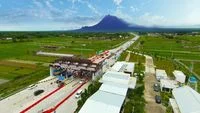
PT Jasa Marga (Persero) Tbk. (JSMR), the state-owned enterprise responsible for the operation and development of Indonesia’s toll road infrastructure, has officially restructured its top-tier management. The leadership overhaul, formalized during the company’s Extraordinary General Meeting of Shareholders (RUPSLB) held in late November 2026, marks a significant strategic pivot for the company as it navigates a maturing infrastructure landscape and seeks to optimize its financial and operational efficiency.
Strategic Consolidation of Executive Roles
The most notable adjustment in the organizational structure involves the consolidation of the business and service divisions. Previously operated as distinct silos, the positions of Director of Business and Director of Service have been merged into a single portfolio: Director of Business and Services. This role has been entrusted to Ari Respati. Industry analysts suggest this move is intended to streamline the customer journey, ensuring that business development—specifically the expansion of toll road concessions—is intrinsically linked to the service standards provided to road users.
Simultaneously, the critical position of Director of Finance and Risk Management has been filled by Sigit Prastowo. This appointment comes at a time when Jasa Marga is managing significant debt obligations related to its aggressive capital expenditure cycle over the past decade. The stewardship of financial risk is paramount as the company balances continued expansion with the necessity of maintaining a healthy debt-to-equity ratio in a fluctuating macroeconomic environment.
The New Executive Landscape
The RUPSLB confirmed the following appointments to the Board of Directors:
- President Director: Rivan A. Purwantono
- Vice President Director: Andry Tanudjaja
- Director of Business and Services: Ari Respati
- Director of Human Resources and Transformation: Riksa Prakoso
- Director of Finance and Risk Management: Sigit Prastowo
- Director of Operations: Yoga Tri Anggoro
- Director of Technical: Fitri Wiyanti
The Board of Commissioners also saw a recalibration to align with the new strategic direction, with Juri Ardiantoro continuing as President Commissioner. The oversight board now includes Syamsul Bachri Yusuf, M. Asrorun Ni’am Sholeh, and Nurul Ghufron as Commissioners, supported by Independent Commissioners Tedi Kurniawan, Nachrowi Ramli, and Rudi Antariksawan.
Departures and Corporate Continuity
The transition period sees the departure of three key executives who have steered the company through the challenging post-pandemic recovery years: Pramitha Wulanjani (Director of Finance and Risk Management, 2023–2026), Yaya Ruhiya (Director of Service, 2025–2026), and Reza Febriano (Director of Business, 2021–2026). Their tenure was defined by the completion of several sections of the Trans-Java Toll Road and the ongoing development of the Trans-Sumatra network.
The company issued a formal statement via its official social media channels, expressing gratitude for the contributions of the outgoing directors. "We hope the Board of Directors and Board of Commissioners are granted smoothness in carrying out their mandate, presenting leadership that brings a positive impact on the company’s progress, and inspiring all Jasa Marga ‘Roadsters’ to continue growing and innovating," the statement read.
Contextualizing the Shift: Infrastructure and Finance
To understand the weight of this reshuffle, one must look at the broader financial context of Jasa Marga. As of 2026, Jasa Marga remains the largest toll road operator in Indonesia, holding the majority market share of the country’s extensive toll road network. However, the company has faced persistent pressure regarding its leverage. The infrastructure sector is capital-intensive, and the long gestation period for toll road projects requires sophisticated financial engineering.
The appointment of a new Director of Finance and Risk Management is a signal to investors that Jasa Marga is prioritizing financial prudence. The global rise in interest rates and the volatility of the Indonesian Rupiah over the last three years have necessitated a more conservative approach to debt servicing and refinancing strategies. By consolidating the Business and Service functions, the company is also likely attempting to increase the non-toll revenue component of its income statement, such as commercial area development at rest stops and digital service integration.
Evolution of Jasa Marga: A Timeline
- 2021-2022: The company focused heavily on operational recovery following the lifting of COVID-19 mobility restrictions. Revenue began to normalize as traffic volume returned to pre-pandemic levels.
- 2023: Significant focus was placed on divestment of toll road assets to recycle capital. This strategy allowed Jasa Marga to reduce its debt burden while maintaining its role as the primary project developer.
- 2024-2025: The company began emphasizing "Smart Toll Road" technology, integrating Artificial Intelligence (AI) for traffic management and implementing Multi-Lane Free Flow (MLFF) systems.
- Late 2026: The RUPSLB serves as a watershed moment to pivot from pure infrastructure construction toward operational excellence and digital service innovation.
The Role of Technology in Future Operations
The inclusion of a "Director of Human Resources and Transformation" underscores the internal shift required to manage a workforce increasingly reliant on automated systems. Jasa Marga’s "Roadsters"—the term used for its employees—are transitioning from traditional toll booth management to technical monitoring and digital infrastructure maintenance. The transformation portfolio is crucial for the company to move away from labor-heavy toll collection toward a digital-first tolling environment, which is significantly more efficient but requires a different set of technical competencies within the staff.
Market Implications and Investor Sentiment
Investors generally view such leadership transitions in state-owned enterprises (SOEs) as a means of ensuring alignment with the current government’s long-term infrastructure agenda. For Jasa Marga, the key performance indicator (KPI) for the new management will be the stabilization of its balance sheet while maintaining the pace of development for the remaining strategic national projects (PSN).
Market analysts note that the consolidation of business and service roles is a logical step toward "customer-centric" infrastructure. In the past, the business side was focused on winning concessions, while the service side managed the day-to-day operations. By merging these, the company aims to create a unified strategy that considers the user experience during the bidding and design phase of new toll roads, rather than treating it as an afterthought.
Challenges Ahead: The Regulatory and Economic Environment
The new leadership team inherits a complex regulatory landscape. The transition to a full MLFF system—where toll booths are removed and replaced by satellite or RFID-based detection—remains a work in progress. This requires not only technical execution but also robust inter-agency coordination with the Ministry of Public Works and the Toll Road Regulatory Agency (BPJT).
Furthermore, the impact of climate change on infrastructure resilience is an increasing concern for Jasa Marga. With more frequent extreme weather events affecting drainage and road integrity, the Technical and Operations divisions will need to allocate more budget toward maintenance and preventative engineering, potentially putting pressure on operational margins.
Conclusion: A New Chapter for Indonesia’s Toll Road Giant
The restructuring at Jasa Marga is not merely a personnel change; it is a strategic repositioning of an industrial giant. By streamlining its executive structure and placing a renewed emphasis on risk management and digital transformation, the company is preparing for the next decade of Indonesian infrastructure development.
As the new leadership settles into their respective roles, the focus will likely remain on maintaining the company’s credit rating and ensuring that its toll road network remains the backbone of the Indonesian logistics and transportation sector. The success of this new management team will be measured by their ability to harmonize the company’s financial stability with the high demand for national infrastructure development, all while navigating the rapidly evolving digital landscape of modern mobility.
For the "Roadsters" at Jasa Marga, the new directive is clear: the path forward is one of innovation. Whether through the integration of better technology, improved service quality, or more efficient financial management, Jasa Marga remains at the center of the country’s economic connectivity. The upcoming quarterly earnings reports will be the first indicators of how the market perceives the efficacy of this new executive lineup and their ability to execute the company’s long-term vision.

