
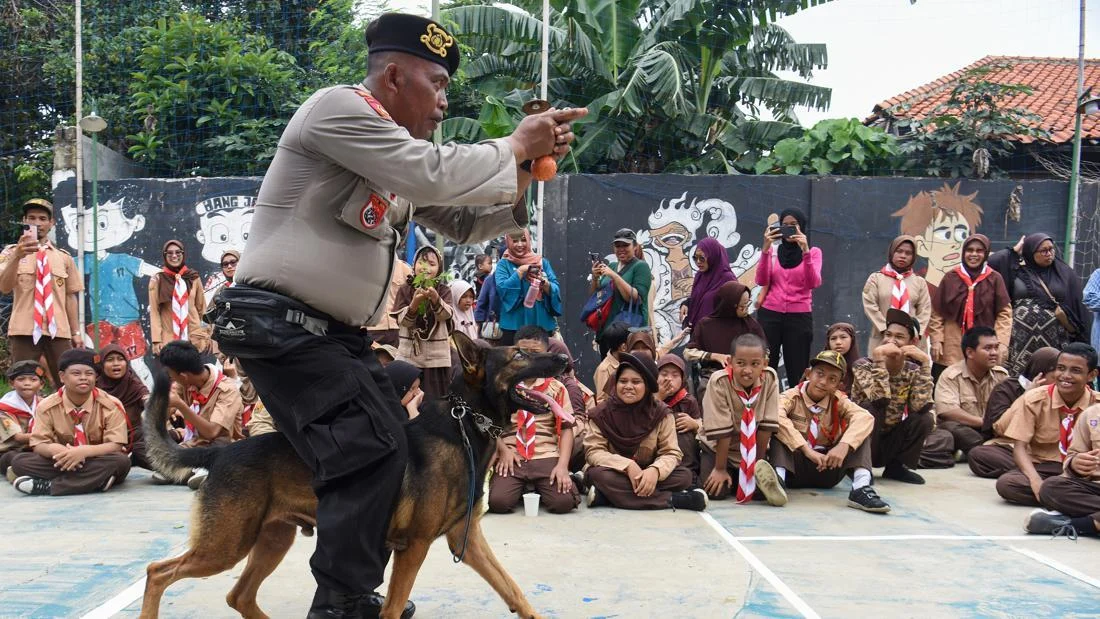
The courtyard of Sekolah Luar Biasa (SLB) Bina Insani in Depok, West Java, transformed into an interactive learning hub recently as students with diverse special needs gathered for a unique educational program featuring the K-9 unit of the Indonesian National Police. The event, designed to introduce children with special needs to the critical roles played by working animals, combined sensory learning, social engagement, and law enforcement outreach into a single inclusive program. By bridging the gap between specialized education and public institutions, the initiative underscored the growing importance of experiential learning tailored to exceptional learners.
Educational programs involving therapy and working animals have gained significant traction worldwide, yet specialized outreach tailored specifically to students in special needs schools (Sekolah Luar Biasa) remains relatively rare in public programming. The visit by the K-9 unit to SLB Bina Insani Depok represents a progressive step toward breaking down accessibility barriers, ensuring that students with physical, intellectual, or developmental disabilities are not excluded from dynamic community experiences. Through closely supervised interactions, the students were introduced to the intelligence, discipline, and gentle nature of police dogs, shifting traditional perceptions of law enforcement animals from figures of strict authority to approachable partners in public safety.
Chronology and Setup of the Event
Preparations for the K-9 educational outreach began weeks in advance, coordinated jointly by the administration of SLB Bina Insani and community outreach divisions of the local law enforcement agency. Educators worked alongside handlers to assess the sensory sensitivities of the student body, ensuring that the environment would remain calm, structured, and psychologically safe for all participants.
On the day of the event, the program commenced in the early morning to capitalize on optimal weather and peak student alertness. Handlers from the K-9 unit introduced the specialized dogs—primarily breeds renowned for their agility, tracking abilities, and stable temperaments, such as German Shepherds and Belgian Malinois—in a controlled, gradual manner. The session began with a distant demonstration of basic obedience commands, allowing students to acclimate to the presence and vocalizations of the animals without feeling overwhelmed.
As the morning progressed, the handlers transitioned to interactive demonstrations. Students were guided through sensory-friendly touch stations where they could feel the thick coats of the dogs, observe specialized equipment, and learn hand signals used by handlers. Teachers and aides remained close at hand, providing individualized support and translating the handlers’ instructions into sign language or simplified concepts where necessary. The structured timeline ensured that every student, regardless of their specific learning profile, had the opportunity to engage at their own comfort level.
The Significance of K-9 Units in Public Education
Working dogs in law enforcement, commonly referred to as K-9 units, undergo rigorous, multi-year training programs that prepare them for specialized tasks ranging from search and rescue operations to narcotics detection and public order maintenance. Introducing these animals to educational environments serves a dual purpose: it demystifies police work for young minds and provides a powerful therapeutic stimulus.
For exceptional learners, animal-assisted interactions offer profound cognitive and emotional benefits. Interacting with trained dogs has been clinically shown to reduce cortisol levels, alleviate anxiety, and improve focus among children with neurodivergent conditions such as autism spectrum disorder, attention deficit hyperactivity disorder (ADHD), and sensory processing challenges. The predictable, non-judgmental nature of well-trained working dogs creates an atmosphere of emotional safety, encouraging students who may otherwise experience social withdrawal to communicate, smile, and participate actively in group settings.
Furthermore, the educational component of the visit provided valuable lessons in empathy, animal welfare, and civic responsibility. Handlers explained the daily routines of the dogs, including their specialized diets, rigorous health check-ups, and the deep bond of trust that must be forged between a handler and their canine partner. This narrative taught students the importance of respect for living creatures and highlighted the dedication required in professional working relationships.
Perspectives from Educators and Law Enforcement
The administration of SLB Bina Insani Depok expressed profound appreciation for the collaboration, emphasizing that inclusive programming is a cornerstone of holistic special education. In a statement reflecting the school’s philosophy, faculty members noted that traditional classroom instruction must be complemented by real-world experiences to foster genuine independence and social integration among students with special needs.
"Education for exceptional children extends far beyond textbooks and indoor classrooms," noted a representative from the school’s coordination committee. "When external institutions like the police department take the initiative to adapt their programs for our students, it sends a powerful message of inclusion and societal acceptance. Our children see that they are valued members of the broader community who deserve access to the same exciting educational experiences as anyone else."
From the law enforcement perspective, community outreach initiatives involving K-9 units are viewed as essential investments in public trust and social cohesion. Officers involved in the Depok deployment emphasized that bridging the gap between police forces and vulnerable populations helps build foundational trust from an early age. By tailoring their demonstrations to accommodate children with diverse learning needs, the handlers demonstrated a high degree of operational flexibility and empathy.
"Our working dogs are trained to serve the public in high-stakes environments, but their best attribute is their ability to connect with people," remarked a senior K-9 handler following the event. "Seeing the positive reactions of the students at SLB Bina Insani reminds us that the value of our unit lies not only in operational efficiency, but also in our capacity to bring joy, education, and reassurance to every segment of society, especially those who often face societal barriers."
Broader Implications for Inclusive Special Education
The successful execution of the K-9 educational program at SLB Bina Insani highlights a broader national need for enhanced inclusivity in public engagement initiatives across Indonesia. While educational reforms have increasingly emphasized inclusive schooling models—where children with and without special needs share learning environments—specialized institutions like SLB remain vital sanctuaries that require specialized outreach to bridge the resource gap.
Experts in inclusive education argue that mainstreaming experiential learning requires deliberate policy support and inter-agency collaboration. When police departments, municipal agencies, and private organizations proactively design accessible programs for SLB students, it normalizes disability in the public sphere and combats persistent stigmas. Such initiatives demonstrate that accessibility is not merely about physical infrastructure like ramps and elevators, but also about cognitive and sensory accessibility in public programming.
The economic and social implications of such programs are noteworthy. Early positive exposures to civic institutions help build confidence and social competence among special needs youth, laying the groundwork for greater participation in community life as they transition into adulthood. Furthermore, these events foster a culture of inclusivity among public servants, ensuring that future interactions between law enforcement and individuals with special needs are characterized by understanding, patience, and appropriate accommodation.
As the event concluded with group photographs and token presentations, the lingering impact on the students, teachers, and officers was palpable. The initiative served as a blueprint for how institutional resources can be effectively mobilized to enrich the lives of exceptional learners. Moving forward, educators and community stakeholders in Depok hope that the success of the SLB Bina Insani K-9 outreach will inspire similar collaborative ventures nationwide, fostering a culture where education, safety, and inclusivity are truly accessible to all.

