
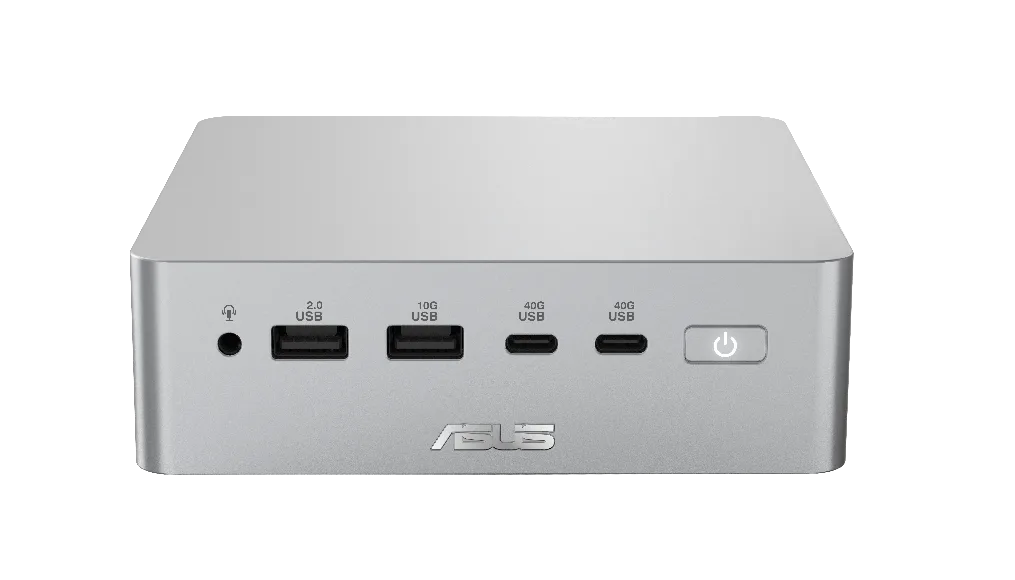
The landscape of professional computing is undergoing a seismic shift as ASUS officially unveils the Ascent QN10, the world’s first Mini PC powered by the cutting-edge Snapdragon X2 Elite platform. This launch marks a pivotal transition in hardware architecture, moving away from traditional, power-hungry desktop configurations toward a new paradigm of AI-native, localized processing. With an integrated Neural Processing Unit (NPU) capable of delivering up to 80 TOPS (Trillions of Operations Per Second), the Ascent QN10 is designed to facilitate on-device Large Language Model (LLM) inference, effectively decentralizing AI capabilities by moving them from the cloud directly to the user’s desktop.
The Technological Leap: Why 80 TOPS Matters
For the average professional, the term "TOPS" has historically been relegated to technical documentation, but with the Ascent QN10, it becomes the primary metric of performance. The integration of the Snapdragon X2 Elite architecture represents a fundamental change in how machines "think." Unlike standard processors that rely on CPU and GPU offloading, the X2 Elite’s NPU is purpose-built for the mathematical rigors of neural network acceleration.
By achieving 80 TOPS, the Ascent QN10 allows for the execution of complex, generative AI tasks without the latency typically associated with remote server requests. This means that applications—ranging from real-time language translation and video upscaling to advanced predictive workflow automation—operate with near-zero latency. For creators and developers, this shift is critical; it ensures that proprietary data remains within the local environment, satisfying the stringent privacy and security requirements of enterprise-level operations while simultaneously removing the "bottleneck" of internet bandwidth.
Chronology of the Development and Market Entry
The development of the Ascent QN10 did not occur in a vacuum. It is the culmination of a multi-year collaborative effort between ASUS and Qualcomm to bring mobile-grade power efficiency to the desktop form factor.
- Early 2024: Industry rumors began circulating regarding the adaptation of Qualcomm’s Snapdragon X series for the Windows-on-Arm ecosystem.
- Mid-2024: ASUS initiated "Project Ascent," focusing on miniaturizing the motherboard layout to accommodate the thermal requirements of the X2 Elite while maintaining a sub-0.7-liter volume.
- Late 2024 (Official Unveil): The Ascent QN10 was finalized, showcasing a design that is 86 percent more compact than standard 5-liter desktop units, signaling a departure from the bulky tower PCs that have dominated the office environment for decades.
- Q1 2025 (Expected Market Availability): Global distribution is scheduled to begin, targeting the enterprise, creative, and software development sectors.
Design Philosophy: Minimalism Meets Industrial Power
The physical architecture of the Ascent QN10 challenges the long-held assumption that high-performance computing requires large, ventilated chassis. By utilizing the Snapdragon X2 Elite’s superior power-per-watt efficiency, ASUS engineers were able to shrink the device to a volume of less than 0.7 liters. This design choice is not merely aesthetic; it is a response to the "modern workspace" evolution, where physical real estate on desks is increasingly limited.
Despite the compact footprint, the device is engineered for intense multitasking. The thermal management system is integrated into the structural design of the sasis, utilizing a passive-active hybrid cooling system that ensures the NPU can maintain its 80 TOPS performance during extended, heavy workloads without thermal throttling—a common failure point in compact PCs.
Security Architecture: The "Chip-to-Cloud" Standard
In an era where data breaches are increasingly sophisticated, the Ascent QN10 implements a robust, multi-layered security protocol. ASUS has adopted a "chip-to-cloud" philosophy that addresses security at the firmware, hardware, and OS levels.
Key security features include:
- fTPM 2.0 (Firmware Trusted Platform Module): This ensures that encryption keys are stored securely, protecting user credentials and preventing unauthorized access to local storage.
- Microsoft Pluton Integration: By incorporating the Microsoft Pluton security processor, the Ascent QN10 offers a hardware-hardened environment that protects against physical tampering and credential theft. This module is essential for enterprise deployments, as it allows IT administrators to maintain control over the device identity even in remote or distributed work environments.
Implications for the Developer Ecosystem
The developer community stands to gain the most from the local-first AI capabilities of the Ascent QN10. By hosting LLMs locally, developers can experiment with custom models, fine-tune existing architectures, and test AI-integrated software without incurring the high costs associated with cloud-based API calls.
Furthermore, the machine’s compatibility with the latest development frameworks ensures that software written for the Ascent QN10 is optimized for the Arm-based Snapdragon architecture, paving the way for a more energy-efficient future in software development. As cloud computing costs continue to rise, the ability to "run local" acts as a hedge against operational expenditure inflation for enterprises.
Connectivity: Bridging the Future of Work
Recognizing that no device is an island, ASUS has outfitted the Ascent QN10 with the latest in wireless and wired connectivity. The inclusion of Wi-Fi 7 and Bluetooth 6.0 standards is significant; these protocols provide the low-latency, high-bandwidth environment necessary for seamless synchronization in a cloud-hybrid world.
Wi-Fi 7, in particular, offers multi-link operation (MLO) capabilities that allow the device to connect to multiple bands simultaneously, ensuring that even if one frequency is congested, the data stream remains uninterrupted. For professional teams collaborating on large datasets or high-resolution creative projects, this connectivity is not a luxury, but a necessity for maintaining operational velocity.
Broader Economic and Industrial Impact
The introduction of the Ascent QN10 by ASUS is expected to trigger a ripple effect throughout the PC industry. Analysts suggest that this device could serve as a benchmark for a new category of "AI Mini PCs," forcing competitors to accelerate their own Arm-based hardware initiatives.
From an environmental standpoint, the energy efficiency of the Snapdragon X2 Elite platform is a massive improvement over traditional x86-based desktop processors. As companies worldwide face pressure to meet ESG (Environmental, Social, and Governance) targets, the reduction in power consumption afforded by the Ascent QN10 provides a compelling "green" argument for large-scale enterprise procurement.
Furthermore, the move to on-device AI addresses the growing "data sovereignty" movement. Many governments and highly regulated industries (such as healthcare and finance) are increasingly wary of sending sensitive data to third-party cloud providers. By keeping the AI processing on-device, the Ascent QN10 allows these organizations to leverage the benefits of artificial intelligence while maintaining total control over their proprietary and sensitive information.
Conclusion: The Future of the Desktop
The ASUS Ascent QN10 is more than just a reduction in size; it is a fundamental reconfiguration of the desktop computer’s purpose. By combining the raw power of the Snapdragon X2 Elite with a design that favors spatial efficiency and enterprise-grade security, ASUS has positioned the Ascent QN10 as the definitive tool for the next generation of professional computing.
As the industry moves toward a future where AI is omnipresent, the necessity for devices that can process this information locally will only grow. With the Ascent QN10, ASUS has not only anticipated this demand but has provided a sophisticated, secure, and high-performance solution that sets a new industry standard. Whether for the software engineer building the next AI model or the enterprise professional automating complex workflows, the Ascent QN10 represents a significant leap forward in the capabilities of the modern, compact workspace.
As market adoption begins, all eyes will be on how effectively this device integrates into existing enterprise infrastructures, but the hardware foundations already suggest that the era of the cloud-dependent desktop may be coming to an end, replaced by a more powerful, private, and efficient local alternative.

