
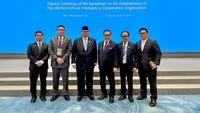
Indonesia has solidified its position as a proactive force in the global digital landscape, becoming a founding member of the World Artificial Intelligence Cooperation Organization (WAICO). This strategic move, highlighted by Coordinating Minister for Economic Affairs Airlangga Hartarto, provides Indonesia with a pivotal opportunity to actively shape international policies, contribute to global governance frameworks, and participate robustly in the institutional development of WAICO. The nation’s commitment underscores a broader ambition to align AI development with global standards, leverage the technology for sustainable economic growth, and ensure equitable benefits for all, particularly developing nations, in line with the United Nations Sustainable Development Goals (SDGs).
The formal establishment of WAICO marks a significant moment in the nascent era of global AI governance. On Friday, July 17, 2026, Minister Airlangga Hartarto joined representatives from nearly 30 other nations in signing the foundational document for this independent inter-governmental organization. This declaration signifies a collective commitment to fostering international cooperation in the development and responsible stewardship of Artificial Intelligence (AI). For Indonesia, this initiative is not merely about keeping pace with technological advancements but about asserting its voice and influence in how these powerful tools are developed and deployed worldwide.
The Genesis of Global AI Governance: WAICO’s Emergence
The rapid and transformative rise of Artificial Intelligence over the past decade has presented both immense opportunities and complex challenges for the global community. From revolutionizing industries and healthcare to enhancing scientific research and public services, AI’s potential is virtually limitless. However, alongside this promise, concerns regarding ethical implications, data privacy, algorithmic bias, job displacement, and potential misuse have grown significantly. The absence of a unified international framework for AI governance has prompted a fragmented regulatory landscape, leading to calls for concerted global action.
In this context, the formation of WAICO emerges as a crucial step towards establishing a more coherent and inclusive approach to AI governance. Unlike existing bodies that might focus on specific aspects or regional interests, WAICO is envisioned as a broad-based, inter-governmental platform dedicated to fostering cooperation in the civilian domain of AI. Its principles of inclusivity and non-discrimination are particularly vital, aiming to ensure that the benefits and responsibilities of AI development are shared widely, preventing a digital divide between technologically advanced nations and the rest of the world. The diverse group of 30 founding countries, spanning various continents and stages of economic development – including Algeria, Belarus, Brazil, Cambodia, Cameroon, Congo, Cuba, Ethiopia, Indonesia, Kazakhstan, Kenya, Kyrgyzstan, Laos, Lesotho, Malaysia, Mozambique, Myanmar, Nicaragua, Oman, Pakistan, Russia, Senegal, Serbia, South Africa, Tajikistan, Uzbekistan, Venezuela, Zambia, and China – reflects a global recognition of the urgent need for a common dialogue on AI’s future.
Indonesia’s Strategic Vision: Shaping, Not Just Consuming AI
Indonesia’s decision to become a founding member of WAICO is deeply rooted in its long-term national development strategy, which increasingly emphasizes digital transformation and technological sovereignty. Coordinating Minister Airlangga Hartarto underscored this, stating during a press conference that Indonesia’s role as a founder grants it a "golden opportunity" to actively contribute to global policy-making and governance frameworks. This ensures that AI development worldwide progresses in a manner that is equitable, sustainable, and aligned with a human-centric approach.
"This will certainly ensure that AI development aligns with global advancements, and Indonesia will leverage this to ensure shared knowledge and collaborative progress, making it a part of the UN’s SDGs targets," Airlangga articulated. This commitment extends beyond merely adopting AI technologies; it is about actively participating in the global conversation to steer AI development towards beneficial societal outcomes, such as enhancing healthcare access, improving educational opportunities, and addressing climate change – all core tenets of the SDGs.
Deputy Minister of Communication and Digital RI, Angga Raka Prabowo, further elaborated on Indonesia’s strategic posture, emphasizing that the nation’s participation in WAICO transcends being merely a market for AI products and services. "We clearly gain benefits by ensuring Indonesia is not just a spectator; we play an active role here. We take the positive side, how we can play a part in shaping global AI governance," Prabowo affirmed. This statement highlights Indonesia’s aspiration to transition from a consumer to a significant contributor in the global technology arena, influencing the ethical guidelines, technical standards, and policy frameworks that will govern AI for decades to come. By engaging early and actively, Indonesia aims to safeguard its national interests, ensure cultural relevance in AI applications, and promote an innovation ecosystem that resonates with its unique socio-economic context.
AI as a Catalyst for Indonesia’s Digital Economic Boom
The strategic engagement with WAICO is inextricably linked to Indonesia’s ambitious goals for its burgeoning digital economy. Minister Airlangga Hartarto highlighted the profound impact that advanced AI development is expected to have on the nation’s digital economic potential. Indonesia, Southeast Asia’s largest economy, has already witnessed rapid growth in its digital sector, driven by a young, digitally-native population and widespread mobile internet adoption. The current valuation of Indonesia’s digital economy stands at an impressive US$130 billion, primarily fueled by robust e-commerce, ride-hailing, online travel, and fintech sectors.
Looking ahead, the projections are even more striking. Airlangga stated that Indonesia’s digital economy is poised to reach US$366 billion by 2030. However, with active participation in regional and global cooperation initiatives like WAICO and the ASEAN Digital Economic Framework Agreement (DEDA), this potential could be significantly boosted, potentially soaring to US$600 billion. This exponential growth is envisioned to be propelled by AI’s ability to unlock new efficiencies, create innovative business models, and personalize services across various sectors. For instance, AI can optimize logistics and supply chains, enhance agricultural productivity through precision farming, improve public health outcomes through predictive analytics, and revolutionize financial services with advanced fraud detection and customized investment advice.
The regional dimension of this economic expansion is equally critical. The ASEAN Digital Economic Framework Agreement (DEDA), a landmark initiative aimed at fostering deeper digital integration across Southeast Asia, is expected to be signed under the Philippines’ chairmanship later this year. This agreement is projected to elevate the entire ASEAN digital economy from its current US$1 trillion to a staggering US$2 trillion. Within this regional surge, Indonesia’s contribution is expected to increase proportionally, with its share potentially growing from an estimated US$400 billion to US$600 billion. This aligns with the broader vision of a digitally connected and prosperous ASEAN, where AI serves as a powerful engine for cross-border digital trade, data flow, and innovation.
WAICO’s Mandate and the Human-Centric Imperative
WAICO is designed as an international inter-governmental organization with a clear and focused mandate: to promote cooperation in the civilian domain of Artificial Intelligence. Its core principles of inclusivity and non-discrimination are fundamental to its mission, aiming to ensure that all member states, regardless of their current technological prowess, have a voice and can benefit from global AI advancements. This stands in contrast to approaches that might favor a few dominant technological powers, seeking instead to build a consensus-driven framework that respects diverse national contexts and values.
The organization’s objectives extend to facilitating knowledge sharing, fostering collaborative research and development, establishing best practices for ethical AI deployment, and building capacity in developing nations. By providing a platform for dialogue and cooperation, WAICO aims to address critical questions surrounding AI ethics, data governance, safety, and accountability at a global level. This collaborative approach is essential for preventing regulatory fragmentation and ensuring that AI development remains a force for good.
A key tenet championed by Minister Airlangga Hartarto and embedded in WAICO’s philosophy is the "human-centric approach" to AI governance. This paradigm emphasizes that AI systems must be designed, developed, and deployed with human well-being, rights, and values at their core. It calls for AI that is fair, transparent, accountable, and respects privacy, with appropriate human oversight mechanisms in place. For developing countries, this approach is particularly vital, as it ensures that AI solutions are not only technologically advanced but also culturally appropriate, socially beneficial, and economically empowering, avoiding the pitfalls of biased or exploitative applications. This commitment aims to bridge the technological gap and ensure that AI serves as a tool for sustainable development and poverty reduction, rather than exacerbating existing inequalities.
Broader Implications and Future Outlook
Indonesia’s proactive engagement in WAICO carries significant implications both domestically and on the global stage. For Indonesia, this membership is expected to accelerate technology transfer, facilitate access to cutting-edge AI research and development, and foster the growth of a skilled AI talent pool through international collaboration and capacity-building programs. It also enhances Indonesia’s attractiveness as an investment destination for AI companies seeking to operate in a well-regulated and ethically conscious environment. Furthermore, by helping to set global standards, Indonesia can ensure that future AI applications are compatible with its national legal and ethical frameworks, reducing the need for extensive retroactive regulation.
Globally, WAICO’s emergence, with its diverse membership, signifies a crucial evolution in the multi-stakeholder model of AI governance. Alongside initiatives from organizations like the OECD, UNESCO, G7, and G20, WAICO adds a powerful voice from a broader spectrum of nations, particularly from the Global South. This diverse representation is essential for creating truly inclusive AI governance frameworks that address the unique challenges and opportunities faced by all countries. It also offers a platform for balancing the imperative for innovation with the need for robust ethical and safety guardrails, preventing a race to the bottom in AI development. The organization’s focus on the civilian domain suggests a pragmatic approach, aiming to build consensus on practical applications while potentially leaving more sensitive areas to other forums.
However, the journey ahead is not without its challenges. For Indonesia, these include ensuring robust digital infrastructure across its vast archipelago, bridging the digital literacy gap, attracting and retaining top AI talent, and developing comprehensive national data privacy and cybersecurity frameworks. On a global scale, WAICO will need to demonstrate its effectiveness in translating its principles into tangible policies and enforceable standards, navigating complex geopolitical dynamics, and fostering genuine cooperation among its diverse members. The success of WAICO, and Indonesia’s role within it, will ultimately be measured by its ability to steer AI development towards a future that is not only technologically advanced but also ethically sound, economically inclusive, and socially beneficial for all of humanity.
In conclusion, Indonesia’s founding membership in WAICO represents a bold and strategic move to secure its future in the AI era. By actively participating in shaping global AI governance, Indonesia is not only aiming to achieve its ambitious digital economy targets but also to champion a human-centric approach that ensures AI serves as a force for equitable and sustainable development worldwide. This commitment underscores a vision for Indonesia as a key player in defining the future of technology, rather than merely adapting to it.

