
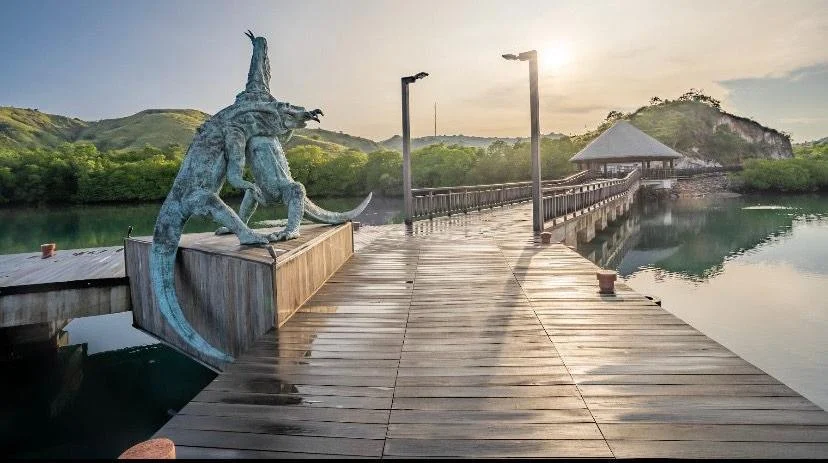
The global tourism landscape is undergoing a significant transformation as travelers increasingly prioritize ecological preservation, cultural authenticity, and off-the-beaten-path experiences. In a recently released comprehensive guide by the BBC, Indonesia’s Komodo National Park has been distinguished as one of the top 20 must-visit destinations for 2026. This recognition places the Indonesian archipelago alongside iconic locations such as Abu Dhabi, Philadelphia, and the Scottish Hebrides, highlighting a shift in global travel trends toward destinations that balance luxury with rigorous environmental stewardship. As the world looks toward 2026, these twenty locations represent the pinnacle of "meaningful travel," a movement defined by deeper engagement with local communities and the natural world.
The inclusion of Komodo National Park comes at a pivotal moment for Indonesian tourism. As the park approaches its 45th anniversary in 2026, the Indonesian government and local authorities are intensifying efforts to transition the region from a high-volume transit point into a world-class model for sustainable ecotourism. The designation by international media outlets underscores the success of recent infrastructure upgrades in Labuan Bajo, which has been designated as one of Indonesia’s "Super Priority Destinations." With the introduction of direct international flights from major regional hubs like Singapore and Kuala Lumpur, the accessibility of the home of the world’s largest lizard—the Komodo dragon—has never been greater, marking a new era for East Nusa Tenggara’s economy.
A Chronology of Tourism Evolution Leading to 2026
The journey toward the 2026 tourism milestones began in the post-pandemic recovery phase of 2022 and 2023. During this period, global travel patterns shifted from "revenge tourism"—characterized by rapid, multi-city trips—to "intentional travel." In 2024, many of the destinations featured on the 2026 list began implementing long-term sustainability frameworks. For instance, Indonesia initiated stricter quota systems for visitors to Komodo Island and Padar Island to protect the fragile ecosystem.
By 2025, several major infrastructure projects are slated for completion. This includes the full operational capacity of the new Techo Takhmao International Airport in Phnom Penh, Cambodia, and the completion of the Saadiyat Cultural District’s newest museums in Abu Dhabi. These developments set the stage for 2026 to be a year of "grand openings" and cultural celebrations. The timeline for 2026 is further bolstered by global anniversaries, such as the 250th anniversary of the United States, centering much of the world’s attention on Philadelphia, and the 25th anniversary of UNESCO World Heritage status for Guimarães, Portugal.
Global Destinations Redefining the Travel Experience
The BBC’s list for 2026 is diverse, spanning six continents and varying from hyper-modern urban centers to remote wilderness areas. Each selection reflects a specific trend in the evolving travel industry.
1. Abu Dhabi, United Arab Emirates
Abu Dhabi is no longer merely a business hub; it is rapidly becoming the cultural capital of the Middle East. The Saadiyat Cultural District is the centerpiece of this evolution, featuring the TeamLab Phenomena Abu Dhabi, the Zayed National Museum, and the Natural History Museum. These institutions join the Louvre Abu Dhabi to create a dense concentration of world-class art and science.
2. Algeria
North Africa’s largest country is gaining traction due to its well-preserved Roman ruins in Timgad and Djémila. The capital, Algiers, offers a blend of French colonial architecture and ancient Casbahs, while the vast expanse of the Sahara Desert provides a frontier for adventure tourism that remains relatively untouched by mass commercialization.
3. Colchagua Valley, Chile
As travelers seek alternatives to the crowded vineyards of Europe, Chile’s Colchagua Valley offers a sophisticated mix of viticulture and stargazing. The region’s unique geography, stretching from the Andes to the Pacific, creates a microclimate perfect for premium red wines, complemented by boutique colonial-style estates.
4. Cook Islands
In the South Pacific, the Cook Islands represent the pinnacle of "slow travel." Rarotonga and Aitutaki are focusing on indigenous Polynesian culture and marine conservation, offering a more secluded and culturally immersive alternative to more commercialized island chains.
5. Costa Rica (Osa Peninsula)
Costa Rica remains a leader in eco-tourism. The Osa Peninsula, home to Corcovado National Park, is described by National Geographic as "the most biologically intense place on Earth." For 2026, the focus is on the integration of wellness retreats—yoga and surfing—with hardcore biodiversity research.
6. Hebrides, Scotland
The Outer Hebrides offer a rugged, spiritual escape. Known for the Calanais Standing Stones and pristine white-sand beaches that rival the Caribbean in appearance, the islands are also benefiting from a resurgence in "whisky tourism," with new distilleries opening to showcase traditional Gaelic methods.
7. Ishikawa, Japan
Following the devastating earthquake in early 2024, the Noto Peninsula in Ishikawa Prefecture is expected to be a major site for "impact tourism" in 2026. Travelers are encouraged to visit to support the local economy, enjoying the Kenrokuen Garden in Kanazawa and the region’s famed sake breweries and lacquerware traditions.
8. Komodo National Park, Indonesia
The park’s 45th anniversary in 2026 will be marked by the launch of new conservation programs aimed at protecting the Varanus komodoensis. The government’s focus on "quality over quantity" ensures that while access via Labuan Bajo is easier, the environmental footprint per traveler is minimized through digital tracking and conservation fees.
9. Loreto, Mexico
Located on the Baja California Peninsula, Loreto is a sanctuary for marine life. The Loreto Bay National Marine Park is a critical habitat for blue whales and sea turtles. It offers a quieter, more nature-focused alternative to the bustling resorts of Cabo San Lucas.
10. Montenegro
Often overshadowed by neighboring Croatia, Montenegro is coming into its own. Beyond the stunning Bay of Kotor, the 2026 focus is on the "Peaks of the Balkans" trail, a cross-border hiking route that connects Montenegro, Albania, and Kosovo, promoting regional peace and community-based tourism.
Supporting Data and Economic Implications
The selection of these destinations is supported by data from the United Nations World Tourism Organization (UNWTO) and the World Travel & Tourism Council (WTTC). According to WTTC projections, the global travel and tourism sector is expected to reach an all-time high in 2025 and 2026, contributing nearly $11.1 trillion to the global economy.
In Indonesia, the tourism sector’s contribution to GDP is targeted to reach 4.5% to 5% by 2026. The focus on Komodo National Park is strategic; data shows that "eco-conscious" travelers spend approximately 30% more per trip than mass-market tourists and stay 20% longer. By positioning Komodo as a premium, sustainable destination, Indonesia aims to increase foreign exchange earnings without the environmental degradation associated with over-tourism.
Furthermore, the rise of "secondary cities" is evident in the list. Destinations like Oulu, Finland—the European Capital of Culture 2026—and Philadelphia, USA, are expected to see a 15-20% increase in international arrivals compared to their 2019 levels. This shift helps redistribute wealth away from traditional "over-touristed" capitals like Paris or London.
Official Responses and Strategic Vision
Government officials across these regions have responded with strategic investments. Indonesia’s Minister of Tourism and Creative Economy has frequently emphasized that the development of Labuan Bajo and Komodo is not just about infrastructure, but about "human-centric tourism." This involves training local guides in conservation biology and hospitality to ensure that the economic benefits of the 2026 surge reach the local Manggarai people.
In the United States, Philadelphia’s city planners are coordinating with federal agencies for the "Semiquincentennial" (250th anniversary). "2026 will be the most significant year for Philadelphia in a generation," noted local tourism boards. "It is an opportunity to showcase our history not as a static museum, but as a living, diverse city."
Similarly, in Finland, the "Oulu 2026" initiative has secured millions in funding to promote "Cultural Climate Change." The goal is to use the European Capital of Culture title to revitalize the Arctic region through art, technology, and sustainable gastronomy.
Broader Impact: The Future of Travel
The implications of the 2026 "Top 20" list extend beyond mere vacation planning. They signal a broader shift in how humanity interacts with the planet. The emphasis on places like the Slocan Valley in Canada—where the Japanese Canadian Legacy Trail will open—shows a growing demand for "dark tourism" or "historical reckoning tourism," where travelers seek to understand the complexities and tragedies of the past.
The focus on connectivity, such as the new airport in Phnom Penh, suggests that the "transit-only" model of travel is dying. Travelers are now looking for "hub-and-spoke" experiences where the gateway city itself is a destination. Phnom Penh’s revitalization of its riverside and its transition from a stopover to a primary destination is a blueprint for other developing capitals.
As 2026 approaches, the travel industry is bracing for a year that will likely define the next decade of exploration. Whether it is the ancient sands of Algeria, the high-tech museums of Abu Dhabi, or the prehistoric majesty of Komodo Island, the common thread is a move toward authenticity. For the global traveler, the message is clear: the most valuable journeys of the future will be those that respect the environment, honor local heritage, and contribute to the restoration of the places we visit.

