
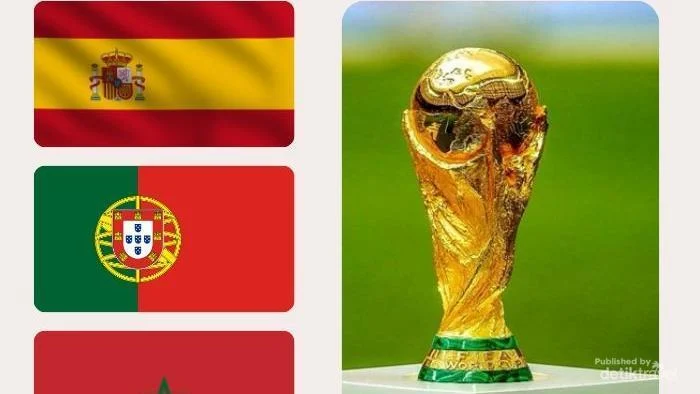
The conclusion of the FIFA World Cup 2026 marks more than just the end of a tournament; it signals the beginning of a four-year countdown to what is arguably the most ambitious undertaking in the history of international sports. As the footballing world bids farewell to the expanded 48-team format’s debut in North America, attention shifts toward the 2030 edition, a landmark event that will celebrate the 100th anniversary of the world’s most-watched sporting competition. This centenary edition is set to redefine the traditional boundaries of hosting, spanning three continents and involving six nations in a unique collaborative framework approved by the FIFA Council.
Since its inception in 1930 in Uruguay, the FIFA World Cup has evolved from a 13-team invitational into a global phenomenon that dictates the rhythm of international tourism and infrastructure development. The 2030 iteration is designed as a bridge between the tournament’s past and its future. FIFA has officially designated Spain, Portugal, and Morocco as the primary hosts of the tournament. However, in a historic nod to the tournament’s origins, the first three matches will be played in South America. Uruguay, Argentina, and Paraguay will each host a single opening match to commemorate the first World Cup held in Montevideo a century ago. This unprecedented arrangement means that for the first time, a single World Cup will be played across Europe, Africa, and South America.
The Tri-Continental Hosting Strategy and Global Significance
The decision to award the 2030 World Cup to the joint bid of Spain, Portugal, and Morocco reflects a strategic move by FIFA to promote intercontinental cooperation and capitalize on existing footballing infrastructure. Morocco’s inclusion is particularly significant, as it marks only the second time the African continent will host World Cup matches, following South Africa in 2010. For Spain and Portugal, the tournament represents a chance to showcase the Iberian Peninsula as a premier global destination for sports and culture.
The "Centenary Celebration" matches in South America are more than symbolic. By hosting the inaugural match at the Estadio Centenario in Montevideo, FIFA honors the legacy of the 1930 champions, Uruguay. Argentina and Paraguay, key figures in the development of South American football and the CONMEBOL confederation, will also play host to opening group stage fixtures before the tournament shifts entirely to the Mediterranean region. This complex logistics plan has already prompted discussions regarding athlete recovery, travel fatigue, and environmental sustainability, which FIFA officials have pledged to address through rigorous scheduling and carbon-offsetting initiatives.
Iconic Venues and Infrastructure Readiness
The selection of venues for 2030 highlights a blend of historic football cathedrals and futuristic architectural marvels. In Spain, the Royal Spanish Football Federation (RFEF) has proposed a list of world-class stadiums that have undergone or are currently undergoing massive renovations. The Santiago Bernabéu in Madrid, recently transformed with a retractable roof and pitch, is a frontrunner to host the final. Barcelona’s Camp Nou, which is being expanded to accommodate over 100,000 spectators, will also serve as a primary hub. Other proposed Spanish venues include the Metropolitano in Madrid, La Cartuja in Seville, and the San Mamés in Bilbao, ensuring that the tournament reaches every corner of the country.
Portugal brings three legendary stadiums to the table: the Estádio da Luz and the Estádio José Alvalade in Lisbon, along with the Estádio do Dragão in Porto. These venues are already Category 4 UEFA stadiums, requiring minimal upgrades to meet FIFA’s stringent requirements for a World Cup. The proximity of these cities allows for a compact travel experience for fans moving between matches within the Iberian Peninsula.
Morocco’s contribution is perhaps the most ambitious. The Moroccan government has unveiled plans for the Grand Stade Hassan II in Benslimane, near Casablanca. With a projected capacity of 115,000, it aims to be the largest football stadium in Africa and one of the largest in the world. Other host cities in Morocco include Rabat, where the Prince Moulay Abdellah Stadium is being rebuilt, as well as Marrakesh, Agadir, Tangier, and Fez. The integration of Moroccan venues provides a gateway between the European and African footballing cultures, separated only by the narrow Strait of Gibraltar.
Travel Logistics for Global Supporters
For fans traveling from distant regions, such as Southeast Asia and Oceania, the 2030 World Cup presents a logistical challenge that requires early planning. Using Indonesia as a benchmark, the journey to the primary host nations involves significant air travel. A flight from Jakarta to Madrid or Lisbon typically spans 18 to 21 hours, usually requiring at least one transit in major hubs like Dubai, Doha, or Istanbul.
Reaching Morocco from Asia involves similar durations. Flights to Casablanca or Rabat often range from 18 to 24 hours depending on layover times. However, once within the host region, travel becomes significantly more efficient. Spain and Portugal are connected by a robust high-speed rail network, and the flight time between Southern Spain and Northern Morocco is less than an hour. Regional airlines and ferry services across the Mediterranean are expected to increase frequency during the tournament to accommodate the influx of millions of supporters.
Economic Projections and Budgetary Considerations
The financial commitment required to attend a World Cup is substantial, and the 2030 edition is expected to follow an upward trend in costs. Under current market conditions, a round-trip economy class ticket from Jakarta to the host cities fluctuates between IDR 12 million and IDR 18 million (approximately USD 750 to USD 1,150). During the World Cup period, industry analysts predict these prices could surge by 50% to 100% due to unprecedented demand.
Accommodation costs are similarly subject to "event-based inflation." Currently, a three-star hotel in cities like Madrid or Casablanca starts at IDR 1.2 million to IDR 2.5 million per night. During the tournament, these rates are expected to triple, particularly for properties located near stadium zones or public transport hubs. FIFA’s official hospitality packages and ticket-inclusive travel tours will offer convenience but at a premium price point, leading many fans to seek budget-friendly alternatives in satellite cities.
Host nations, conversely, view the 2030 World Cup as a massive economic catalyst. The Spanish government estimates that the tournament could contribute billions to the national GDP through tourism, job creation, and infrastructure investment. Morocco, meanwhile, is using the tournament as a vehicle to accelerate its national development plan, improving its transport networks and hotel capacity to meet international standards.
Exploring the Cultural Tapestry of Three Nations
The 2030 World Cup is being marketed as more than a sporting event; it is a "destination tournament." Fans are encouraged to explore the rich cultural heritage of the host nations between match days. In Spain, the itinerary often begins with the Royal Palace and the Prado Museum in Madrid, followed by the architectural wonders of Antoni Gaudí in Barcelona, such as the Sagrada Família and Park Güell. The historic charm of Seville and the culinary excellence of the Basque Country offer diverse experiences for the traveling supporter.
Portugal offers a blend of Atlantic coastal beauty and historical depth. Lisbon’s iconic Tram 28 and the Belém Tower provide a glimpse into the Age of Discovery, while the city of Porto offers world-renowned wine cellars and a picturesque riverfront. The compact nature of Portugal makes it an ideal base for fans who wish to experience multiple matches with minimal transit time.
Morocco provides a sensory experience unlike any other World Cup host. The vibrant souks of Marrakesh, the coastal majesty of the Hassan II Mosque in Casablanca—one of the few mosques open to non-Muslims—and the blue-washed streets of Chefchaouen offer a unique backdrop for football fans. The blend of Arab, Berber, and European influences ensures that the 2030 World Cup will be the most culturally diverse edition to date.
Strategic Planning and Official Roadmaps
While 2030 may seem distant, the organizational machinery is already in motion. FIFA is expected to finalize the official list of host stadiums and the match schedule by late 2024 or early 2025. This will be followed by the opening of the ticket application portal, which traditionally operates on a lottery basis due to the volume of requests.
Travelers are advised to monitor the official FIFA channels for information on "Fan IDs," which have become a staple of recent World Cups. These digital documents often serve as entry visas and provide free access to public transportation within host cities. Given the multi-country nature of the 2030 event, coordination between the immigration departments of Spain, Portugal, and Morocco will be crucial to ensure seamless movement for ticket holders.
Broader Implications for the Future of Football
The 2030 World Cup serves as a litmus test for the future of global sports hosting. By moving away from the single-nation model, FIFA is acknowledging the rising costs and logistical burdens of hosting 48 teams and millions of fans. The collaborative model used by Spain, Portugal, and Morocco—enhanced by the South American centenary tribute—suggests a future where regional cooperation becomes the norm.
Critics have raised concerns about the carbon footprint of such an expansive tournament, particularly with the South American matches requiring long-haul flights for teams and staff. In response, the organizing committees have emphasized that the vast majority of the tournament—101 matches—will be played in a geographically concentrated area in Europe and North Africa. This concentration is intended to mitigate the environmental impact while still honoring the global heritage of the game.
As the world transitions from the excitement of the 2026 World Cup, the road to 2030 promises a journey through history, culture, and sporting excellence. For the fan, the traveler, and the athlete, the centenary World Cup represents the ultimate celebration of "The Beautiful Game," uniting three continents under a single banner of competition and camaraderie. The countdown has begun, and the planning for this historic milestone starts now.

