
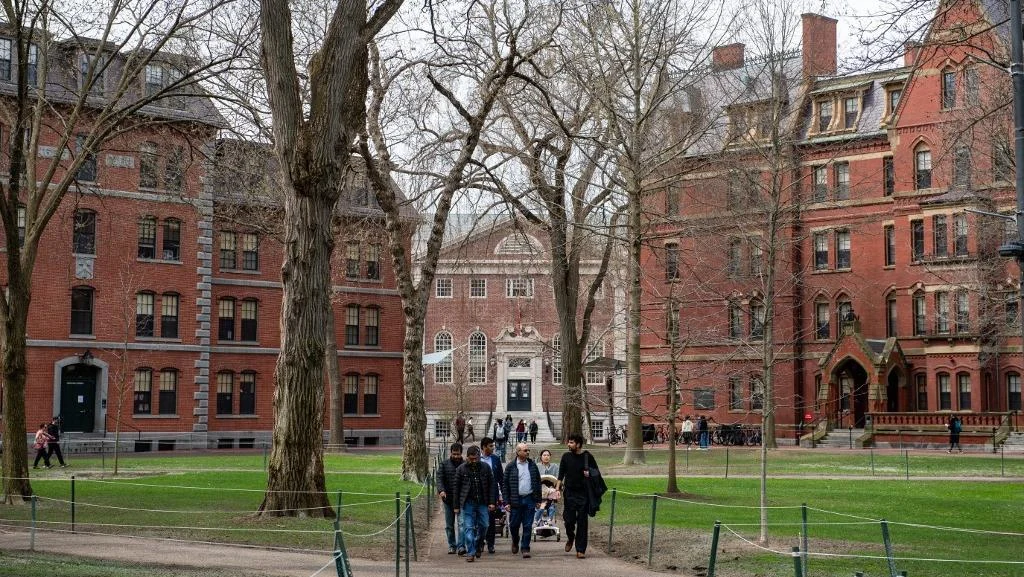
The landscape of international education in the United States has experienced significant scrutiny and policy turbulence, prompting prospective students and their families to reevaluate the safety, stability, and long-term viability of pursuing academic degrees in North America. Recent legal battles involving top-tier American institutions and federal administration directives have placed the spotlight squarely on the rights and security of foreign scholars on American soil. Despite administrative attempts to restrict international student enrollment at premier universities, robust judicial interventions and proactive institutional measures have thus far preserved the pathways for global talent. Educational authorities, foreign governments, and university administrators are actively working to reassure international applicants that the foundational integrity and legal protections within the American higher education system remain resilient.
Chronology of the Federal Policy Challenge and Judicial Intervention
The tension between federal executive directives and academic autonomy escalated notably when the administration of U.S. President Donald Trump sought to implement sweeping restrictions on international admissions. In May 2025, federal policy proposals targeted premier academic institutions, specifically directing Harvard University to halt the acceptance of foreign students and instructing existing international scholars to seek alternative academic placements. This unprecedented maneuver sent shockwaves through the global academic community, threatening the decades-long tradition of cross-cultural intellectual exchange that underpins the reputation of American universities.
Swiftly responding to the federal directive, Harvard University leadership initiated legal proceedings to contest the executive overreach. Alan M. Garber, President of Harvard University, formally submitted a motion for a temporary restraining order, arguing that the federal mandate violated statutory protections, administrative procedures, and the institutional autonomy of the university. The legal challenge underscored the vital economic, scientific, and cultural contributions that international students bring to the academic ecosystem of the United States.
The legal counteroffensive achieved a decisive preliminary victory when U.S. District Judge Alison D. Burroughs formally granted Harvard’s request for relief. The federal court issued a temporary restraining order that successfully blocked the Trump administration from executing any policy measures designed to strip Harvard and potentially other institutions of their authority to enroll and host international students and researchers. This judicial ruling served as a critical buffer, reinforcing the checks and balances inherent in the U.S. legal system and providing immediate legal security to thousands of foreign nationals currently studying or planning to study in the United States.
Perspectives from Educational Authorities and Institutional Leaders
In the wake of these legal developments, government officials and educational strategists have addressed the lingering anxieties among prospective international students and their families. Ardi Findyartini, Director of Strategy and Transformational Learning Systems at the Indonesian Ministry of Higher Education, Science, and Technology (Kemdiktisaintek), emphasized that while official government policies regarding student visas and international admissions frameworks technically remain unchanged, the recent policy volatility has created a psychological hurdle that requires targeted communication and reassurance.
Speaking at the EducationUSA Indonesia Fall Fair 2026, held at the Le Méridien Hotel in Jakarta, Findyartini noted that rebuilding confidence among parents is a primary objective for educational stakeholders. The event, which showcased twenty accredited universities from the United States alongside comprehensive consultation services for admissions and scholarship opportunities, served as a platform to address parental concerns directly.
"From the perspective of U.S. government policy, the regulations concerning visas and related matters remain fundamentally consistent," Findyartini stated. "However, addressing these perceptions is an ongoing responsibility. That is why we actively support and encourage exposure events of this nature to provide absolute clarity."
Findyartini further analyzed the distinct decision-making dynamics between undergraduate and graduate applicants. According to her observations, while the academic excellence of U.S. institutions is universally recognized and rarely questioned by parents, safety and geopolitical stability remain paramount considerations. For undergraduate candidates, parental influence is frequently decisive, meaning that family apprehensions regarding social safety and political climate can heavily sway educational choices. Conversely, postgraduate candidates typically exercise greater autonomy in their decision-making processes. Consequently, bridging the information gap through structured guidance sessions is essential to ensure that families receive comprehensive, unvarnished facts rather than relying on generalized anxieties driven by sensationalized headlines.
Statistical Context and the Value of U.S. International Education
To fully understand the weight of these administrative policies, it is necessary to examine the broader economic and demographic footprint of international students within the United States. Historically, the U.S. has remained the premier destination for global academic mobility, hosting over one million international students annually from more to 200 countries. These scholars contribute significantly not only to the intellectual dynamism of campus classrooms and research laboratories but also to the domestic economy.
According to data compiled by organizations such as the Institute of International Education (IIE) and the Department of Commerce, international students contribute tens of billions of dollars annually to the U.S. economy through tuition, housing, and living expenses. Furthermore, international scholars in fields such as Science, Technology, Engineering, and Mathematics (STEM) form a critical component of the American research and development pipeline. Any disruption to the continuous flow of global talent poses tangible risks to the competitive edge of the United States in high-tech industries, pharmaceuticals, and academic innovation.
The resilience demonstrated by federal courts in blocking restrictive immigration and enrollment policies highlights the structural protections embedded within American democratic institutions. Universities, higher education coalitions, and legal advocacy groups frequently coordinate to challenge executive overreach, viewing international diversity as an indispensable pillar of world-class scholarship.
Implications for Prospective International Students and Parents
For students in Southeast Asia and across the globe who are planning to commence their studies in the coming academic cycles, the events of 2025 and 2026 offer several key takeaways. First, the American legal system continues to provide substantial safeguards against abrupt administrative changes that threaten institutional autonomy and student rights. The decisive ruling by Judge Alison D. Burroughs illustrates that federal policies attempting to curtail international education are subject to strict judicial review and constitutional limitations.
Second, the operational framework for student visas (such as the F-1 and J-1 visa categories) and Student and Exchange Visitor Information System (SEVIS) compliance remains legally intact, governed by established federal statutes rather than transient executive whims. Consular processing, while subject to routine administrative checks, continues to operate under standard legal protocols.
Third, events like the EducationUSA Fall Fair underscore the proactive measures taken by both foreign governments and U.S. diplomatic missions to maintain transparent communication channels. By offering direct access to university representatives, financial aid advisors, and consular experts, these initiatives empower students and their families to base their educational investments on verified data rather than speculative media narratives.
As global educational mobility continues to evolve in a complex geopolitical environment, the primary challenge for international applicants is not the absence of legal safety, but rather the need for diligent navigation of institutional requirements. With robust legal defenses established by universities and ongoing support from educational ministries worldwide, the pathways to earning a degree in the United States remain fundamentally secure, reaffirming the enduring appeal of the American higher education system to the world’s brightest minds.

