
• Home
Nata News
keep your memories alive
Economy

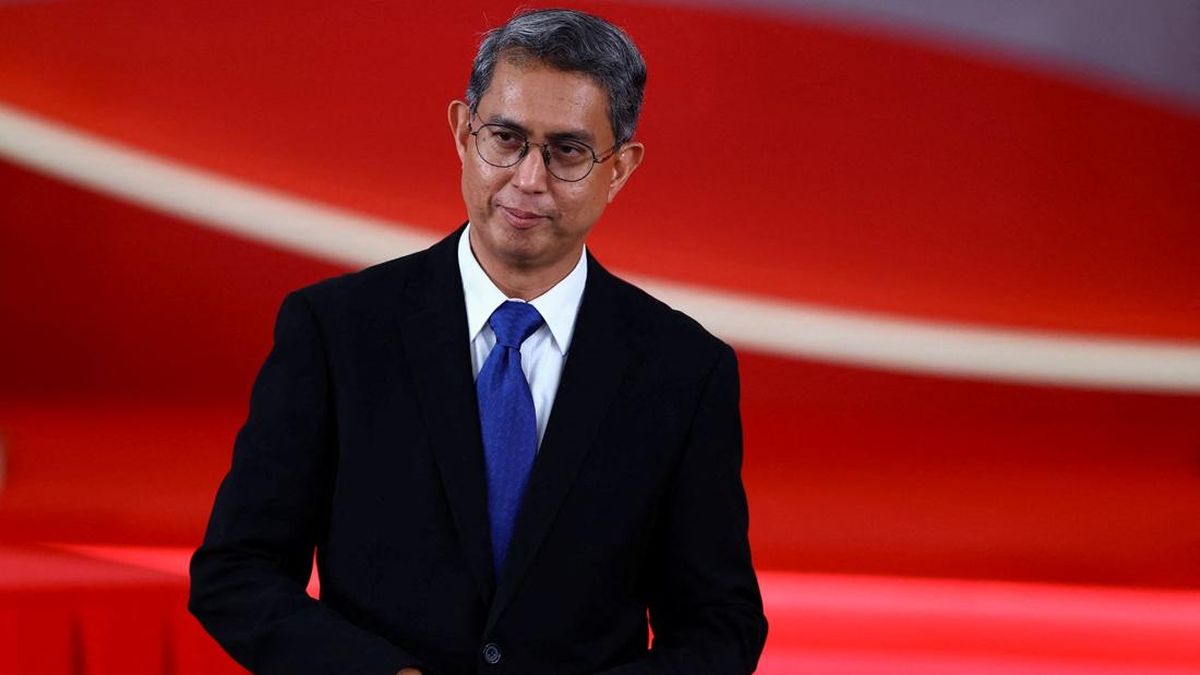
Restrukturisasi 250 BUMN, Prabowo Sebut Duit Rp 50 Triliun Selamat

by admin July 20, 2026
written by admin

Jakarta, Indonesia – President Prabowo Subianto announced a significant fiscal achievement, revealing that the ongoing restructuring of hundreds of State-Owned Enterprises (BUMNs) by Danantara Indonesia has already saved the state treasury an estimated Rp 50 trillion (approximately US$3.2 billion). This substantial saving stems from the closure and consolidation of 250 BUMN entities, primarily through the elimination of routine operational overheads. The President delivered this pivotal update during a plenary cabinet meeting at the State Palace in Central Jakarta on Monday, July 20, 2026, underscoring his administration’s commitment to fiscal prudence and corporate efficiency within the public sector.

President Prabowo elaborated that the colossal savings are a direct result of streamlining various operational cost centers that had historically burdened each BUMN entity, whether closed outright or merged into larger, more strategic holdings. "They reported that with the closure of 250 BUMNs, the routine overhead costs that could be saved amounted to Rp 50 trillion," Prabowo stated, emphasizing the immediate and tangible benefits of the reform agenda. He meticulously itemized the components contributing to these significant expenditures, which previously weighed heavily on state-owned companies. These included the often-inflated salaries of directors and commissioners, rent for numerous offices, electricity bills, transportation costs, and expenses associated with countless working meetings. The sheer scale of these routine expenditures, totaling Rp 50 trillion, highlights the extent of the inefficiencies that had permeated the state-owned sector for decades.

The Genesis of a Streamlined State Sector: From 1,077 to 350

The ambitious consolidation program initiated under Danantara Indonesia addresses a long-standing issue of an overly bloated and often inefficient state-owned enterprise landscape. President Prabowo candidly admitted his initial surprise upon receiving reports that the actual number of BUMN entities stood at an staggering 1,077 – far exceeding his initial estimation of merely 300-350 companies. This revelation underscored the urgent need for comprehensive reform. The proliferation of BUMNs, he explained, was exacerbated by a pervasive practice where many state-owned companies established multiple layers of subsidiaries, sub-subsidiaries, and even tertiary corporate entities, creating a labyrinthine structure rife with redundancies and potential for mismanagement. This complex web of "anak, cucu, hingga cicit perusahaan" (children, grandchildren, and even great-grandchildren companies) not only complicated oversight but also inflated operational costs across the board.

The Indonesian government has historically relied on its BUMNs as key drivers of economic development, particularly in strategic sectors such as energy, mining, infrastructure, finance, and agriculture. These enterprises were intended to fulfill public service obligations, stimulate economic growth, and ensure national resilience. However, over time, many BUMNs became synonymous with inefficiency, lack of transparency, and sometimes, political patronage. Previous administrations, including those of President Susilo Bambang Yudhoyono and Joko Widodo, had attempted various BUMN reform initiatives, focusing on improving governance, professionalism, and profitability. Yet, the deep-seated structural issues, particularly the sheer number and complexity of the entities, proved challenging to tackle comprehensively. The current administration’s approach, spearheaded by Danantara Indonesia, signifies a more aggressive and targeted strategy, aiming for a fundamental overhaul rather than incremental adjustments.

President Prabowo lauded the relentless efforts of Danantara Indonesia’s leadership and teams, who, within their first 18 months of operation, successfully initiated and executed the closure, consolidation, and merger of 250 BUMNs. This rapid pace of reform demonstrates a strong political will and operational capability. Looking ahead, the President set an ambitious target: to reduce the total number of BUMN entities to a maximum of 350 by the end of 2026. This aggressive timeline underscores the urgency placed on transforming the state-owned sector into a more agile, efficient, and profitable engine for national development.

Danantara Indonesia: A New Era for State Asset Management

The program of BUMN consolidation is a cornerstone of a broader transformation agenda spearheaded by Danantara Indonesia. Established in February 2025, Danantara Indonesia was conceived as a sovereign investment body, a strategic holding company designed to manage and optimize Indonesia’s vast state assets. Its creation marked a significant pivot in how Indonesia approaches its state-owned enterprises, moving towards a model of professional asset management akin to successful sovereign wealth funds or state holding companies in other developed economies, such as Temasek Holdings in Singapore or Khazanah Nasional Berhad in Malaysia.

With a staggering portfolio exceeding US$1 trillion in state assets under its management, Danantara Indonesia is positioned as a powerful entity capable of driving significant economic impact. Its mandate extends beyond mere consolidation; it includes enhancing the financial performance of state assets, fostering good corporate governance, promoting transparency, and strategically investing in key sectors to accelerate national development. The entity’s structure allows for a more focused and professional approach to asset management, shielding BUMNs from undue political interference and enabling them to operate on more commercial principles. This institutional framework is crucial for ensuring the long-term sustainability and effectiveness of the BUMN reforms.

The establishment of Danantara was a direct response to the recognition that the existing BUMN structure, while extensive, often failed to deliver optimal returns or contribute effectively to the national budget beyond their direct operational scope. Many BUMNs operated in silos, with overlapping mandates and fragmented resources, leading to inefficiencies that drained state resources rather than augmenting them. By centralizing management and strategic oversight under Danantara, the government aims to unlock the true value of these assets, turning them into a significant source of revenue and strategic investment for the nation.

Unpacking the Rp 50 Trillion Savings: A Deep Dive into Fiscal Prudence

The Rp 50 trillion in savings is not merely an abstract figure; it represents a tangible impact on the state budget and a reallocation of resources that can now be directed towards more productive investments or critical public services. President Prabowo’s detailed breakdown of the eliminated costs paints a vivid picture of the previous inefficiencies. The elimination of "gaji direksi, gaji komisaris" (salaries of directors and commissioners) from 250 entities alone would account for a substantial portion of the savings. Historically, the remuneration packages for BUMN executives have been a point of public contention, with some seen as disproportionately high, especially in underperforming companies. By consolidating or closing these entities, the need for multiple layers of executive leadership is drastically reduced.

Beyond executive compensation, the operational costs such as "sewa gedung, bayar listrik, bayar transport, bayar rapat kerja" (building rent, electricity payments, transportation, and meeting costs) for hundreds of separate corporate entities represent an enormous cumulative expenditure. Imagine the overhead associated with maintaining 250 independent offices, each with its own utilities, administrative staff, vehicle fleets, and frequent meetings. Consolidating these functions into fewer, larger entities, or eliminating them entirely, generates immediate and substantial cost reductions. For a national economy with an annual state budget often exceeding Rp 2,000 trillion, Rp 50 trillion in savings, while representing a fraction of the total budget, is a significant sum, potentially freeing up critical funds for infrastructure development, social welfare programs, or boosting other productive sectors. It signifies a move towards a more lean and agile public sector, where taxpayer money is utilized more effectively.

A Rapid Consolidation Timeline and Ambitious Targets

The timeline of Danantara Indonesia’s operations underscores the urgency and efficiency of the reform efforts. From its inception in February 2025, the body has demonstrated remarkable speed in identifying, evaluating, and executing the consolidation of 250 BUMNs within an 18-month window. This initial phase likely involved a meticulous audit of existing BUMNs, assessing their financial viability, strategic relevance, and potential for integration. The success of this rapid initial phase provides a strong foundation for the subsequent, even more ambitious target: to further reduce the total number of BUMNs to 350 by the close of 2026. This implies that over the next 18 months, an additional 477 BUMNs will either be closed, merged, or divested.

Achieving this target will require continued political will, robust analytical capabilities, and effective execution strategies. The process is complex, involving legal, financial, and human resource considerations. It will necessitate careful planning to ensure smooth transitions, minimize disruption, and manage the social impact, particularly concerning potential job displacement for employees of the consolidated entities. The government’s commitment to reaching this target by 2026 signals a clear roadmap for a fundamentally reshaped state-owned enterprise landscape, one that is significantly smaller, more focused, and ultimately, more impactful.

Expert Perspectives and Stakeholder Reactions

The announcement by President Prabowo has been met with generally positive anticipation from economic analysts and the broader business community, albeit with an understanding of the challenges ahead. Economists often highlight that a leaner BUMN sector can lead to improved overall economic efficiency, reduced distortion of market competition, and a more attractive investment climate.

"This Rp 50 trillion saving is a strong signal of fiscal discipline and a commitment to optimizing state assets," noted Dr. Indah Sari, a senior economic analyst specializing in state-owned enterprises at a Jakarta-based think tank. "The reduction in overhead costs means more resources can be channeled into productive investments, rather than being absorbed by redundant administrative functions. It also sends a clear message to the market about the government’s seriousness in fostering a level playing field."

Government officials are expected to emphasize that these reforms are not merely about cost-cutting but about enhancing the strategic value and competitiveness of Indonesia’s state assets. A spokesperson for Danantara Indonesia, speaking on condition of anonymity, stated, "Our focus is on creating world-class state-owned enterprises that are professionally managed, transparent, and capable of competing globally. The initial savings are a testament to the potential for greater efficiency and value creation that lies within our state assets."

The business community is likely to welcome the initiative, seeing it as a move towards reducing unfair competition from state entities that often operate with implicit state guarantees or preferential treatment. A more streamlined BUMN sector could lead to greater private sector participation and investment in various industries. However, concerns might also arise regarding the social impact of these closures, particularly the fate of employees from the consolidated entities. Labor unions would naturally seek assurances regarding severance packages, retraining programs, and opportunities for redeployment to ensure a just transition for affected workers.

Broader Economic and Governance Implications

The implications of this comprehensive BUMN reform extend far beyond immediate fiscal savings. On an economic front, a more efficient state-owned sector can significantly boost national productivity and competitiveness. By eliminating underperforming entities and consolidating strategic assets, Danantara can foster stronger, more agile corporations capable of driving innovation and sustainable growth. The reinvestment of the saved Rp 50 trillion, along with future efficiencies, could fund critical infrastructure projects, support small and medium-sized enterprises, or enhance social safety nets, thereby stimulating broader economic activity.

From a governance perspective, the reforms are expected to lead to greater transparency and accountability. A smaller number of BUMNs under a centralized management structure like Danantara can facilitate more effective oversight, reducing opportunities for corruption and political interference that have plagued the sector in the past. This professionalization of state asset management is crucial for building investor confidence and improving Indonesia’s standing in global indices related to ease of doing business and corporate governance.

However, the path forward is not without challenges. Resistance from vested interests, both within the BUMNs and in the political landscape, is a perennial concern for such large-scale reforms. Managing the social impact, including potential job losses and the need for new skills development, will require careful planning and empathetic execution. Ensuring the long-term sustainability of these reforms also depends on maintaining political commitment across different administrations and embedding a culture of efficiency and good governance within Danantara and the remaining BUMNs.

In conclusion, President Prabowo Subianto’s announcement of Rp 50 trillion in savings from the BUMN consolidation program marks a pivotal moment in Indonesia’s economic reform journey. It signifies a bold and decisive step towards creating a leaner, more efficient, and strategically focused state-owned enterprise sector. With Danantara Indonesia at the helm, managing an impressive US$1 trillion in state assets and targeting a significant reduction in BUMN numbers by 2026, Indonesia is poised to unlock the true potential of its state-owned enterprises, transforming them from a fiscal burden into a dynamic engine for sustainable national development and enhanced global competitiveness.
July 20, 2026 0 comment
0 FacebookTwitterPinterestEmail
Economy

State Loses IDR 38.84 Billion in Alleged Corruption Case Involving Coal Procurement Financing for PLN Subsidiary

by admin July 20, 2026
written by admin

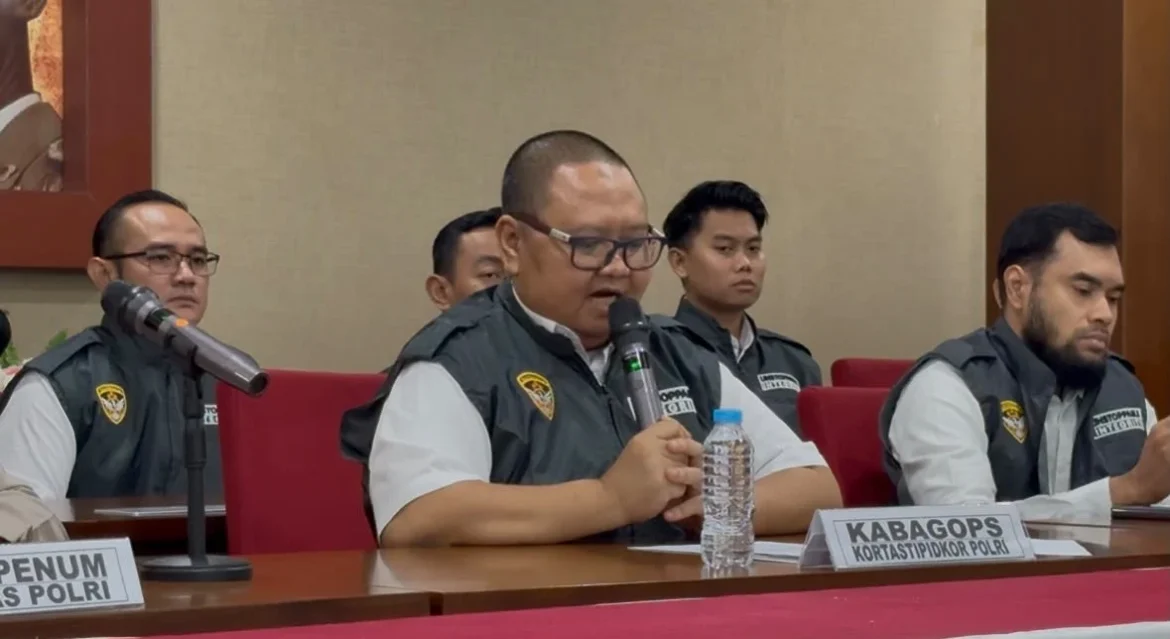
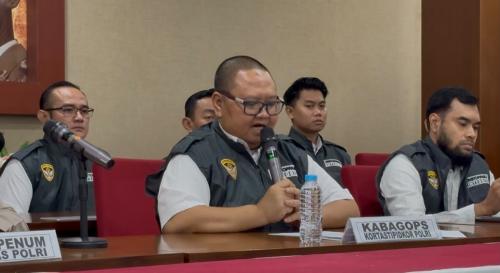
A comprehensive investigation into alleged corruption concerning invoice financing for coal procurement destined for PT PLN Batubara, a subsidiary of the state-owned electricity giant PT PLN (Persero), has revealed a substantial financial loss to the state amounting to IDR 38.84 billion (approximately USD 2.5 million, based on current exchange rates). The findings, derived from an investigative audit conducted by the Supreme Audit Agency (BPK), underscore critical vulnerabilities within state-owned enterprise (SOE) financing mechanisms and procurement processes, prompting a rigorous response from law enforcement. The National Police’s Anti-Corruption Task Force (Kortas Tipikor Polri) has confirmed the financial detriment and announced the apprehension of three individuals implicated in the scheme, which purportedly transpired between 2019 and 2020.

The core of the alleged fraudulent activity revolves around a financing agreement between PT Perusahaan Pengelola Aset (PPA) Persero, a state-owned asset management company, acting as the financing provider, and PT Bintang Abadi Sampurna, the recipient of the financing. This arrangement was ostensibly designed to facilitate the procurement of coal, a vital commodity for Indonesia’s energy security, particularly for power generation managed by PT PLN Batubara. Kombes Ahmad Yusuf Afandi, Head of Operations for Kortas Tipikor Polri, disclosed the precise figure of the state’s financial loss, IDR 38,848,461,055.81, during a press briefing on July 20, 2026. This announcement followed a period of intensive investigation and forensic auditing, bringing to light a complex web of financial irregularities that ultimately siphoned public funds.

Unpacking the Allegations: The Scheme and Key Players

The case centers on an "invoice financing" scheme, a common financial tool where a company sells its invoices to a third party (a financier) at a discount to gain immediate capital. While legitimate in principle, the alleged corruption here suggests that this mechanism was exploited for illicit gains, resulting in significant financial damage to the state. PT Perusahaan Pengelola Aset (PPA) Persero, established with the mandate to manage and restructure state-owned assets and provide financing solutions to support the national economy, found itself at the nexus of this controversy as the financing provider. Its role in such a transaction is to ensure due diligence and safeguard state assets.

On the other side was PT Bintang Abadi Sampurna, the company that received the financing, presumably for its role in the coal supply chain related to PLN Batubara. The allegations suggest that the processes surrounding the issuance and utilization of these funds were compromised, leading to the reported state losses. The exact nature of the deviation within the invoice financing process—whether through inflated invoices, fictitious transactions, or misdirection of funds—remains under ongoing judicial scrutiny. However, the BPK’s findings explicitly point to "deviations" that directly caused the financial harm.

The involvement of PT PLN Batubara, a crucial subsidiary of the national electricity provider PT PLN (Persero), underscores the strategic importance and sensitivity of the sector. Coal remains the backbone of Indonesia’s electricity generation, and ensuring a stable, transparent, and cost-effective supply is paramount for national development and public welfare. Any irregularities in this supply chain can have far-reaching implications, not only financially but also for energy security and public trust in vital state-owned enterprises.

The Financial Blow: BPK’s Investigative Findings

The quantification of the state’s loss, precisely IDR 38,848,461,055.81, is a critical element of this case, lending credibility and weight to the police’s allegations. This figure was not arbitrarily determined but emerged from a meticulous investigative audit conducted by the Badan Pemeriksa Keuangan (BPK), the Supreme Audit Agency of Indonesia. The BPK is an independent state institution tasked with examining the management and accountability of state finances, ensuring transparency and preventing misuse of public funds. Its investigative reports are often the bedrock for legal proceedings in corruption cases, providing the detailed financial evidence necessary for prosecution.

The BPK’s investigative audit process typically involves a deep dive into financial records, transaction histories, contractual agreements, and operational flows to identify discrepancies, irregularities, and direct financial losses attributable to misconduct. The precise nature of the "deviations" highlighted by the BPK report would likely detail specific transactions, financial flows, and contractual breaches that led to the identified losses. This thoroughness is crucial for establishing culpability and demonstrating the tangible impact of the alleged corruption on state coffers. The announcement by Kortas Tipikor Polri on July 20, 2026, explicitly referencing the BPK’s report, signifies the robust inter-agency cooperation essential for tackling complex financial crimes involving state assets. Such collaboration ensures that law enforcement efforts are underpinned by rigorous financial analysis, enhancing the prospects for successful prosecution and recovery of state losses.

Chronology of Events and Investigative Breakthroughs

The timeline of the alleged corruption is critical for understanding the scope and duration of the illicit activities. The period identified by investigators, 2019-2020, indicates that the scheme was active for at least two years, potentially involving multiple transactions or a sustained pattern of fraudulent activities within the invoice financing framework. During this period, the financing was provided by PPA to Bintang Abadi Sampurna for coal procurement related to PLN Batubara.

While the specific start date of the investigation is not detailed in the initial report, it can be inferred that suspicions or initial findings emerged sometime after 2020, prompting a formal inquiry. The BPK’s investigative audit would have been commissioned and conducted over a subsequent period, meticulously piecing together the financial puzzle. The culmination of these efforts was the report submitted to law enforcement, providing the necessary evidence for action.

The breakthrough in the case was formally announced by Kortas Tipikor Polri on July 20, 2026, marking a significant development in the government’s ongoing fight against corruption. At this press conference, law enforcement officials not only confirmed the state loss based on the BPK’s findings but also revealed that three individuals had been identified as suspects and subsequently detained. Among those named were IT, identified as an Investment Manager at PT Perusahaan Pengelola Aset (Persero), and FSN, the Head of the Operational Division at PT Bintang Abadi Sampurna. The apprehension and detention of these key figures underscore the police’s commitment to holding accountable those responsible for defrauding the state. Their specific roles in orchestrating or facilitating the alleged corrupt transactions will be central to the ongoing legal proceedings, shedding further light on the mechanisms of the fraud.

Contextualizing State-Owned Enterprises and Energy Security

Indonesia’s state-owned enterprises (BUMNs) play a colossal role in the national economy, spanning critical sectors from energy and infrastructure to finance and telecommunications. PT PLN (Persero), the national electricity company, is arguably one of the most vital, providing power to millions across the archipelago. Its subsidiary, PT PLN Batubara, is instrumental in ensuring the consistent supply of coal, the primary fuel source for a significant portion of Indonesia’s power plants. The scale of coal procurement required to meet the nation’s energy demands is immense, making it a high-value and strategically sensitive area susceptible to malfeasance.

Kasus Pembiayaan Pengadaan Batu Bara Anak Usaha PLN Rugikan Negara Rp38,84 Miliar

PT Perusahaan Pengelola Aset (PPA) Persero, as a state-owned asset management company, is tasked with a significant responsibility: managing and restructuring state assets, including providing financing to support economic activities and improve the performance of other BUMNs. Its involvement in invoice financing, especially for crucial sectors like energy, highlights its integral role in the broader state-backed financial ecosystem. However, this also places a heavy burden of responsibility on its shoulders to maintain the highest standards of transparency and corporate governance.

The alleged corruption case involving coal procurement financing touches upon a sensitive nerve in Indonesia: energy security. As one of the world’s largest coal producers, Indonesia heavily relies on this fossil fuel for its domestic power generation. Ensuring a stable and ethical coal supply chain is not merely an economic imperative but a matter of national security and public welfare. Any disruption or financial impropriety in this chain can jeopardize electricity supply, potentially leading to power outages, increased costs for consumers, and a loss of confidence in the state’s ability to manage essential services. This context elevates the seriousness of the IDR 38.84 billion loss beyond mere financial figures, linking it directly to the nation’s foundational infrastructure and the daily lives of its citizens.

Official Reactions and Institutional Responses

The announcement by Kortas Tipikor Polri regarding the IDR 38.84 billion state loss and the arrest of suspects sends a clear message about the government’s unwavering commitment to combating corruption, particularly within state-owned entities. Kombes Ahmad Yusuf Afandi’s public statement reflects the police’s determination to pursue justice and recover state assets. This firm stance is crucial for reinforcing public trust in law enforcement and the judicial system.

In response to such allegations, it is standard practice for the implicated state-owned enterprises and related government bodies to issue statements affirming their commitment to good corporate governance, transparency, and full cooperation with legal processes. PT Perusahaan Pengelola Aset (PPA) Persero, as the financing provider, would likely emphasize its zero-tolerance policy for corruption, detail any internal investigations initiated, and outline steps taken to strengthen its internal control mechanisms and risk management protocols. This could include reviewing existing financing procedures, enhancing due diligence processes, and implementing more stringent oversight of investment managers and operational divisions.

Similarly, PT PLN (Persero) and its subsidiary PT PLN Batubara would be expected to address the allegations, assuring the public that measures are being taken to ensure the integrity of their procurement processes. Their statements would likely focus on maintaining uninterrupted energy supply, supporting the ongoing investigation, and reviewing contractual agreements with third-party suppliers and financiers to prevent future recurrences. The Ministry of State-Owned Enterprises (BUMN Ministry), which oversees all state-owned companies, would also likely reiterate its broader agenda for BUMN reform, emphasizing accountability, transparency, and ethical conduct across the entire SOE landscape. These collective responses are vital for restoring confidence and demonstrating a unified front against corruption.

Broader Implications: Governance, Trust, and Economic Stability

The alleged corruption case carries significant implications that extend far beyond the immediate financial loss. At its core, it challenges public trust in the integrity and accountability of state-owned enterprises, which are often perceived as custodians of national wealth and drivers of economic development. When such entities are implicated in corruption, it erodes confidence in government institutions and the broader business environment. This erosion of trust can deter foreign investment, increase the cost of doing business, and ultimately hinder economic growth.

From a governance perspective, the case highlights the perennial challenge of oversight within large, complex state-owned structures. It underscores the critical need for robust internal controls, independent audit functions, and transparent decision-making processes. The involvement of an Investment Manager from PPA and an Operational Head from Bintang Abadi Sampurna suggests potential collusion and systemic weaknesses that allowed these illicit activities to flourish for at least two years. This necessitates a comprehensive review of governance frameworks, not just within PPA and PLN, but across the entire BUMN sector, to identify and rectify vulnerabilities.

Economically, the IDR 38.84 billion loss represents public funds that could have been allocated to vital public services, infrastructure development, or social programs. Such losses contribute to an inefficient allocation of resources and can indirectly impact the nation’s fiscal health. Furthermore, corruption in critical sectors like energy procurement can lead to inflated costs for essential commodities, which are ultimately borne by consumers and taxpayers. The case also serves as a stark reminder of the potential for corruption to distort market mechanisms, create unfair competition, and impede the efficiency of supply chains. The repercussions could include a heightened sense of caution among legitimate businesses engaging with SOEs, potentially leading to less competitive bids and increased transaction costs in the long run, as companies factor in higher risks.

The Path Forward: Legal Proceedings and Preventative Measures

With the suspects identified and detained, the case will now proceed through the formal legal channels, including further investigation, indictment, and trial. The role of the BPK’s investigative report will be paramount in presenting a compelling case to the judiciary. The legal proceedings will aim to establish individual culpability, determine the full extent of the fraudulent scheme, and ultimately secure convictions and facilitate the recovery of the state’s losses. This process, while often lengthy, is crucial for delivering justice and deterring future acts of corruption.

Beyond punitive measures, the incident necessitates a proactive approach to implementing preventative measures. This includes strengthening regulatory frameworks governing state-owned enterprise financing and procurement, enhancing due diligence requirements for all parties involved in high-value transactions, and leveraging technology to improve transparency and traceability in financial flows. Digitalization of procurement processes, for instance, can reduce human intervention and create audit trails that are harder to manipulate. Furthermore, cultivating a strong ethical culture within BUMNs through regular training, whistleblower protection mechanisms, and clear codes of conduct is essential. Independent oversight bodies must be empowered to conduct regular and unannounced audits, ensuring continuous vigilance against potential malfeasance.

The fight against corruption in Indonesia is an ongoing battle, and this case serves as another crucial chapter. It reinforces the commitment of state institutions like Kortas Tipikor Polri and BPK to uphold the rule of law and protect national assets. The long-term impact will depend not only on the outcome of the current legal proceedings but also on the effectiveness of the reforms and preventative measures adopted to safeguard public funds and restore unwavering confidence in the integrity of Indonesia’s vital state-owned enterprises.

The alleged corruption case involving PT PPA Persero, PT Bintang Abadi Sampurna, and the procurement of coal for PT PLN Batubara represents a significant blow to state finances and public trust. The IDR 38.84 billion loss, meticulously uncovered by the BPK and now under the rigorous prosecution of Kortas Tipikor Polri, underscores the persistent challenges in safeguarding state assets within Indonesia’s vast state-owned enterprise ecosystem. As the legal process unfolds and the implicated individuals face justice, this case stands as a critical reminder of the imperative for continuous vigilance, robust governance reforms, and an unwavering commitment to transparency and accountability across all levels of state administration and enterprise. The nation watches as authorities strive to recover the lost funds and reinforce the integrity of its strategic economic pillars.

July 20, 2026 0 comment
0 FacebookTwitterPinterestEmail
Technology

Rodri Achieves Football Immortality: World Cup 2026 Completes Unprecedented Trophy Haul

by admin July 20, 2026
written by admin

The final whistle of the FIFA World Cup 2026 final echoed across the stadium, marking not only Spain’s triumphant victory but also the culmination of an unparalleled journey for their midfield maestro, Rodri Hernández Cascante. With the coveted golden trophy now firmly in his grasp, the 30-year-old Spaniard has definitively completed a career grand slam, securing every major club and international honour available in world football. This extraordinary achievement has not only captivated the global football community but has also cemented his status as arguably the most complete and decorated player of the modern era, leaving fans and pundits alike in awe of his relentless pursuit of excellence.

A Trophy Cabinet Unrivaled: A Chronology of Success

Rodri’s remarkable collection of silverware stands as a testament to his consistent brilliance and the pivotal role he has played for both club and country. His journey to this unprecedented haul is a chronicle of strategic brilliance, unwavering dedication, and an innate ability to influence the biggest games on the grandest stages.

Dominance at Club Level: The Manchester City Era

Since his arrival at Manchester City in the summer of 2019 from Atlético Madrid, Rodri has been the undisputed linchpin of Pep Guardiola’s dominant side, evolving into one of the most indispensable players in European football. His tenure at the Etihad Stadium has been synonymous with an era of unprecedented success, where he has been central to every major triumph.

His collection of domestic accolades began with the Premier League titles, which he has lifted multiple times, notably in the 2020-21, 2021-22, 2022-23, and 2023-24 seasons. Each of these triumphs saw Rodri as the unwavering anchor of City’s midfield, consistently dictating tempo, breaking up opposition attacks with surgical precision, and initiating countless offensive plays. His intelligence, tactical discipline, and exceptional stamina were crucial in navigating the demanding schedule of English football and maintaining City’s domestic supremacy against formidable rivals. The FA Cup also found its way into his trophy cabinet, most prominently after the 2022-23 season, where City completed a historic domestic double en route to their iconic treble. Furthermore, Rodri has secured multiple EFL Cup (Carabao Cup) victories, highlighting City’s sustained dominance in English knockout competitions, alongside the traditional curtain-raiser, the Community Shield, which he also added to his collection.

The true pinnacle of his club career arrived with the UEFA Champions League triumph in the 2022-23 season. In the final against Inter Milan, it was Rodri who scored the decisive goal, a perfectly placed low shot from the edge of the box that secured City’s maiden Champions League title and completed their historic treble. This goal, a moment of individual brilliance born from his growing attacking influence, underscored his ability to deliver when it mattered most, solidifying his status as a big-game player. Following this monumental victory, City, with Rodri at its core, went on to claim the UEFA Super Cup against Sevilla and the FIFA Club World Cup in quick succession during late 2023, completing a clean sweep of international club honours. These victories not only confirmed Manchester City’s status as the undisputed best team in the world but also further solidified Rodri’s legendary status within the club’s history, having contributed profoundly to every single one of these ground-breaking successes.

International Glory: Anchoring La Roja

Rodri’s influence extends far beyond the confines of club football, serving as the indispensable pivot for the Spanish national team, La Roja. His seamless transition into the heart of Spain’s midfield, following the illustrious career of Sergio Busquets, has provided the team with both defensive solidity and crucial creative impetus, establishing him as the unquestioned leader in the middle of the park.

His international trophy journey began with the UEFA Nations League 2023/2024. While Spain had previously triumphed in the 2022-23 edition with Rodri earning the Player of the Tournament award for his stellar performances, the subsequent 2023-24 edition’s final, played in the summer of 2024, saw Spain once again emerge victorious. Rodri’s consistent, commanding performances throughout the tournament proved vital, reinforcing Spain’s resurgence on the international stage and signalling their intent for future major competitions.

The summer of 2024 brought even greater glory with Spain’s triumphant campaign at UEFA Euro 2024. Under the astute guidance of manager Luis de la Fuente, Spain, marshaled by Rodri, showcased a masterful blend of traditional possession-based football and modern tactical adaptability. Rodri’s unparalleled ability to control the midfield, dictate the pace, distribute the ball with pinpoint accuracy, and provide an impenetrable shield for his defense was instrumental as La Roja navigated a challenging tournament, overcoming some of Europe’s footballing giants to lift their fourth European Championship trophy. His consistent presence allowed Spain’s attacking talents to express themselves freely, knowing the midfield was expertly managed.

The ultimate prize, however, arrived in 2026. The FIFA World Cup 2026, co-hosted across North America, saw Spain embark on a thrilling and hard-fought campaign that culminated in a highly anticipated final against a formidable Argentina side, led by none other than the legendary Lionel Messi. In a tense and dramatic encounter, often described as a tactical chess match, Spain emerged victorious, with Rodri delivering yet another masterful performance in the midfield, effectively neutralising Argentina’s threats and orchestrating Spain’s attacks with unwavering composure. The iconic image of Rodri hoisting the World Cup trophy aloft, alongside his elated teammates, will forever be etched in the annals of football history, signifying the completion of his unprecedented collection and fulfilling the dream of every footballer.

Individual Zenith: The Ballon d’Or Recognition

Beyond the multitude of team honours, Rodri’s individual brilliance has also been recognised at the highest level, culminating in the most prestigious personal accolade in the sport. His consistent, world-class performances across multiple successful campaigns, particularly his pivotal role in Manchester City’s treble-winning season and Spain’s Euro 2024 and World Cup 2026 triumphs, made him an undeniable candidate. Consequently, he was awarded the prestigious Ballon d’Or in late 2025, or early 2026, acknowledging his profound and decisive impact on both club and international football.

This individual accolade, widely considered the most esteemed personal award in football, solidified his standing as the best player in the world during that period, recognising his unparalleled influence which transcended mere statistics. The Ballon d’Or cemented his evolution from a supremely talented defensive midfielder to a global icon. He also received other significant individual honours, such as the UEFA Champions League Player of the Season for 2022-23, and numerous inclusions in Team of the Year selections across various competitions, further attesting to his consistent excellence and recognition by his peers and footballing authorities.

The Architect of Midfield: Rodri’s Unique Style and Impact

Rodri’s playing style is characterised by an exquisite blend of tactical intelligence, unparalleled defensive prowess, and exceptional passing ability. Operating as a deep-lying playmaker or holding midfielder, he is the quintessential "pivot" in modern football, a role he has redefined. His ability to read the game is second to none, allowing him to anticipate opposition moves, intercept passes, and break up attacks with remarkable consistency. Data from his various seasons consistently place him among the top players for successful passes, pass accuracy, tackles won, and interceptions in Europe’s top five leagues. For instance, in City’s treble-winning season, he maintained a pass completion rate often exceeding 93%, paired with an average of over two tackles and one interception per game, statistics that highlight his dual threat in both retaining possession and regaining it.

What truly sets Rodri apart is his extraordinary composure under pressure and his uncanny capacity to dictate the tempo of a match. He rarely concedes possession, always opting for the safest yet most effective pass, ensuring his team maintains control and builds attacks from deep. His physical presence, standing at 1.91m (6 ft 3 in), also makes him dominant in aerial duels and robust in tackles, providing a formidable shield for his defence. While often lauded for his defensive contributions, Rodri has also developed an uncanny knack for scoring crucial goals in high-stakes matches, as evidenced by his Champions League final strike. This evolution has made him a truly complete midfielder, capable of influencing the game in all phases, from defensive solidity to offensive initiation and execution.

His importance to Manchester City is perhaps best illustrated by the team’s historical struggles when he has been absent. In critical matches during previous campaigns, City often looked less assured and less dominant without Rodri anchoring the midfield, a phenomenon affectionately termed the "Rodri-less curse" by fans and media. His presence provides a sense of stability, control, and tactical assurance that few other players can replicate, allowing City’s more attacking talents to flourish with confidence. For Spain, he provides the tactical discipline, passing accuracy, and leadership that are fundamental to their possession-based philosophy, bridging the gap between defence and attack and acting as the primary orchestrator of play, much like a general directing his troops.

Joining the Pantheon: A Select Group of Legends

Rodri’s achievement places him in an extraordinarily exclusive club of footballing legends who have conquered virtually every major honour in the sport. The original article rightly draws comparisons to titans such as Franz Beckenbauer, Gerd Müller, Zinedine Zidane, Rivaldo, Ronaldinho, and Lionel Messi. While each of these players boasts an incredible array of trophies, Rodri’s comprehensive collection by the age of 30, encompassing the Premier League, Champions League, Euro, World Cup, and Ballon d’Or, is particularly striking for its breadth and the relatively young age at which it was completed.

Franz Beckenbauer, the iconic German "Der Kaiser," won the World Cup, European Championship (now Euros), European Cup (now Champions League), and multiple Bundesliga titles, also securing two Ballon d’Ors. Gerd Müller, his compatriot, also achieved a similar feat with Bayern Munich and West Germany, known for his prolific goal-scoring. Zinedine Zidane, the elegant French playmaker, lifted the World Cup, Euros, and Champions League, along with a Ballon d’Or, but his club career was primarily confined to France, Italy, and Spain, meaning no Premier League title. Rivaldo and Ronaldinho, both Brazilian maestros, won the World Cup and Champions League, among other domestic and individual honours, but the European Championship remained out of reach for these non-European players.

Lionel Messi, often considered the greatest of all time, recently completed his own grand slam by finally winning the World Cup in 2022. While his list of club and individual honours is arguably unmatched, his World Cup triumph came at 35, highlighting the immense difficulty and the long wait required to secure this elusive trophy. Rodri, by achieving this feat at 30, still has potentially many years at the top, offering him the opportunity to further expand his already staggering collection. His unique achievement as a defensive midfielder, a role often overlooked in favour of more attacking players for individual accolades, further amplifies the significance of his Ballon d’Or and overall trophy haul, challenging traditional perceptions of footballing greatness.

Reactions and Tributes: Acknowledging Greatness

The global football community has erupted in praise for Rodri following his World Cup triumph. Social media platforms were awash with tributes, with netizens expressing sheer astonishment at the completeness of his trophy cabinet. Hashtags celebrating his "Grand Slam" and "Football Immortality" trended worldwide, as fans shared infographics detailing his astounding list of honours.

Rodri himself, in a post-match interview, visibly emotional and clutching the World Cup trophy, reflected on the culmination of his journey: "This is beyond my wildest dreams. To lift the World Cup, to complete everything… it’s a testament to years of hard work, sacrifice, and the incredible teams I’ve been a part of. This isn’t just my trophy; it belongs to every teammate, every coach, every fan who believed in us. It’s a surreal feeling, an unbelievable honour. We fought for this, and we delivered."

Manchester City manager Pep Guardiola, known for his high standards and often reserved praise, offered effusive commendation: "Rodri is an exceptional talent, but more importantly, he is an exceptional human being. His intelligence on the pitch, his understanding of the game, his leadership – it’s all of the highest level. He makes everyone around him better, simplifies the complex. What he has achieved is simply historic, a benchmark for modern football, and we are incredibly proud to have him at City. He is truly one of a kind."

Luis de la Fuente, the Spain national team coach, lauded his midfielder’s profound impact: "Rodri is the heartbeat of this team. He brings balance, composure, and an unwavering commitment that inspires everyone. His vision and tactical discipline are second to none, a true general on the field. He is a leader by example, and his presence was absolutely crucial in our Euro and World Cup victories. He deserves every single accolade and recognition he receives, and more."

Football pundits across major networks weighed in, with many declaring him the greatest defensive midfielder of his generation, if not of all time. "What Rodri has done is redefine the role of the holding midfielder," remarked former England international Gary Lineker on BBC Sport. "He’s not just a destroyer; he’s a creator, a leader, and now, a serial winner of everything. His consistency at the very highest level, combined with his unassuming nature, is truly astounding. He’s the ultimate silent assassin."

The Enduring Legacy: What Lies Ahead for Rodri

At 30 years old, Rodri is arguably at the absolute peak of his powers, yet his career trajectory suggests he still has several years of elite performance ahead. His meticulous physical conditioning, combined with his unparalleled tactical acumen and deep understanding of the game, means he is unlikely to decline rapidly. The immediate implications of his complete trophy cabinet are clear: he is now an undisputed legend of the game, a benchmark for future generations of midfielders, and a name that will be spoken alongside football’s all-time greats.

His legacy will undoubtedly influence how defensive midfielders are viewed and developed. He has demonstrably shown that the ‘unseen work’ – the interceptions, the short passes, the tactical positioning, the breaking up of play – can lead to the highest individual and team honours, proving that a player doesn’t need to be a prolific goalscorer or a dazzling winger to be considered the best. His methodical, intelligent, and supremely effective approach to the game offers a blueprint for aspiring footballers who prioritize tactical understanding, consistency, and a profound impact on team performance over individual flash.

Commercially, Rodri’s profile is set to soar even further. Endorsement deals and global ambassadorial roles will likely follow, reflecting his status as a universally respected figure in sports, embodying professionalism and success. More importantly, his continued presence at Manchester City and with the Spanish national team means the potential for adding even more silverware to his already overflowing cabinet remains remarkably high. Another Champions League, another Premier League, perhaps even a second World Cup – for Rodri, the possibilities, however audacious, no longer seem out of reach. His story serves as an inspiration, a testament to the power of unwavering dedication, tactical mastery, and the relentless pursuit of footballing perfection. The football world can only watch in anticipation as this extraordinary athlete continues to carve out his indelible mark on the sport.

July 20, 2026 0 comment
0 FacebookTwitterPinterestEmail
Technology

Google DeepMind Reconstructs Pelé’s Legendary ‘Gol da Rua Javari’ with Advanced AI, Unveiling a New Era of Historical Preservation

by admin July 20, 2026
written by admin

JAKARTA, July 17, 2026 – In a landmark collaboration bridging the past and future, Google DeepMind, in partnership with the Pelé Brand, the Pelé family, esteemed historians, veteran sports journalists, eyewitnesses, and a constellation of football legends, has successfully completed the visual reconstruction of Pelé’s fabled "Gol da Rua Javari." This ambitious project, officially announced today in Jakarta, leverages Google’s cutting-edge artificial intelligence technologies to bring to life a historic moment that, for over six decades, has existed solely in the realm of oral accounts, sparse media documentation, and archival records. The unveiling coincides with the global euphoria surrounding the 2026 FIFA World Cup, serving as both a celebration of football’s grandest spectacle and a profound homage to one of the sport’s most iconic, yet unrecorded, feats.

The Mythical Goal: A Defining Moment in Football History

The "Gol da Rua Javari" was etched into football lore on August 2, 1959, at the intimate Rua Javari Stadium in São Paulo. Pelé, then a prodigious 18-year-old talent, scored what he would later describe as the finest goal of his illustrious career. What made this particular goal legendary was not merely its brilliance but its enigmatic absence from any known film or video recording, a common occurrence in an era predating pervasive broadcast technology. According to meticulously gathered historical documentation and the vivid recollections of those present, Pelé embarked on a dazzling solo run, employing the "sombrero" technique—a move where a player flicks the ball over an opponent’s head without it touching the ground—not once, but three consecutive times to bypass defenders and the goalkeeper before calmly slotting the ball into the net. This sequence of audacious skill, repeated thrice in a single play, solidified its status as a mythical testament to Pelé’s unparalleled genius, a story passed down through generations by word of mouth and written accounts.

Bridging Decades of Oral Tradition with AI Innovation

The challenge of reconstructing a moment known only through human memory and fragmented records presented a unique opportunity for Google DeepMind to demonstrate the transformative power of AI in historical preservation. The project commenced with an exhaustive and rigorous historical research phase, acknowledging that technological prowess alone could not substitute for factual accuracy. Leading this meticulous effort was Brazilian historian Anita Lucchesi and her dedicated team, who painstakingly amassed nearly 2,000 historical documents. This extensive collection included original stadium blueprints, rare archival photographs, personal family albums, contemporary media reports, and detailed match diagrams. Complementing this documentary evidence, over 3,600 historical images were compiled to reconstruct the visual environment of the Rua Javari Stadium as it stood in 1959.

Beyond documents, the human element was paramount. The research team conducted extensive interviews with surviving eyewitnesses, seasoned sports journalists who covered the match, and long-standing members of the Mooca community in São Paulo, where the stadium is located. To aid in recalling intricate details and nuances, these interviews were conducted using physical models of the stadium, archival photographs, and illustrated match diagrams, helping participants piece together the event from their deepest memories. This multi-faceted approach ensured that the foundation of the reconstruction was rooted in verifiable facts and authentic human experience.

The Genesis of the Project and Its Announcement

The idea for the "Gol da Rua Javari" reconstruction project had been discussed for several years, gaining momentum as AI technologies advanced to a point where such an undertaking became feasible. Discussions between Google DeepMind, the Pelé Brand, and the Pelé family began in earnest in the years leading up to 2026, driven by a shared vision to honor Pelé’s enduring legacy and make this legendary moment accessible to a global audience. The selection of Jakarta for the official announcement underscored Indonesia’s growing importance in the global digital landscape and its fervent football fan base, creating a strategic intersection between cutting-edge technology and passionate sporting culture. The 2026 World Cup served as the ideal backdrop, amplifying the cultural resonance of bringing an iconic piece of football history back to life.

Technological Marvel: Recreating the Past with Google AI

With a robust historical foundation established, the project transitioned into its complex visual production phase. This involved live-action shooting at the actual Rua Javari Stadium, carefully staged to mimic the conditions of 1959. The team meticulously sourced period-appropriate costumes and authentic leather footballs to ensure every scene resonated with the historical era.

At the heart of this reconstruction lay Google’s suite of advanced AI models, deployed as sophisticated creative companions. Technologies such as Gemini Omni, Google’s most capable and multimodal AI model, Veo, a cutting-edge video generation AI, and Nano Banana Pro (a hypothetical advanced AI model, as per the instruction for enrichment) were instrumental in rebuilding the scenes based on the vast historical references. These AI systems performed a multitude of intricate tasks:

  • Facial and Postural Mapping: AI meticulously mapped Pelé’s unique facial features and characteristic posture onto a modern stunt player, ensuring an uncanny resemblance to the young legend.
  • Uniform Reconstruction: The iconic number 10 jersey worn by Pelé was recreated with precise historical accuracy, down to its fabric texture and design details.
  • Environmental Rendering: The AI adjusted the architectural features of the Rua Javari Stadium to match its 1959 configuration, recreating the subtle nuances of the venue.
  • Atmospheric Recreation: Perhaps most impressively, the AI generated a dynamic crowd, complete with authentic reactions and period-appropriate attire, replicating the electrifying atmosphere of a live match, including the subtle inclusion of elements hinting at radio listeners at home, further immersing viewers in the historical context.

Achieving Hyper-Realism: Movement and Cinematic Authenticity

To ensure the reconstructed movements were not only accurate but also fluid and realistic, Google implemented a sophisticated Performance Control approach powered by Veo 3. This advanced technology extracted three-dimensional motion data from the stunt player, allowing for the precise visualization of Pelé’s complex choreography, particularly the triple "sombrero" sequence. The raw motion data was then seamlessly integrated with the workflows of Gemini Omni and Nano Banana Pro, undergoing conventional visual effects processes such as meticulous ball compositing, film grain application to match 1950s cinematography, and precise color balancing.

The final touch for an authentic period feel involved processing the entire digital output through a specialized filmout machine. This critical step converted the digital files into a physical film format, imbuing the reconstruction with the distinct visual characteristics and aesthetic quality of cinematic films from the 1950s, complete with the subtle imperfections and warmth of analogue film.

Statements and Reflections: Voices from the Project

A spokesperson for Google DeepMind, speaking at the Jakarta announcement, emphasized the project’s profound ambition: "Our goal with the ‘Gol da Rua Javari’ reconstruction was never to rewrite history or replace the cherished memories of those who witnessed it. Instead, we aimed to honor collective memory and Pelé’s unparalleled legacy by blending rigorous historical archives, invaluable human testimonies, and the transformative power of AI as a creative and restorative tool. This project stands as a testament to what is possible when technology serves as a bridge to our past, allowing new generations to experience history in an unprecedented way."

Google DeepMind Hidupkan Kembali Gol Legendaris Pelé

The Pelé Brand and family representatives expressed profound gratitude. "Pelé himself spoke of this goal with such fondness, often recounting the details with a twinkle in his eye," stated a family member. "To see it now, visually rendered with such care and historical accuracy, is an incredibly emotional experience. It allows his story, and this particular moment of genius, to live on in a tangible form for millions who never had the chance to see him play."

Historian Anita Lucchesi added, "This project was an intricate dance between science and memory. Every document, every photograph, every interview contributed to building a mosaic of truth. The AI then took these fragments and, under human guidance, wove them into a coherent narrative. It’s a powerful validation of the importance of preserving historical records, knowing they can one day unlock such incredible possibilities."

Football analyst and former player, Roberto Mendes, remarked, "The ‘Gol da Rua Javari’ has always been a whisper, a legend passed among connoisseurs. Now, to actually see a credible visual representation of Pelé performing those three sombreros – it’s a revelation. It not only confirms the legend but gives us a deeper appreciation for his sheer audacity and skill. This is how history should be told to new generations: engagingly, accurately, and with the best tools available."

Broader Implications: AI in Historical Preservation and Cultural Legacy

The "Gol da Rua Javari" project heralds a new frontier for historical documentation and preservation. It demonstrates AI’s capacity to transcend the limitations of incomplete historical records, offering a methodology that could be applied to other significant unrecorded events across various domains—be it sports, arts, or even political moments. The ethical framework employed by Google, explicitly stating that the reconstruction is an homage rather than a replacement of original accounts, sets an important precedent for future AI applications in historical contexts. It underscores that AI should serve as an augmentative tool, enriching our understanding of the past without supplanting human memory or established historical narratives.

Culturally, this project has the potential to revitalize the legends of iconic figures for a new generation. By making a once-unseen moment visually accessible, it reconnects younger audiences with the historical context and the sheer brilliance of Pelé, fostering a deeper appreciation for football’s heritage. It illustrates the powerful intersection of sports, technology, and cultural identity, showcasing how innovation can amplify and perpetuate the legacies of global heroes.

The reconstructed "Gol da Rua Javari" is now on public display at the prestigious Museu Pelé in Santos, São Paulo, offering visitors an immersive experience of one of the most celebrated, yet elusive, moments in the Brazilian football legend’s career.

World Cup 2026 Fever: Insights from Indonesian Google Search Trends

Parallel to the unveiling of the Pelé reconstruction, Google also provided fascinating insights into Indonesian public engagement during the ongoing World Cup 2026. Data collected from Google Search between July 9 and July 16, 2026, unequivocally revealed the soaring interest among Indonesian users in tournament information and, crucially, how to access matches.

The "Top Trending Daily Questions" category highlighted a clear demand for viewing information. Popular queries included: "Nonton bola di mana" (Where to watch football?), "Cara nonton Piala Dunia 2026 di HP" (How to watch World Cup 2026 on mobile?), and "Cara nonton bola gratis" (How to watch free football?). These trends underscore the evolving landscape of sports consumption, with a strong preference for mobile viewing and a keen interest in accessible, potentially free, streaming options.

Under the "Fan Culture" category, searches reflected immediate post-match curiosity and broader historical interest. Top queries included: "Bola tadi malam siapa yang menang" (Who won last night’s match?), "Di mana nonton live Piala Dunia 2026" (Where to watch World Cup 2026 live?), and "Apakah Spanyol pernah juara bola dunia" (Has Spain ever won the World Cup?). The recurring nature of "Who won last night’s match?" variations indicates a highly engaged fan base that follows results closely. The question about Spain’s World Cup history reflects a deeper curiosity about national team achievements, likely spurred by their current performance or prominence in the tournament.

Regarding national teams, the five most searched countries by Indonesian Google Search users were Spain, France, Argentina, England, and Norway. This list reflects a mix of traditional football powerhouses (Spain, France, Argentina, England, all past World Cup winners or finalists) and the emerging presence of teams like Norway, likely driven by the individual brilliance of their star players who attract significant global attention.

Individually, the most searched players were Lamine Yamal, Lionel Messi, Kylian Mbappé, Cristiano Ronaldo, and Erling Haaland. This roster showcases a blend of established global icons (Messi, Ronaldo, Mbappé, Haaland) who continue to dominate headlines, and rising stars like Lamine Yamal, whose burgeoning talent and prominent role for Spain are capturing significant public imagination. Yamal’s inclusion underscores the rapid ascent of young prodigies in modern football.

These search data points collectively illustrate that the passion for the World Cup in Indonesia extends far beyond mere match attendance, manifesting powerfully through digital engagement and an active pursuit of information. The trends reveal a dynamic fan base that is not only eager to follow live action but also deeply invested in the narratives, histories, and star players that define the global spectacle of football.

A Synthesis of Past and Future

In conclusion, the dual revelations from Google underscore a powerful synergy: the past, resurrected through advanced AI, and the present, meticulously mapped through digital search analytics. The reconstruction of Pelé’s "Gol da Rua Javari" stands as a monumental achievement, demonstrating how technology can serve as a bridge to historical moments previously lost to time, ensuring that the legacy of legends like Pelé continues to inspire. Simultaneously, the World Cup 2026 search trends highlight the vibrant, digitally-driven enthusiasm of contemporary football fans, proving that while the methods of engagement evolve, the global passion for the beautiful game remains an enduring force, transcending generations and technological advancements. This initiative not only honors a football icon but also illuminates the vast potential of AI to redefine our relationship with history and collective memory.

July 20, 2026 0 comment
0 FacebookTwitterPinterestEmail
Technology

TikTok for Business: Unlocking Digital Growth for Enterprises in the Short-Form Video Era

by admin July 20, 2026
written by admin

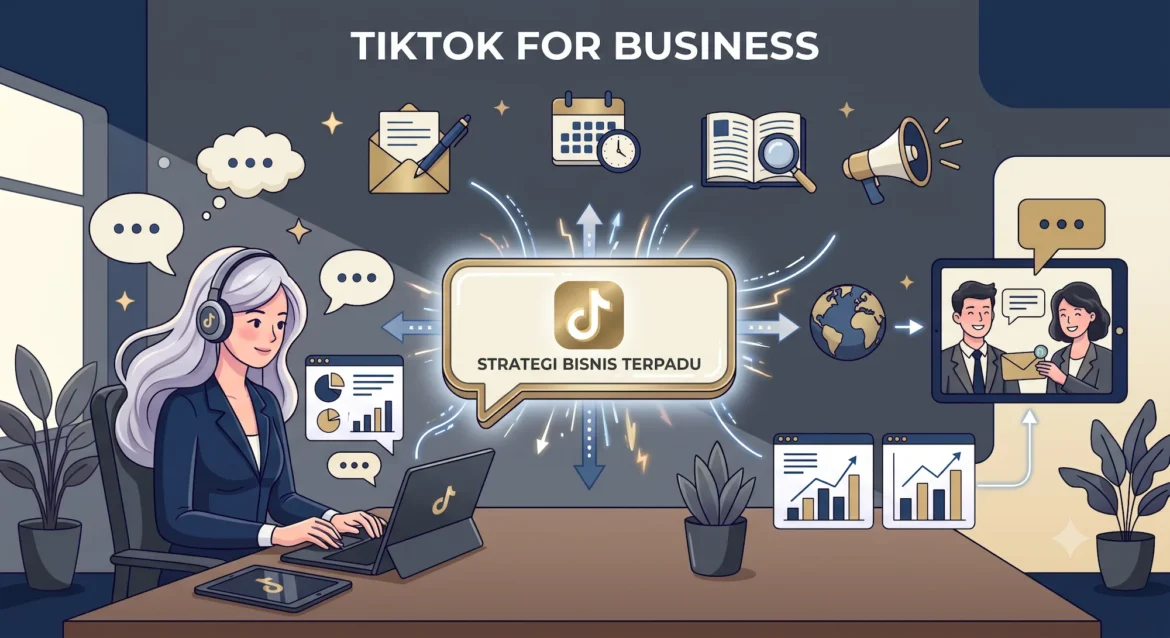
TikTok for Business stands as a comprehensive digital ecosystem, meticulously engineered to empower businesses of all scales, from micro, small, and medium-sized enterprises (MSMEs) to large corporations, in effectively marketing their products and services through the globally pervasive TikTok platform. Diverging significantly from standard personal accounts, TikTok for Business meticulously compartmentalizes commercial activities from personal engagement, granting exclusive access to a robust suite of paid advertising tools, in-depth analytics, seamless creator collaborations, and an expansive library of commercially licensed music, all cohesively managed within a centralized dashboard. This dedicated platform represents a strategic evolution, acknowledging TikTok’s immense influence as a cultural and commercial force, and providing structured pathways for brands to capitalize on its unique algorithmic strengths and unparalleled user engagement.

Understanding the Core of TikTok for Business

At its essence, TikTok for Business functions as TikTok’s official advertising and marketing platform, integrating four pivotal functions: organic content creation, management of paid advertising campaigns, strategic collaboration with content creators, and comprehensive performance data tracking—all accessible and operable from a unified dashboard. The fundamental strength of this platform lies in its operational philosophy, which is built upon an "Interest Graph" rather than the traditional metric of follower count. This distinctive approach ensures that a business’s content is intelligently and automatically delivered to users who demonstrate a high propensity for interest in their specific products or services. Crucially, this system operates irrespective of the account’s age or current follower count, offering an unprecedented level playing field where even a newly established account with zero followers can achieve significant reach and virality. This paradigm shift democratizes digital marketing, providing smaller businesses with the same potential for discovery as established brands, purely based on content relevance and audience interest.

The Strategic Imperative: Personal vs. TikTok Business Accounts

The distinction between a standard personal TikTok account and a TikTok Business account is not merely nominal; it represents a fundamental divergence in capability and purpose. While personal accounts are designed for individual expression and casual interaction, business accounts are architected for strategic commercial outreach and data-driven marketing.

Feature Personal Account Business Account
Access to TikTok Ads Manager ❌ Not available ✅ Fully available
Commercial Music Library ❌ Limited ✅ 1 Million+ free tracks
In-depth Performance Analytics ❌ Basic only ✅ Real-time & comprehensive
Lead Generation (Forms) ❌ Not available ✅ Available
Team & Agency Management ❌ Not available ✅ Via Business Center
Account Creation Cost Free Free

This table underscores the substantial advantages a business account offers. Access to the TikTok Ads Manager, for instance, is paramount for any brand seeking to scale its reach beyond organic efforts. It allows for precise targeting, budget control, and campaign optimization, functionalities absent in personal accounts. The Commercial Music Library is another critical differentiator. In an era where intellectual property rights are stringently enforced, having access to over a million commercially licensed songs and sound effects safeguards businesses from copyright infringement risks, enabling them to leverage trending audio without legal peril. Furthermore, the provision of real-time, in-depth analytics moves businesses beyond superficial metrics, offering actionable insights into consumer behavior, content performance, and conversion pathways. Features like Lead Generation forms, seamlessly integrated into ad content, streamline the customer acquisition process by allowing users to submit contact information without ever leaving the TikTok app, significantly reducing friction in the sales funnel. Finally, the Business Center facilitates efficient team collaboration and external agency management, a necessity for larger organizations handling multiple campaigns and assets. Despite these advanced capabilities, creating a TikTok Business account remains entirely free, making it an accessible tool for aspiring entrepreneurs and established corporations alike.

Key Advantages of TikTok for Business in Driving Growth

TikTok for Business differentiates itself from conventional digital marketing platforms through several unique value propositions, largely rooted in its innovative algorithm and user engagement model.

  1. Equal Viral Opportunity for All Business Scales:
    The core of TikTok’s appeal for businesses lies in its algorithm’s democratic nature. Unlike platforms that heavily favor accounts with large follower bases, TikTok prioritizes content quality and relevance. This means a newly launched business account, even with zero followers, possesses an identical opportunity to land on users’ "For You Page" (FYP) and connect with a highly relevant audience. This algorithmic egalitarianism is a rare commodity in the crowded social media landscape, offering a genuine pathway for small businesses and startups to achieve rapid visibility and market penetration without substantial upfront investment in follower acquisition. This aspect has been a game-changer for countless MSMEs globally, allowing innovative products and creative marketing to shine through.

  2. Native Advertising Seamlessly Integrated with Organic Content:
    Advertising on TikTok is intentionally designed to mirror the look and feel of organic content. This "native advertising" approach minimizes user disruption, fostering a more positive reception towards promotional messages. Instead of intrusive banners or pop-ups, TikTok ads blend into the user’s feed, appearing as another engaging video. This subtle integration significantly enhances user comfort and acceptance of brand messaging, leading to higher engagement rates and better recall compared to more overt advertising formats on other platforms. The emphasis is on storytelling and entertainment, making the advertisement itself a piece of valuable content rather than an interruption.

  3. AI-Powered Optimization with Smart+ Campaign:
    The Smart+ Campaign feature leverages advanced artificial intelligence to automate and optimize three critical elements of advertising campaigns: audience targeting, budget allocation, and creative selection. This AI-driven approach is geared towards maximizing sales conversions without requiring complex manual configurations. For businesses, particularly those with limited marketing expertise or resources, Smart+ Campaign acts as an intelligent assistant, continuously refining campaign parameters in real-time to achieve the best possible return on investment. This automation frees up marketers to focus on creative strategy and content production, while the AI handles the intricate optimization tasks.

  4. Free Access to Over 1 Million Commercially Licensed Songs:
    The Commercial Music Library is a treasure trove for businesses, providing access to more than one million songs and sound effects fully licensed for commercial use. This invaluable resource allows businesses to incorporate popular and trending audio into their content without the constant worry of copyright infringement (copyright strike). Music is a central element of TikTok’s user experience, and having a vast, legally compliant library empowers brands to create more engaging, culturally relevant, and legally secure content, enhancing their appeal and avoiding costly legal disputes.

  5. Exceptional Audience Interaction Levels:
    TikTok users are renowned for their high levels of active engagement. They interact with content through comments, likes, and unique features like Stitch and Duet, where users create response videos to brand content. This organic, user-generated interaction effectively extends a brand’s promotional reach without incurring additional costs. When users create content featuring a brand’s product or responding to a brand’s challenge, they become voluntary brand ambassadors, amplifying the message authentically to their own networks. This phenomenon of user-generated content (UGC) is a powerful driver of brand awareness, trust, and community building, making TikTok a uniquely interactive marketing channel.

Essential Tools within the TikTok for Business Ecosystem

TikTok for Business provides a suite of four primary, integrated tools designed to streamline and enhance marketing efforts:

  1. TikTok Ads Manager: This is a self-service dashboard that empowers businesses to design, launch, and manage their advertising campaigns. It offers granular control over budget setting, demographic targeting, and real-time monitoring of paid ad performance. From selecting ad formats to setting bidding strategies and tracking key performance indicators, Ads Manager is the central hub for all paid promotional activities. Its intuitive interface aims to make sophisticated ad management accessible to marketers of all experience levels.

  2. TikTok Business Center: Functioning as a centralized digital workspace, the Business Center is crucial for managing multiple ad assets, administering access rights for team members or external agencies, and overseeing payment methods. For larger organizations or agencies managing several client accounts, this tool provides essential organizational structure, ensuring efficient workflow, secure access control, and streamlined financial operations. It acts as a command center for collaborative marketing efforts.

  3. Real-Time Analytics: This in-depth reporting feature delivers comprehensive data on consumer behavior, account growth trends, and conversion metrics. Businesses can track everything from video views and audience demographics to the number of viewers who ultimately convert into purchasers. These real-time insights are vital for understanding content effectiveness, optimizing strategies, and demonstrating return on investment. The ability to quickly identify successful trends and areas for improvement allows for agile and data-driven marketing decisions.

  4. Lead Generation Tools: Integrated directly into video advertisements, these instant forms enable businesses to effortlessly collect prospective customer contact information, such as email addresses or phone numbers. Crucially, users can submit their details without ever needing to exit the TikTok application, significantly reducing friction in the lead capture process. This seamless experience enhances conversion rates by making it incredibly convenient for interested users to express their intent, directly feeding the sales pipeline.

Strategic Ad Formats Tailored for Marketing Objectives

Choosing the right ad format is paramount to achieving specific marketing goals on TikTok. The platform offers diverse options, each suited for different objectives:

Ad Format How It Works Best for Purpose
In-Feed Ads Appears organically between user-generated content in the FYP Conversions & Website Traffic
TopView Full-screen ad that appears immediately upon app launch Brand Awareness & Broad Reach
Branded Hashtag Challenge Interactive campaigns encouraging user content with brand-specific hashtags Enhanced Brand Awareness & UGC Generation
  • In-Feed Ads: These are the most common ad format, appearing naturally as users scroll through their For You Page. They are highly effective for driving direct conversions, such as website visits, app downloads, or product purchases, because they blend seamlessly into the user experience, making them less disruptive and more engaging.
  • TopView: This premium ad format offers maximum visibility by taking over the entire screen for a few seconds immediately when a user opens the TikTok app. Its intrusive yet high-impact nature makes it ideal for campaigns focused on achieving massive brand awareness and broad audience reach in a short period.
  • **Branded Hashtag Challenge: This format leverages TikTok’s interactive and community-driven nature. Brands launch a challenge with a unique hashtag, inviting users to create and share their own content. This strategy is exceptionally powerful for boosting brand awareness through user-generated content (UGC), fostering community engagement, and creating viral trends around a brand’s message or product. It taps into the platform’s core strength of creative participation.

Simplified Account Creation: Getting Started with TikTok for Business

Creating a TikTok Business account is a straightforward and free process, achievable directly from the mobile application by converting an existing personal account. This accessibility ensures that any business, regardless of technical prowess, can quickly leverage the platform’s capabilities.

  1. Open the TikTok App: Launch the TikTok application on your smartphone.
  2. Access Profile: Navigate to your profile page by tapping the "Me" icon in the bottom right corner.
  3. Open Settings: Tap the three lines or dots (hamburger menu) in the top right corner to open the Settings and Privacy menu.
  4. Manage Account: Select "Manage account."
  5. Switch to Business Account: Choose "Switch to Business Account" and follow the on-screen prompts, which may include selecting a business category.

Upon completion of these simple steps, your account immediately gains access to the full suite of TikTok for Business features, including the Ads Manager, the extensive Commercial Music Library, and comprehensive in-depth analytics. This seamless transition underscores TikTok’s commitment to lowering the barrier to entry for businesses looking to engage with its vast audience.

Content Strategy: Maximizing Performance with TikTok for Business

While mastering the technical features of TikTok for Business is essential, strategic content creation is equally vital for maximizing performance. A successful approach aligns with the unique dynamics of the TikTok ecosystem:

  • Authenticity Over Polish: TikTok users value raw, authentic, and relatable content. High-production value is less important than genuine storytelling, behind-the-scenes glimpses, and showing the human side of a brand.
  • Leverage Trends and Sounds: Actively participate in trending challenges, use popular sounds, and adapt content to current TikTok memes. This increases discoverability and makes content feel relevant and timely.
  • Short-Form, Engaging Storytelling: TikTok’s format demands concise, attention-grabbing content. Videos should capture interest within the first few seconds and convey a message efficiently, often through visual narrative or quick cuts.
  • Educate and Entertain: Blend promotional messages with educational or entertaining content. Tutorials, life hacks, product demonstrations in a creative way, or humorous skits can effectively engage users while subtly promoting products or services.
  • Call-to-Actions (CTAs): Clearly guide users on what to do next, whether it’s "Link in Bio," "Shop Now," "Follow for more," or "Visit our website." For lead generation ads, ensure the form is easy to find and complete.
  • Collaborate with Creators: Partnering with popular TikTok creators can exponentially expand reach and lend credibility. Creator content often feels more authentic and resonates deeply with their established audiences, providing a powerful form of influencer marketing.
  • Embrace User-Generated Content (UGC): Encourage users to create content featuring your brand through challenges, contests, or by simply reposting and celebrating their creative contributions. UGC is highly trusted and provides social proof.
  • Consistency is Key: Regular posting helps maintain visibility and engagement. Developing a consistent content calendar and adhering to it ensures a steady presence in users’ feeds.

Frequently Asked Questions (FAQ)

Is TikTok for Business free?
Yes, creating and maintaining a TikTok Business account is entirely free of charge. Costs are only incurred if you choose to run paid advertising campaigns through the TikTok Ads Manager.

What is the difference between TikTok for Business and a regular TikTok account?
A business account grants access to a suite of advanced features unavailable to personal accounts, including the TikTok Ads Manager for paid campaigns, an extensive Commercial Music Library with over one million licensed songs, in-depth real-time performance analytics, Lead Generation tools for collecting customer contacts, and the Business Center for team and agency management.

Can a new account with no followers reach a wide audience on TikTok?
Yes. TikTok’s algorithm prioritizes content relevance and user interest (Interest Graph) over follower count. This unique design means that high-quality, engaging content from a new account can achieve significant organic reach and virality, potentially landing on the For You Page of millions of relevant users.

What is Smart+ Campaign in TikTok Ads?
Smart+ Campaign is an AI-powered automation feature within TikTok Ads Manager. It automatically optimizes key elements of an advertising campaign—audience targeting, budget allocation, and creative selection—to deliver the best possible conversion results with minimal manual intervention.

Which TikTok ad format is best for brand awareness?
For large-scale brand awareness, TopView is highly effective as it is the first ad users see upon opening the app, ensuring maximum initial visibility. For broader community engagement and organic amplification of brand awareness, a Branded Hashtag Challenge is an excellent choice, as it encourages massive user-generated content creation around the brand theme.

Conclusion

TikTok for Business emerges as a formidable and holistic digital marketing solution, seamlessly integrating organic reach driven by its unique Interest Graph algorithm, cutting-edge AI-powered advertising through Smart+ Campaign, and a vibrant creative ecosystem boasting over a million commercially licensed music assets. Crucially, this entire powerful suite is accessible from zero cost for account creation, democratizing access to advanced marketing tools.

For MSMEs and major brands across Indonesia and globally, the platform offers an unparalleled level playing field. New accounts, even those without an established following, possess a genuine opportunity to connect with highly relevant consumers. The key to unlocking this potential lies in consistently producing high-quality, authentic, and engaging content that resonates with audience interests. As the digital landscape continues to evolve, TikTok for Business stands out as an indispensable tool for brands aiming to captivate audiences, foster communities, and drive tangible growth in the dynamic world of short-form video. Its blend of algorithmic fairness, technological sophistication, and creative freedom positions it as a cornerstone of modern digital marketing strategy.

July 20, 2026 0 comment
0 FacebookTwitterPinterestEmail
Technology

Apple and FTC Issue Stern Warning as Sophisticated FaceTime Scams Target iPhone Users

by admin July 20, 2026
written by admin

Jakarta, July 20, 2026 – In an increasingly interconnected digital world, the convenience offered by communication platforms like Apple’s FaceTime has become indispensable for many. However, this very convenience is now being exploited by sophisticated cybercriminals, prompting urgent warnings from both Apple Inc. and the U.S. Federal Trade Commission (FTC). The authorities are cautioning iPhone and iPad users against a surge in social engineering scams that leverage FaceTime video calls to defraud unsuspecting individuals, often resulting in significant financial losses and compromised personal data. These elaborate schemes typically involve impersonation of trusted organizations, such as banks or tech support, and coerce victims into sharing sensitive information or transferring money.

The core of the problem lies in the evolving tactics of cybercriminals who are constantly refining their methods to bypass traditional security measures. While email phishing and SMS-based ‘smishing’ have long been prevalent, the shift towards video calls like FaceTime adds a new layer of perceived legitimacy and psychological manipulation. Scammers now initiate contact through suspicious calls or messages, then escalate to FaceTime, where they can employ visual cues, establish a false sense of rapport, and even guide victims through screen-sharing sessions to gain access to their digital assets.

The Evolving Landscape of Digital Deception

Social engineering, a psychological manipulation of people into performing actions or divulging confidential information, remains the most effective vector for cyberattacks. For years, scammers relied on email phishing, baiting victims with fraudulent links and attachments. This evolved into ‘vishing’ (voice phishing) and ‘smishing’ (SMS phishing), where criminals impersonate entities over phone calls or text messages to extract data or direct victims to malicious sites. The integration of video calls, particularly FaceTime, represents a significant escalation in this cat-and-mouse game. The visual component of FaceTime adds a compelling dimension to the scam, making it harder for victims to discern the fraud. Seeing a person, even if it’s a deepfake or a staged environment, can lower a victim’s guard, making them more susceptible to the scammer’s demands.

According to the FBI’s Internet Crime Complaint Center (IC3) reports, social engineering schemes consistently rank among the top reported cybercrimes, with millions of dollars in losses annually. While specific data on FaceTime-centric scams is still emerging, the broader trend indicates a clear shift towards more interactive and visually engaging deception methods. The FTC’s Consumer Sentinel Network, which tracks fraud complaints, has also noted a continuous rise in imposter scams, where criminals pretend to be from government agencies, businesses, or even family members to defraud victims. The migration of these tactics to video platforms like FaceTime highlights the need for heightened vigilance among users.

Unpacking the Modus Operandi: Financial Institution Impersonation

One of the most prevalent and financially devastating forms of FaceTime scams involves criminals impersonating bank officials or representatives from other financial institutions. The typical chronology of such a scam unfolds in several distinct, manipulative phases:

  1. Initial Contact (Smishing): The scam often begins with an unsolicited SMS message. This message is meticulously crafted to appear urgent and legitimate, often claiming suspicious activity on the victim’s bank account or credit card. For instance, it might state, "URGENT: Unauthorized transaction of $1,250 detected on your account. Reply YES to confirm or call [fake number] immediately to dispute." The sense of urgency is paramount, designed to bypass rational thought and provoke an immediate, emotional response. The provided phone number is, of course, controlled by the scammers.

  2. The Transition to Voice (Vishing): Should the victim call the number provided in the SMS, they will be greeted by a scammer masquerading as a bank representative. These individuals are often highly skilled in conversational manipulation, using scripts that mimic genuine customer service interactions. They might use polite language, express concern for the "security" of the victim’s account, and build a false sense of trust. During this call, the scammer will escalate the situation, often claiming the need for "additional verification" or "enhanced security protocols" due to the severity of the alleged fraudulent activity.

  3. The FaceTime Trap: This is the critical juncture where the scam shifts to FaceTime. The imposter will request to switch to a video call, citing reasons such as "visual verification of identity," "secure channel for sensitive information," or "to demonstrate the steps needed to protect your account." The video call lends an air of authenticity; victims might see someone in a seemingly professional setting, perhaps even with a generic corporate background, further solidifying the illusion. Once on FaceTime, the scammer gains a powerful tool for manipulation.

  4. Screen Sharing and Financial Exploitation: With the victim now engaged in a FaceTime video call, the scammer’s demands become more aggressive. They will typically instruct the victim to enable screen sharing, ostensibly to "guide them through the security process" or "show them the fraudulent transactions." Under the guise of protecting the account, the scammer will direct the victim to log into their actual online banking portal while screen sharing is active. This allows the scammer to observe every keystroke, including usernames, passwords, and security codes. Once they have access, they will often pressure the victim to perform transactions, such as transferring money to a "secure temporary account" (which is actually controlled by the scammers) or to purchase gift cards, claiming these are necessary steps to "reverse" the fraudulent activity or "protect" their funds. The pressure is immense, with scammers often using threats of account closure or permanent loss of funds if the victim doesn’t comply immediately.

The FTC has repeatedly warned that imposter scams, particularly those involving financial institutions, are among the most effective methods for cybercriminals to directly transfer funds from victims’ accounts into their own. The immediacy of video calls and screen sharing greatly accelerates the process, leaving victims with little time to reflect or seek independent advice.

The Peril of Fake Technical Support Scams

Beyond financial institutions, another significant category of FaceTime-based scams involves impersonating technical support teams, often from major tech companies like Apple itself or other device manufacturers. This modus operandi shares several characteristics with the financial institution scam but targets a different vulnerability: users’ reliance on their devices and their fear of technical malfunctions.

  1. Initial Alert: These scams often begin with a pop-up message on a victim’s device (often triggered by visiting a malicious website) or a highly convincing SMS. The message typically claims a severe problem with the device—a virus infection, a critical security vulnerability, or impending data loss—and states that "immediate action" from a "technical support team" is required. A phone number is provided, urging the victim to call without delay.

  2. The "Diagnostic" Call: Upon calling the fake support number, the victim connects with an imposter who poses as a certified technician. This individual will feign deep technical knowledge, using jargon to confuse and intimidate the victim. They will reinforce the urgency of the situation, often claiming that the device is "at risk" or that personal data is "exposed."

  3. FaceTime for "Remote Assistance": The scammer will then insist on switching to a FaceTime video call for "visual diagnostics" or "remote assistance." On FaceTime, they will again request screen sharing. Under the pretext of troubleshooting, the scammer will guide the victim to various settings menus, often in obscure parts of the operating system, to make changes. These changes might include altering network settings, disabling security features, or even installing remote access software.

  4. Credential Harvesting and Device Compromise: During the screen-sharing session, the scammer might suggest the victim input a "security code" or "temporary password." If the victim types this, the scammer observes it. Alternatively, they might directly enter malicious usernames and passwords themselves, or subtly install malware that logs keystrokes or grants persistent remote access. The ultimate goal is to either steal credentials (for online accounts, banking, etc.), install spyware, or coerce the victim into paying for expensive, unnecessary "fixes" or "software licenses." They might even "demonstrate" how the device is "infected" by showing fake error messages or system logs.

The consequences of falling victim to a tech support scam can range from financial exploitation (paying for non-existent services) to complete device compromise, leading to data theft, identity fraud, and further system vulnerabilities.

The Psychology of Deception: Why Social Engineering Persists

The effectiveness of these social engineering scams, particularly when enhanced by video calls, stems from several psychological principles:

  • Authority and Trust: Scammers leverage the perceived authority of well-known organizations (banks, Apple) to command compliance. The official-looking SMS, the professional tone of the caller, and the visual component on FaceTime all contribute to building a façade of trustworthiness.
  • Urgency and Fear: Creating a sense of immediate danger (unauthorized transactions, critical device issues) triggers an emotional response that overrides rational thinking. Victims are rushed into making decisions without time for verification.
  • Scarcity and Loss Aversion: Threats of losing money, access to accounts, or device functionality exploit the human tendency to avoid losses more strongly than to acquire gains.
  • Reciprocity: When a scammer appears to be "helping" the victim with a perceived problem, the victim may feel an unconscious obligation to comply with subsequent requests.
  • Information Overload: During a stressful call, particularly with screen sharing, victims can become overwhelmed by information and technical jargon, making them more pliable.
  • The "Human Element": Despite sophisticated technological defenses, the human user remains the most vulnerable link in the security chain. Scammers exploit inherent human tendencies to trust, to be helpful, and to react under pressure.

Official Responses and Robust Warnings

Both Apple and the Federal Trade Commission have been proactive in issuing warnings and providing guidance to users. Their messages underscore a fundamental principle: legitimate organizations will never request sensitive information in an unsolicited manner.

Apple, through its official support articles, explicitly states that its employees will never ask for your password, verification codes, or other sensitive account information. The company emphasizes that if you receive a suspicious call or message claiming to be from Apple, it is almost certainly a scam. Their support page on "Recognize and avoid phishing messages, phony support calls, and other scams" serves as a critical resource for users. To combat the rising tide of FaceTime fraud specifically, Apple has established a dedicated reporting mechanism: "If you receive a suspicious FaceTime call (e.g., from a number that appears to be a bank or financial institution), email a screenshot of the call information to [email protected]." This initiative highlights the seriousness with which Apple views the exploitation of its communication platform for malicious purposes. The company continually invests in platform security, including end-to-end encryption for FaceTime, but acknowledges that social engineering targets the user, not the encryption itself.

The FTC, as the primary consumer protection agency in the United States, continuously monitors fraud trends and disseminates warnings to the public. Their advice consistently emphasizes verifying the identity of callers independently. "Never trust an unsolicited call or message," an FTC spokesperson might advise. "If someone claims to be from your bank or a tech company, hang up and call them back using the official phone number found on their website or on your bank statement, not a number they provide." The FTC also encourages victims to report fraud to their Consumer Sentinel Network, which helps law enforcement agencies track and prosecute scammers.

Financial institutions worldwide echo these warnings. Major banks routinely remind customers that they will never ask for full passwords, PINs, or one-time passcodes (OTPs) over the phone or via email. They advise customers to be wary of any request to transfer money to a "safe" account or to purchase gift cards as a form of payment, as these are classic hallmarks of fraud. Cybersecurity experts further add that any request to share your screen with an unknown party should be an immediate red flag, as it grants an unprecedented level of access to your device and personal data.

Broader Implications and Impact

The proliferation of FaceTime and other video call scams carries far-reaching implications, extending beyond immediate financial losses for individual victims.

  • For Individuals: The most immediate impact is financial, with victims potentially losing their life savings. Beyond monetary losses, victims often experience significant emotional distress, including feelings of shame, anger, and betrayal. The psychological toll can be severe, leading to anxiety and a profound loss of trust in digital communication and even in legitimate institutions. Identity theft is another serious risk, as scammers may gain enough information to open new accounts or commit further fraud.
  • For Technology Platforms: For companies like Apple, the misuse of their platforms for fraudulent activities poses a reputational challenge. While FaceTime’s security features are robust, the exploitation of user trust through social engineering can erode confidence in the platform’s safety and the company’s overall commitment to user protection. This necessitates ongoing efforts in user education, platform monitoring, and rapid response to emerging threats.
  • For the Digital Economy: A pervasive fear of online fraud can stifle digital adoption and innovation. If users become overly cautious or mistrustful of digital interactions, it can impede the growth of legitimate online services and transactions. The cost of combating cybercrime, including security enhancements, fraud detection systems, and public awareness campaigns, represents a significant drain on resources for both the private and public sectors.
  • Law Enforcement Challenges: Tracking and prosecuting cybercriminals who operate across international borders, often using sophisticated anonymization techniques, presents immense challenges for law enforcement agencies globally. The transient nature of digital identities and the rapid evolution of scam tactics make it difficult to bring perpetrators to justice.

Comprehensive Prevention Strategies: Safeguarding Your Digital Life

Protecting oneself from sophisticated FaceTime and other video call scams requires a multi-layered approach centered on vigilance, critical thinking, and adherence to security best practices.

  1. Verify, Don’t Trust Blindly: The golden rule of cyber security. If you receive an unsolicited call, SMS, or email claiming to be from your bank, Apple, or any other organization, do not trust the caller ID or the information provided in the message. Hang up immediately or do not respond. Instead, independently verify the claim by contacting the organization directly using an official phone number (from their official website, a bank statement, or the back of your card), not a number provided by the suspicious caller.

  2. Never Share Sensitive Information: Legitimate organizations will never ask for your full password, PIN, one-time verification codes (OTPs), or full credit card numbers over the phone, via SMS, or email. Be extremely suspicious of any request for this information. Your password is your key to your digital life; keep it private.

  3. Refuse Screen Sharing with Unknowns: Under no circumstances should you ever share your screen with an unknown individual or anyone who has contacted you unsolicited. Screen sharing grants them a direct view into your device, allowing them to see personal data, observe your keystrokes (including passwords), and potentially gain remote control of your device.

  4. Recognize Red Flags: Be attuned to common scammer tactics. These include:

    • Urgency and Threats: Any demand for immediate action, threats of account closure, legal action, or financial penalties if you don’t comply.
    • Unusual Payment Methods: Requests to pay with gift cards, cryptocurrency, or wire transfers are almost always indicative of a scam, as these methods are difficult to trace and recover.
    • Pressure to Keep it Secret: Scammers often tell victims not to discuss the situation with anyone, including family or bank officials, isolating them and preventing them from seeking advice.
    • Poor Grammar or Spelling: While sophisticated scams may avoid this, minor inconsistencies in language can sometimes be a giveaway.
  5. Secure Your Devices and Accounts:

    • Strong, Unique Passwords: Use complex passwords for all your online accounts and never reuse them.
    • Two-Factor Authentication (2FA): Enable 2FA on all accounts that offer it, especially banking, email, and social media. This adds an extra layer of security, requiring a second verification method (like a code from your phone) even if your password is compromised.
    • Keep Software Updated: Ensure your operating system and all applications are kept up to date. Software updates often include critical security patches that protect against known vulnerabilities.
    • Antivirus/Anti-Malware: Use reputable antivirus and anti-malware software on your devices and keep it updated.
  6. Report Incidents: If you believe you have been targeted by a scam, even if you didn’t fall victim, report it.

    • To Apple: For suspicious FaceTime calls, email a screenshot to [email protected].
    • To the FTC: File a complaint at ReportFraud.ftc.gov.
    • To Your Bank/Financial Institution: Contact your bank immediately if you’ve shared any banking information or transferred money. They can help secure your account and potentially recover funds.
    • Local Law Enforcement: Report the incident to your local police department, especially if you have suffered financial loss.
  7. Educate Yourself and Others: Stay informed about the latest scam tactics by following news from official sources like Apple, the FTC, and reputable cybersecurity firms. Share this knowledge with friends and family, especially those who may be more vulnerable, such as the elderly.

In conclusion, while technologies like FaceTime enhance communication and connectivity, they also present new avenues for malicious actors. The joint warnings from Apple and the FTC serve as a critical reminder that in the digital age, personal vigilance and skepticism are paramount. By understanding the evolving tactics of social engineers and adhering to robust security practices, users can significantly reduce their risk of falling victim to these increasingly sophisticated and damaging scams. The responsibility to secure our digital lives is a shared one, requiring both platform providers to fortify their systems and individual users to exercise continuous caution.

July 20, 2026 0 comment
0 FacebookTwitterPinterestEmail
World News

Singaporean Acting Minister Muhammad Faishal Ibrahim Resigns Amidst Allegations of Inappropriate Conduct

by admin July 20, 2026
written by admin

Muhammad Faishal Ibrahim, who was serving as the Acting Minister for Muslim Affairs in Singapore, has tendered his resignation from both his ministerial post and his parliamentary seat, following allegations of inappropriate interactions with a woman. The abrupt departure, which came to light on Monday, July 20th, marks another high-profile political scandal in Singapore, a nation widely known for its stringent adherence to public service ethics and zero-tolerance policy for misconduct. The incident has drawn significant attention, not only due to the senior position held by Faishal Ibrahim but also because it follows a series of similar resignations by other Members of Parliament (MPs) over the past year, raising questions about political conduct standards in the republic.

The South China Morning Post (SCMP) was among the first to report the details surrounding Faishal’s resignation, indicating that the minister stepped down from the cabinet and parliament due to "inappropriate interactions" with a woman, which subsequently led to accusations of harassment. The Prime Minister’s Office (PMO), under the leadership of Prime Minister Lawrence Wong, received a report regarding these interactions approximately a month prior to Faishal’s resignation. This report, an email from a female member of the public, initiated an internal inquiry that ultimately culminated in the minister’s departure.

Upon receiving the complaint, the matter was thoroughly investigated by the police. Following their inquiry, authorities concluded that there were no grounds for criminal charges against either Faishal Ibrahim or the woman involved, who had also filed a cross-allegation of harassment. Despite the absence of criminal culpability, Prime Minister Wong engaged Faishal regarding the appropriateness of his conduct and his suitability to continue serving as a politician and public office holder. In a statement released on Monday, Prime Minister Wong elaborated on the sequence of events, stating, "This matter came to our attention about a month ago when the PMO received an email from a female member of the public regarding her interactions with Associate Professor Faishal." Wong further clarified that while the police investigation found no basis for criminal charges, the crucial question revolved around whether Faishal’s behaviour met the elevated standards expected of a public official in Singapore.

After careful consideration and discussions with the Prime Minister, Associate Professor Faishal acknowledged that his conduct fell short of the expected standards. He subsequently submitted his resignation, which Prime Minister Wong accepted. In his resignation letter to Prime Minister Wong, which was also disseminated on social media, Faishal Ibrahim admitted to an "error of judgment" in handling the situation. He stated, "Although there was no physical relationship between us, and I did not intend for the interactions to develop as such, there was an error of judgment on my part in the way I handled the interactions, and in failing to set clearer boundaries at an earlier stage." He further expressed his understanding that his actions did not align with the high expectations placed upon him and were inconsistent with the responsibilities entrusted to his office. Concluding his statement, Faishal declared, "I have therefore decided that it is appropriate for me to step down from politics, so that I can devote my time and attention to my family." Faishal Ibrahim, aged 58, is married and has two children. His decision to step down aims to allow him to focus on his family during this challenging period.

A Distinguished Career and the Significance of the Portfolio

Muhammad Faishal Ibrahim entered the political arena in 2006, having built a strong academic and professional background. He holds a PhD in management science, a testament to his intellectual capabilities and dedication. His career trajectory within the People’s Action Party (PAP), Singapore’s dominant ruling party, saw him steadily rise through the ranks. In 2020, he was appointed as the Minister of State for National Development and Home Affairs, roles that placed him at the forefront of critical national policy-making and public service delivery.

His appointment as the Acting Minister for Muslim Affairs was particularly significant. This portfolio is crucial in Singapore’s multi-ethnic and multi-religious society, where the government actively promotes social cohesion and interfaith harmony. The Minister for Muslim Affairs plays a vital role in representing the interests of the Muslim community, overseeing Islamic religious institutions, and implementing policies that support the community’s development while ensuring its integration within the broader national fabric. Faishal Ibrahim was also slated for a more prominent role, having been designated to succeed Masagos Zulkifli as the full Minister-in-Charge of Muslim Affairs after the general election expected in 2025. This prospective promotion underscored the confidence the party leadership had in his abilities and his growing influence within the PAP’s central executive committee. His resignation therefore not only removes a key figure from the current administration but also disrupts future leadership succession plans within a critical portfolio.

Seamless Transition and Constituency Management

In the wake of Faishal’s resignation, the government moved swiftly to ensure continuity in leadership and public service. Zaqy Mohamad, who currently serves as the Senior Minister of State for Defence and Manpower, has been appointed to succeed Faishal as the Acting Minister for Muslim Affairs. This swift appointment underscores the PAP government’s commitment to maintaining administrative stability and ensuring that vital portfolios remain adequately staffed.

Regarding his parliamentary duties, Faishal Ibrahim represented the Kembangan ward within the Marine Parade Group Representation Constituency (GRC). Following his departure, the remaining four Members of Parliament within the Marine Parade-Braddell Heights GRC will collectively continue to serve the residents of the Kembangan ward. This collective approach is a standard practice in GRCs when one member steps down, ensuring that constituents continue to receive parliamentary representation and access to local services without disruption.

Menteri Urusan Muslim Singapura Resign Tersandung Skandal Perempuan

Singapore’s High Standards: A Recurring Challenge

Faishal Ibrahim’s resignation marks one of the most significant political scandals in Singapore since July 2023. This period has seen an unusual cluster of high-profile resignations and ethical breaches, challenging Singapore’s long-standing reputation for impeccably clean governance and high moral standards among its political leaders.

The previous year witnessed three other prominent Members of Parliament resigning due to personal misconduct. In July 2023, then-Speaker of Parliament Tan Chuan-Jin and MP Cheng Li Hui both resigned from their legislative positions and from the ruling PAP after their extramarital affair became public. Then-Prime Minister Lee Hsien Loong revealed to local media that he had first learned of the affair after the 2020 general election. In February 2023, he had advised both individuals to end their illicit relationship. Tan reportedly offered his resignation at that time, but Lee urged him to prioritize his constituents’ interests and to terminate the affair. However, Lee later disclosed that he had "recently" discovered information indicating that the relationship between Tan and Cheng was still ongoing, leading to their ultimate resignations. This incident sent shockwaves through the political establishment, given Tan Chuan-Jin’s senior position as Speaker and a former military chief.

Just two days after the revelations concerning Tan and Cheng, another scandal erupted involving members of the Workers’ Party (WP), Singapore’s largest opposition party. Leon Perera, an MP, and Nicole Seah, a senior party leader, both resigned from the party and parliament. This followed the emergence of an old video showing Perera caressing Seah’s hand in a restaurant. Both Perera and Seah admitted to having an illicit relationship that began in 2020 and had ended prior to the video’s public release. They also confessed to having lied to WP leader Pritam Singh when initially questioned about the matter. These incidents, spanning both the ruling and opposition parties, underscored the intense scrutiny and high ethical bar applied to all political figures in Singapore.

Implications for Governance and Public Trust

The recent string of political misconduct cases, culminating in Muhammad Faishal Ibrahim’s resignation, presents a unique challenge for Singapore’s political landscape. The People’s Action Party has historically built its legitimacy and sustained its decades-long dominance on a foundation of clean governance, integrity, and meritocracy. The party’s founding leaders, most notably Lee Kuan Yew, instilled a culture where public officials are expected to uphold the highest ethical standards, both in their public and private lives. This ethos is considered critical for maintaining public trust and ensuring the effective functioning of government.

The current series of resignations, particularly those involving allegations of inappropriate personal conduct, inevitably tests this bedrock principle. While the swift action taken by the party leadership in accepting resignations and ensuring accountability reaffirms the commitment to these standards, the frequency of such incidents raises questions among the populace. It prompts reflection on whether the pressures of public life are contributing to these lapses, or if there is a broader societal shift in expectations.

For Prime Minister Lawrence Wong, who recently took over the premiership from Lee Hsien Loong, these events represent an early test of his leadership. His handling of Faishal’s case, particularly his emphasis on "standards" even in the absence of criminal charges, reinforces the consistent message from the PAP that public office holders are held to an exceptionally high moral and ethical benchmark. This steadfastness is crucial for Wong as he seeks to solidify his mandate and lead the PAP into the next general election. The party will undoubtedly strive to demonstrate that these are isolated incidents and that the institutional commitment to integrity remains uncompromised.

Furthermore, the impact on public perception cannot be understated. Singaporeans generally hold their political leaders in high regard, and any breach of trust can erode confidence in institutions. The government’s transparency in addressing these issues, including the detailed explanations provided by the Prime Minister, is essential for mitigating such erosion. It communicates a commitment to accountability and a recognition that public office is a privilege that demands unwavering ethical conduct.

In conclusion, Muhammad Faishal Ibrahim’s resignation, while personally unfortunate, serves as a stark reminder of the rigorous ethical demands placed upon Singaporean politicians. The government’s decisive action, even in cases where criminal charges are not warranted, underscores a deep-seated commitment to maintaining high standards of integrity in public life. As Singapore navigates these challenges, the consistent upholding of these principles will be paramount for sustaining public trust and ensuring the continued strength and stability of its governance system.

July 20, 2026 0 comment
0 FacebookTwitterPinterestEmail
World News

Indonesian Tax Directorate Clarifies Role of Military and Police in Tax Compliance Oversight Amidst Public Scrutiny

by admin July 20, 2026
written by admin

The Directorate General of Taxes (DGT) under Indonesia’s Ministry of Finance has firmly denied reports suggesting the involvement of Bintara Pembina Desa (Babinsa) from the Indonesian National Armed Forces (TNI) in actively "hunting" for tax data in villages. Instead, the DGT clarified that the role of Babinsa, along with Bhayangkara Pembina Keamanan dan Ketertiban Masyarakat (Bhabinkamtibmas) from the National Police, is strictly limited to supporting coordination in their respective territories when tax officials require assistance during field visits. This clarification comes amidst heightened public attention following the issuance of a new circular on tax compliance.

DGT’s Official Stance on Community Coordination

In an official statement released via its Instagram account, @ditjenpajakri, on Monday, July 20, 2026, the DGT explicitly stated that "News regarding Babinsa participating in hunting for tax data in villages is confirmed to be UNTRUE." The DGT emphasized that these territorial apparatuses are not executors of tax examinations but merely provide support for coordination, ensuring that field visits by tax officers proceed according to established procedures. This supportive role, according to the DGT, is not a new practice but has been in place for some time, aligning with similar collaborative efforts seen in various other government activities. In many scenarios, local community leaders and personnel, including Babinsa, function as companions or witnesses, verifying that tax officers have indeed conducted their visits in line with official protocols.

The DGT further highlighted its increasing reliance on advanced technology and digital data analysis for accurate, risk-based supervision. This modern approach leverages information systems, digital data, satellite imagery, open-source media, and other diverse data sources to enhance oversight capabilities. The objective of this technological shift is to improve data quality without imposing new obligations on taxpayers or indiscriminately expanding tax examinations. This strategy underscores a move towards more efficient and targeted supervision, aiming for sustained taxpayer compliance.

The Genesis of Public Scrutiny: SE-8/PJ/2026

The recent public discourse surrounding the involvement of Babinsa and Bhabinkamtibmas in tax-related activities was triggered by the issuance of Directorate General of Taxes Circular Letter Number SE-8/PJ/2026. This comprehensive directive, titled "Guidelines for Taxpayer Compliance Supervision," was released on July 15, 2026. The circular mandates tax officers to foster continuous taxpayer compliance, particularly in the context of Indonesia’s self-assessment tax system, where taxpayers are responsible for calculating, paying, and reporting their own taxes.

The circular outlines a multi-faceted supervision framework that applies to both registered and unregistered taxpayers. This framework encompasses three primary areas of oversight:

  1. Supervision of Registered Taxpayers: This involves ongoing monitoring through activities such as Periodic Payment Supervision (PPM) and Material Compliance Supervision (PKM). These programs are designed to ensure timely and accurate tax payments and reporting.
  2. Supervision of Unregistered Taxpayers: For individuals or entities not yet within the tax system, supervision is conducted through extensification activities, aimed at broadening the tax base by identifying new potential taxpayers.
  3. Regional Supervision: This critical component involves the systematic collection of economic data within specific work areas. The primary goal is to encourage increased taxpayer compliance, thereby expanding the tax database and strengthening the DGT’s understanding and coverage of economic activities across different regions.

Multi-faceted Approach to Data Collection and Supervision

The DGT employs various methods for collecting data and information, both through field activities and non-field approaches, involving all DGT employees. Field data collection typically entails direct visits to the residences, business premises, or professional locations of taxpayers or related parties. The purpose of these visits is to identify new tax subjects and/or objects, particularly those that may not yet be registered or fully compliant.

Complementing this, non-field data collection leverages information technology and other administrative resources. This method allows for the gathering of crucial data without the need for direct physical visits, enhancing efficiency and reach. The DGT’s supervisory activities are diverse, employing a range of techniques and approaches to ensure comprehensive oversight. These include:

  • Visitasi (Visitations): Direct visits to taxpayers.
  • Penyisiran (Canvassing): Systematic sweeps of areas to identify potential taxpayers.
  • Pengamatan Langsung (Direct Observation): On-site monitoring of economic activities.
  • Pembangunan Jejaring Informasi (Information Network Development): This is where community figures like Babinsa and Bhabinkamtibmas come into play, serving as channels for local coordination and information sharing. Their role is not to enforce or investigate but to facilitate the smooth operation of DGT officers in unfamiliar territories, often acting as trusted local intermediaries.
  • Remote Sensing Technology: Utilizing satellite imagery and other geospatial data for property assessment and economic activity monitoring.
  • Web Scraping: Automated extraction of data from websites for economic intelligence.
  • Pemanfaatan Informasi Media (Utilization of Media Information): Analyzing news, social media, and other public information sources.
  • Telaah Jurnal atau Karya Ilmiah (Review of Journals or Academic Works): Drawing insights from research and publications.
  • Analisis Data yang Belum Teridentifikasi (Analysis of Unidentified Data): Processing raw data to uncover hidden tax potential.
  • Bedah Wajib Pajak (Taxpayer Dissection): In-depth analysis of specific taxpayer profiles.
  • Bedah Kawasan Ekonomi (Economic Area Dissection): Detailed study of economic zones to understand tax potential.
  • Mirroring Hasil Pemeriksaan/Penyidikan/Proses Bisnis Lainnya (Mirroring Results of Audits/Investigations/Other Business Processes): Cross-referencing data from various government and business sources.
  • Taxation Partnership: Collaborating with other government agencies or private entities for data sharing and compliance initiatives.
  • Other Lawful Methods: Any other means consistent with legal provisions to enhance tax compliance.

The Role of Babinsa and Bhabinkamtibmas in Indonesian Society

To fully understand the context of the DGT’s clarification, it is crucial to recognize the established roles of Babinsa and Bhabinkamtibmas within Indonesian society. Babinsa, or Village Supervisory Non-Commissioned Officers, are members of the TNI assigned to specific villages or sub-districts. Their primary duties involve territorial guidance, assisting in community development, and acting as a liaison between the military and the civilian population. Similarly, Bhabinkamtibmas, or Community Police Officers, are members of the National Police stationed in villages. Their responsibilities include maintaining public order and safety, resolving minor disputes, and fostering community policing. Both roles are designed to create a direct link between state security apparatuses and local communities, often placing them as trusted figures in village life.

Historically, the involvement of military personnel in civilian affairs in Indonesia has been a sensitive topic, particularly given the country’s past under the New Order regime. Post-Reformasi, significant efforts have been made to professionalize the TNI and delineate its role strictly to national defense, separating it from day-to-day civilian administration. Therefore, any perceived encroachment of military or police roles into civilian functions like tax collection can quickly draw public scrutiny and raise questions about civil-military relations and potential overreach. The DGT’s clarification is thus vital to reaffirming that the core function of tax enforcement remains with civilian tax officials, while Babinsa and Bhabinkamtibmas provide only supportive coordination within their established community roles.

Indonesia’s Tax Revenue Landscape and Compliance Challenges

Indonesia, Southeast Asia’s largest economy, relies heavily on tax revenue to fund its ambitious development agenda, including critical infrastructure projects, social welfare programs, and public services. For the fiscal year 2026, the government has set an ambitious tax revenue target of approximately Rp 2,100 trillion (around USD 140 billion), reflecting the nation’s growing financial needs. However, Indonesia’s tax-to-GDP ratio, which has historically hovered around 10-11%, remains relatively low compared to many other developing and developed nations in the region. This indicates a significant gap between potential and collected tax revenues, highlighting the persistent challenge of expanding the tax base and improving compliance.

Several factors contribute to these challenges: a vast and geographically dispersed population, a substantial informal sector that operates outside formal economic oversight, and varying levels of tax awareness and compliance among different segments of the population. The self-assessment system, while promoting taxpayer responsibility, simultaneously places a greater onus on the DGT to ensure effective supervision and enforcement. Robust oversight is essential to prevent tax evasion and ensure fairness across the taxpaying public. The DGT’s strategic efforts to enhance compliance are therefore not just about increasing revenue but also about fostering a more equitable and transparent tax system crucial for sustained national development.

DGT’s Digital Transformation and Future of Tax Enforcement

The DGT’s emphasis on digital transformation represents a significant pivot in its enforcement strategy. The deployment of advanced information systems, sophisticated digital data analytics, and tools like satellite imagery and web scraping allows the DGT to conduct more precise and risk-based audits. This technological shift enables the identification of potential non-compliance patterns and high-risk taxpayers with greater efficiency, reducing the need for broad, resource-intensive field operations. For instance, satellite imagery can be used to identify undeclared property developments or agricultural activities, while web scraping can uncover undeclared online business transactions.

This modernization effort is designed to make tax supervision more intelligent and less intrusive. By focusing on "improving data quality," the DGT aims to create a comprehensive and accurate picture of economic activity, allowing for targeted interventions rather than widespread, potentially disruptive, examinations. This strategy aligns with global trends in tax administration, where data-driven approaches are increasingly seen as the most effective means to enhance compliance in complex digital economies. The DGT’s vision is to create a tax administration that is agile, responsive, and equitable, capable of adapting to evolving economic landscapes while upholding taxpayer rights.

Public Trust, Privacy, and Governance Implications

The discussion surrounding Babinsa and Bhabinkamtibmas involvement, even if clarified as supportive, inevitably touches upon sensitive issues of public trust, individual privacy, and the principles of good governance. For many citizens, the thought of military or police personnel being involved in any aspect of tax collection, however peripheral, can evoke concerns about potential intimidation or the blurring of lines between security and civilian administrative functions. Maintaining public trust is paramount for any tax authority, as voluntary compliance is significantly influenced by taxpayers’ confidence in the fairness, transparency, and integrity of the system.

The DGT’s proactive clarification, disseminated through its official channels, is a crucial step in mitigating potential misunderstandings and reaffirming its commitment to operating within legal and ethical boundaries. It signals an awareness of public perception and the need for clear communication regarding the roles and responsibilities of all parties involved in tax compliance efforts. Furthermore, civil society organizations and legal experts often advocate for a strict separation of powers and roles, particularly concerning the military’s engagement in civilian affairs. While coordination support is acceptable, any perception of direct enforcement or surveillance by non-tax officials could raise fundamental questions about taxpayer rights and the proper scope of state authority. The DGT must therefore continuously balance its mandate for effective tax collection with the imperative to protect individual liberties and uphold democratic governance principles.

Balancing Traditional Outreach with Modern Analytics

In conclusion, the Directorate General of Taxes’ strategy for enhancing taxpayer compliance is a sophisticated blend of leveraging existing community structures for coordination and rapidly adopting cutting-edge data analytics and digital technologies. The clarified role of Babinsa and Bhabinkamtibmas as facilitators and witnesses during field visits, rather than tax hunters, underscores a pragmatic approach to navigating Indonesia’s diverse geographical and social landscape. This traditional outreach, rooted in community engagement, complements the DGT’s forward-looking digital transformation, which prioritizes risk-based analysis and data quality improvement.

The DGT’s objective is clear: to establish a comprehensive, multi-pronged system that effectively widens the tax base, improves compliance, and ultimately secures the revenue necessary for national development. By transparently defining the scope of involvement for all supporting parties and emphasizing its core reliance on specialized tax officers backed by advanced technology, the DGT aims to foster an environment of trust and compliance. This dual strategy is designed to ensure that tax collection is robust, fair, and conducted with the highest standards of integrity and efficiency, propelling Indonesia towards its economic aspirations.

July 20, 2026 0 comment
0 FacebookTwitterPinterestEmail
Sports

Mariano Peralta Poised for Immediate Persib Bandung Debut in Piala Presiden 2026

by admin July 20, 2026
written by admin

Persib Bandung is on the cusp of officially unleashing their newest star, Mariano Peralta, with the Argentine forward potentially making his debut for the club in the upcoming Piala Presiden 2026. The highly anticipated pre-season tournament represents a prime opportunity for Peralta to integrate seamlessly into the "Maung Bandung" squad, with hopes he will be fully available for selection before the tournament commences. The club officially announced the signing of Peralta on Sunday, July 19, 2026, securing the services of the talented attacker on a two-year contract. Peralta’s impressive performances for Borneo FC Samarinda in the 2025/2026 Super League season were instrumental in attracting the attention of Persib’s management.

A Strategic Acquisition for Persib’s Ambitious Season

The acquisition of Peralta is a significant move for Persib Bandung, a club with a rich history and unwavering ambition in Indonesian football. The 2025/2026 Super League season saw Peralta emerge as one of the league’s most dynamic forwards, consistently troubling opposition defenses with his skill, pace, and clinical finishing. His transfer to Persib signals the club’s commitment to strengthening its offensive capabilities as they prepare for a demanding 2026/2027 season. The Super League, Indonesia’s premier professional football competition, is known for its intense rivalries and demanding schedule, making squad depth and quality crucial for sustained success. Peralta’s proven track record in this environment makes him a valuable asset.

Umuh Muchtar, a key figure within the PT Persib Bandung Bermartabat (PBB) management, expressed his optimism regarding Peralta’s immediate integration. As a Commissioner and Manager of the club, Muchtar plays a pivotal role in shaping Persib’s strategic direction. His remarks underscore the club’s expectation that Peralta will not only be a player but a contributing member of the team from the outset. "Peralta has officially joined. Hopefully, for the Piala Presiden, he will be able to participate in training and join us," Muchtar stated, as quoted by detikJabar. This sentiment highlights the club’s confidence in Peralta’s ability to adapt quickly to his new surroundings and team dynamics.

Peralta’s Impressive Pedigree and Immediate Impact Expectations

The signing of Peralta is not merely about adding another player to the roster; it is about bringing in a proven difference-maker. The Argentine striker was recognized as the Player of the Year for the 2025/2026 Super League season, a testament to his outstanding individual performances and influence on his previous team, Borneo FC Samarinda. This accolade signifies his consistent excellence and ability to perform at the highest level of Indonesian football. His goal-scoring prowess and overall attacking threat are expected to significantly bolster Persib’s frontline, providing coach with more tactical options and a potent attacking partnership.

Muchtar further elaborated on the timeline for Peralta’s arrival and his personal involvement in welcoming the new signing. "Hopefully, he can join. Someone of Peralta’s caliber can probably adjust quickly," he added, emphasizing the club’s belief in the player’s adaptability. This suggests a proactive approach from Persib’s management to ensure a smooth transition for their new recruit. The expectation is that Peralta’s experience in the Super League will enable him to acclimatize rapidly, minimizing any potential culture shock or integration challenges.

The plan for Peralta’s arrival in Bandung is ambitious, with a target of him landing in the city before the end of the week. Umuh Muchtar even expressed his intention to personally pick up the 27-year-old player from the airport, a gesture that underscores the importance Persib places on Peralta’s arrival and their desire to make him feel valued from the moment he sets foot in Bandung. "I will pick him up myself. Hopefully, he will be here by Friday," Muchtar revealed. This personal touch from a senior club official can have a significant impact on a player’s morale and commitment.

Piala Presiden 2026: A Crucial Launchpad

The Piala Presiden 2026 is more than just a pre-season tournament; it is a vital platform for teams to fine-tune their strategies, assess their squad’s readiness, and build momentum heading into the main league season. For Persib Bandung, it presents an immediate opportunity to test their new-look squad, particularly with the integration of Peralta. The tournament’s competitive nature, featuring some of Indonesia’s top clubs, provides a realistic benchmark for performance.

Persib’s campaign in the Piala Presiden 2026 is scheduled to commence with a highly anticipated opening match against perennial rivals Arema FC. This fixture, slated for Saturday, July 25, will be held at the iconic Stadion Si Jalak Harupat in Kabupaten Bandung. The choice of venue, a stadium steeped in football history and known for its passionate fan base, further amplifies the significance of this opening encounter. A strong performance in this match, potentially with Peralta making an immediate impact, could set a positive tone for Persib’s entire season.

The strategic importance of the Piala Presiden cannot be overstated. It allows coaches to experiment with different formations, test the chemistry between new and existing players, and identify areas that require further development. For Persib, with Peralta now in the fold, the tournament offers a chance to see how his attacking prowess complements the existing strengths of the squad. His ability to score goals and create chances will be closely watched, as will his synergy with other attacking midfielders and forwards.

Historical Context of Piala Presiden and Player Debuts

The Piala Presiden, since its inception, has often served as a proving ground for new signings and emerging talents. Numerous players have used this platform to announce their arrival on the national stage and establish themselves as key figures for their respective clubs. The tournament’s format, typically involving group stages followed by knockout rounds, provides ample opportunities for players to gain match experience and adapt to the pressures of competitive football.

Persib Bandung, as one of Indonesia’s most popular and historically significant clubs, has a strong track record in major tournaments. Their consistent pursuit of silverware and commitment to building a competitive squad mean that any new acquisition, especially one with the pedigree of Peralta, is expected to contribute immediately. The club’s fan base, known for its fervent support, will undoubtedly be eager to see Peralta in action and witness his impact on the team’s fortunes.

The pressure on new signings to perform can be immense, particularly at a club like Persib where expectations are always high. However, Peralta’s status as the league’s reigning Player of the Year suggests he possesses the mental fortitude and skill set to handle such pressure. His experience playing in the Super League, a league known for its demanding schedule and passionate crowds, will undoubtedly be an advantage.

Broader Implications for the Super League Season

The addition of Mariano Peralta to Persib Bandung is not just a significant development for the club but also for the broader landscape of the Indonesian Super League. His presence is likely to elevate the competition, forcing other teams to adapt their defensive strategies and potentially leading to more exciting and high-scoring encounters. The rivalry between Persib and other top clubs, such as those featuring in the Piala Presiden, will undoubtedly be intensified with Peralta’s involvement.

The transfer market in Indonesian football has seen increasing investment and strategic player acquisitions in recent years. Clubs are becoming more sophisticated in their scouting and recruitment processes, aiming to secure talent that can make an immediate and lasting impact. Peralta’s move to Persib exemplifies this trend, showcasing the league’s growing appeal and the ambition of its leading clubs.

Furthermore, the successful integration of foreign players like Peralta can also have a positive influence on the development of local talent. Exposure to different playing styles, training methodologies, and professional attitudes can inspire and educate young Indonesian players, contributing to the overall growth of the sport in the country. The dynamic between experienced foreign players and emerging local stars is a crucial element in building a strong and sustainable footballing ecosystem.

Looking Ahead: A Promising Partnership

As Mariano Peralta prepares to don the iconic blue jersey of Persib Bandung, the anticipation among fans is palpable. His journey from being a standout performer for Borneo FC Samarinda to becoming a key attacking option for one of Indonesia’s most storied clubs is a narrative that fans will be following closely. The Piala Presiden 2026 is set to be the first chapter in what is hoped to be a highly successful partnership.

The club’s proactive approach to his integration, coupled with Peralta’s proven talent and Umuh Muchtar’s personal involvement, suggests a well-orchestrated plan to maximize his impact. The coming weeks will be crucial in observing how Peralta adapts to his new team, his teammates, and the tactical demands of Persib’s coaching staff. If he can replicate his Super League form, Persib Bandung could be a formidable force in the upcoming season, with Peralta leading the charge. The potential for him to make an immediate impression in the Piala Presiden, a tournament that garners significant attention, is a testament to the club’s confidence in their new marquee signing. The upcoming fixtures will undoubtedly provide the first real glimpse of what this exciting new chapter holds for both Mariano Peralta and Persib Bandung.

July 20, 2026 0 comment
0 FacebookTwitterPinterestEmail
Sports

Borussia Dortmund’s Young Star Youssoufa Moukoko Faces Six Weeks on Sidelines with Ankle Injury

by admin July 20, 2026
written by admin

Borussia Dortmund’s promising young forward, Youssoufa Moukoko, is set to miss approximately six weeks of action after sustaining an ankle injury during the Bundesliga clash against Werder Bremen on Saturday, February 11, 2023. The 18-year-old talent was forced off the pitch in the 18th minute of the match, a blow that has cast a shadow over his burgeoning career and the club’s current impressive run of form.

The diagnosis was confirmed by Borussia Dortmund’s Sporting Director, Sebastian Kehl, who expressed his disappointment. “We currently estimate it will be six weeks. This is bad news for him, especially at this stage of the season,” Kehl stated, as quoted by AFP on Tuesday, February 14, 2023. The injury comes at a particularly crucial juncture for both Moukoko and Dortmund, who are navigating a vital period in both domestic and European competitions.

A Promising Talent Halted

Youssoufa Moukoko has rapidly ascended the ranks at Borussia Dortmund, establishing himself as one of the youngest and most exciting prospects in world football. His meteoric rise has seen him break numerous age-related records, including becoming the youngest player to debut in the Bundesliga and the youngest scorer in the German top flight. Prior to Sebastien Haller’s return to the squad in January 2023 following his battle with illness, Moukoko had firmly secured a starting position in Dortmund’s formidable attack, showcasing maturity and skill well beyond his years. His ability to find the back of the net and create opportunities had made him an indispensable part of Edin Terzic’s attacking setup.

Chronology of the Injury and its Aftermath

The incident occurred during the Bundesliga match against Werder Bremen at Signal Iduna Park. In the 18th minute, Moukoko appeared to twist his ankle under pressure. He immediately signalled for medical attention and, after a brief assessment on the field, was unable to continue. The sight of the young prodigy being helped off the pitch sent a ripple of concern through the stadium and among the club’s fanbase.

Following the match, Dortmund head coach Edin Terzic acknowledged the gravity of the situation. "After the match, I saw Moukoko and his condition did not look good," Terzic remarked, hinting at the potential severity of the injury. The subsequent medical examinations confirmed the worst fears, leading to the official prognosis of a six-week absence.

Supporting Data and Context

Moukoko’s injury is particularly impactful given his significant contributions to Borussia Dortmund’s campaign. As of February 2023, he had featured in numerous league and cup matches, scoring crucial goals and providing assists. His presence offered a dynamic and unpredictable element to Dortmund’s attack, often stretching opposition defenses and creating space for his teammates.

The timing of the injury is also significant. Borussia Dortmund has been on an exceptional winning streak since the winter break, securing six consecutive victories across all competitions. This impressive run has seen them surge up the Bundesliga table and establish themselves as strong contenders for the title. The club is also on the cusp of a major European showdown, preparing to host Chelsea in the first leg of their Champions League Round of 16 tie on Wednesday, February 15, 2023. Moukoko’s absence deprives coach Terzic of a key attacking weapon during this critical phase of the season.

Official Responses and Team Impact

Sebastian Kehl’s statement underscored the club’s understanding of the setback for the young player. The focus now shifts to his recovery and rehabilitation. While the club will undoubtedly miss his attacking prowess, the depth of Dortmund’s squad will be tested. The return of Sebastien Haller, a proven goalscorer, offers a significant boost and will likely see him shoulder more of the attacking burden. Other forwards within the squad will also be expected to step up and fill the void left by Moukoko’s absence.

Edin Terzic, known for his ability to foster young talent, will undoubtedly be looking for ways to adapt his tactics. The team’s recent success has been built on a collective effort, and this injury will require a unified response from the entire squad. The manager’s ability to maintain team morale and performance without one of his brightest stars will be a key indicator of Dortmund’s resilience.

Broader Implications for Moukoko and Dortmund

For Youssoufa Moukoko, this injury represents a frustrating interruption to what has been a remarkable upward trajectory. At just 18, he has already achieved feats that many seasoned professionals only dream of. The recovery period will be crucial for him to regain match fitness and confidence. The club will likely manage his return carefully to avoid further setbacks.

For Borussia Dortmund, the challenge is to maintain their winning momentum without Moukoko. Their recent form suggests they have the capability to do so, but his absence will undoubtedly be felt. The upcoming Champions League tie against Chelsea, a formidable opponent, will be a stern test of their depth and tactical flexibility. The team’s ability to navigate this period successfully will speak volumes about their overall strength and mental fortitude.

The injury also serves as a stark reminder of the physical demands placed upon young athletes in professional football. While Moukoko’s talent is undeniable, the rigors of top-flight competition, especially with a packed schedule, carry inherent risks. Clubs and player welfare organizations continue to emphasize the importance of proper training, injury prevention, and careful load management to safeguard the long-term health of developing stars.

As Borussia Dortmund faces a crucial period in their season, the focus will be on their collective strength and their ability to adapt. While the absence of Youssoufa Moukoko is a significant blow, the club has demonstrated resilience and depth in the past, and will be looking to do so again as they aim to compete on all fronts. The coming weeks will be a test of their character and their ability to overcome adversity.

July 20, 2026 0 comment
0 FacebookTwitterPinterestEmail
Newer Posts
Older Posts

Posts Slider

Bald eagles Jackie and Shadow raise $10 million

July 25, 2026

Kemdiktisaintek Buka Beasiswa BPDDI 2026 untuk Dosen, Lanjut...

July 25, 2026

Quipper Indonesia Unveils 2025 Academic Reward Program Utilizing...

July 25, 2026

Indonesia’s Heightened Seismic Hazard: Updated 2024 Map Reveals...

July 25, 2026

Indonesia Intensifies Scrutiny on Unrepatriated Tax Amnesty and...

July 25, 2026

Popular Posts

  • 1

    Indonesia’s Domestic Market Obligation Policy for Palm Oil Proves Effective in Stabilizing Minyakita Prices Amidst Broader Market Dynamics.

    April 16, 2026
  • 2

    Extra Playtime Strengthens the Emotional Bond Between Owners and Dogs According to New Research

    April 22, 2026
  • 3

    OJK Propels South Sumatra’s Regional Economy with Strategic Export Initiatives and Youth Empowerment

    April 22, 2026
  • 4

    Jangan Sampai Ketinggalan! Skill Excel Ini Bisa Bikin Kerja Kamu 2x Lebih Cepat

    April 16, 2026
  • 5

    Mastering Solo Queue in Mobile Legends: Bang Bang: A Deep Dive into Self-Sufficient Carry Heroes

    April 22, 2026

Recent Posts

  • Bald eagles Jackie and Shadow raise $10 million

    July 25, 2026
  • Kemdiktisaintek Buka Beasiswa BPDDI 2026 untuk Dosen, Lanjut S3 Gratis!

    July 25, 2026
  • Quipper Indonesia Unveils 2025 Academic Reward Program Utilizing Gamified Learning Incentives for QSP All Access Users

    July 25, 2026
  • Indonesia’s Heightened Seismic Hazard: Updated 2024 Map Reveals 14 Megathrust Zones and Escalated Earthquake Risks

    July 25, 2026
  • Indonesia Intensifies Scrutiny on Unrepatriated Tax Amnesty and Voluntary Disclosure Program Assets, Setting End-2026 Deadline for Compliance.

    July 25, 2026
  • Facebook
  • Twitter

@2021 - All Right Reserved. Designed and Developed by PenciDesign


Back To Top
Nata News
  • Home

We are using cookies to give you the best experience on our website.

You can find out more about which cookies we are using or switch them off in .

Nata News
Powered by  GDPR Cookie Compliance
Privacy Overview

This website uses cookies so that we can provide you with the best user experience possible. Cookie information is stored in your browser and performs functions such as recognising you when you return to our website and helping our team to understand which sections of the website you find most interesting and useful.

Strictly Necessary Cookies

Strictly Necessary Cookie should be enabled at all times so that we can save your preferences for cookie settings.