
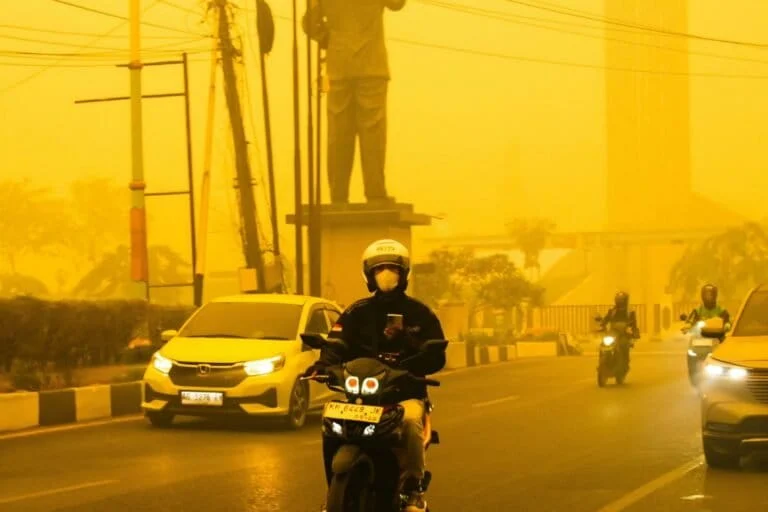
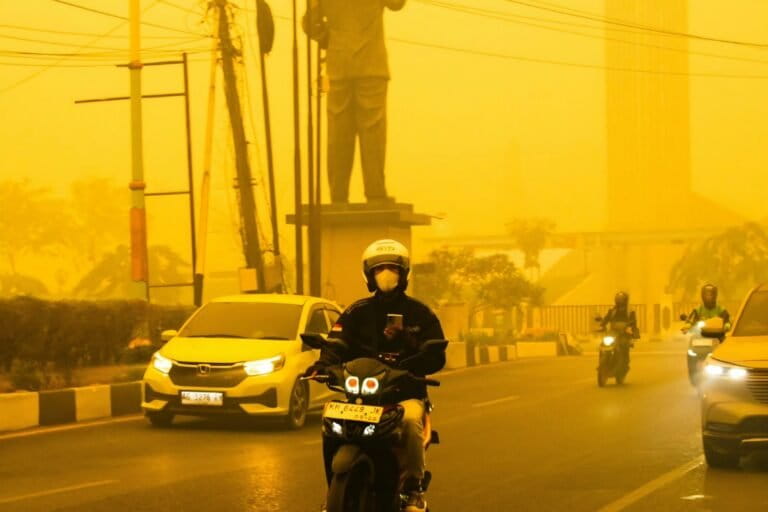
When the thick, acrid haze finally lifts from the Indonesian archipelago, the return of clear blue skies is often mistaken for the conclusion of the forest and land fire crisis. However, public health experts and environmental scientists warn that the departure of visible smoke does not signify the end of the emergency. For hundreds of thousands of citizens who have inhaled hazardous particulate matter for weeks or months, the medical repercussions are only just beginning, creating a secondary, silent crisis that threatens to overwhelm the public health infrastructure long after the last flames are extinguished.
The Yayasan Suara Sains Terbuka Indonesia (YSSTI) has issued a stern advisory, emphasizing that the national strategy for handling Karhutla (kebakaran hutan dan lahan) is fundamentally flawed if it remains confined to suppression efforts. According to the organization, effective crisis management must prioritize the protection of the most vulnerable demographic groups: infants, young children, pregnant women, the elderly, and outdoor laborers who are unable to retreat into filtered environments.
Escalating Public Health Data
The scale of the medical fallout is documented in grim detail by the Ministry of Health. As of October 21, 2026, official reports indicate that 333,470 cases of Acute Respiratory Infection (ARI) have been recorded across 68 regencies and municipalities in seven severely impacted provinces. Perhaps most alarming is that 75,172 of these cases—roughly 22.5% of the total—involve children under the age of five.
These figures represent a significant burden on the regional health systems. In areas where the Air Quality Index (AQI) has repeatedly spiked into the "hazardous" category, primary healthcare centers (Puskesmas) have reported severe shortages of nebulizers, oxygen supplies, and respiratory medication. The surge in patients has not only strained resources but also highlighted the lack of a longitudinal health monitoring system for those residing in high-risk zones.
A Failure of Strategic Focus
Herawati Supolo Sudoyo, a lead advisor at YSSTI, argues that the current government apparatus remains obsessively focused on fire suppression—the physical act of dousing flames—while neglecting the biological damage occurring in the lungs of the populace.
"Health protection for the public cannot be a reactionary measure triggered only when the smoke is thick," Sudoyo noted. "It must be an integrated, year-round framework. We need a comprehensive policy that covers pre-fire prevention, aggressive medical response during periods of exposure, and, critically, long-term clinical monitoring for residents after the air quality improves."
According to Sudoyo, the expectation that citizens can simply "build immunity" to seasonal smog is a dangerous fallacy. There is no physiological adaptation to toxic particulate matter; instead, repeated exposure leads to cumulative cellular damage.
The Science of Toxic Exposure
Dr. Feni Fitriani Taufik, a pulmonary specialist with the Indonesian Society of Respirology, underscores the gravity of the chemical cocktail inhaled by millions. Smoke from forest fires is not merely carbon; it is a complex, volatile mixture of fine particulate matter (PM2.5 and PM10), carbon monoxide, nitrogen oxides, benzene, and formaldehyde.
The danger of PM2.5 lies in its size. At less than 2.5 micrometers in diameter, these particles penetrate deep into the alveolar sacs of the lungs and can even enter the bloodstream. "Once in the circulatory system, these pollutants induce systemic inflammation," Dr. Taufik explained. "This is not just about coughing or eye irritation. We are seeing a measurable increase in cardiovascular events, chronic obstructive pulmonary disease (COPD) exacerbations, and potential long-term developmental delays in children whose respiratory systems are still forming."
Carbon monoxide, a byproduct of the incomplete combustion of biomass, further complicates the situation by binding to hemoglobin, reducing the blood’s oxygen-carrying capacity. This results in hypoxia, which manifests as fatigue, cognitive impairment, and increased strain on the heart, particularly in the elderly population.
Environmental Context and Land Management
The fires in 2026 have been exacerbated by a confluence of climate patterns and land-use mismanagement. In Kalimantan Tengah, the environmental advocacy group Walhi has drawn a direct link between the degradation of peatland ecosystems and the intensity of the current fire season.
Data compiled by the organization reveals that more than 81,000 hectares of land were scorched between January and September 2026. Aligned with these environmental losses, the regional health offices reported over 91,000 cases of ARI, illustrating a direct correlation between fire intensity and community health decline.
A controversial finding in Walhi’s report is that 74% of identified "hotspots"—the thermal signatures detected by satellites—were located within corporate concession areas. This has prompted renewed calls for rigorous environmental audits and strict law enforcement. Proponents of this view argue that the responsibility for the health crisis lies not just with climate variables, but with the failure of companies to maintain adequate water tables in peatland areas, which prevents the soil from becoming combustible. Rewetting these peatlands is now being presented as a mandatory requirement for long-term fire prevention.
The Scale of the Emergency
The sheer magnitude of the 2026 fire season is reflected in the figures provided by the National Disaster Management Agency (BNPB). Between January and October 28, 2026, Indonesia recorded 1,039 incidents of forest and land fires, accounting for nearly half of the country’s 2,231 total disaster events during that period.
The government’s response has been massive in scope but arguably traditional in method. Over 51,000 ground personnel and 61 aircraft have been deployed to combat the fires. While these resources are vital for physical suppression, critics argue that the budget allocation is heavily skewed toward hardware and logistics for firefighting, leaving the healthcare sector to scramble for funding.
Toward an Integrated Policy Shift
The recurring nature of the haze suggests that the current cycle of "crisis, response, and silence" is unsustainable. Policy analysts are now advocating for a "Health-in-All-Policies" approach. This would mean that when a corporation or government agency is granted a land permit, the health impact assessment for nearby communities must be as legally binding as the environmental impact study.
Furthermore, the integration of public health data into the early warning systems for forest fires could allow for preemptive evacuations or the distribution of high-efficiency particulate air (HEPA) masks and air purifiers to schools and elderly care facilities before the smoke becomes critical.
The Road Ahead: Implications and Challenges
The economic implications of this health crisis are profound. Beyond the immediate costs of medical treatment, the long-term loss of productivity due to chronic illness and the developmental costs associated with children suffering from early-life respiratory issues represent a significant drag on national development.
As the government evaluates the 2026 data, the message from the scientific community is clear: the safety of the population must be treated as a primary indicator of successful fire management. If the skies are clear but the hospitals are full, the mission has not been accomplished. The challenge for the coming years lies in breaking the cycle of complacency that occurs the moment the satellite sensors stop detecting heat. True recovery requires that the invisible health crisis receives as much, if not more, attention than the visible flames on the horizon.
Ultimately, the resolution of Indonesia’s Karhutla crisis requires a paradigm shift. It is no longer enough to measure success by the number of hectares saved or the amount of water dropped from the sky. The success of the state must be measured by the air quality in the lungs of its most vulnerable citizens and the long-term medical stability of the communities that stand on the front lines of the fire. The 2026 season serves as a sobering reminder that while fire can be extinguished with water, the health effects of its smoke require a much more complex and persistent solution.

