
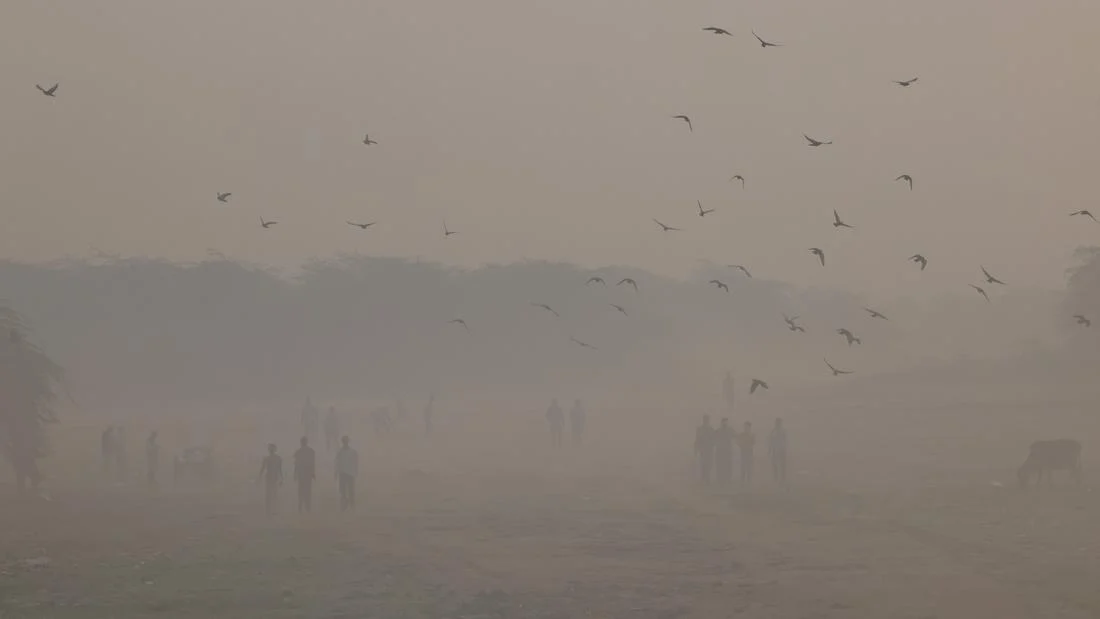
New Delhi, the sprawling capital of India, found itself encased in a suffocating blanket of toxic smog on Wednesday, November 4, 2026. As the air quality index plummeted to hazardous levels, the city’s residents were forced to navigate a landscape where visibility was severely compromised and the very act of breathing became a health risk. This recurring environmental crisis has once again placed the Indian capital at the center of a global conversation regarding urban air quality, public health, and the efficacy of environmental policy in one of the world’s most densely populated regions.
A City Under Siege: The Environmental Crisis
The current atmospheric conditions in New Delhi represent a critical escalation of the seasonal pollution that plagues Northern India every autumn and winter. On this particular Wednesday, the skyline was obscured by a thick, grey-brown haze that lingered over the city, dampening the sunlight and creating a grim, surreal atmosphere. Despite official warnings from health authorities advising residents to limit outdoor exposure, the daily rhythm of the city persisted. In public parks and open fields, citizens were seen jogging, meditating, and going about their routines, seemingly desensitized by the repetitive nature of this annual phenomenon.
The air, heavy with particulate matter (PM2.5), acts as a silent assailant. Fine particles smaller than 2.5 micrometers are capable of penetrating deep into the respiratory tract and entering the bloodstream, causing both acute and chronic health complications. For a city of over 30 million people, the implications of this sustained exposure are catastrophic, potentially leading to a surge in respiratory illnesses, cardiovascular events, and long-term pulmonary degradation.
Chronology of the 2026 Pollution Spike
The descent into hazardous air quality this season did not occur in a vacuum. It follows a predictable, albeit tragic, timeline that authorities have failed to effectively mitigate over the past decade.
In mid-October 2026, the meteorological department had already warned of a potential trapping of pollutants due to the onset of cooler temperatures and lower wind speeds—a phenomenon known as temperature inversion. As the month progressed, the burning of crop residue (stubble burning) in the neighboring states of Punjab and Haryana, combined with local industrial emissions and vehicular exhaust, began to saturate the airshed of the National Capital Region (NCR).
By November 1, 2026, air quality monitors began recording "severe" category readings. By the morning of November 4, the concentration of PM2.5 in many parts of the city was recorded at levels nearly 20 times the World Health Organization’s (WHO) recommended safety limit. This period of stagnation is expected to persist throughout the week unless meteorological conditions—such as a shift in wind direction or a localized rain event—intervene to disperse the toxic particulate matter.
Supporting Data and Scientific Context
The severity of the crisis is substantiated by data collected from the System of Air Quality and Weather Forecasting and Research (SAFAR). The data indicates that during the winter months, the contribution of biomass burning to the city’s total pollution load can reach upwards of 30% to 40% on peak days.
When analyzed alongside vehicular traffic—which accounts for approximately 25% of the pollution—and industrial activity, the cumulative effect is a "gas chamber" environment. The lack of adequate ventilation in the city’s topography, coupled with the seasonal reduction in wind speed, creates an environment where pollutants are trapped at the ground level, essentially preventing the city from "breathing."
Health experts point to a clear correlation between these spikes and emergency room admissions. Hospitals across New Delhi typically report a 20% to 30% increase in patients presenting with asthma exacerbations, allergic bronchitis, and eye irritation during this specific window of the year. The long-term epidemiological data is even more concerning, with studies suggesting that sustained exposure to such levels of particulate matter can reduce the life expectancy of Delhi residents by several years.
Official Responses and Policy Stagnation
The government’s response to the crisis has historically been a mix of emergency restrictions and long-term legislative promises. Following the spike on November 4, officials from the Commission for Air Quality Management (CAQM) are expected to trigger the third stage of the Graded Response Action Plan (GRAP). This typically involves a ban on non-essential construction and demolition activities, the imposition of stricter norms on vehicular movement, and the potential closure of primary schools if conditions do not improve within 48 hours.
However, critics argue that these measures are merely "band-aid" solutions to a systemic failure. The political gridlock between the central government and the state governments of the neighboring agricultural hubs remains the greatest hurdle. Efforts to provide farmers with the machinery necessary to manage crop residue without burning have faced challenges in logistics, funding, and implementation. Without a cohesive, cross-border strategy that addresses the source of the emissions rather than just the symptoms, the seasonal cycle of pollution remains locked in place.
The Human Toll and Societal Implications
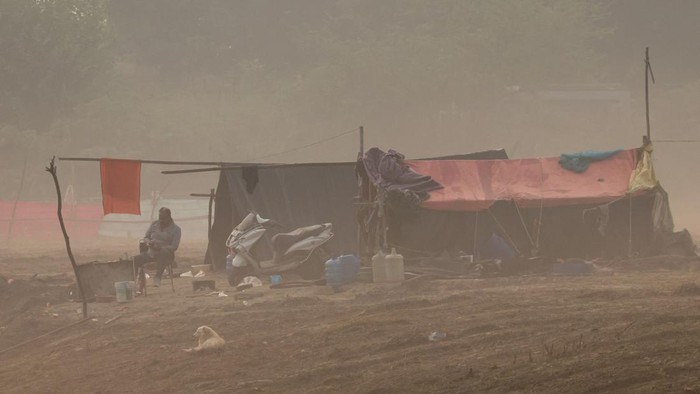
The imagery from New Delhi on November 4 serves as a stark reminder of the social disparity inherent in this crisis. While those with the financial means can retreat into homes equipped with high-end air purifiers and avoid outdoor activity, the city’s vast working-class population—including rickshaw pullers, street vendors, and construction laborers—have no such luxury.
For these individuals, the air is not merely a concern; it is a workplace hazard that cannot be avoided. A man sitting outside his tent, as seen in the recent photographic documentation of the city, exemplifies this reality. His livelihood requires him to remain in the thick of the smog, highlighting the socioeconomic dimension of the pollution crisis. The economic impact is equally significant; productivity losses due to health-related absenteeism and the strain on the public healthcare system are estimated to cost the national economy billions of dollars annually.
Broader Implications: A Global Concern
New Delhi’s plight is not an isolated event but a bellwether for the challenges facing rapidly urbanizing nations. As the world grapples with climate change, the interplay between local pollution and global atmospheric patterns is becoming increasingly complex. The "Great Smog" of Delhi serves as a critical case study for international environmental agencies regarding the dangers of rapid, unchecked urbanization without corresponding investment in sustainable energy and green infrastructure.
The international community, through platforms like the COP summits, has frequently called for India to transition away from fossil fuels and implement cleaner agricultural practices. Yet, the path to reform is obstructed by the immediate needs of a growing population and the complexities of local politics.
Moving Toward a Sustainable Future
As the smog persists, the conversation must shift from reactionary measures to proactive, structural reform. This includes:
- Accelerating the Energy Transition: A more aggressive shift toward electric public transport and the decommissioning of old, coal-based power plants in the surrounding regions.
- Agricultural Reform: Moving beyond the "carrot and stick" approach to stubble burning, and providing farmers with sustainable alternatives that are both economically viable and easy to deploy.
- Urban Planning: Redesigning city spaces to include more "green lungs"—large-scale urban forests and parks that can act as natural filters for pollutants.
- Data-Driven Governance: Utilizing satellite technology and localized sensor networks to pinpoint pollution sources in real-time and hold industrial actors accountable.
The events of November 4, 2026, are a somber milestone in an ongoing battle. As the residents of New Delhi continue to endure these conditions, the city stands as a test of political will and social resilience. Whether the capital can successfully navigate this crisis will depend not on temporary bans or seasonal alarms, but on a fundamental reimagining of how a modern, populous city can coexist with its environment. Until that fundamental shift occurs, the recurring grey haze will continue to serve as a persistent reminder of the urgent need for change.

