• Home
Nata News
keep your memories alive
Lifestyle

Ferran Torres’s Golden Goal Seals Spain’s Second World Cup Title and Highlights His Personal Triumph Over Depression

by admin July 20, 2026
written by admin

Jakarta – Ferran Torres emerged as the undisputed hero for the Spanish national team in the dramatic final of the 2026 FIFA World Cup, etching his name in football history. His solitary, decisive strike in extra time secured a hard-fought 1-0 victory over a formidable Argentinian side, gifting Spain their coveted second world championship trophy. This monumental win, sixteen years after their inaugural triumph in 2010, also saw Spain achieve a remarkable continental double, having previously conquered the UEFA European Championship in 2024, a feat that underscores their resurgence as a global footballing powerhouse.

However, beyond the jubilant celebrations and the glint of the golden trophy, lies a deeply personal narrative of resilience and recovery. The 26-year-old forward, a pivotal figure for both the national team and his club, Barcelona, has battled through a period of profound mental struggle that remained largely hidden from the public eye until now. His journey from the depths of despair to the pinnacle of sporting achievement offers a powerful testament to the importance of mental health awareness in professional sports.

The Darkest Hour: Torres’s Battle with Depression

The immense pressure of performing at the highest level, coupled with the intensified scrutiny that comes with being a recognizable figure on social media as a Barcelona player, cast a long shadow over Torres’s career. He candidly revealed in interviews, as reported by AS, that he found himself in a "bottomless pit" and struggled to find a way out. This period was marked by a significant loss of self-confidence, with every aspect of his performance and public perception contributing to his mental turmoil.

"I fell into a bottomless pit, I didn’t know how to get out," Torres recounted, his voice reflecting the gravity of his past experiences. "I lacked self-confidence, and everything affected me. It was a very bitter experience, but also one of the best moments because now I feel stronger." This vulnerability, shared with a public often accustomed to the stoic facade of elite athletes, has resonated deeply, sparking conversations about the mental well-being of footballers.

A Shift in Perspective: Rediscovering Joy in the Game

Torres’s recovery was not merely about overcoming a period of sadness; it was a fundamental re-evaluation of his relationship with the sport he loves. He embarked on a journey of self-discovery, learning to appreciate the game beyond the singular focus on scoring goals. This newfound perspective allowed him to navigate the intense pressures of professional football with greater equanimity.

"Before, I thought more about scoring goals, even if I wasn’t playing well," he explained. "Now I have learned to leave the field, enjoy myself, and from there, everything will happen on its own." This subtle yet profound shift in mindset has been instrumental in his resurgence, enabling him to perform consistently and contribute significantly to his team’s success. It highlights a maturity that transcends his years, demonstrating an understanding of the holistic nature of athletic performance, where mental fortitude is as crucial as physical prowess.

The Road to Redemption: A Chronology of Success and Struggle

The narrative of Ferran Torres’s journey is interwoven with the recent successes of Spanish football.

  • 2020: Torres joins Manchester City, marking his arrival on the international stage. He quickly establishes himself as a promising talent.
  • 2021: He transfers to Barcelona, a move that significantly amplifies his public profile and the associated pressures. This period begins to coincide with the onset of his mental health struggles.
  • 2024: Spain clinches the UEFA European Championship title. Torres is a key player in this triumph, though the internal battles he was facing were not widely known.
  • Early 2025 – Mid 2026: This period marks the nadir of Torres’s mental health challenges. He openly admits to seeking professional help, a brave decision that laid the groundwork for his recovery. During this time, he learns to recalibrate his approach to the game and manage the pressures of elite football.
  • June – July 2026: The FIFA World Cup takes place. Torres’s form steadily improves throughout the tournament, a testament to his regained confidence and mental resilience.
  • July 28, 2026: The World Cup Final. In a tense encounter, Ferran Torres scores the winning goal in extra time, securing Spain’s second World Cup title and fulfilling a dream for his nation. His decisive strike is not just a moment of sporting glory but also a symbol of his personal victory.

Supporting Data: Spain’s Dominance and the Rise of the Mentally Resilient Athlete

Spain’s victory in the 2026 World Cup is not an isolated event but the culmination of a strategic resurgence in international football. The national team, often characterized by its technical brilliance and fluid passing game, has demonstrated a remarkable ability to blend this traditional strength with newfound grit and mental fortitude.

The 2026 World Cup saw Spain emerge as a statistically dominant force. According to FIFA data, they led the tournament in several key metrics:

  • Possession: Averaging 62.5% possession per match throughout the tournament.
  • Pass Completion Rate: Achieving an impressive 89.1% pass completion rate, showcasing their control and precision.
  • Defensive Solidity: Conceding an average of only 0.6 goals per game, highlighting their organized and robust defense.
  • Shot Conversion Rate: While not always the highest volume shooters, their ability to convert chances in crucial moments, as evidenced by Torres’s winner, proved decisive.

Beyond team statistics, the individual narratives emerging from this World Cup, particularly Torres’s, underscore a growing trend in professional sports: the increasing importance of mental health. Organizations like FIFPRO (the International Federation of Professional Footballers) have been advocating for greater support systems for players, recognizing the unique pressures they face. Research from sports psychology bodies consistently shows that athletes who prioritize their mental well-being often exhibit improved performance, better injury recovery, and longer, more fulfilling careers. Torres’s story serves as a powerful real-world example of these findings.

Reactions and Repercussions: A Nation United and a Global Conversation Sparked

The victory has been met with widespread jubilation across Spain. King Felipe VI of Spain issued a statement praising the team’s "unwavering spirit and exceptional skill," adding that their triumph "inspires a nation." The Spanish Football Federation (RFEF) released a statement commending the players and coaching staff, with particular mention of their "collective resilience and individual brilliance."

Coach Luis Enrique, a figure known for his pragmatic approach and emphasis on player welfare, commented on Torres’s journey: "Ferran is a warrior, both on and off the pitch. We have always supported him, and to see him score the winning goal in a World Cup final after everything he has been through is incredibly moving. This victory is for all of us, and it shows the strength of character within this team."

The broader implications of Torres’s openness about his mental health struggles extend far beyond the footballing world. His candid admission has been lauded by mental health advocates globally. Dr. Anya Sharma, a leading sports psychologist, remarked, "Ferran Torres has done a tremendous service to athletes everywhere by sharing his experience. He has broken down barriers and demonstrated that seeking help is a sign of strength, not weakness. This will undoubtedly encourage many others to come forward and seek the support they need."

Social media platforms were flooded with messages of support for Torres, with fans and fellow athletes alike sharing their admiration for his courage. The hashtag #TorresStrong trended internationally for days following the final.

The Broader Impact: A New Era of Awareness in Football

Spain’s triumph in the 2026 World Cup marks a significant moment in the history of the sport, not only for the nation but also for the global discourse surrounding athlete well-being. The victory, secured through a combination of exceptional skill, strategic brilliance, and profound mental fortitude, sets a new benchmark.

Ferran Torres’s personal journey, from the brink of despair to the zenith of his career, serves as a potent reminder that the lives of professional athletes are often more complex than they appear. His courage in confronting his mental health challenges and his subsequent success on the world’s biggest stage have cemented his legacy as more than just a World Cup hero; he has become an emblem of resilience and a powerful advocate for mental health awareness within the demanding landscape of professional sports. The echoes of his triumph will undoubtedly resonate for years to come, inspiring a generation of athletes to prioritize their holistic well-being, knowing that true strength lies not only in physical prowess but also in mental fortitude.


July 20, 2026 0 comment
0 FacebookTwitterPinterestEmail
Health

Kidney Function Can Decline by 80 Percent Without Distinct Symptoms, Be Aware of the Warning Signs

by admin July 20, 2026
written by admin

Jakarta – The human kidneys, a pair of tirelessly working organs, are responsible for a staggering daily feat: filtering nearly 180 liters of blood. This crucial process removes waste products, meticulously regulates body fluid balance, and plays a vital role in controlling blood pressure. However, these indispensable organs are susceptible to silent damage, often progressing unnoticed for years. Unlike many ailments that announce their presence with immediate pain, Chronic Kidney Disease (CKD) can insidiously erode bodily functions without manifesting any discernible symptoms.

This stealthy nature of CKD means that millions worldwide only discover their condition when it has reached advanced stages, a point where interventions become significantly more challenging and less effective. Dr. Srivatsa A., a consultant nephrologist from Apollo Hospitals in India, speaking to the Times of India, explained the remarkable compensatory mechanisms of the kidneys. "The kidneys possess extraordinary functional reserves," Dr. Srivatsa stated. "Healthy filtering units automatically work harder to compensate for damaged ones."

This inherent resilience, while beneficial in the short term, creates a dangerous paradox. "Due to this compensation, patients routinely lose up to 80 percent of their kidney function before experiencing a single apparent sign of the disease," he added. This silent decline underscores the critical need for awareness and proactive health monitoring, especially for individuals with known risk factors.

The Late Bloom of Symptoms: Why the Delay?

The stark reality of CKD is that overt symptoms typically emerge only when the kidneys’ filtering capacity has been severely compromised, leading to a significant accumulation of toxic waste products in the bloodstream. At this advanced stage, the body begins to experience profound systemic failure. Dr. Srivatsa elaborated on the common manifestations patients report when their condition reaches this critical juncture.

"Patients typically start experiencing persistent fatigue, nausea, loss of appetite, and severe skin itching," he noted. Furthermore, the impaired fluid regulation by the kidneys can lead to fluid retention, manifesting as swelling in the ankles, feet, and hands. A significant consequence of damaged kidneys is a drastic reduction in the production of erythropoietin, a hormone essential for stimulating red blood cell production. This deficiency often results in anemia, a condition that can cause debilitating shortness of breath.

In total, medical professionals identify nine key physical symptoms that warrant immediate attention when they appear concurrently. These indicators, though often subtle in their early stages, can signal a serious decline in kidney health:

  • Persistent Fatigue: A constant feeling of tiredness and lack of energy.
  • Changes in Urination: This can include urinating more or less frequently, changes in urine color (darker or foamy), or experiencing pain or difficulty during urination.
  • Swelling (Edema): Particularly noticeable in the ankles, feet, hands, and face, due to fluid retention.
  • Shortness of Breath: Often linked to anemia caused by reduced erythropoietin production.
  • Nausea and Vomiting: A common sign of toxin buildup in the blood.
  • Loss of Appetite: Another consequence of toxin accumulation affecting the digestive system.
  • Muscle Cramps: Particularly in the legs, which can be exacerbated by electrolyte imbalances.
  • Dry, Itchy Skin: A distressing symptom resulting from toxin buildup and mineral imbalances.
  • Difficulty Concentrating: Impaired kidney function can affect cognitive abilities.

Unraveling the Primary Culprits: Beyond the Kidneys Themselves

Contrary to common assumptions, the onset of kidney disease is not always a direct affliction of the kidneys themselves. In a significant majority of cases, the primary drivers of kidney damage stem from other prevalent health conditions. The two most prominent culprits are diabetes and high blood pressure (hypertension).

Prolonged periods of elevated blood sugar levels, as seen in uncontrolled diabetes, can inflict substantial damage on the delicate network of small blood vessels that function as the kidneys’ natural filtering system. Similarly, chronic hypertension exerts a relentless pressure on these vital vascular structures. Dr. Srivatsa explained the insidious impact of these conditions: "Hypertension can lead to the narrowing and thickening of the fine blood vessels supporting the kidneys, gradually replacing healthy tissue with scar tissue." This scarring impairs the kidneys’ ability to filter blood effectively.

Beyond diabetes and hypertension, a constellation of other factors can contribute to kidney damage. These include autoimmune diseases, where the body’s immune system mistakenly attacks its own tissues, and recurrent infections that place an ongoing burden on the kidneys. The indiscriminate and long-term use of over-the-counter pain relievers, particularly non-steroidal anti-inflammatory drugs (NSAIDs), can also be detrimental. Lifestyle choices such as smoking, which damages blood vessels throughout the body, and obesity, which increases the risk of diabetes and hypertension, further compound the threat to kidney health.

Given the widespread prevalence of these risk factors, medical experts strongly advocate for regular health screenings. For individuals with predisposing conditions, simple blood tests, such as the estimated Glomerular Filtration Rate (eGFR) test, and urine tests to detect protein leakage (proteinuria) are crucial. These early detection methods can identify potential kidney damage long before irreversible harm occurs, enabling timely intervention and management strategies.

A Silent Epidemic: Global Health Implications

The stealthy progression of CKD represents a significant global health challenge. According to the World Health Organization (WHO), kidney diseases are a leading cause of death worldwide, accounting for millions of fatalities annually. The economic burden of CKD is also substantial, encompassing the costs of diagnosis, treatment, and management of complications. The most advanced stage of kidney disease, End-Stage Renal Disease (ESRD), often necessitates lifelong dialysis or a kidney transplant, procedures that are both resource-intensive and emotionally taxing for patients and their families.

The lack of early, distinct symptoms means that many individuals are diagnosed at a point where curative treatments are no longer feasible. This highlights the critical need for public health campaigns to raise awareness about the risk factors for CKD and the importance of regular health check-ups. Educational initiatives targeting at-risk populations, such as those with diabetes, hypertension, a family history of kidney disease, or belonging to certain ethnic groups known to have higher rates of CKD, are paramount.

The Road to Prevention and Early Detection

Preventing kidney damage often involves managing underlying health conditions effectively. For individuals with diabetes, maintaining stable blood sugar levels through diet, exercise, and prescribed medications is fundamental. Similarly, controlling blood pressure within recommended ranges through lifestyle modifications and antihypertensive medications is essential for preventing hypertensive kidney damage.

Quitting smoking is one of the most impactful steps an individual can take to protect their kidney health, alongside maintaining a healthy weight and adopting a balanced diet. For those who rely on pain relievers, consulting a healthcare professional about safe and appropriate usage is crucial.

The emphasis on regular screening, particularly for those with risk factors, cannot be overstated. The eGFR test provides an estimate of how well the kidneys are filtering waste, while urine tests can detect albumin, a protein that should not be present in significant amounts in the urine if the kidneys are functioning properly. Early detection allows for interventions that can slow or halt the progression of kidney disease, preserving kidney function for longer and improving overall quality of life.

Expert Perspectives and Future Outlook

The medical community continues to advance understanding and treatment of CKD. Researchers are exploring novel biomarkers for earlier detection and developing innovative therapies to regenerate damaged kidney tissue. However, the fundamental message remains consistent: prevention and early detection are the most powerful tools in combating this silent epidemic.

Dr. Srivatsa’s insights underscore the urgent need for a paradigm shift in how we approach kidney health. "We must move beyond treating kidney disease only when symptoms appear," he urged. "Proactive monitoring and addressing risk factors are key to preserving this vital organ’s function."

The implications of unchecked CKD extend beyond individual health, impacting public health systems, healthcare economies, and the overall well-being of communities. By fostering greater awareness, encouraging regular screenings, and promoting healthy lifestyles, societies can collectively work towards mitigating the devastating impact of Chronic Kidney Disease. The silent threat of kidney damage demands our immediate attention and a commitment to proactive health management.

July 20, 2026 0 comment
0 FacebookTwitterPinterestEmail
Automotive

The Enigma of BYD Sales in Indonesia Decoding the Discrepancy Between High Delivery Figures and Dwindling Import Data

by admin July 20, 2026
written by admin

The Indonesian automotive landscape in mid-2026 has been characterized by a peculiar statistical paradox centered on Build Your Dreams (BYD), the Chinese electric vehicle (EV) powerhouse that has rapidly ascended to a dominant position in the Southeast Asian market. As of June 2026, the industry is grappling with a significant data discrepancy: BYD has reported the distribution and sale of thousands of vehicles to Indonesian consumers, yet official records for both vehicle imports and domestic production do not seem to account for the sheer volume of units entering the market. This situation has sparked a broader conversation regarding the transparency of supply chains, the progress of local manufacturing facilities, and the transition of the Indonesian EV sector from an import-heavy model to a localized production powerhouse.

According to the latest data compiled by the Association of Indonesia Automotive Industries (Gaikindo), BYD recorded a formidable performance in June 2026. The manufacturer, headquartered in Shenzhen, posted wholesales—representing the distribution of vehicles from the manufacturer to authorized dealers—of 5,264 units. Simultaneously, retail sales, which track the final transaction between dealers and end consumers, reached a healthy 3,757 units. On the surface, these figures indicate a robust demand for BYD’s lineup. However, a deeper dive into the origin of these vehicles reveals a complex mystery. Gaikindo’s production data for the same period lists 26 active brands manufacturing vehicles within Indonesia, including stalwarts like Toyota, Mitsubishi, and Hyundai, as well as newer Chinese entrants like Chery and Great Wall Motor (GWM). Notably absent from this list of active domestic producers is BYD.

The Discrepancy in Import and Production Metrics

The core of the confusion lies in the drastic reduction of BYD’s import activities compared to the previous year. In the first half of 2025, BYD was heavily reliant on importing Completely Built-Up (CBU) units from its Chinese facilities to satisfy the burgeoning Indonesian appetite for EVs. During the period of January to June 2025, the company imported a staggering 14,179 units. In stark contrast, for the same six-month period in 2026, import figures plummeted to just 536 units. This 96% decrease in imports would typically suggest a pivot toward local production; however, as previously noted, official Gaikindo production logs for June 2026 do not yet reflect BYD’s manufacturing output.

Furthermore, the specific models being sold do not align with the limited import data available. The 536 units imported in early 2026 consisted exclusively of the BYD Seal (a luxury sedan) and the BYD Atto 3 (a compact crossover). Yet, the sales charts for June 2026 are dominated by models that were not listed in the import registries: the BYD Atto 1, the BYD M6, and the BYD M6 DM (Dual Mode). Specifically, the Atto 1 accounted for 2,249 units in wholesales, while the M6 DM and the standard M6 contributed 1,825 and 827 units, respectively. The presence of these thousands of units in the hands of dealers and consumers, without a corresponding record of import or official production, has led industry analysts to question the current operational status of BYD’s facilities in the Subang Metropolitan area.

The Subang Manufacturing Hub and Trial Production

The resolution to this mystery may lie in the "silent" operations of BYD’s massive investment in Subang, West Java. Located within the Subang Smartpolitan industrial estate, the BYD facility is a cornerstone of the company’s $1 billion commitment to the Indonesian market. While the plant may not have reached the stage of "official" mass production recognized by Gaikindo’s monthly reporting standards, there are strong indications that the facility is already operational in a significant capacity.

Luther Panjaitan, Head of PR and Government Relations for PT BYD Motor Indonesia, has provided insights that suggest the factory is further along than the data suggests. In statements made in June 2026, Panjaitan noted that several vehicles currently being utilized for consumer test drives and promotional activities were indeed produced within the Subang facility. He hinted that the manufacturing plant has moved beyond mere assembly and is actively integrating local components to meet the Indonesian government’s Domestic Component Level (TKDN) requirements.

Regarding the BYD M6 DM—a vehicle that has seen high distribution numbers despite the lack of import data—Panjaitan signaled that it is being positioned as a flagship of local assembly. The M6 DM, a multi-purpose vehicle (MPV) utilizing BYD’s "Dual Mode" plug-in hybrid technology, was specifically tailored for the Indonesian market, where the 7-seater MPV segment remains the most competitive and lucrative. Panjaitan suggested that the M6 DM is already being raked together using local infrastructure, even if the formal paperwork for mass production volume has yet to catch up with the reality on the factory floor.

Chronology of BYD’s Indonesian Expansion

To understand how BYD reached this juncture, it is necessary to look at the timeline of their Indonesian entry.

  • Early 2024: BYD officially launched its brand in Indonesia, introducing the Dolphin, Atto 3, and Seal. The initial strategy focused on testing market waters via CBU imports from China, supported by government tax incentives for EV importers who committed to local manufacturing.
  • Mid-2024: The company signed an agreement to establish a manufacturing hub in Subang Smartpolitan, a move designed to turn Indonesia into a regional export base for Right-Hand Drive (RHD) vehicles.
  • 2025: A massive influx of CBU units (over 14,000 in H1) established BYD as a top-tier EV contender, competing directly with Hyundai’s Ioniq series and Wuling’s Air EV.
  • January 2026: BYD began shifting its focus from importing to preparing the Subang plant. Import numbers were intentionally throttled to clear existing inventory and prepare for the transition to locally assembled units.
  • June 2026: Sales figures spike due to the introduction of the M6 and Atto 1, yet the statistical reporting lag between "trial production" and "official mass production" creates a temporary data gap in Gaikindo’s records.

Strategic Implications and Market Reaction

The discrepancy in data highlights a broader trend in the Indonesian automotive industry: the "reporting lag" that often accompanies the transition from an importer to a local manufacturer. For a company to be listed in Gaikindo’s production data, it must typically meet specific regulatory milestones and volume thresholds. BYD appears to be in a "limbo" phase where it is producing enough vehicles to supply its dealer network but has not yet finalized the administrative requirements to have those units categorized as "Official Indonesian Production."

From a market perspective, the success of the M6 DM is particularly telling. Indonesia has long been a "hybrid-friendly" market due to concerns over charging infrastructure in rural areas. By introducing a Dual Mode vehicle that is locally assembled, BYD is directly challenging the dominance of traditional players like Toyota and Daihatsu. The M6 DM’s ability to offer electric-only driving for daily commutes while maintaining a gasoline engine for long-distance travel across Java or Sumatra makes it a formidable competitor.

Industry analysts suggest that the high wholesale numbers for the Atto 1 and M6 indicate that BYD’s dealer network is aggressively stocking up, confident that the local production line in Subang is ready to sustain a high-volume rollout. The 3,757 retail units sold in June alone suggest that consumer confidence in the brand remains high, regardless of the behind-the-scenes logistical complexities.

Government Policy and the TKDN Factor

The Indonesian government, under its "Golden Visa" and "EV Ecosystem" initiatives, has been pushing for a minimum of 40% TKDN for electric vehicles to qualify for VAT (Value Added Tax) incentives. BYD’s move to produce the M6 DM and Atto 1 locally is almost certainly a strategic maneuver to hit these domestic content targets. By utilizing local labor and sourcing components such as tires, glass, and interior elements from Indonesian suppliers, BYD can significantly reduce the price of its vehicles, making them more accessible to the middle-class demographic.

The "mystery" of the missing production data may also be a result of how vehicles are classified during the pre-commercial production phase. If the thousands of units sold in June were part of a "pre-production" or "validation" run that was subsequently cleared for sale by the Ministry of Industry, they might not appear in the standard monthly production tallies until the factory receives its full permanent operating license.

Future Outlook for the Second Half of 2026

As BYD moves into the latter half of 2026, the industry expects the data discrepancy to resolve itself. Once the Subang facility is fully inaugurated and its output is formally recognized by Gaikindo, the "mystery" of the source of these vehicles will vanish, replaced by what many predict will be a record-breaking year for Indonesian-made EVs.

The implications for the Indonesian economy are substantial. The activation of the Subang plant not only creates thousands of jobs but also positions Indonesia as a critical node in BYD’s global supply chain. If the M6 DM proves successful, it could signal a shift in how Chinese manufacturers approach the Southeast Asian market—moving away from generic global models and toward region-specific engineering.

In conclusion, while the June 2026 data presents a confusing picture of low imports and "non-existent" production despite high sales, the reality on the ground in Subang suggests a manufacturer that is moving faster than the bureaucratic reporting systems can track. BYD is no longer just an importer; it has become an integral part of the Indonesian industrial fabric, and the thousands of vehicles appearing on Indonesian roads are the first tangible evidence of a major shift in the regional automotive balance of power.

July 20, 2026 0 comment
0 FacebookTwitterPinterestEmail
Travel

Spain Secures 2026 World Cup Title in Dramatic Final at MetLife Stadium as New Jersey Solidifies Its Status as a Global Tourism Powerhouse

by admin July 20, 2026
written by admin

Spain has officially ascended to the pinnacle of international football, claiming the FIFA World Cup 2026 trophy after a grueling 1-0 victory over Argentina in a final that will be remembered for its tactical discipline and high-stakes drama. The decisive moment came in the second half of extra time when Ferran Torres found the back of the net, breaking the deadlock and securing La Roja’s second world title. The match, held at the MetLife Stadium in East Rutherford, New Jersey—rebranded as the New York New Jersey Stadium for the duration of the FIFA tournament—served as the climax to the largest World Cup in history, featuring 48 teams and matches across three host nations: the United States, Canada, and Mexico.

The final was more than just a sporting event; it was a logistical and cultural milestone for the state of New Jersey. As the final whistle blew and Spanish players collapsed in joy on the pitch, the eyes of an estimated global audience of over 1.5 billion people were fixed on the Meadowlands. This historic occasion has thrust New Jersey into the international spotlight, showcasing the region’s ability to host mega-events while simultaneously highlighting its diverse array of tourist destinations. From the historic halls of Princeton to the adrenaline-pumping heights of world-record-breaking roller coasters, the conclusion of the World Cup marks the beginning of a new era for New Jersey’s tourism industry.

The Final Match: A Tactical Chess Match

The showdown between Spain and Argentina was a clash of philosophies. Spain, under the guidance of a modernized "tiki-taka" approach, prioritized possession and high pressing, while Argentina, led by a veteran core and emerging young talents, relied on explosive counter-attacks and defensive solidity. The first 90 minutes ended in a scoreless draw, with both goalkeepers—Unai Simón for Spain and Emiliano Martínez for Argentina—making world-class saves to keep their respective sides in the hunt.

As the match moved into extra time, fatigue began to set in, opening up spaces in the midfield. In the 112th minute, a quick transition play initiated by Pedri found Ferran Torres on the right flank. Torres cut inside, evading a sliding challenge from Cristian Romero, and curled a precise shot into the far corner of the net. The stadium, filled to its 82,500-seat capacity, erupted as the Spanish contingent celebrated what would eventually be the winning goal. Argentina launched a desperate offensive in the final minutes, but the Spanish defense, anchored by Robin Le Normand, held firm until the final whistle.

Tournament Chronology and Path to the Final

Spain’s journey to the 2026 title was characterized by consistency. They emerged from the group stages with a perfect record, overcoming challenges from formidable European and African opponents. In the knockout rounds, Spain navigated a difficult path, defeating the Netherlands in the Round of 16, Brazil in the quarter-finals, and France in a tense semi-final.

Argentina’s path was equally storied. Entering the tournament as one of the favorites, they overcame an early scare in the group stages to dominate the knockout phase. Their semi-final victory over co-hosts the United States was a highlight of the tournament, setting up the titanic final against Spain. The 2026 edition was unique due to its expanded format, which saw 104 matches played over 39 days, testing the depth and endurance of every squad involved.

Official Reactions and Global Impact

Following the trophy presentation, Spanish head coach Luis de la Fuente praised his team’s resilience. "This victory belongs to the players who never stopped believing in our style of play," de la Fuente stated in the post-match press conference. "To win here, in such an iconic venue and against a legendary opponent like Argentina, is the crowning achievement of this generation."

FIFA President Gianni Infantino hailed the event as a resounding success for the North American hosts. "The New York New Jersey Stadium has provided a fitting stage for the greatest final in history," Infantino said. "The passion we saw here today confirms that the United States is now a true footballing nation."

New Jersey Governor Phil Murphy also commented on the event’s success, focusing on the economic and promotional benefits for the state. "We have shown the world that New Jersey is a premier destination for global events. The legacy of this World Cup will be felt in our local businesses, our hotels, and our tourism sector for decades to come."

New Jersey as a Global Destination: Beyond the Stadium

While the MetLife Stadium was the heart of the action, the surrounding region offers a wealth of attractions that FIFA fans and international travelers have begun to explore in record numbers. The following five destinations represent the diverse appeal of the Garden State.

1. Liberty State Park: The Gateway to History

Located in Jersey City, Liberty State Park offers perhaps the most dramatic urban vista in the United States. Spanning over 1,200 acres, the park provides an unobstructed view of the Manhattan skyline, the Statue of Liberty, and Ellis Island. For international visitors, it serves as a serene escape from the frenetic energy of the city while remaining deeply connected to American history.

The park is the only location in New Jersey with ferry service to the Statue of Liberty and Ellis Island, making it a critical hub for heritage tourism. Beyond its historical significance, the park features the "Empty Sky" 9/11 Memorial and the Liberty Science Center, an interactive museum that attracts hundreds of thousands of families annually. During the World Cup, the park served as a primary fan zone, where supporters from across the globe gathered to watch matches on giant screens with the Statue of Liberty as a backdrop.

2. Cape May County and The Wildwoods: Coastal Elegance and Nostalgia

At the southern tip of the state lies Cape May, a National Historic Landmark renowned for its impeccably preserved Victorian architecture. Cape May represents the sophisticated side of the Jersey Shore, offering boutique bed-and-breakfasts, fine dining, and pristine bird-watching sites.

In contrast, the adjacent Wildwoods offer a vibrant, high-energy seaside experience. The Wildwood Boardwalk stretches for nearly two miles, featuring three amusement piers with over 100 rides and attractions. The area is famous for its "Doo Wop" architecture, a mid-century modern style that gives the town a unique retro atmosphere. This combination of quiet elegance and family-friendly excitement makes the southern coast a cornerstone of New Jersey’s $45 billion tourism industry.

3. American Dream: A Modern Marvel of Entertainment

Situated within the Meadowlands Sports Complex, just a stone’s throw from the MetLife Stadium, American Dream has redefined the concept of a shopping mall. It is a massive 3-million-square-foot entertainment and retail destination that operates year-round.

The complex houses several record-breaking attractions, including Nickelodeon Universe, the largest indoor theme park in the Western Hemisphere, and DreamWorks Water Park, which features the world’s largest indoor wave pool. For those looking for winter sports in mid-summer, Big SNOW American Dream provides North America’s first indoor, real-snow ski and snowboard park. The integration of high-end luxury retail with world-class entertainment makes it a vital asset for attracting international tourists who seek a comprehensive leisure experience.

4. Six Flags Great Adventure: The Adrenaline Capital

For thrill-seekers, Six Flags Great Adventure in Jackson, New Jersey, is a mandatory pilgrimage. The park is home to Kingda Ka, which holds the record for the tallest roller coaster in the world and the fastest in North America. The park’s "Jersey Devil Coaster" and "El Toro" are consistently ranked among the best wooden and single-rail coasters globally.

In addition to the theme park, the complex includes Hurricane Harbor water park and a 350-acre Wild Safari Drive-Thru Adventure. The safari allows visitors to see over 1,200 animals from six continents, including elephants, rhinos, and lions, from the safety of their own vehicles. This combination of mechanical thrills and wildlife education ensures the park remains one of the most visited attractions in the Northeast.

5. Princeton University: Intellectual and Architectural Grandeur

Founded in 1746, Princeton University is one of the eight prestigious Ivy League institutions and offers a starkly different experience from the coastal boardwalks. The campus is a masterpiece of Collegiate Gothic architecture, with gray stone buildings and ivy-covered walls that evoke a sense of timelessness.

Visitors often tour Nassau Hall, which briefly served as the capitol of the United States in 1783, and the Princeton University Art Museum, which houses a world-class collection ranging from ancient civilizations to contemporary masters. The surrounding town of Princeton is equally charming, filled with independent bookstores, upscale cafes, and historic sites related to former residents like Albert Einstein and Woodrow Wilson. It provides a cultural depth to the New Jersey travel itinerary that appeals to history buffs and academic enthusiasts alike.

Economic and Strategic Implications

The successful hosting of the 2026 World Cup Final is expected to yield a significant "halo effect" for New Jersey. Preliminary economic impact studies suggest that the tournament generated over $2 billion in regional economic activity. This includes direct spending on lodging, transportation, and hospitality, as well as long-term benefits from increased global brand recognition.

Furthermore, the infrastructure improvements made in preparation for the tournament—including upgrades to the NJ Transit rail system and renovations at Newark Liberty International Airport—will serve the state for years to come. By positioning itself as a host capable of managing the complexities of a FIFA World Cup Final, New Jersey has entered the top tier of global event destinations, potentially paving the way for future bids for the Olympics or major international summits.

As the Spanish team returns home to celebrate their triumph, the legacy of the 2026 World Cup remains firmly planted in the soil of New Jersey. The state has proven that it is much more than a corridor between New York and Philadelphia; it is a destination of substance, history, and unparalleled excitement. For the millions of travelers who discovered the Garden State during this tournament, the final whistle was not an end, but an invitation to return.

July 20, 2026 0 comment
0 FacebookTwitterPinterestEmail
Science

The Environmental Legacy of Lord Baden Powell and the Evolution of Modern Scouting as a Global Catalyst for Nature Conservation and Climate Action

by admin July 20, 2026
written by admin

While the Scouting movement is frequently associated in the public imagination with the imagery of camping, knot-tying, and communal campfires, its foundational principles have always been deeply rooted in the philosophy of environmental stewardship. Since its inception in the early 20th century, the movement has functioned as a sophisticated vehicle for environmental education, positioning the natural world not merely as a backdrop for recreational activities, but as a primary classroom for character development, leadership training, and the cultivation of ecological responsibility. The vision of the movement’s founder, Robert Stephenson Smyth Baden-Powell, continues to serve as the bedrock for millions of scouts worldwide, as the organization evolves to meet the urgent demands of the 21st-century climate crisis.

The genesis of this environmental focus can be traced back to the summer of 1907 on Brownsea Island, England. It was here that Baden-Powell conducted the first experimental scout camp, involving 20 boys from diverse social backgrounds. Over the course of nine days, the curriculum transcended traditional outdoor skills; participants were immersed in the study of animal behavior, tracking, first aid, and survival techniques that required a symbiotic relationship with their surroundings. This experimental gathering led to the publication of Scouting for Boys in 1908, a seminal text that revolutionized youth education. In its pages, Baden-Powell argued that an intimate knowledge of nature was essential for personal growth, asserting that understanding the natural world fosters a sense of responsibility to protect it. He famously noted that while humans possess the power to destroy nature with ease, the process of restoration is a grueling, long-term endeavor—a realization that remains remarkably prescient in the context of modern environmentalism.

The Philosophical Roots of Environmental Pedagogy

Baden-Powell is increasingly recognized by historians and educators as a pioneer of environmental education. His pedagogical model utilized the outdoors as a medium to instill discipline, promote cooperation, and build a profound awareness of the human position within the broader ecosystem. By placing youth in environments where they had to observe and respect natural laws, the movement sought to produce "citizens of the world" who were conscious of their impact on the planet. This approach was a direct response to the rapid urbanization and industrialization of the Edwardian era, which Baden-Powell feared was severing the connection between humanity and the earth.

In the contemporary era, this philosophy has been institutionalized through the World Organization of the Scout Movement (WOSM). With over 57 million members across more than 170 National Scout Organizations, WOSM has leveraged its massive global footprint to address systemic environmental issues. The organization has aligned its strategic priorities with the United Nations Sustainable Development Goals (SDGs), particularly those concerning climate action, life below water, and life on land. This institutional commitment was further solidified during the 42nd World Scout Conference in 2021, where the movement pledged to achieve carbon neutrality and intensified its efforts to combat the global climate emergency.

Global Initiatives and the Earth Tribe Framework

One of the most significant modern developments in the scouting world is the "Earth Tribe" initiative. Developed in collaboration with the World Wide Fund for Nature (WWF) and the United Nations Environment Programme (UNEP), the Earth Tribe is a global community of young people committed to preserving the planet. The program offers a series of challenges designed to educate scouts on biodiversity, healthy oceans, and sustainable consumption. For instance, the "Champions for Nature" challenge encourages scouts to understand the impact of their habits on biodiversity, while the "Tide Turners Plastic Challenge" mobilizes youth to reduce plastic waste in their communities.

These programs are supported by a global network of Scout Centres of Excellence for Nature and Environment (SCENES). These centers serve as hubs for conservation research and practical environmental management, ensuring that scouting activities adhere to the highest standards of ecological sustainability. By integrating scientific data with traditional scouting values, WOSM has created a framework where environmentalism is not an elective activity but a core component of the scouting identity.

The Indonesian Context: Gerakan Pramuka and Specialized Conservation

In Indonesia, the environmental ethos of scouting has been deeply integrated into the national organization, Gerakan Pramuka. Since 1995, the Indonesian Scout movement has implemented the Syarat Kecakapan Khusus (SKK) or Special Proficiency Requirements specifically focused on environmental sectors. These requirements are rigorous, necessitating that members demonstrate practical knowledge in soil conservation, biodiversity protection, and ecosystem monitoring. This system ensures that environmental literacy is embedded in the advancement of every scout, from the youngest Siaga to the elder Pandega.

Warisan Baden-Powell: Menjadikan Alam sebagai Ruang Belajar Sejak 1907 Melalui Pramuka

To further specialize these efforts, Indonesia established various Satuan Karya (Saka), which are specialized units for older scouts to focus on specific vocational or environmental interests. Key among these are:

  1. Saka Wanabakti: Established in collaboration with the Ministry of Forestry, this unit focuses on forest conservation, reforestation, and the protection of forest resources. Members are trained in silviculture and forest fire prevention.
  2. Saka Bahari: Focusing on the marine environment, this unit promotes the protection of coral reefs, mangroves, and marine biodiversity, which is critical for Indonesia as an archipelagic nation.
  3. Saka Kalpataru: Launched more recently, this unit is dedicated specifically to environmental management, including waste management (reduce, reuse, recycle), water conservation, energy efficiency, and climate change mitigation.

In 2017, the Gerakan Pramuka introduced the "Gugus Depan Ramah Lingkungan" (Environmentally Friendly Scout Troops) program. This initiative aims to transform the daily operations of local scout groups into models of sustainability. The program emphasizes behavioral changes such as waste segregation at the source, the reduction of carbon emissions through smarter transportation choices, and the implementation of water-saving technologies in scout headquarters.

Challenges and Institutional Barriers

Despite the robust framework and the historical legacy, the implementation of environmental programs within the scouting movement faces significant hurdles. A primary challenge is the disparity in resources between urban and rural scout troops. Many regions struggle with a shortage of qualified mentors and trainers who possess the technical expertise to teach complex environmental subjects. Furthermore, funding remains a perennial issue, as conservation projects often require specialized equipment and long-term financial commitment.

Organizational capacity also varies widely. While some local branches are highly active, others remain focused on traditional drills and ceremonies, missing the opportunity to engage youth in meaningful environmental action. However, grassroots successes provide a roadmap for improvement. In East Java, the "Tunas Hijau" (Green Sprouts) community has become a benchmark for success. This group has successfully mobilized thousands of scouts for urban farming, river cleaning, and waste management campaigns, demonstrating that when scouting values are combined with modern environmental activism, the impact on the community is profound.

Analysis of Broader Implications and the Path Forward

The evolution of scouting from a survivalist youth movement to a global environmental vanguard has significant implications for international climate policy. As governments struggle to meet the targets of the Paris Agreement, non-state actors like the Scout movement provide a vital "bottom-up" approach to climate action. By fostering environmental literacy in millions of young people, scouting is creating a generation of voters, consumers, and leaders who prioritize ecological health.

The movement’s shift toward data-driven conservation and formal partnerships with UN agencies marks a transition from "nature appreciation" to "nature intervention." In the coming decade, the success of scouting will likely be measured not just by the number of badges awarded, but by the measurable impact scouts have on carbon sequestration, plastic reduction, and habitat restoration.

The ultimate legacy of Baden-Powell, therefore, is not found in the knots or the tents, but in the persistent belief that every generation has a fiduciary duty to the earth. The scouting movement serves as a reminder that the protection of the environment is a matter of character and discipline. As the world faces unprecedented ecological threats, the scout’s promise to "leave the world a little better than you found it" has transformed from a simple moral guiding principle into a necessary strategy for global survival. The integration of technology, scientific research, and traditional outdoor wisdom within the scouting framework offers a unique and powerful model for youth-led environmentalism in the 21st century.

July 20, 2026 0 comment
0 FacebookTwitterPinterestEmail
Science

NASA Fuels Revolutionary Pulsed Plasma Rocket Concept to Slash Mars Travel Time to Two Months Amidst Decades of Interplanetary Ambition

by admin July 20, 2026
written by admin

The National Aeronautics and Space Administration (NASA) has officially announced its support and funding for a groundbreaking propulsion system known as the Pulsed Plasma Rocket (PPR), a technology that could potentially shorten the journey to Mars from nine months to a mere sixty days. Developed by Howe Industries, the PPR is currently moving into Phase II of the NASA Innovative Advanced Concepts (NIAC) program. This ambitious project represents a significant leap forward in aerospace engineering, aiming to overcome the logistical and biological hurdles that have stalled human Mars exploration for over half a century. By utilizing high-energy plasma pulses generated through nuclear fission, the PPR promises to deliver high thrust and high specific impulse, a combination previously thought difficult to achieve in a single propulsion system.

According to official statements from NASA, the development of the PPR has the potential to revolutionize space exploration by drastically reducing the risks associated with long-duration spaceflight. Under current chemical propulsion technology, a round-trip mission to Mars could take nearly two years, exposing astronauts to prolonged periods of cosmic radiation and microgravity. The PPR’s ability to complete the transit in two months would not only safeguard human health but also significantly lower the costs and complexity of the mission’s life-support systems. Howe Industries, the Arizona-based firm leading the design, asserts that this technology could be the key to establishing a sustainable human presence on the Red Planet.

Technical Mechanics of the Pulsed Plasma Rocket

The Pulsed Plasma Rocket is a propulsion concept that bridges the gap between traditional chemical rockets and advanced electric propulsion. Traditional rockets provide high thrust but are inefficient in terms of fuel consumption, while electric ion thrusters are highly efficient but produce very low thrust, making them unsuitable for rapid interplanetary transit of heavy crewed vessels. The PPR utilizes a fission-based system where a nuclear reactor generates intense bursts of energy to heat plasma, which is then exhausted through a magnetic nozzle to produce thrust.

In Phase I of the NIAC study, Howe Industries focused on the "pulsed" aspect of the system, demonstrating that the reactor could safely and effectively generate the required plasma bursts. The projected performance metrics are staggering: the PPR is designed to produce up to 10,000 Newtons of thrust with a specific impulse (a measure of fuel efficiency) of 5,000 seconds. This efficiency allows for much larger payloads to be transported, which is essential for carrying the shielding necessary to protect astronauts from Galactic Cosmic Rays (GCRs). As the project enters Phase II, researchers will focus on optimizing the engine design, conducting proof-of-concept experiments, and designing a spacecraft shielded enough to handle the nuclear power source while remaining light enough for rapid acceleration.

A Historical Retrospective: The Long Road to Mars

The dream of sending humans to Mars is not a new phenomenon; it has been a cornerstone of American aerospace ambition since the dawn of the Space Age. However, the path to the Red Planet has been littered with canceled programs, shifting political priorities, and technological "dead ends." Understanding the current excitement surrounding the PPR requires a look back at why previous attempts failed to materialize.

In the 1940s and 1950s, the conceptual foundation for Mars exploration was laid by Wernher von Braun, the architect of the Saturn V rocket. In his 1952 book, Das Marsprojekt (The Mars Project), von Braun outlined a massive expedition involving a fleet of ten spacecraft and a crew of 70. While visionary, the sheer scale and cost of von Braun’s plan were far beyond the capabilities of the era. It did, however, establish Mars as the ultimate "finish line" for space exploration.

The 1960s saw the emergence of Project Orion, perhaps the most radical propulsion concept in history. Led by physicist Freeman Dyson and Theodore Taylor, Project Orion proposed a spacecraft propelled by the detonation of small nuclear bombs behind a massive pusher plate. Theoretically, this "Nuclear Pulse Propulsion" could have reached Mars in weeks and even traveled to the outer planets. However, the project faced two insurmountable obstacles: the 1963 Partial Nuclear Test Ban Treaty, which prohibited nuclear explosions in the atmosphere and space, and NASA’s own safety concerns regarding the launch of hundreds of nuclear devices from Earth’s surface. Project Orion was officially shuttered in 1964.

The Reality Check of 1965 and the Nixon Pivot

In the mid-1960s, optimism was high. NASA scientist Ernst Stuhlinger proposed a mission that would see five crewed ships departing for Mars by the early 1980s. To prepare for this, NASA launched the Mariner 4 probe in 1964. When the probe performed its flyby in July 1965, the images it sent back were a "cold shower" for enthusiasts. Instead of a world with canals or vegetation, Mariner 4 revealed a cratered, moon-like surface with a thin atmosphere and no magnetic field. The realization that Mars was a desolate, radiation-scorched desert tempered political enthusiasm for a multi-billion-dollar human mission.

The 1970s brought the most significant shift in US space policy. Following the success of the Apollo Moon landings, the Space Task Group appointed by President Richard Nixon recommended a bold "Post-Apollo" program that included a Mars landing by 1982. However, the economic strain of the Vietnam War and the Great Society social programs led Nixon to reject the Mars goal. Instead, he approved the Space Shuttle program, which was designed to make access to Low Earth Orbit (LEO) routine but effectively grounded human exploration to the immediate vicinity of Earth for the next thirty years.

Modern Challenges: Radiation and Human Physiology

While the PPR addresses the "time" factor of a Mars mission, it also directly impacts the biological challenges that have long plagued NASA’s planners. Space is a hostile environment, and a nine-month transit using current technology presents three primary risks: radiation, bone density loss, and psychological isolation.

Galactic Cosmic Rays (GCRs) and Solar Particle Events (SPEs) pose a lethal threat to astronauts outside the protection of Earth’s magnetosphere. On a standard 500-day round trip, astronauts would likely exceed their career limits for radiation exposure, significantly increasing the risk of cancer and central nervous system damage. By shortening the trip to 60 days, the PPR reduces the total radiation dose to a fraction of previous estimates, making the mission much safer for the crew.

Furthermore, prolonged exposure to microgravity leads to rapid bone demineralization and muscle atrophy. Even with intensive exercise, astronauts on the International Space Station (ISS) experience significant physical decline. A shorter transit time minimizes these effects, ensuring that when the crew arrives on Mars, they are physically capable of performing the demanding tasks of surface exploration and habitat construction.

Broader Implications and the Future of Deep Space Travel

The funding of the Pulsed Plasma Rocket is part of a broader resurgence in nuclear-enabled space technologies. NASA is currently collaborating with DARPA on the DRACO (Demonstration Rocket for Agile Cislunar Operations) project, which focuses on Nuclear Thermal Propulsion (NTP). While NTP is more mature, the PPR offers even higher performance, representing the "next generation" of nuclear propulsion.

The success of the PPR would have implications far beyond Mars. A high-thrust, high-efficiency engine would enable missions to the asteroid belt, the moons of Jupiter, and even the outer reaches of the solar system. It would transform the solar system into a reachable backyard for scientific inquiry and potential resource extraction.

However, political and regulatory hurdles remain. The deployment of nuclear material in space is subject to strict international treaties and domestic safety protocols. NASA and Howe Industries must demonstrate not only that the engine works, but that it can be launched and operated without risk to the Earth’s environment or the safety of the crew.

Conclusion: A New Era of Exploration

The announcement of the Pulsed Plasma Rocket’s Phase II funding marks a pivotal moment in the history of the US space program. For decades, the goal of reaching Mars has been "twenty years away," a moving target hampered by the limitations of chemical rockets and the shifting winds of political will. By investing in revolutionary technology like the PPR, NASA is signaling a shift toward high-risk, high-reward innovation that could finally bridge the gap between Earth and the Red Planet.

If Howe Industries can prove the viability of the PPR, the 2030s or 2040s may finally see the realization of the dreams of von Braun and the Project Orion scientists. The "two-month mission" is no longer just a science fiction concept; it is a funded engineering project that could redefine humanity’s place in the cosmos. As the PPR moves through its next stages of development, the eyes of the global scientific community will be on NASA to see if this revolutionary engine can finally turn the "Red Planet" into a human destination.

July 20, 2026 0 comment
0 FacebookTwitterPinterestEmail
Science

Testing the Efficacy of AI Content Detectors in an Era of Generative Language Models

by admin July 19, 2026
written by admin

The rapid proliferation of large language models (LLMs) has fundamentally altered the landscape of digital communication, academic integrity, and professional content creation. As platforms like OpenAI’s ChatGPT, Google’s Gemini, and Anthropic’s Claude become capable of producing high-quality, polished text at an infinite scale, the demand for reliable verification tools has reached a critical juncture. For educators, hiring managers, and media professionals, the central question of the current era has become increasingly urgent: Can a human reader—or even a sophisticated software tool—accurately distinguish between a person’s creative output and a machine’s algorithmic synthesis?

Recent investigations into the reliability of AI detection software reveal a complex and often inconsistent technological battlefield. While many developers claim their tools can identify "telltale signs" of AI writing—such as specific uses of em dashes, lack of sentence variation, and predictable linguistic patterns—the practical application of these checkers suggests that the technology is far from foolproof. In a controlled assessment of five leading AI detection platforms, including Pangram, Grammarly, GPTZero, Scribbr, and Copyleaks, the results demonstrated a significant disparity in accuracy, particularly when faced with sophisticated outputs from the latest generation of LLMs.

Do AI writing detectors actually work? We put 5 to the test.

The Methodology of the Detection Challenge

To assess the current state of AI verification technology, a rigorous comparative test was conducted using a dual-sample approach. The human-written samples consisted of original article introductions authored by David Nield, a professional technology journalist, whose work is characterized by a distinct, non-AI-assisted style. These samples were weighed against AI-generated counterparts produced by ChatGPT, Gemini, and Claude. To ensure a fair comparison, the AI bots were prompted to write 150-word versions based on the specific titles and premises of the original human-written articles.

This experiment sought to measure two primary metrics: the "false positive" rate (how often human writing is incorrectly flagged as AI) and the "false negative" rate (how often AI writing successfully evades detection). The results provided a snapshot of an industry in flux, where some tools demonstrated near-perfect accuracy while others struggled to identify even basic machine-generated prose.

Tool-by-Tool Performance Analysis

Pangram: High Confidence and Precision

Pangram positions itself as a premium AI detector, offering a subscription-based model for high-volume users. During the assessment, Pangram emerged as one of the most reliable performers. It correctly identified 100 percent of the human-written samples as being "100 percent human" with a high level of confidence. Furthermore, it successfully flagged AI-generated text from both ChatGPT and Claude. Beyond simple scoring, Pangram provided qualitative feedback, identifying specific linguistic "giveaways," such as the repetitive use of formulaic introductory phrases like "from the moment you…"

Do AI writing detectors actually work? We put 5 to the test.

Grammarly: The Integrated Approach

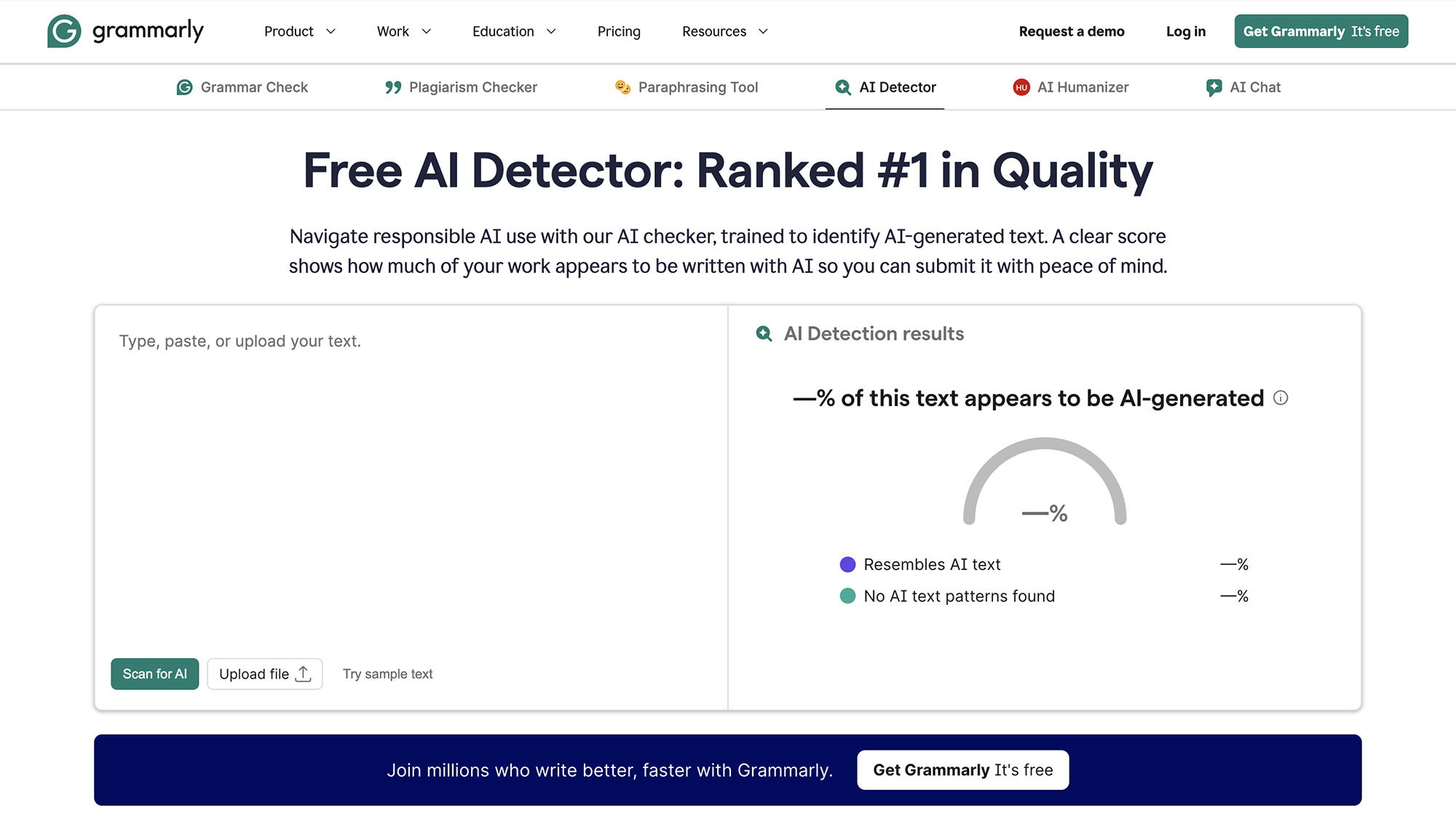
Grammarly, a long-standing leader in spelling and grammar assistance, has recently pivoted to include AI detection within its suite of features. In the test, Grammarly mirrored Pangram’s success in exonerating human writers, returning a score of 0 percent AI patterns for the journalist’s original work. However, its detection of AI-generated text was more nuanced. While it correctly identified samples from Claude and Gemini as machine-produced, it assigned them scores of 68 percent and 66 percent AI-written, respectively. This suggests that Grammarly’s algorithm may be more conservative, requiring a higher threshold of evidence before declaring a text entirely artificial.

GPTZero: The Academic Standard

Originally developed to help educators maintain academic integrity, GPTZero aims to "preserve what’s human." Its performance in the trial was exemplary, achieving a 4/4 accuracy rate. It correctly identified human text with "high confidence" and successfully pinpointed AI-generated sentences from Gemini and ChatGPT. Notably, GPTZero attempts to highlight specific sentences that exhibit high "perplexity" and "burstiness"—two key metrics used to differentiate human randomness from machine predictability.

Scribbr: The Challenge of False Negatives

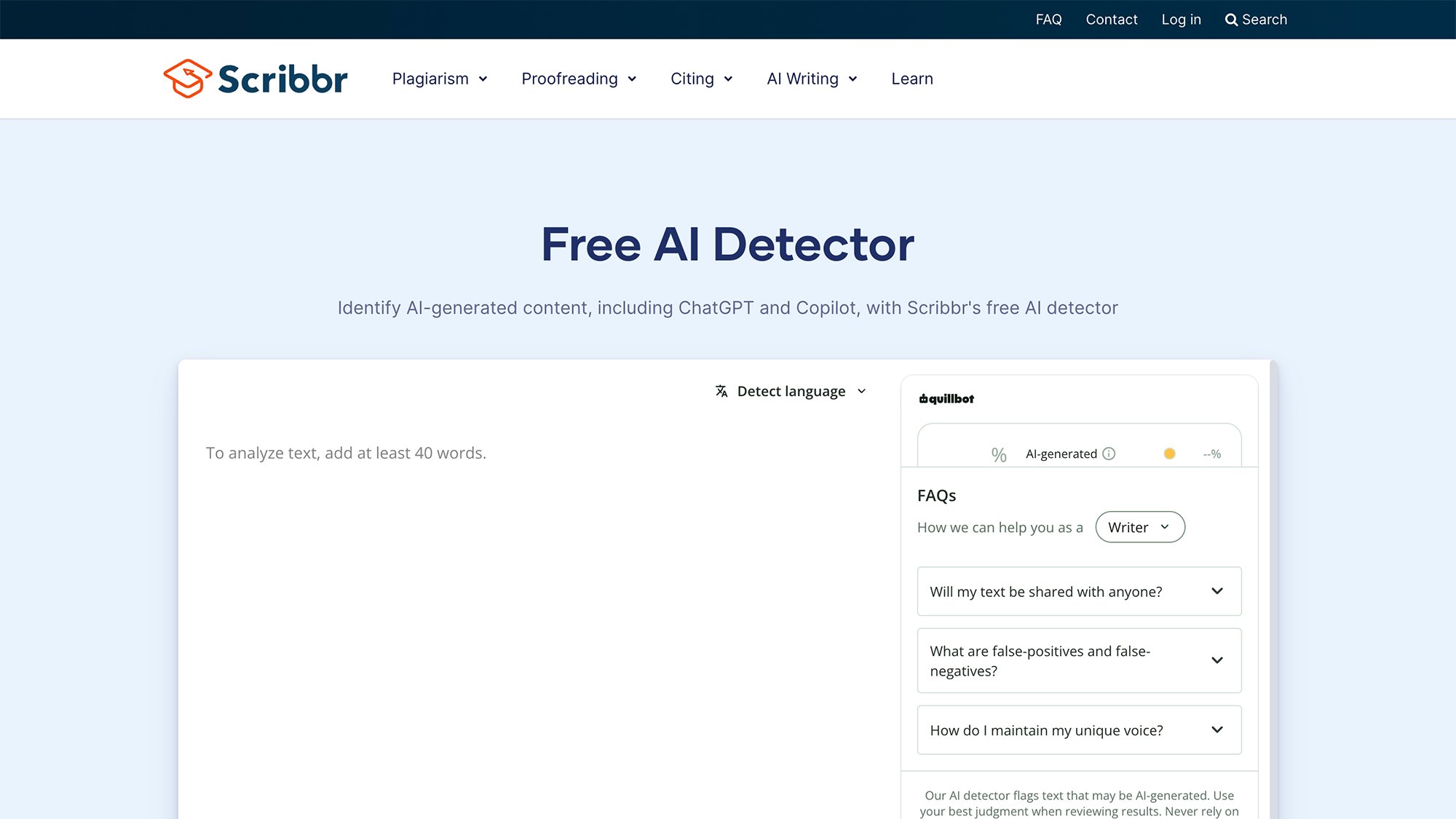
Scribbr, a platform known for its proofreading and editing services, offers a free AI detection tool. While it correctly identified the human-written samples, it failed significantly when presented with AI-generated content. The tool cleared samples from ChatGPT and Claude as being entirely human-written. This failure highlights a major vulnerability in the current detection market: as LLMs become more sophisticated, some detection algorithms are failing to keep pace with the naturalistic flow of modern AI prose.

Do AI writing detectors actually work? We put 5 to the test.

Copyleaks: Mixed Results in a Multi-Media Landscape

Copyleaks provides a broad spectrum of detection services, including tools for images and video. In this test, its performance was inconsistent. While it correctly identified the human samples and the Gemini-generated text, it failed to flag the sample from Claude, marking it as 0 percent AI-written. This 75 percent accuracy rate (3/4) suggests that even comprehensive detection platforms can be bypassed by certain models or specific writing styles.

Chronology of the AI Detection Arms Race

The development of AI detection tools has mirrored the explosive growth of the LLMs they are designed to catch. This "arms race" can be traced through several key milestones over the last three years:

  • November 2022: The launch of ChatGPT-3.5 triggers an immediate crisis in education and publishing, as machine-generated text becomes indistinguishable from human writing for the average reader.
  • January 2023: GPTZero is launched by Princeton student Edward Tian, becoming one of the first major public-facing tools to address AI plagiarism.
  • Early 2023: OpenAI releases its own "AI Classifier" tool but is forced to retire it months later due to a low accuracy rate and high false-positive concerns.
  • 2024: Major platforms like Grammarly and Copyleaks integrate AI detection into their core services, shifting the focus from simple plagiarism checks to "content authenticity" verification.
  • April 2025: Legal tensions escalate as Ziff Davis, the parent company of Popular Science, files a lawsuit against OpenAI. The litigation alleges that OpenAI infringed on copyrights by using proprietary content to train and operate its AI systems without authorization.

Supporting Data: The Science of Detection

AI detectors generally rely on two primary linguistic concepts: perplexity and burstiness. Perplexity measures the complexity of the text; because AI models are trained to predict the next word in a sequence, they tend to produce text with low perplexity—words that follow a mathematically probable path. Burstiness refers to the variation in sentence length and structure. Human writers naturally vary their sentence patterns—a short, punchy sentence followed by a long, descriptive one. AI models, by contrast, often produce a steady, uniform "pulse" of sentence lengths.

Do AI writing detectors actually work? We put 5 to the test.

However, data from recent studies suggests that these metrics are becoming less reliable. As users learn to "prompt engineer" their AI—instructing it to "write with high burstiness" or "adopt a casual, idiosyncratic tone"—the mathematical gap between human and machine narrows.

Broader Impact and Industry Implications

The inconsistency of AI detection tools has profound implications for several sectors. In the legal and corporate world, the inability to verify the origin of a document can lead to copyright disputes and liability issues. The ongoing lawsuit between Ziff Davis and OpenAI underscores the high stakes of this technological shift, as publishers seek to protect their intellectual property from being subsumed by generative models.

In the field of journalism, the "AI-free" label is becoming a mark of quality and trust. As the internet becomes saturated with "slop"—low-quality, AI-generated content farms designed to capture ad revenue—original human reporting is increasingly viewed as a premium product. However, if detection tools remain unreliable, the burden of proof will fall on individual creators to provide "proof of human" through behind-the-scenes transparency or verified credentials.

Do AI writing detectors actually work? We put 5 to the test.

Furthermore, the risk of "false positives" remains a significant ethical concern. If a student or a job applicant is unfairly accused of using AI based on a flawed software report, the professional and personal consequences can be devastating. This has led many experts to recommend that AI detectors should never be used as the sole basis for disciplinary action, but rather as one piece of evidence in a broader human-led review process.

Conclusion: The Path Forward

The findings of the five-tool test suggest that while AI detection technology is advancing, it remains an imperfect science. The tools are currently most effective at confirming human authorship but are less consistent at "convicting" sophisticated AI models. For those tasked with verifying content, the most effective strategy involves using multiple detectors in tandem and looking for qualitative "tells" that algorithms might miss.

As the legal battle over AI training data continues and the models themselves become even more human-like, the industry may eventually move away from detection toward "watermarking"—a system where AI companies embed invisible digital signatures into their outputs. Until then, the digital world remains in a state of "trust but verify," where the definition of what it means to be a "writer" continues to be redefined by the tools we use and the machines that mimic them.

July 19, 2026 0 comment
0 FacebookTwitterPinterestEmail
Education

Ingin Karier Akuntansi Lebih Cepat Berkembang? Mulai dari Sertifikasi CAP Ini

by admin July 19, 2026
written by admin

In an increasingly competitive global labor market, the demand for specialized technical skills has shifted from being a professional advantage to a fundamental necessity. Addressing this shift, Piranha Smart Center, through its specialized division, the Education Visionary Lab, has officially announced the commencement of the "Accurate + Sertifikasi CAP #11" program. This initiative is designed as a strategic response to the growing need for standardized accounting proficiency within the Indonesian corporate landscape. By combining rigorous practical training in Accurate—one of Indonesia’s most widely used accounting software platforms—with the prestigious Certified Accurate Professional (CAP) certification, the program aims to bridge the gap between academic theory and the practical demands of the modern financial industry.

The program is structured as an intensive, six-session online workshop conducted via the Zoom platform, scheduled to take place on July 29, July 30, August 5, August 8, August 12, and August 15, 2026. Each session is slated for the evening hours, specifically from 18:30 to 20:30 WIB, to accommodate the schedules of working professionals and students alike. This timing reflects a growing trend in "after-hours" professional development, allowing participants to enhance their credentials without disrupting their daily occupational or academic responsibilities.

Comprehensive Curriculum and Practical Methodology

The "Accurate + Sertifikasi CAP #11" program distinguishes itself through a curriculum that prioritizes hands-on application over rote memorization. Participants are guided through the entire lifecycle of a company’s financial management within the software environment. The training begins with the critical foundation of setting up a corporate database, a task that requires a deep understanding of chart of accounts, currency settings, and initial balances.

Following the setup phase, the program delves into the recording of daily transactions. In the context of modern accounting, the ability to accurately input sales, purchases, and cash flows in real-time is essential for maintaining the integrity of a company’s financial data. Furthermore, the curriculum covers complex modules such as inventory management and fixed asset tracking. For many Indonesian businesses, particularly those in the retail and manufacturing sectors, these areas are often where the most significant financial discrepancies occur. By mastering these modules, participants can ensure that physical stock aligns with digital records and that asset depreciation is calculated in accordance with prevailing accounting standards.

The culmination of the training involves the automatic generation of financial reports. One of the primary advantages of software like Accurate is its ability to synthesize raw data into balance sheets, profit and loss statements, and cash flow reports with a high degree of precision. The program utilizes case studies derived from real-world scenarios, ensuring that when participants enter or advance in the workforce, they possess the "industrial muscle memory" required to handle complex financial ecosystems.

The Significance of the Certified Accurate Professional (CAP) Credential

While proficiency in software is a vital skill, the inclusion of the Certified Accurate Professional (CAP) examination elevates the program from a simple workshop to a formal certification course. In the current recruitment climate, HR departments and finance directors are increasingly looking for third-party validation of a candidate’s claims. The CAP designation serves as a hallmark of quality, indicating that the holder has passed a standardized assessment of their skills.

To ensure a high success rate among participants, the program includes a dedicated "try out" or mock examination session. This preparatory phase is designed to familiarize candidates with the format and rigor of the official CAP exam, thereby reducing test-related anxiety and highlighting areas that may require further review. Upon successful completion of the competency test, participants are granted the right to use the "CAP" title behind their names, a professional post-nominal that signals their expertise to potential employers, clients, and peers.

Strategic Timing and the Digitalization of Indonesian Accounting

The scheduling of this program for mid-2026 aligns with the broader digital transformation goals outlined by various Indonesian regulatory bodies. As the Indonesian government continues to push for greater tax transparency and the digitalization of Micro, Small, and Medium Enterprises (MSMEs), the role of standardized accounting software has become more prominent.

Accurate, as a locally developed software, is uniquely positioned in the Indonesian market. Unlike some international ERP (Enterprise Resource Planning) systems, Accurate is specifically tailored to comply with Indonesian tax regulations and financial accounting standards (PSAK). This localization makes it the software of choice for thousands of companies across the archipelago. Consequently, a certification in this specific platform carries significant weight within the domestic job market.

Targeted Demographic and Economic Implications

The program is strategically marketed to a broad spectrum of the financial workforce. For university students and fresh graduates, the certification acts as a powerful differentiator in an entry-level job market that is often saturated with applicants holding similar degrees. By entering the workforce with a CAP certification, these individuals can bypass some of the basic training typically required for new hires, making them more attractive to cost-conscious firms.

For accounting staff and finance officers already in the workforce, the program offers a pathway to career advancement. As companies grow, they often migrate from manual spreadsheets to automated systems. Professionals who can lead this transition are frequently prioritized for promotions and salary increments. Similarly, tax consultants and MSME owners benefit from the program by gaining the tools necessary to maintain "clean" books, which is a prerequisite for securing bank loans, attracting investors, or navigating tax audits.

Industry analysts suggest that the professionalization of accounting practices within the MSME sector could have a transformative effect on the national economy. MSMEs contribute over 60% of Indonesia’s GDP, yet many struggle with financial literacy. By empowering business owners and their staff with tools like Accurate, the "Accurate + Sertifikasi CAP #11" program contributes to the overall stability and growth of the private sector.

Chronological Overview of the Training Program

The structure of the program is designed to build competency incrementally, ensuring that participants are not overwhelmed by the technical complexities of the software. The following chronology outlines the planned progression of the 11th batch:

  1. Session 1 (July 29, 2026): Introduction to the Accurate ecosystem and initial database configuration. Participants learn to map out a company’s financial structure digitally.
  2. Session 2 (July 30, 2026): Mastering the ledger and cash/bank modules. This session focuses on the flow of liquid assets and the reconciliation of bank statements.
  3. Session 3 (August 5, 2026): Sales and Receivables. A deep dive into the revenue cycle, from invoicing to payment collection and aging reports.
  4. Session 4 (August 8, 2026): Purchases and Payables. Managing the expenditure cycle, including purchase orders, receiving goods, and vendor payments.
  5. Session 5 (August 12, 2026): Inventory and Fixed Assets. Focus on valuation methods (FIFO/Average) and the lifecycle of company property.
  6. Session 6 (August 15, 2026): Financial Reporting and Final Review. The final instructional session covers the generation of end-of-period reports and a comprehensive review in preparation for the certification.

Following these sessions, the mock exam and official certification process will be initiated, providing a clear path from novice user to certified professional within a span of less than one month.

Supporting Data: The Value of Certification in the Modern Economy

Data from various global employment surveys indicate that certified professionals can command salaries 15% to 25% higher than their non-certified counterparts in similar roles. In Indonesia, as the "Gig Economy" and freelance consulting market expand, certifications like the CAP provide the necessary credibility for independent accountants to secure high-value clients.

Furthermore, a study on digital adoption in Southeast Asia suggests that companies using automated accounting software reduce their financial reporting errors by up to 40%. This reduction in error not only saves money but also prevents potential legal and regulatory hurdles. By training a new cohort of CAP-certified professionals, Piranha Smart Center is directly addressing the technical skills gap that often hinders corporate efficiency.

Broader Impact on Professional Standards

The partnership between Piranha Smart Center and the Education Visionary Lab represents a growing trend in private-sector-led vocational training. As traditional academic institutions often struggle to update their curricula at the pace of technological change, private training providers have stepped in to provide the "last-mile" education that makes graduates job-ready.

The "Accurate + Sertifikasi CAP #11" program is more than just a software tutorial; it is a component of a larger movement toward professional standardization in Indonesia. By creating a community of certified experts, the program fosters a culture of accuracy, transparency, and professional pride within the accounting community.

As the registration period remains open, interested parties are encouraged to facilitate their enrollment through the official Detik Event portal. The continued success of the CAP series suggests a robust appetite for high-quality, practical financial education in Indonesia, pointing toward a future where digital proficiency is the standard, rather than the exception, for all accounting professionals.

July 19, 2026 0 comment
0 FacebookTwitterPinterestEmail
Education

Waspada Konten Penipuan dan/atau Menyesatkan yang Mengatasnamakan Perusahaan dan Karyawan!

by admin July 19, 2026
written by admin

As the digital landscape for education continues to expand in Indonesia, the vulnerability of users to social engineering and phishing attacks has become a paramount concern for industry leaders. PT Quipper Edukasi Indonesia has taken a proactive stance by outlining specific protocols and verification measures to ensure that its users do not fall victim to scams that falsely claim an association with the brand. This official communication serves as both a defensive measure for the company’s intellectual property and a critical safety guide for the public.

The Context of Digital Impersonation in the EdTech Sector

The education technology (EdTech) sector has seen unprecedented growth over the last several years, accelerated by the shift toward hybrid learning environments. However, this growth has also attracted cybercriminals who utilize "brandjacking" to exploit the trust established between educational platforms and their users. In the case of Quipper, the misuse of its identity often involves fraudulent schemes ranging from fake job offers to unauthorized financial services.

Data from cybersecurity analysts suggests that educational institutions and EdTech platforms are increasingly targeted because they handle sensitive personal information and maintain high levels of trust with a younger, often less cynical, demographic. By issuing this warning, Quipper aligns itself with global best practices in corporate transparency and cybersecurity awareness, aiming to mitigate the risks of identity theft and financial loss among its user base.

Official Communication Channels and Domain Verification

A primary focus of Quipper’s warning is the clarification of its official communication channels. One of the most common methods used by fraudsters is the creation of fake email accounts that closely resemble official corporate addresses—a technique known as typosquatting. To combat this, PT Quipper Edukasi Indonesia has explicitly stated that all official correspondence from its employees, including members of management, will exclusively originate from the domain @quipper.com.

The company urges users to be skeptical of emails coming from generic providers (such as Gmail, Yahoo, or Outlook) or domains that use variations of the brand name (e.g., quipper-info.com or quipper-promo.id). Verification of the sender’s email address is the first line of defense in identifying a phishing attempt. Furthermore, all official contact information and customer service links are strictly managed by internal teams and are listed directly on the authenticated Quipper platform. Users are advised to navigate directly to the official website rather than clicking on links provided in unsolicited messages.

Commitment to Data Privacy and Regulatory Compliance

In light of the enactment of the Personal Data Protection (PDP) Law in Indonesia, Quipper has reaffirmed its commitment to the stringent protection of user data. The company maintains that it adheres to all applicable legal frameworks regarding the collection, storage, and processing of personal information. A key component of this commitment is the policy regarding third-party data sharing.

PT Quipper Edukasi Indonesia has clarified that it will never share a user’s personal data with third parties without obtaining explicit, written consent from the data owner. This statement is particularly relevant in an era where data harvesting and unauthorized data brokerage are rampant. By emphasizing the necessity of written consent, Quipper provides a clear benchmark for its users: any request for personal data that bypasses these formal channels should be immediately flagged as suspicious.

Disassociation from Financial Services and Online Lending

A significant portion of the public warning addresses the misuse of the Quipper name in relation to financial transactions. The company has categorically stated that it is not involved in any form of online lending (locally known as pinjaman online or pinjol), investment schemes, or the distribution of funds.

This clarification is a response to a disturbing trend in the Indonesian digital economy where the names of reputable companies are frequently used to provide a veneer of legitimacy to illegal or predatory lending apps. By distancing itself from the financial services sector, Quipper protects its reputation from being tarnished by the "pinjol" epidemic, which has seen many citizens fall into debt traps due to fraudulent platforms.

Furthermore, the company has addressed the issue of personal financial liability. PT Quipper Edukasi Indonesia has made it clear that any financial transactions, loans, or personal business dealings conducted by its employees are strictly private matters. The company does not assume responsibility for the personal financial risks or obligations of its staff members. This distinction is crucial for third parties and financial institutions, ensuring they understand that corporate assets and the brand’s legal entity are not tied to the private conduct of individuals employed by the firm.

Chronology of Corporate Vigilance and Legal Recourse

While the company has not cited a specific single incident as the catalyst for this warning, the move follows a chronological pattern of increasing reports regarding digital fraud across the Indonesian internet landscape. Over the past 24 months, several high-profile Indonesian enterprises have had to issue similar "Public Notices" as scammers become more sophisticated in their use of social media and messaging apps like WhatsApp and Telegram to impersonate corporate representatives.

Quipper’s response strategy involves a multi-tiered approach:

  1. Monitoring: Continuous internal monitoring of the digital space for unauthorized use of brand assets.
  2. Public Education: Disseminating safety guides and verification checklists to teachers and students.
  3. Legal Action: The company has explicitly stated its readiness to pursue legal avenues to address fraud and identity theft. This includes collaborating with law enforcement agencies to track and prosecute individuals or groups that misappropriate the company’s name for illegal gain.

By stating that it will handle these matters through "legal channels," Quipper signals to potential fraudsters that the misuse of its identity will result in serious judicial consequences, thereby acting as a deterrent.

Analysis of Broader Implications for the EdTech Industry

The stance taken by PT Quipper Edukasi Indonesia reflects a broader shift in the responsibilities of digital service providers. It is no longer sufficient for a company to simply provide a service; they must also act as a guardian of their digital ecosystem. The implications of this warning are twofold.

First, for the EdTech industry, it sets a standard for "Duty of Care." When a platform becomes a central part of a student’s daily life, the platform provider must ensure that the environment remains safe from external predators. Quipper’s detailed breakdown of official domains and financial disclaimers provides a template for other educational startups to follow in protecting their communities.

Second, for the users, this warning serves as a critical lesson in digital literacy. By instructing "Quipperians" to verify every interaction, the company is fostering a culture of skepticism and verification that is essential in the modern age. This education is perhaps as valuable as the academic content provided on the platform, as it equips students with the tools to navigate a world where digital deception is common.

Actionable Steps for Teachers, Students, and Parents

To ensure maximum safety, PT Quipper Edukasi Indonesia has urged all stakeholders to adhere to the following safety protocols:

  • Always Verify the Source: Before participating in any program or providing information, check if the communication aligns with the official contacts listed on the Quipper website.
  • Scrutinize Email Addresses: Ensure that any email claiming to be from Quipper ends exactly in @quipper.com. Be wary of any additional characters or different extensions (like .net or .org).
  • Report Suspicious Activity: Users are encouraged to report any instances of suspected fraud or identity misuse to Quipper’s official customer support channels immediately.
  • Maintain Financial Privacy: Never provide bank details, passwords, or "OTP" (One-Time Password) codes to anyone claiming to represent Quipper in a financial capacity, as the company does not engage in such transactions.

Conclusion and Corporate Commitment

PT Quipper Edukasi Indonesia remains steadfast in its mission to provide high-quality educational resources while maintaining a secure digital environment. The company’s commitment to the security of its customers and employees is the foundation of the trust it has built over years of operation in Indonesia.

In an era where digital identities are easily forged, the burden of vigilance falls on both the service provider and the user. Through this comprehensive warning and the implementation of strict verification protocols, Quipper aims to ensure that the focus remains where it belongs: on the education and development of the next generation. The company will continue to monitor the situation closely and will not hesitate to take the necessary legal steps to protect its brand integrity and, most importantly, the safety of the Quipperian community. Information security is an ongoing process, and PT Quipper Edukasi Indonesia reaffirms its dedication to staying at the forefront of user protection in the evolving digital landscape.

July 19, 2026 0 comment
0 FacebookTwitterPinterestEmail
Politics

Spain Clinches Second World Cup Title with Extra-Time Victory Over Argentina in Thrilling 2026 Final

by admin July 19, 2026
written by admin

New Jersey, USA – Spain has etched its name into football history once more, securing the coveted FIFA World Cup 2026 title after a gripping 1-0 extra-time victory over defending champions Argentina. The climactic final, held at the iconic MetLife Stadium in East Rutherford, New Jersey, United States, unfolded in the early hours of Monday, July 20, 2026, Western Indonesia Time, captivating a global audience. The decisive moment arrived in the 106th minute, deep into the second period of extra time, when Spanish forward Ferran Torres emerged as the hero, striking the solitary goal that would ultimately crown La Furia Roja as world champions.

This triumph marks Spain’s second World Cup title, adding another star to their crest following their inaugural victory in 2010. The victory further solidifies a remarkable period for Spanish football, coming just two years after they lifted the UEFA European Championship 2024 trophy, their fourth continental title in history. This recent success underscores a new golden era for Spanish football, characterized by a blend of experienced veterans and prodigious young talents who have consistently performed at the highest level.

For Argentina, the result was a heartbreaking conclusion to their campaign and a bitter blow for their talismanic captain, Lionel Messi. The defeat extinguished Messi’s aspirations of leading the Albiceleste to back-to-back World Cup titles, following their memorable triumph in Qatar at the 2022 tournament. Despite a valiant effort and a tournament filled with flashes of his enduring brilliance, the elusive second consecutive star for Argentina remained just out of reach, potentially marking the final World Cup appearance for one of football’s greatest ever players.

The Road to MetLife: A Battle of Giants

The build-up to the 2026 World Cup final was steeped in anticipation, pitting two footballing titans against each other. Spain, under the astute guidance of coach Luis de la Fuente, had showcased a captivating blend of possession-based football, tactical flexibility, and an abundance of youthful exuberance throughout the tournament. Their path to the final saw them overcome formidable opponents, demonstrating resilience and a potent attack. Key players like Lamine Yamal, Pedri, and Dani Olmo had illuminated the tournament with their skill and creativity, complemented by the defensive solidity orchestrated by Rodri and Pau Cubarsi.

Argentina, meanwhile, arrived in New Jersey as the reigning champions, carrying the weight of expectation and the narrative of potentially providing a fairytale ending to Messi’s illustrious international career. Lionel Scaloni’s side had navigated a challenging route, displaying their characteristic grit, tactical discipline, and moments of individual genius, primarily from their captain. The prospect of Messi lifting the trophy for a second consecutive time, an unprecedented feat in the modern era, had generated immense global interest and an electric atmosphere surrounding the final.

Match Report: A Tactical Stalemate Ignites

The final match itself, played before a capacity crowd exceeding 80,000 at MetLife Stadium, was a fiercely contested affair, characterized by tactical discipline, intense midfield battles, and moments of individual brilliance from both sides. The global viewership for the final was projected to be in the billions, reflecting the magnitude of the event.

First Half: Early Exchanges and Defensive Fortitude

The game ignited from the opening whistle, with both Spain and Argentina immediately adopting a high tempo. Spain’s intent to dominate possession was evident early on. In the fifth minute, a fluid attacking move saw Dani Olmo thread a precise pass to Lamine Yamal, who expertly eluded Argentine defenders. Yamal’s subsequent shot, however, was bravely blocked by Lisandro Martinez, with Emiliano Martinez then gathering the loose ball. This early chance signaled Spain’s attacking ambitions.

Moments later, Argentina responded with a characteristic counter-attack. Lionel Messi, ever the threat, broke free from the Spanish defensive line in pursuit of a through ball. However, Spanish goalkeeper Unai Simon demonstrated excellent situational awareness, rushing off his line to clear the danger with a decisive intervention. The early exchanges highlighted the quality of both defensive setups and the tactical discipline being enforced by both coaches.

The intensity of the midfield battle was underscored in the 15th minute when Alexis Mac Allister committed a foul on Dani Olmo. Mac Allister, perhaps fortunate, escaped a booking for the challenge, a decision that could have significantly impacted the flow of the game. Spain’s control of possession was undeniable in the initial quarter of the match, boasting an impressive 68% of the ball, effectively stifling Argentina’s attacking rhythm.

The physical nature of the contest became increasingly apparent, with numerous fouls punctuating the opening 20 minutes. Following the hydration break, a necessary pause given the intensity and the July conditions, the score remained locked at 0-0. To counter Spain’s tight marking, particularly by Rodri and his midfield partners, Lionel Messi was frequently observed dropping deeper into midfield, attempting to initiate play and break the defensive shackles.

As the first half progressed towards its final stages, clear-cut chances remained at a premium. Spain’s possession dominance, while impressive, had not translated into sustained pressure on the Argentine goal. A rare opportunity for Spain arose in the 38th minute when Mikel Oyarzabal unleashed a shot from the edge of the penalty area, but Emiliano Martinez was well-positioned to make a comfortable save.

The physical battle continued, leading to the first booking of the match in the 41st minute, with Lisandro Martinez receiving a yellow card for impeding Oyarzabal’s counter-attack. Two minutes later, Marc Cucurella tried his luck from outside the box, but his powerful strike veered wide of the left post. Just before halftime, Lisandro Martinez, who had been a pivotal figure in Argentina’s defense, appeared to pick up an injury and was subsequently replaced by the experienced Nicolas Otamendi. The first half concluded with the scoreboard still reflecting a 0-0 stalemate, a testament to the defensive solidity and goalkeeping heroics on display.

Second Half: Intensifying Pressure and Heroic Goalkeeping

The second half commenced with Spain immediately on the offensive. Alex Baena, showing attacking intent, drove forward and fired a shot from outside the penalty area, which Emiliano Martinez once again managed to gather safely. The tension escalated in the 52nd minute when Leandro Paredes fouled Rodri in midfield, sparking a brief but heated confrontation between players from both sides. Paredes was subsequently shown a yellow card for his challenge.

Spain continued to probe for openings. Dani Olmo orchestrated a dangerous run into the box, but his attempted cross was cleared by Gonzalo Montiel, who was then replaced by Nahuel Molina in the 58th minute as Scaloni sought to reinforce his defense. Recognizing the need for fresh impetus, Luis de la Fuente made a double substitution in the 62nd minute, introducing Ferran Torres and Pedri for Mikel Oyarzabal and Fabian Ruiz, respectively.

The changes almost paid immediate dividends. In the 63rd minute, Dani Olmo again unleashed a shot from range, which Emiliano Martinez parried, though he failed to hold it cleanly. Four minutes later, Ferran Torres, now on the pitch, met a Lamine Yamal cross with a header, but Martinez was once more perfectly positioned to make the save.

Following the second-half hydration break, Lionel Scaloni made further attacking adjustments, bringing on Facundo Medina and Giuliano Simeone to inject more attacking prowess into the Argentine lineup. Not to be outdone, De la Fuente countered with his own reinforcements, introducing Nico Williams and Mikel Merino in the 75th minute, further intensifying Spain’s attacking threat.

The Spanish offensive barrage intensified dramatically in the latter stages of the second half. Two successive chances fell to Spain: first, Pedri tested Martinez, and then Pau Cubarsi’s effort was also thwarted by the Argentine goalkeeper. Emiliano Martinez, a hero in the 2022 final, was proving to be Argentina’s impenetrable last line of defense, making a string of crucial saves that kept the score at 0-0. With just five minutes remaining in regular time, Spain had registered an astonishing eight shots on target, while Argentina had yet to force Unai Simon into a single save.

In injury time, Nico Williams embarked on a dangerous counter-attack, culminating in a powerful shot that Martinez once again managed to block. The drama escalated further shortly after when Enzo Fernandez received a second yellow card for a challenge on Cubarsi in midfield, resulting in his expulsion from the game. This left Argentina with ten men for the remainder of the match and any potential extra time. Spain was awarded a free-kick in the dying moments, with Lamine Yamal curling in a dangerous effort that Martinez brilliantly tipped over the bar. Despite Spain’s relentless pressure and Argentina’s defensive heroics, the score remained 0-0, pushing the final into extra time.

Extra Time: The Decisive Strike

With Argentina reduced to ten men, Spain dominated the first period of extra time, controlling possession and continuously probing for an opening. However, Argentina’s disciplined defense, marshaled by the ever-present Otamendi and the tireless midfield, held firm, ensuring no goals were conceded in the first fifteen minutes.

The deadlock was finally broken in the second period of extra time. In the 106th minute, just as the prospect of a penalty shootout loomed, Ferran Torres seized his moment. A precise header from Nico Williams Jr. found Torres, who unleashed a powerful left-footed strike that left Emiliano Martinez with no chance. The ball rippled the back of the net, sending the Spanish contingent into delirium and silencing the majority of the Argentine supporters.

The remaining minutes of extra time saw Spain manage the game expertly, utilizing their numerical advantage and tactical discipline to protect their precious lead. Argentina, despite their numerical disadvantage, mounted a desperate late charge, but their efforts were ultimately in vain against a resolute Spanish defense. When the final whistle blew, it confirmed Spain’s hard-fought 1-0 victory and their status as the FIFA World Cup 2026 champions.

Key Players and Turning Points

While Ferran Torres’s goal was the definitive moment, several performances shaped the final. Emiliano Martinez’s heroic goalkeeping, particularly in the second half, kept Argentina in the game against an onslaught of Spanish attacks. His saves were monumental, demonstrating why he is considered one of the world’s best. Conversely, the red card shown to Enzo Fernandez proved to be a critical turning point, forcing Argentina to play with a man down for a significant portion of the match and ultimately limiting their attacking options in extra time. For Spain, the introduction of substitutes like Ferran Torres and Nico Williams Jr. proved inspired, directly leading to the winning goal. Lamine Yamal also showcased his immense potential throughout the match, consistently threatening the Argentine defense.

Coaches’ Perspectives

Following the triumph, Spain’s coach, Luis de la Fuente, lauded his team’s unwavering spirit, tactical execution, and the depth of talent within his squad. He would likely emphasize the collective effort and the belief that propelled them to victory against a formidable opponent. "This team showed incredible resilience and character," De la Fuente might have stated. "We faced a great Argentina side, but our players never stopped believing. This is a testament to their hard work and dedication."

Lionel Scaloni, Argentina’s coach, would undoubtedly express pride in his team’s effort, especially playing with ten men for an extended period. While acknowledging the disappointment, he would likely praise Messi’s leadership and the team’s fight. "It’s a tough loss, but I am incredibly proud of my players," Scaloni might have commented. "They gave everything, and that’s all you can ask for. We fought until the very end."

A New Era for La Furia Roja

Spain’s 2026 World Cup victory marks a significant milestone. It signals a new generation of Spanish talent stepping up to global prominence, building on the legacy of the 2010 squad. The blend of experienced players like Rodri and Dani Olmo with rising stars such as Lamine Yamal, Pedri, and Pau Cubarsi suggests a bright future for Spanish football. This triumph will undoubtedly inspire a new generation of footballers in Spain and provide a significant boost to La Liga, further enhancing its reputation as a breeding ground for world-class talent. The achievement of winning both the European Championship and the World Cup within a two-year span firmly establishes this Spanish squad as one of the most dominant in recent memory.

The End of an Era? Messi’s Legacy and Argentina’s Future

For Lionel Messi and Argentina, the defeat is a poignant moment. While it denies Messi a second consecutive World Cup, his legacy as one of football’s all-time greats remains unchallenged. His performance throughout the tournament, at an advanced age for a footballer, demonstrated his enduring class and commitment. The question of whether this marks his final World Cup appearance will loom large over Argentine football, prompting discussions about the team’s future without their iconic captain. Scaloni’s challenge will be to manage the transition, integrating new talent while maintaining the competitive edge that has characterized Argentina in recent years. The pain of this loss will fuel a desire for redemption, but the path forward will require strategic planning and the emergence of new leaders.

Global Reactions and Football’s Ever-Evolving Narrative

The 2026 World Cup final, hosted in North America, proved to be a monumental success, showcasing the global appeal of football. The passionate support from fans, both at the stadium and around the world, underscored the sport’s unparalleled ability to unite and thrill. Spain’s victory adds another compelling chapter to the World Cup narrative, highlighting the cyclical nature of dominance in international football. It was a final that delivered on its promise of high drama, tactical intrigue, and a memorable conclusion, reaffirming the World Cup’s status as the pinnacle of the beautiful game. The implications of a European team winning on North American soil also set an interesting precedent as the global football landscape continues to evolve, potentially influencing future tournament dynamics.

July 19, 2026 0 comment
0 FacebookTwitterPinterestEmail
Newer Posts
Older Posts

Posts Slider

Bald eagles Jackie and Shadow raise $10 million

July 25, 2026

Kemdiktisaintek Buka Beasiswa BPDDI 2026 untuk Dosen, Lanjut...

July 25, 2026

Quipper Indonesia Unveils 2025 Academic Reward Program Utilizing...

July 25, 2026

Indonesia’s Heightened Seismic Hazard: Updated 2024 Map Reveals...

July 25, 2026

Indonesia Intensifies Scrutiny on Unrepatriated Tax Amnesty and...

July 25, 2026

Popular Posts

  • 1

    Indonesia’s Domestic Market Obligation Policy for Palm Oil Proves Effective in Stabilizing Minyakita Prices Amidst Broader Market Dynamics.

    April 16, 2026
  • 2

    Extra Playtime Strengthens the Emotional Bond Between Owners and Dogs According to New Research

    April 22, 2026
  • 3

    OJK Propels South Sumatra’s Regional Economy with Strategic Export Initiatives and Youth Empowerment

    April 22, 2026
  • 4

    Jangan Sampai Ketinggalan! Skill Excel Ini Bisa Bikin Kerja Kamu 2x Lebih Cepat

    April 16, 2026
  • 5

    Mastering Solo Queue in Mobile Legends: Bang Bang: A Deep Dive into Self-Sufficient Carry Heroes

    April 22, 2026

Recent Posts

  • Bald eagles Jackie and Shadow raise $10 million

    July 25, 2026
  • Kemdiktisaintek Buka Beasiswa BPDDI 2026 untuk Dosen, Lanjut S3 Gratis!

    July 25, 2026
  • Quipper Indonesia Unveils 2025 Academic Reward Program Utilizing Gamified Learning Incentives for QSP All Access Users

    July 25, 2026
  • Indonesia’s Heightened Seismic Hazard: Updated 2024 Map Reveals 14 Megathrust Zones and Escalated Earthquake Risks

    July 25, 2026
  • Indonesia Intensifies Scrutiny on Unrepatriated Tax Amnesty and Voluntary Disclosure Program Assets, Setting End-2026 Deadline for Compliance.

    July 25, 2026
  • Facebook
  • Twitter

@2021 - All Right Reserved. Designed and Developed by PenciDesign


Back To Top
Nata News
  • Home

We are using cookies to give you the best experience on our website.

You can find out more about which cookies we are using or switch them off in .

Nata News
Powered by  GDPR Cookie Compliance
Privacy Overview

This website uses cookies so that we can provide you with the best user experience possible. Cookie information is stored in your browser and performs functions such as recognising you when you return to our website and helping our team to understand which sections of the website you find most interesting and useful.

Strictly Necessary Cookies

Strictly Necessary Cookie should be enabled at all times so that we can save your preferences for cookie settings.