
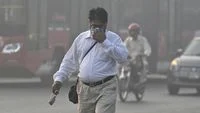
Lahore, the cultural capital of Pakistan, has once again been thrust into the center of a severe environmental crisis as air quality levels plummeted to hazardous extremes. According to data provided by the Swiss air quality technology company IQAir, the city recorded an Air Quality Index (AQI) of 447, placing it firmly in the "hazardous" category. This reading represents a significant threat to public health, as the concentration of fine particulate matter (PM2.5) has soared to levels exponentially higher than the guidelines recommended by the World Health Organization (WHO). For residents of Lahore, the thick, toxic smog has become a recurring seasonal phenomenon, yet the intensity of this current spike has prompted renewed concerns regarding urban planning, industrial regulation, and the efficacy of government mitigation strategies.
The Anatomy of a Hazardous AQI Reading
The AQI scale is a standardized tool used globally to communicate how polluted the air currently is or how polluted it is forecast to become. An index value of 447 is deeply alarming. For context, an AQI between 0 and 50 is considered "good," while anything above 300 is classified as "hazardous," warranting emergency health warnings for the entire population. At 447, the air contains a dangerous concentration of PM2.5—microscopic particles that are less than 2.5 micrometers in diameter. These particles are particularly insidious because they can penetrate deep into the respiratory tract and enter the bloodstream, potentially causing long-term cardiovascular and respiratory diseases.
When the AQI reaches such levels, medical experts advise that healthy individuals may experience breathing difficulties and throat irritation, while those with pre-existing conditions, children, and the elderly face an acute risk of severe health complications. The atmosphere in Lahore has taken on a yellowish, opaque hue, obscuring the skyline and drastically reducing visibility, which has in turn complicated traffic operations and public safety across the metropolitan area.
Chronology of the Seasonal Crisis
The deterioration of air quality in Lahore is not a sudden occurrence but rather the culmination of a seasonal cycle that intensifies as winter approaches. Typically, the problem begins to escalate in October and persists through February. This period is characterized by the "inversion" phenomenon, where a layer of warm air traps cooler air near the ground, preventing the dispersal of pollutants.
In the preceding weeks, Lahore had already been experiencing elevated AQI levels, fluctuating between the "unhealthy" and "very unhealthy" ranges. However, the surge to 447 suggests a convergence of meteorological conditions and increased emission sources. Agricultural practices in the neighboring regions, particularly the burning of crop residues by farmers clearing fields for the next planting season, are frequently cited as a primary contributor. These smoke plumes, carried by prevailing winds into the densely populated urban center, exacerbate the already heavy load of pollutants generated by vehicular emissions, industrial waste, and construction dust.
Historically, this cycle has repeated for years, with local authorities struggling to implement a consistent, year-round solution. While temporary measures such as the closure of brick kilns and restrictions on heavy transport have been attempted in the past, the lack of long-term structural reform has meant that the city remains vulnerable to these recurring spikes.
Supporting Data and Environmental Factors
The environmental challenges facing Lahore are multifaceted. Beyond agricultural burning, the city’s rapid and often unregulated urbanization has led to a significant loss of green spaces. Trees, which serve as natural air filters, have been cleared to make way for high-rise developments and infrastructure projects, further reducing the city’s ability to mitigate pollution naturally.
Furthermore, the vehicle fleet in Lahore is largely comprised of older, high-emission engines. The lack of stringent fuel quality standards and the reliance on diesel-powered transport contribute significantly to the nitrogen dioxide and sulfur dioxide levels present in the city’s air. According to recent reports, the transport sector is responsible for a substantial percentage of the city’s carbon footprint. Coupled with industrial activity—where many factories continue to utilize low-grade coal or biomass for energy production—the city essentially creates a "pollution trap" that is difficult to break without aggressive policy intervention.
Meteorological data from recent years confirms that the intensity of the smog is closely linked to wind patterns. When wind speeds drop, the pollutants stagnate. Climate change experts have also pointed out that shifting weather patterns are disrupting the expected onset of seasonal winds that would otherwise help clear the air, leading to longer and more frequent periods of toxic smog.
Official Responses and Governance Challenges
In response to the escalating crisis, local and provincial authorities have often been criticized for reactive rather than proactive measures. When the AQI reaches these hazardous levels, the standard government response usually includes the temporary closure of educational institutions, the mandatory use of face masks, and the intermittent halting of construction activities.
However, these measures are frequently met with skepticism by environmentalists and public health advocates. Many argue that shutting down schools, while necessary for immediate health protection, does not address the root causes of the pollution. There have been calls for increased cross-border cooperation, as air pollution does not adhere to political boundaries; the smog in Lahore is often part of a broader regional crisis affecting the Indo-Gangetic Plain, where pollution flows freely between Pakistan and India.
The provincial government has indicated that it is exploring long-term strategies, such as the introduction of electric buses, the promotion of cleaner industrial technologies, and stricter enforcement of emissions testing. Nevertheless, the implementation of these initiatives has been hampered by budgetary constraints, a lack of administrative coordination, and the difficulty of balancing industrial productivity with environmental regulation.
Broader Impact and Public Health Implications
The implications of sustained exposure to an AQI of 447 are profound. Beyond the immediate respiratory distress, public health officials worry about the long-term burden on the city’s healthcare infrastructure. Increased hospital admissions for asthma, bronchitis, and other chronic obstructive pulmonary diseases place immense pressure on already strained medical facilities.
From an economic perspective, the smog creates significant losses. Reduced worker productivity, the health costs associated with pollution-related illnesses, and the disruption of daily business operations contribute to a measurable decrease in the city’s economic vitality during the winter months. There is also the issue of "brain drain," as families and professionals consider relocating to cities or countries with cleaner air, potentially affecting the long-term socio-economic development of the region.
Furthermore, the social impact is disproportionately felt by the city’s lower-income populations. Those who rely on outdoor manual labor or who cannot afford high-quality air filtration systems and adequate medical care are the most exposed to the toxic environment. This creates an environmental inequality that is becoming an increasingly central topic in local political discourse.
Future Outlook and Policy Recommendations
As Lahore enters the peak of its smog season, the path forward requires a shift from emergency management to strategic, evidence-based policy. Experts suggest that the government must prioritize a transition to renewable energy sources for industrial use, incentivize the modernization of public and private transport, and implement rigorous, year-round monitoring of air quality.
Regional cooperation remains the missing piece of the puzzle. Given that air pollution is a shared regional challenge, diplomatic engagement with neighboring states to synchronize agricultural policies and industrial standards could yield significant benefits. Without such cooperation and a sustained commitment to green infrastructure, the residents of Lahore are likely to face similar hazardous AQI levels in the years to come.
The current reading of 447 is a stark reminder of the limitations of current environmental policies. It serves as a call to action for policymakers to recognize that air quality is not merely a seasonal nuisance but a critical public health emergency that demands a comprehensive and unified response. The future of Lahore’s livability depends on the courage to enact systemic changes that prioritize public health over short-term economic convenience. As the city waits for the wind to change, the reality remains that the air its citizens breathe is a direct reflection of the policies enacted—or neglected—in the halls of government.

