
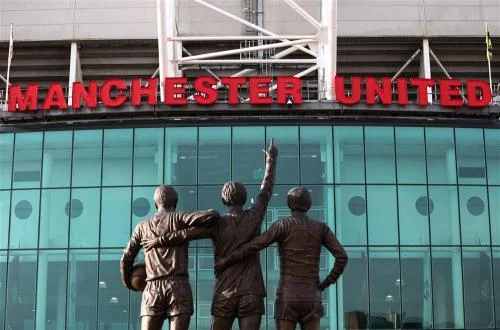
A potential takeover of Manchester United by Qatari investors, reportedly preparing an initial bid, is poised to further intensify the economic chasm within top-tier football, solidifying the sport’s elite status as a trophy asset for the ultra-wealthy and a vehicle for national ambition. The prospect of the third major English Premier League club falling under the control of oil-rich Middle Eastern investment groups raises significant questions about fairness, competition, and the very fabric of European football.
The Shifting Landscape of Football Ownership
The news, first reported by Bloomberg News on Tuesday, February 14, 2023, indicated that a consortium of Qatari investors is on the verge of submitting an early proposal for the iconic Manchester club. Sources familiar with the matter revealed that officials from the Qatar Investment Authority (QIA), the emirate’s sovereign wealth fund, are actively involved in the preparatory stages, working in conjunction with a local family office. This development has already sent ripples through the financial markets, with Manchester United’s shares experiencing a notable increase in New York trading on the same day, pushing the club’s market capitalization to approximately $3.9 billion USD (around Rp 59.8 trillion at the time).
If Qatar officially backs this bid, its financial muscle makes a successful acquisition seem highly probable. To date, the only other prominent party to publicly express interest is British billionaire Jim Ratcliffe, who has been collaborating with financial giants Goldman Sachs Group Inc. and JPMorgan Chase & Co. on his own potential offer. Ratcliffe, the founder and majority shareholder of the chemical producer Ineos Group Holdings Plc, is recognized as the second-wealthiest individual in the United Kingdom, with an estimated net worth of $13.4 billion USD (approximately Rp 203 trillion), according to the Bloomberg Billionaires Index. While Ratcliffe’s wealth is substantial, it pales in comparison to the estimated $450 billion USD (around Rp 6,826 trillion) managed by the QIA. The ruling Emir of Qatar, Sheikh Tamim bin Hamad Al Thani, is also known to be a fervent supporter of Manchester United, adding a layer of personal interest to the potential transaction.
Navigating Regulatory Hurdles: The UEFA Conundrum
The primary obstacle to any such acquisition, however, is not financial but regulatory. UEFA, European football’s governing body, has stringent rules stipulating that clubs with the same majority owner cannot compete in major European tournaments. This rule is designed to prevent conflicts of interest and ensure a level playing field.
Qatar Sports Investments (QSI), a separate entity from the QIA, already holds a controlling stake in French Ligue 1 club Paris Saint-Germain (PSG). The prospect of another club of Manchester United’s stature and global significance potentially being barred from lucrative competitions like the Champions League would undoubtedly create significant controversy among fan bases and the wider football hierarchy. The viability of the purchase, therefore, hinges on UEFA’s determination of whether QSI and QIA are considered sufficiently independent entities. Adding another layer of complexity, Nasser Al-Khelaifi, the chairman of QSI, also holds a position on UEFA’s executive committee, a role that could invite scrutiny regarding impartiality.
A Precedent and its Implications
This situation echoes previous instances where questions of multi-club ownership have arisen. In 2018, RB Leipzig of Germany and Red Bull Salzburg of Austria were permitted to compete against each other in the Champions League, despite both being part of the broader Red Bull GmbH group. UEFA’s decision at the time was based on its assessment that no single individual or entity held decisive control over both clubs. However, the scale and prominence of Manchester United and PSG present a far more significant challenge to the spirit of UEFA’s regulations.
Even if UEFA deems QSI and QIA to be operationally separate, the acquisition would still place two of the world’s top five revenue-generating clubs under the umbrella of state-backed Qatari investment. This scenario is likely to ignite widespread concern across Europe. Football officials on the continent have already been expressing unease about the overwhelming financial power wielded by Premier League clubs, which they argue distorts regional financial sustainability.
Under Qatari ownership, PSG has been responsible for two of the most expensive player transfers in history: the acquisition of Neymar from Brazil for €222 million ($238 million) in 2017, and Kylian Mbappé the following year for €180 million. Such extravagant spending, while potentially challenging for a Qatar-owned Manchester United in light of recent developments, highlights the financial capacity that such investors bring to the market.
The Premier League’s Financial Scrutiny
The Premier League itself has been intensifying its scrutiny of financial fair play. Just last week, the league formally accused cross-town rivals Manchester City, owned by Abu Dhabi’s state-backed City Football Group, of over 100 breaches of its financial regulations. This ongoing investigation casts a shadow over the financial practices of clubs with significant state investment. Meanwhile, Newcastle United, acquired by Saudi Arabia’s Public Investment Fund (PIF) in 2021, has demonstrated a more measured approach to spending compared to Manchester City or Chelsea, which was purchased by American investor Todd Boehly from Russian oligarch Roman Abramovich in 2022.
The Glazer family, the current owners of Manchester United, have reportedly been seeking a valuation of up to $6 billion USD for the club, according to Bloomberg News reports from the previous year. This valuation would translate to an enterprise value to EBITDA (earnings before interest, taxes, depreciation, and amortization) ratio exceeding 60 times. Despite a relative dip in on-field success over the past decade, Manchester United boasts an unparalleled history and the largest global fanbase among Premier League clubs, making it an exceptionally attractive, albeit expensive, proposition.
For the legions of Manchester United fans who have long criticized the Glazer ownership for what they perceive as excessive debt burdens and underinvestment, the prospect of a Qatari takeover could be met with cautious optimism. Many would welcome a scenario where their club achieves a financial footing comparable to that of their well-resourced, state-backed rivals.
A Historical Perspective on Ownership Changes
The potential Qatari bid for Manchester United is not an isolated event but part of a broader trend of significant investment in English football by entities from the Middle East. This trend began to accelerate in the early 2000s.
- 2003: Roman Abramovich, a Russian oligarch, acquired Chelsea Football Club, ushering in an era of unprecedented spending and success for the London club.
- 2008: The Abu Dhabi United Group, led by Sheikh Mansour bin Zayed Al Nahyan, purchased Manchester City. This acquisition marked the beginning of a dramatic transformation for the club, propelling it into one of the elite forces in English and European football through substantial investment in players, infrastructure, and personnel.
- 2011: Qatar Sports Investments (QSI), a subsidiary of the Qatar Investment Authority, acquired Paris Saint-Germain. Similar to Manchester City, PSG experienced a meteoric rise, attracting world-class talent and becoming a dominant force in French football and a contender in European competitions.
- 2021: The Saudi Public Investment Fund (PIF) completed its controversial takeover of Newcastle United. This move signaled Saudi Arabia’s increasing ambition in the global football landscape.
The current situation with Manchester United, should the Qatari bid materialize, represents the next significant chapter in this evolving narrative of global capital reshaping the ownership structures of the world’s most popular sport.
The Economic and Sporting Ramifications
The implications of a Qatari takeover of Manchester United extend far beyond the club’s immediate financial health. It raises critical questions about:
- Competitive Balance: The sheer financial resources available to state-backed entities can create an uneven playing field, making it exceedingly difficult for clubs without similar backing to compete for top talent and trophies. This can stifle organic growth and lead to a more concentrated group of super-clubs dominating the sport.
- Financial Sustainability: While Premier League clubs are subject to Financial Fair Play (FFP) regulations, the immense wealth behind some owners can create pressure to push the boundaries of these rules. The recent charges against Manchester City underscore the ongoing tension between investment and regulation.
- National Ambition and Soft Power: For nations like Qatar, investing in globally recognized football clubs serves as a powerful tool for enhancing national prestige, promoting tourism, and projecting soft power on the international stage. The visibility and emotional connection associated with a club like Manchester United are invaluable assets in this regard.
- Fan Engagement and Club Identity: While fans may welcome investment that leads to on-field success, there is also a growing concern about the commercialization of the sport and the potential erosion of traditional club identities when ownership is primarily driven by external economic or geopolitical interests.
The coming weeks and months will be crucial in determining the trajectory of this potential acquisition. The football world will be watching closely to see how regulatory bodies like UEFA navigate this complex situation, and what the ultimate impact will be on the delicate balance of power and economics in elite football. The potential for a Qatari-led Manchester United is a potent symbol of the sport’s increasing globalization and the growing influence of sovereign wealth funds in its most coveted assets.

