
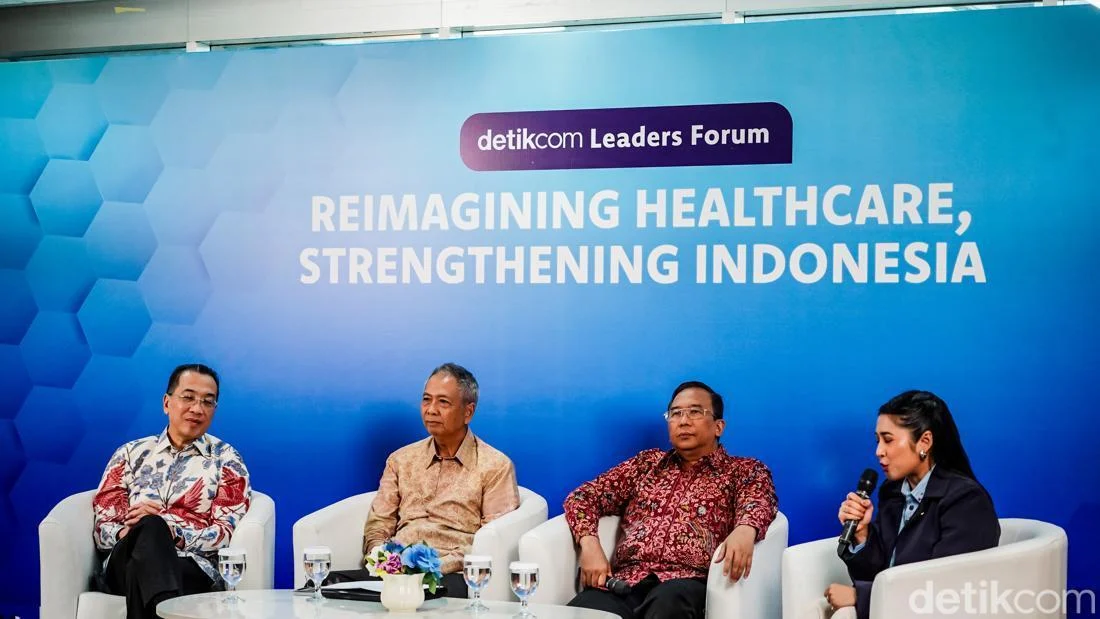
The landscape of Indonesian healthcare is undergoing a radical transformation as Siloam International Hospitals, one of the nation’s largest private healthcare providers, accelerates its transition toward a tech-driven model. By integrating artificial intelligence (AI) and robotic-assisted systems, the company aims to address systemic challenges such as a shortage of specialized medical professionals, escalating operational costs, and a significant outflow of domestic patients seeking medical treatment abroad.
This strategic pivot, announced during the recent detikcom Leaders Forum, represents an ambitious effort to redefine the concept of a "hospital of the future." With 41 hospitals under its management, Siloam is positioning itself to reclaim the trust of the Indonesian public, a segment that currently contributes to a massive annual capital outflow of approximately IDR 170 trillion (roughly USD 10.7 billion) to foreign healthcare providers.
The Catalyst: Addressing the Medical Deficit
The urgency behind Siloam’s digital transformation is rooted in sobering industry statistics. Indonesia continues to grapple with a disproportionate doctor-to-patient ratio. According to data from the Ministry of Health, the nation faces a deficit of specialists, particularly in specialized surgery, oncology, and advanced diagnostics. This shortage forces patients in remote regions—and even those in major urban centers—to look toward neighboring countries like Singapore and Malaysia, where medical infrastructure is perceived as more advanced and efficient.
David Utama, President Director of Siloam International Hospitals, emphasized that the current reliance on foreign healthcare is a symptom of a broader issue regarding patient trust and infrastructure capability. "If we do not innovate, we will be left behind by our neighbors. The IDR 170 trillion outflow is a staggering figure that highlights an opportunity for domestic providers to step up," Utama stated.
The strategy to bridge this gap is not merely through building more physical hospitals, but through a "leapfrog" approach. This involves bypassing traditional, slower methods of capacity building in favor of digital scalability, ensuring that high-quality, standardized care can be delivered consistently across the entire archipelago.
Chronology of the Digital Transformation
The path toward this digital revolution began in earnest at the start of 2026, when Siloam launched its Enterprise AI Foundation. This initiative was designed to solve a fundamental problem in the healthcare sector: fragmented, siloed data.
- Early 2026: Siloam initiates the Enterprise AI Foundation. The primary objective is to structure and integrate data across all 41 hospitals, moving away from legacy paper-based or disjointed electronic health records.
- 2024–2025 (Foundation Phase): Prior to the official AI rollout, the company spent two years centralizing its diagnostic data, specifically focusing on MRI imagery and migrating to cloud-based storage solutions to ensure seamless access for clinicians.
- November 2026 (Targeted Milestone): Completion of the core Enterprise AI Foundation. This will serve as the engine room for all subsequent AI applications.
- Post-November 2026: Implementation phase for the three pillars of AI—Patient Digital Twin, Doctor Digital Twin, and Hospital Digital Twin.
The Three Pillars of the Hospital of the Future
Siloam’s framework relies on three distinct pillars, each targeting a specific layer of the healthcare ecosystem. These pillars are designed to function as an interconnected nervous system, ensuring that data-driven insights translate into improved clinical outcomes.
1. Patient Digital Twin: Personalized Medicine
Unlike generic health applications, the Patient Digital Twin is an internal ecosystem developed specifically for Siloam’s patient demographic. It tracks a patient’s historical health data, genetic predispositions, and current treatment plans to create a real-time digital representation. This allows doctors to simulate treatment outcomes and predict potential health complications before they manifest, moving the healthcare model from reactive to proactive.
2. Doctor Digital Twin: Standardizing Excellence
Perhaps the most complex undertaking is the "Doctor Digital Twin." This initiative seeks to capture the expertise of top-tier specialists and digitize their decision-making processes. By creating a standardized framework for diagnosis and treatment protocols, Siloam aims to ensure that a patient in a smaller regional hospital receives the same quality of care as a patient in a flagship Jakarta facility. This does not replace the human element; rather, it provides a "consultant in the cloud" that supports medical staff in making evidence-based decisions.
3. Hospital Digital Twin: Operational Efficiency
The third pillar addresses the business side of medicine. The Hospital Digital Twin optimizes the "mechanics" of the hospital. This includes AI-driven rostering for nursing staff, automated scheduling for diagnostic equipment to minimize patient wait times, and predictive inventory management for pharmaceuticals and medical supplies. By reducing operational friction, Siloam expects to lower the cost of service delivery, ultimately making healthcare more affordable for the average Indonesian.
Expert Analysis: Implications for the Healthcare Industry
The move by Siloam serves as a bellwether for the private healthcare sector in Southeast Asia. Industry analysts suggest that the integration of AI in hospitals is no longer an optional luxury but a competitive necessity.
"The challenge for Siloam will be the integration and the cultural shift," says an independent health-tech consultant. "Digital transformation in healthcare is 20% technology and 80% change management. Getting medical professionals to trust and adopt AI-assisted tools requires rigorous training and transparent evidence that these tools actually improve outcomes."
Furthermore, the focus on data security and privacy cannot be overstated. As Siloam centralizes vast amounts of sensitive patient data, the company is expected to adhere to the highest global standards of cybersecurity and personal data protection, particularly in light of Indonesia’s Personal Data Protection (PDP) Law.
The Human-Technology Symbiosis
A recurring theme in Siloam’s messaging is the "Human-in-the-Loop" philosophy. There is a palpable concern among the public that automation might lead to cold, impersonal care. David Utama has been quick to address these fears, asserting that technology is meant to act as a force multiplier for the physician, not a replacement.
"The doctor remains the captain of the ship," Utama noted. "The AI provides the map, the weather report, and the engine diagnostics, but the doctor decides the route. By offloading administrative and analytical burdens to AI, we allow doctors to spend more time on what they do best: direct patient interaction and complex clinical judgment."
Looking Ahead: The Regional Competitive Landscape
Siloam’s ambition is to become a regional hub for medical tourism. By lowering costs and improving reliability, the company is positioning Indonesia to become a destination rather than a source of medical outbound traffic. The success of this strategy could influence government policy, potentially encouraging more public-private partnerships to digitize national health records and improve the overall resilience of the Indonesian health system.
As November 2026 approaches, the healthcare community will be watching closely. If the Enterprise AI Foundation delivers on its promises, Siloam could set a new benchmark for private hospitals in emerging markets, proving that advanced technology—when applied with a patient-centric focus—can bridge the gap between resource constraints and world-class care.
In the final analysis, the digital transition of Siloam International Hospitals is a vital component of Indonesia’s broader ambition to modernize its economy. By turning the tide on medical tourism and fostering an environment of technical excellence, the company is not only securing its future in the market but also contributing to the fundamental health security of the nation. The road ahead involves complex technical hurdles and the need for sustained investment, but the potential rewards—a more efficient, accessible, and reliable healthcare system—are far-reaching for millions of Indonesians.

