
The rapid integration of artificial intelligence (AI) and advanced robotics into Indonesia’s national healthcare system marks a pivotal shift in the country’s medical landscape. As hospitals across major metropolitan areas increasingly adopt cutting-edge diagnostic tools, automated surgical systems, and machine-learning algorithms to enhance patient care, healthcare leaders are confronting a critical reality: the digital health revolution risks deepening existing disparities between Java and the country’s outer islands. This technological leap forward, while promising unprecedented precision and efficiency, exposes profound infrastructural divides that policymakers, medical professionals, and private healthcare operators must urgently address to ensure equitable healthcare access for all citizens.
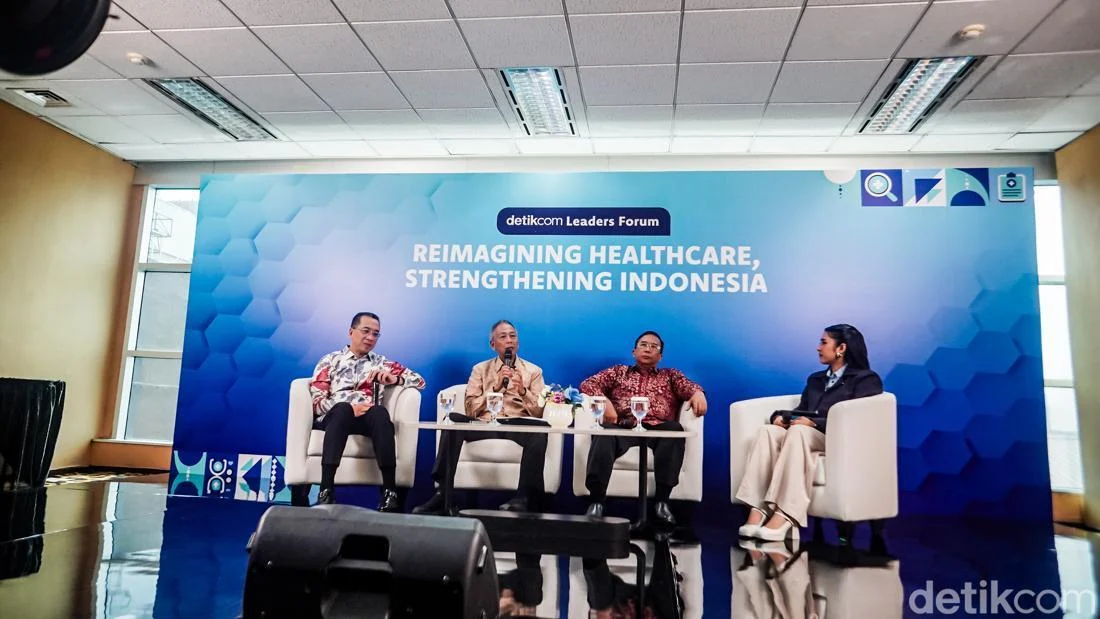
The discourse surrounding this digital transformation took center stage at the recent Leaders Forum talk show themed "Reimagining Healthcare, Strengthening Indonesia," held in Jakarta on Tuesday, October 27, 2026. The event brought together key stakeholders from government ministries, regulatory committees, and private hospital networks to debate the future of Indonesian medicine. Amid growing enthusiasm for smart hospitals and remote surgical procedures, experts cautioned that the excitement surrounding artificial intelligence must be tempered by a rigorous evaluation of foundational readiness, particularly in remote and underdeveloped regions.
The Urgent Need for Special Attention in Outer Java
Opening the discussion on infrastructural equity, Ir Tjahajana Wirakusumah, Chairman of the National Committee for Health Robotics Technology, emphasized that the deployment of high-tech medical machinery must not remain concentrated in urban centers like Jakarta, Surabaya, or Bandung. Facilities and systemic readiness outside the island of Java require exceptional, dedicated oversight to prevent a widening healthcare gap.
"We must acknowledge and ensure that regions outside Java require extra attention," Tjahajana stated during the panel discussion. His remarks underscored a persistent challenge in national development: the equitable distribution of modern amenities. While premier medical institutions in major cities boast state-of-the-art robotic surgery suites and AI-powered diagnostic imaging, regional hospitals often struggle with basic equipment maintenance, reliable power supplies, and specialized medical personnel. Without deliberate intervention, the integration of advanced technology threatens to create a two-tiered health system where advanced diagnostics are reserved for the urban elite, while rural populations continue to face foundational deficits.
Digital Infrastructure and Network Stability: A Matter of Life and Death
Echoing these logistical concerns, Dr. Azhar Jaya, Director General of Advanced Healthcare at the Indonesian Ministry of Health, delivered a stark warning regarding the perils of deploying sophisticated health technology without adequate underlying infrastructure. During his address, Dr. Azhar focused on the technical prerequisites for telehealth and teleoperation—systems that allow specialists in central hospitals to guide or even perform procedures on patients hundreds of kilometers away.
The primary bottleneck, according to the Ministry of Health, is not the sophistication of the hardware itself, but the reliability of the supporting digital ecosystem. Internet network stability and human resource preparedness are non-negotiable prerequisites.
"Imagine if we place a device in Papua, for instance, intending to utilize telehealth or teleoperation technology, only to discover that the internet connection remains unstable," Dr. Azhar explained. "Midway through a procedure, the network drops. This poses an extreme, life-threatening danger to the patient."
This sobering scenario highlights the technical chasm between conceptual medical innovation and practical field execution. Telemedicine and AI diagnostics rely heavily on seamless, high-bandwidth data transmission. In regions plagued by intermittent connectivity, rolling blackouts, or limited broadband penetration, advanced tools risk becoming liabilities rather than assets. Consequently, the Ministry of Health has advocated for a phased approach, where infrastructural fortification—including satellite internet redundancy and robust local server networks—precedes the installation of high-risk medical AI and robotics.
Private Sector Alignment and Network Standardization
Addressing the institutional response from the private healthcare sector, David Utama, President Director of Siloam International Hospitals, offered insights into how major hospital networks are restructuring to support this technological wave. Speaking on behalf of one of Indonesia’s largest private healthcare providers, Utama explained that the integration of advanced technology must be paired with comprehensive network standardization to elevate overall clinical quality.
The strategic push behind this transformation is multifaceted. Beyond adopting modern tools, healthcare providers aim to curb the massive capital flight of Indonesian patients traveling abroad—predominantly to Singapore, Malaysia, and Australia—for specialized medical care. By upgrading domestic capabilities through standardized, technology-driven care models, hospitals hope to instill confidence in the local populace.
"To achieve this, Siloam has undergone a massive transformation since last year, shifting from a regional operation model to an archetype model," Utama detailed. "We now operate across four distinct archetypes. Our primary focus is the premium specialist archetype, which concentrates heavily on developing specific centers of excellence."
This structural reorganization allows hospital groups to channel investments into specialized technological clusters—such as oncology, cardiology, and neurological robotics—rather than spreading resources thinly across all branches. By concentrating advanced AI and robotic assets within designated centers of excellence, institutions can maintain stringent quality controls, manage specialized talent more effectively, and ensure that complex procedures are performed in environments optimized for high-tech medical interventions.
Background Context: Indonesia’s Health Transformation Agenda
The current push toward AI and robotics in Indonesian hospitals does not occur in a vacuum. It is part of the Ministry of Health’s broader six-pillar health system transformation agenda, which was initiated in the wake of the COVID-19 pandemic. The transformation pillars encompass primary care, secondary care, health resilience system, health financing, health human resources, and health technology integration.
Over the past several years, the government has accelerated digitalization through platforms like SatuSehat, an integrated health data exchange system designed to unify patient medical records across public and private facilities nationwide. Artificial intelligence tools are increasingly being piloted within this framework, particularly in radiology (for tuberculosis and lung cancer screening) and primary care diagnostics. However, the integration of surgical robotics and real-time remote operations represents the bleeding edge of this transformation, raising the stakes for infrastructural compliance.
Fact-Based Analysis of Implications and Future Outlook
The convergence of artificial intelligence, robotics, and healthcare delivery in Indonesia presents a complex matrix of socio-economic and technical implications. A balanced examination of the current landscape reveals several critical trajectories for the near future:
1. Widening Clinical Disparities vs. Leapfrogging Potential
While experts rightly warn of the dangers of infrastructural inequality, proponents of health tech argue that mobile health and AI diagnostics offer an unprecedented opportunity to "leapfrog" traditional developmental stages. In areas lacking resident specialists, AI-assisted screening tools deployed at community health centers (Puskesmas) can theoretically triage patients faster and more accurately than general practitioners working unaided. However, realizing this potential requires massive public investment in last-mile connectivity, particularly across Indonesia’s eastern islands.
2. Regulatory and Ethical Oversight
The introduction of autonomous and semi-autonomous medical systems necessitates a rigorous overhaul of national medical regulations. Questions regarding liability in the event of an AI misdiagnosis or a teleoperated surgical failure remain legally ambiguous in Indonesia. Regulatory bodies, including the Indonesian Medical Council (KKI) and the Ministry of Health, face mounting pressure to establish clear ethical guidelines, certification protocols for robotic operators, and data privacy frameworks for cloud-stored patient metrics.
3. Human Capital Development
Technology cannot replace human expertise; rather, it amplifies it. A major bottleneck highlighted by both public and private health leaders is the shortage of medical personnel trained to operate, maintain, and interpret data generated by advanced AI and robotic systems. Medical education curricula in Indonesian universities must rapidly adapt to include digital health literacy, ensuring that the next generation of doctors and nurses are comfortable working alongside algorithmic assistants and precision hardware.
4. Economic Accessibility and Universal Health Coverage
High-tech medical interventions are inherently capital-intensive. As private hospital groups integrate premium robotic systems, policymakers must ensure that these innovations are integrated into the National Health Insurance (JKN) scheme managed by BPJS Kesehatan. Without public subsidization, advanced AI diagnostics and robotic surgeries risk remaining inaccessible to the broader population, thereby reinforcing healthcare stratification along economic lines.
Conclusion
The discourse at the Reimagining Healthcare forum encapsulates the dual nature of Indonesia’s medical evolution. The momentum behind artificial intelligence and robotics in hospitals is irreversible, driven by a desire for clinical excellence, reduced medical tourism, and global competitiveness. Yet, the warnings issued by figures like Ir Tjahajana Wirakusumah and Dr. Azhar Jaya serve as a vital reminder that technological sophistication must be anchored in infrastructural reality.
As Indonesia navigates the remainder of the decade, the success of its health transformation will not be judged solely by the presence of futuristic surgical robots in Jakarta’s glass-facade hospitals, but by the reliability of an internet connection in a remote clinic in Papua, the stability of power grids in outer islands, and the equitable delivery of life-saving care to every citizen, regardless of geography.

