
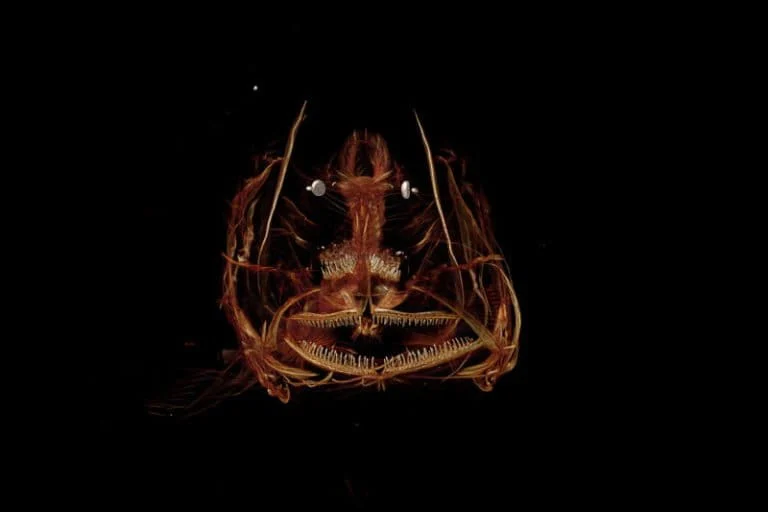
The discovery of life at depths exceeding eight kilometers has fundamentally reshaped biological oceanography, proving that the deepest reaches of our oceans are far from the desolate, barren voids once imagined by early twentieth-century scientists. Among the most remarkable inhabitants of these extreme environments is the Mariana snailfish (Pseudoliparis swirei), a creature characterized by its ethereal, translucent appearance, which thrives in the crushing pressures of the Mariana Trench in the western Pacific Ocean.
Scientific Discovery and Classification
The formal introduction of Pseudoliparis swirei to the global scientific community occurred in 2017. This milestone was the culmination of rigorous analysis involving multiple specimens collected from the Hadal zone—the deepest part of the ocean, ranging from 6,000 to 11,000 meters. Researchers meticulously examined the morphology, skeletal structure, soft tissues, egg development, and genomic data of these specimens to distinguish them from other liparid species.
The Mariana snailfish is typically found at depths ranging from 6,900 to over 8,000 meters. In these regions, the hydrostatic pressure is more than 800 times greater than that found at sea level—a force equivalent to having an elephant stand on one’s thumb. Despite these conditions, the species has carved out a successful ecological niche, thriving where most known vertebrate life would be instantly crushed.
Morphological Adaptations to Extreme Pressure
To the untrained eye, the Mariana snailfish appears fragile. Its pale, gelatinous body bears a striking resemblance to a tadpole, with skin so transparent that the internal organs and delicate skeletal structures are visible beneath the surface. This appearance is a stark departure from the common perception of deep-sea predators, which are often depicted in popular culture as armored, sharp-toothed monsters.
However, the "fragility" of the Mariana snailfish is a masterful evolutionary adaptation. Instead of possessing rigid, calcified skeletons—which would be brittle and prone to shattering under extreme pressure—these fish have evolved partially cartilaginous skeletons that remain flexible. They lack a gas-filled swim bladder, a common feature in shallow-water fish that would implode at such depths. Furthermore, their musculature is thin and highly specialized, and their cellular membranes are fluid and adaptable, preventing the structural failure that would occur in surface-dwelling organisms.
Genomic analysis has revealed specific mutations related to protein stability, vision, and pigmentation. These adaptations allow the fish to function in absolute darkness and maintain cellular homeostasis despite the surrounding environmental stress. They are not merely surviving; they are the apex predators of their immediate micro-ecosystem, efficiently hunting small crustaceans that are also adapted to the Hadal environment.
The Chronology of Deep-Sea Exploration
The history of deep-sea exploration is marked by a steady progression of technological capability. For decades, the deepest parts of the ocean were considered inaccessible.
- 1960: The Bathyscaphe Trieste reached the bottom of the Challenger Deep, providing the first human visual confirmation of life in the deepest parts of the ocean.
- 2014: Scientists began deploying sophisticated landers and cameras, leading to a surge in data regarding Hadal biodiversity.
- 2017: The formal description of Pseudoliparis swirei provided a benchmark for what a vertebrate could look like at extreme depths.
- 2023: A significant development occurred when a research team recorded a snailfish from the genus Pseudoliparis at an unprecedented depth of 8,336 meters in the Izu-Ogasawara Trench near Japan.
While the 2023 discovery holds the current record for the deepest documented fish, the specific identity of that specimen remains under investigation. Consequently, the Mariana snailfish remains the most significant and well-studied reference point for deep-sea fish biology. These milestones reflect a broader shift in marine science, moving from exploratory observation to detailed physiological and genetic study.
The Physiological Limit of Fish
Biologists have long debated whether there is a physical "ceiling" to how deep a fish can exist. Recent research suggests that the boundary lies between 8,200 and 8,400 meters. This limit is dictated by the chemical properties of biological molecules.
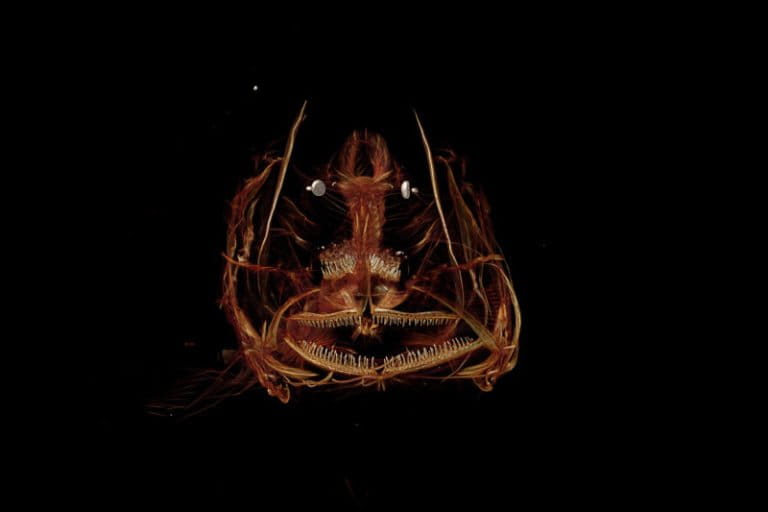
At depths exceeding 8,400 meters, the pressure becomes so great that the chemical compounds responsible for maintaining protein stability—specifically a substance known as trimethylamine N-oxide (TMAO)—reach a saturation point. TMAO acts as a piezolyte, a small molecule that protects proteins from being crushed by pressure. If a fish were to dive deeper than this physiological limit, its proteins would lose their structural integrity, and cellular fluids would become toxic. This explains why, despite the vastness of the Hadal trenches, fish are rarely observed in the deepest trenches, which can reach nearly 11 kilometers.
Methodologies of the Abyss
Studying the Mariana snailfish presents immense logistical challenges. Researchers utilize autonomous landers equipped with high-definition cameras, LED lighting, and baited traps. Because these devices must descend through thousands of meters of water, the transit time to the ocean floor can exceed four hours.
Upon reaching the seabed, the equipment must withstand the same crushing pressures as the fish. Observations from these missions have revealed that the Mariana snailfish is surprisingly active. Rather than being sluggish or energy-deprived, they are constant foragers. In the Hadal zone, the availability of food—often in the form of falling organic detritus or swarms of small crustaceans—is concentrated enough to support these populations, while the lack of large, competing predators allows them to flourish.
Implications for Marine Conservation and Evolution
The study of the Mariana snailfish offers vital insights into the evolutionary resilience of life. By understanding how these organisms have modified their fundamental biological processes, scientists are gaining a clearer picture of how life might adapt to extreme environments elsewhere in the universe, such as the subsurface oceans of icy moons like Europa or Enceladus.
Furthermore, the discovery of such biodiversity in the deepest parts of the ocean serves as a sobering reminder of the interconnectedness of global ecosystems. While these regions appear isolated, they are susceptible to the impacts of human activity, including climate change and the accumulation of pollutants. Plastics and chemical contaminants have been found in the tissues of organisms in the deepest trenches, highlighting the global reach of human industrial output.
Expert Perspectives
Marine biologists involved in the study of the Hadal zone often emphasize that we have explored less than five percent of the deep ocean. "Every time we drop a camera into a new trench, we are essentially looking into an alien world," noted a researcher associated with the University of Washington’s deep-sea initiatives. The consensus among the scientific community is that the Mariana snailfish is merely the tip of the iceberg regarding the biodiversity of the Hadal zone. Ongoing efforts to map the seafloor and conduct deep-sea biological surveys are considered essential to maintaining a comprehensive understanding of Earth’s biological heritage.
Broader Impact on Ocean Science
The existence of the Mariana snailfish forces a revision of the "barren desert" hypothesis regarding the deep ocean. It demonstrates that life is not just a passive participant in these environments but an active driver of the ecosystem. The fish play a critical role in the nutrient cycle of the deep ocean, consuming localized prey and facilitating the flow of energy in an otherwise lightless world.
As technology improves, allowing for longer-duration observations and better sampling techniques, the scientific community anticipates the discovery of even more specialized organisms. The Mariana snailfish remains a flagship species—a testament to the fact that evolution, given sufficient time and unique environmental pressures, can produce biological solutions that challenge our very definitions of life’s limits.
In conclusion, the Mariana snailfish stands as a beacon of discovery. It bridges the gap between the known biology of the surface and the mysterious, pressurized frontiers of the abyss. As we look toward the future of deep-sea exploration, the lessons learned from this translucent inhabitant of the Mariana Trench will undoubtedly serve as the foundation for new inquiries into the resilience of life on Earth and beyond. The ocean, it seems, still has many secrets to reveal, and the deep-dwelling snailfish is leading the way in showing us how life finds a way to exist in the most inhospitable corners of our planet.

