
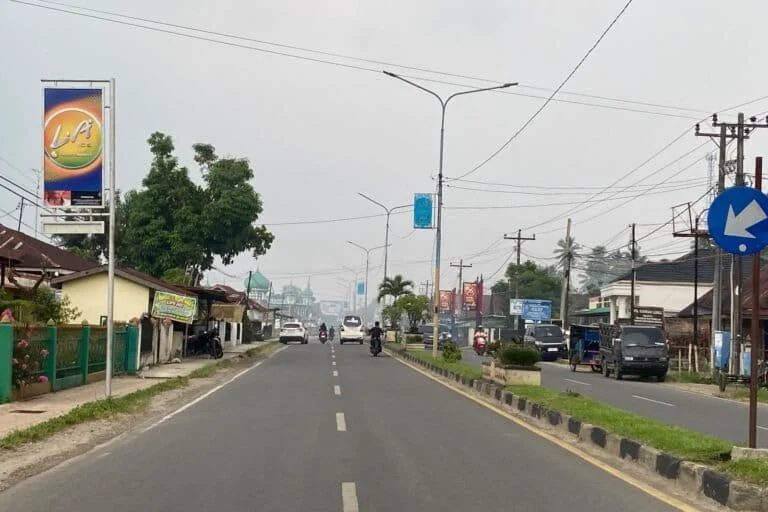
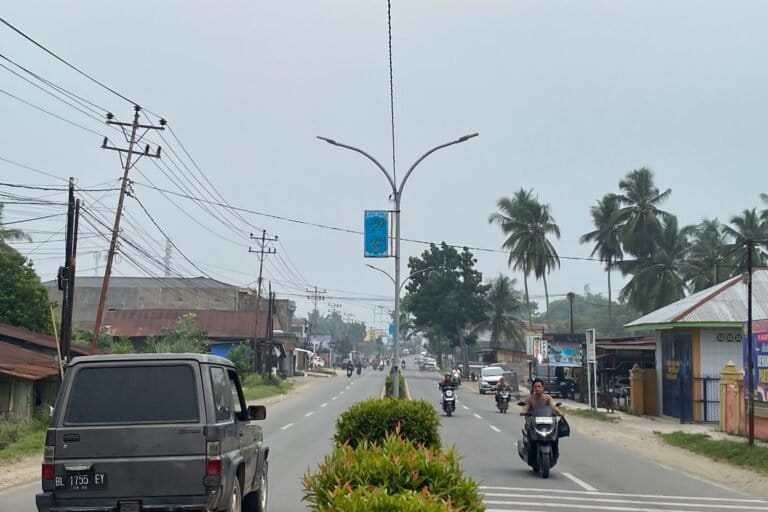
A suffocating blanket of toxic haze has descended upon North Sumatra, forcing regional authorities to implement emergency measures as air quality levels plummet to hazardous thresholds. The crisis, driven by transboundary air pollution, has placed over 13 million residents at risk, with the most vulnerable—children, the elderly, and women—bearing the brunt of the atmospheric degradation. While North Sumatra claims to have successfully contained its own local fire outbreaks, the province has become a victim of its geography, acting as a basin for smoke plumes carried by prevailing winds from southern Sumatra and Kalimantan.
The current environmental emergency highlights a systemic failure in regional fire management and the persistent challenge of transboundary haze in Southeast Asia. With approximately 85% of North Sumatra’s 15.8 million residents falling into high-risk categories, the socioeconomic fabric of the province is under immense strain. Schools have been shuttered, air travel has been disrupted, and the regional economy is facing a significant contraction as outdoor activity grinds to a halt.
Chronology of the Crisis and Meteorological Drivers
The escalation of the haze began in early October 2026, as shifting wind patterns from the east and southeast funneled high-density particulate matter into the northern tip of Sumatra. By mid-October, the concentration of PM2.5—fine particulate matter capable of entering the bloodstream—reached levels deemed unsafe by health standards.
According to Hendro Nugroho, Head of the Meteorology, Climatology, and Geophysics Agency (BBMKG) Region I Medan, the haze is not a local phenomenon. Monitoring data confirms that the pollutants are "imported" from large-scale land and forest fires (karhutla) occurring in the southern reaches of the island and the Indonesian portion of Borneo. Despite North Sumatra’s official stance that it has been free of fire hotspots for over six weeks, the atmospheric conditions have left the province at the mercy of external environmental mismanagement.
On October 16, 2026, the provincial government initiated a decisive response: an aerial cloud-seeding operation. Governor Muhammad Bobby Afif Nasution authorized the deployment of Cessna aircraft from the Kualanamu International Airport cargo terminal to trigger artificial rainfall. This intervention, while technically challenging due to the specific requirement of moisture-rich cloud formations, aims to wash away the pollutants hovering over Medan, Binjai, and Deli Serdang before expanding to other affected regencies.
Demographic Vulnerability and Public Health Implications
The scale of the crisis is magnified by the region’s demographic composition. Data from the 2025 Inter-Census Population Survey (SUPAS) reveals that the population includes 4.2 million children under the age of 15, 7.9 million women, and 1.58 million elderly citizens. For these groups, the prolonged exposure to smoke is not merely an inconvenience but a grave health threat.
Medical experts warn that the ongoing inhalation of PM2.5 causes immediate and long-term complications. For the elderly, the pollution exacerbates pre-existing chronic conditions such as asthma, bronchitis, and cardiovascular disease. For children, whose respiratory systems are still in the developmental stage, the damage may be permanent, potentially leading to impaired lung function in adulthood.
Debora Boru Sihite, a 61-year-old resident of North Tapanuli, reflects the frustration of the average citizen. Forced to remain indoors and divert limited financial resources toward masks and medication, she echoes a growing sentiment of resentment toward the lack of accountability for the corporations behind the original fires. "The government must be firm in cracking down on the corporations that destroy our forests for profit," she stated. "They enrich themselves at the expense of our health and the development of our rural communities."
Socioeconomic and Cultural Disruption
The haze has acted as a silent inhibitor of commerce and social life. In Medan and surrounding regencies like Karo, Toba, and Mandailing Natal, the mandatory closure of schools has disrupted the education cycle, while the fear of health complications has emptied marketplaces and retail centers.
The tourism sector, a cornerstone of the North Sumatra economy, has suffered a severe blow. The Lake Toba region, a primary destination for both domestic and international visitors, has seen a sharp decline in foot traffic. The cancellation of traditional and cultural ceremonies, which often occur in open-air venues, has further eroded the social cohesion of local communities, leaving residents feeling isolated and anxious about the future.
Ecological Devastation and the Threat to Biodiversity
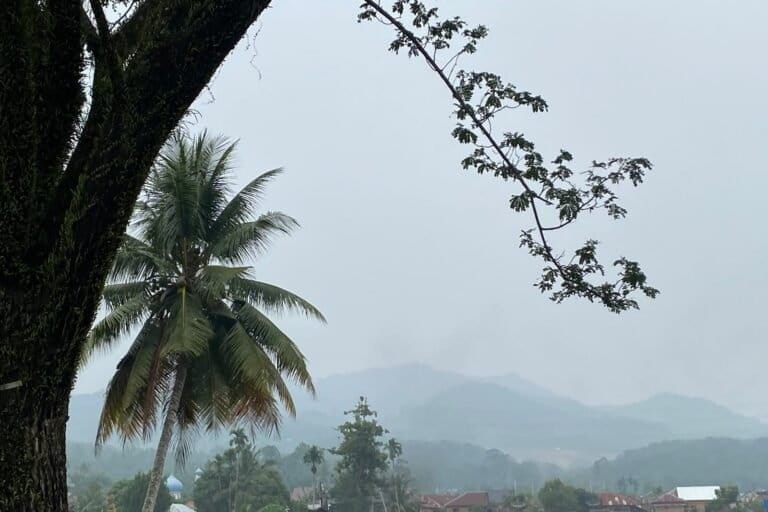
Beyond human health, the haze has cast a dark shadow over the province’s rich biodiversity. North Sumatra serves as a vital refuge for endangered species, including the critically endangered Tapanuli orangutan (Pongo tapanuliensis) in the Batang Toru ecosystem.
Researchers from the group for Madina have expressed grave concerns regarding the impact of particulate matter on wildlife. In the Batang Gadis National Park, the silence of the forest is palpable. The smoke has disrupted the natural behaviors of arboreal species, including various primates, which are now forced to consume food sources coated in toxic ash.
"The song of the Pongo tapanuliensis and the calls of the forest birds are key indicators of forest health," noted Azura Borotan, a researcher with for Madina. "This pollution is a poison that weakens the immune systems of these endemic animals, effectively threatening the long-term viability of their populations."
Furthermore, in areas like Labuhanbatu Utara and Labuhanbatu Selatan, the falling ash and smoke particles are settling into water bodies, altering the pH levels of aquatic ecosystems. This chemical shift threatens to destabilize the food chain, affecting birds and fish that have thrived in these environments for millennia.
Policy Gaps and Future Outlook
The current crisis highlights a recurring failure in Indonesia’s environmental policy: the inability to coordinate fire suppression across provincial lines. While the North Sumatra government is currently taking reactive measures—such as cloud seeding and school closures—the root cause remains an external, systemic issue of land clearing and inadequate corporate oversight in the southern provinces.
Critics argue that current government efforts to blame traditional agricultural practices often mask the deeper, more significant role played by large-scale industrial plantations. The shift toward a more sustainable landscape requires a transition from reactive emergency response to proactive landscape management, including stricter enforcement of the "no-burn" policy and international cooperation to manage transboundary haze.
As the smoke persists, the people of North Sumatra are left to navigate a precarious reality. The economic burden of the haze—increased medical expenses, lost labor productivity, and damaged tourism revenue—will likely be felt for months to come. Meanwhile, the ecological scars left on the Batang Toru and Batang Gadis ecosystems may take years to heal.
The challenge for the administration of Governor Bobby Nasution and the central government is to move beyond temporary fixes. Ensuring that the sky over North Sumatra remains clear requires a comprehensive strategy that prioritizes the health of its citizens and the preservation of its natural heritage over the interests of industries that continue to view forest fires as an acceptable cost of doing business. Without a fundamental shift in how forests are managed and how corporate accountability is enforced, the cycle of smog will likely continue to haunt the region in seasons to come.
As the air remains heavy with the scent of smoldering timber, the residents of North Sumatra continue their wait for the rain—a meteorological solution to a man-made catastrophe. Until the fire suppression efforts in the south yield results, the region remains in a state of suspended animation, waiting for the return of the clear blue skies that are essential for the survival of both its people and its unique wildlife.

