
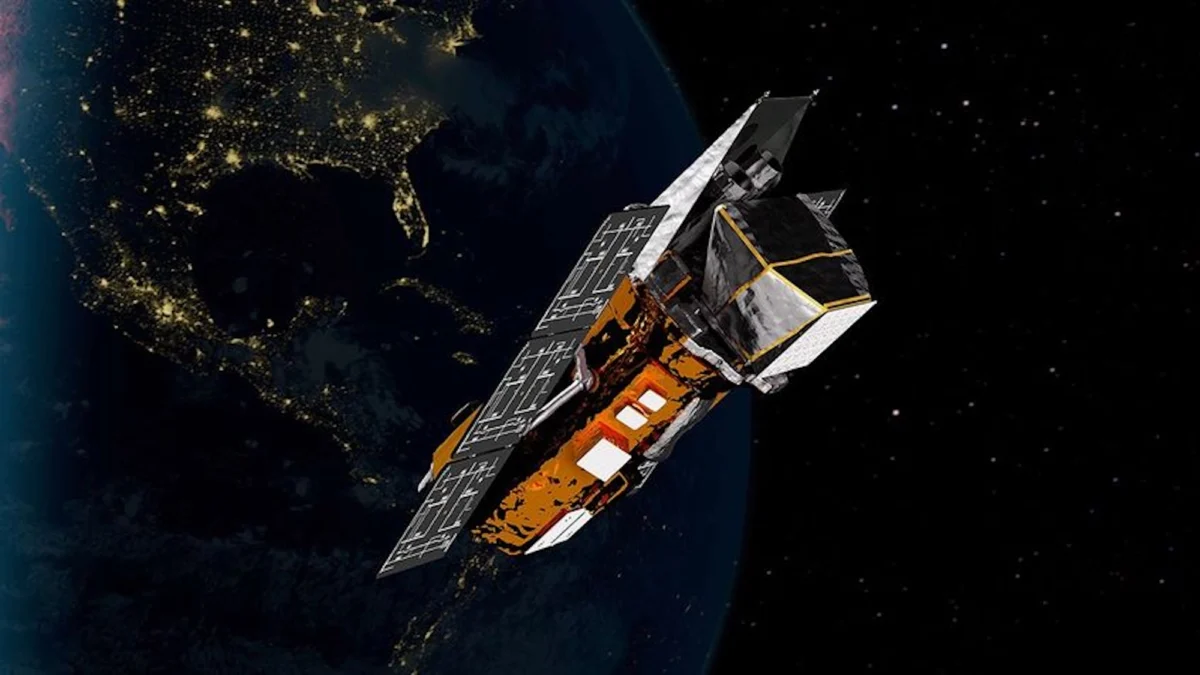
The Neil Gehrels Swift Observatory, a cornerstone of high-energy astrophysics for over two decades, has concluded its remarkable journey through the cosmos. On November 4, 2026, at approximately 7:39 a.m. EST, the 2,500-pound spacecraft re-entered Earth’s atmosphere, ending a mission that far exceeded its original operational expectations. According to the United States Space Force, which monitored the orbital decay, the re-entry occurred over the North Sumatra region of Indonesia. While NASA officials confirmed that the majority of the satellite’s structure disintegrated due to the intense friction and heat generated during its descent, the agency noted that minor debris may have reached the surface, though the likelihood of impact in populated areas remained negligible.
This event marks the final chapter for a satellite that became synonymous with the study of the universe’s most violent phenomena. Launched in November 2004, the Swift Observatory was initially designed for a two-year mission to solve the mystery of gamma-ray bursts (GRBs)—intense, short-lived flashes of radiation occurring in distant galaxies. Instead, it became a permanent fixture in the astronomical community, evolving into a multi-purpose tool that fundamentally changed our understanding of the transient sky.
A Chronology of Discovery: From Launch to Legacy
The lifecycle of the Swift Observatory was defined by its agility and responsiveness. Unlike many space-based observatories that focus on a single patch of sky, Swift was engineered to autonomously pivot its three onboard instruments—the Burst Alert Telescope (BAT), the X-ray Telescope (XRT), and the Ultraviolet/Optical Telescope (UVOT)—toward a target within seconds of detecting a GRB.
- 2004: Swift launches from Cape Canaveral, marking the start of its mission to study gamma-ray bursts.
- 2005–2010: The observatory begins a prolific period of data collection, identifying the afterglows of GRBs and establishing the connection between these bursts and the collapse of massive stars.
- 2011–2017: Swift expands its portfolio, beginning systematic surveys of the sky in X-ray and ultraviolet wavelengths, contributing significantly to the study of active galactic nuclei and supernova remnants.
- 2018: The observatory is renamed in honor of Neil Gehrels, a pioneering astrophysicist and the mission’s principal investigator, who passed away in 2017.
- 2026 (July): NASA and the private firm Katalyst attempt a robotic mission to boost the observatory into a higher orbit, but the rescue vehicle suffers a catastrophic malfunction, sealing the telescope’s fate.
- 2026 (November): Swift completes its final orbit, undergoing atmospheric re-entry over Indonesia.
Unprecedented Scientific Contributions
The scientific output of the Swift mission is measured not just in years, but in the sheer volume of data integrated into global research. Over the course of 22 years, the telescope cataloged more than 2,000 gamma-ray bursts and provided high-resolution data on over 1,400 supernovae. Its ability to capture "multiwavelength" data—observing the same event in gamma, X-ray, and optical light simultaneously—provided astronomers with a complete picture of cosmic explosions that had previously been obscured by incomplete data.
Perhaps most notably, Swift excelled at observing "tidal disruption events," where a star wanders too close to a supermassive black hole and is shredded by tidal forces. By monitoring the resulting X-ray flares, researchers were able to calculate the mass of distant black holes with unprecedented accuracy. Furthermore, in its twilight years, the telescope provided crucial observations of the interstellar object 3I/ATLAS, proving that even as it neared its end, the observatory remained a vital asset for solar system and deep-space research.
The data repository created by Swift serves as the foundation for approximately 7,000 peer-reviewed scientific papers. This translates to an average of six papers published every week for over two decades—a testament to the telescope’s enduring relevance.
The Failed Rescue and Institutional Response
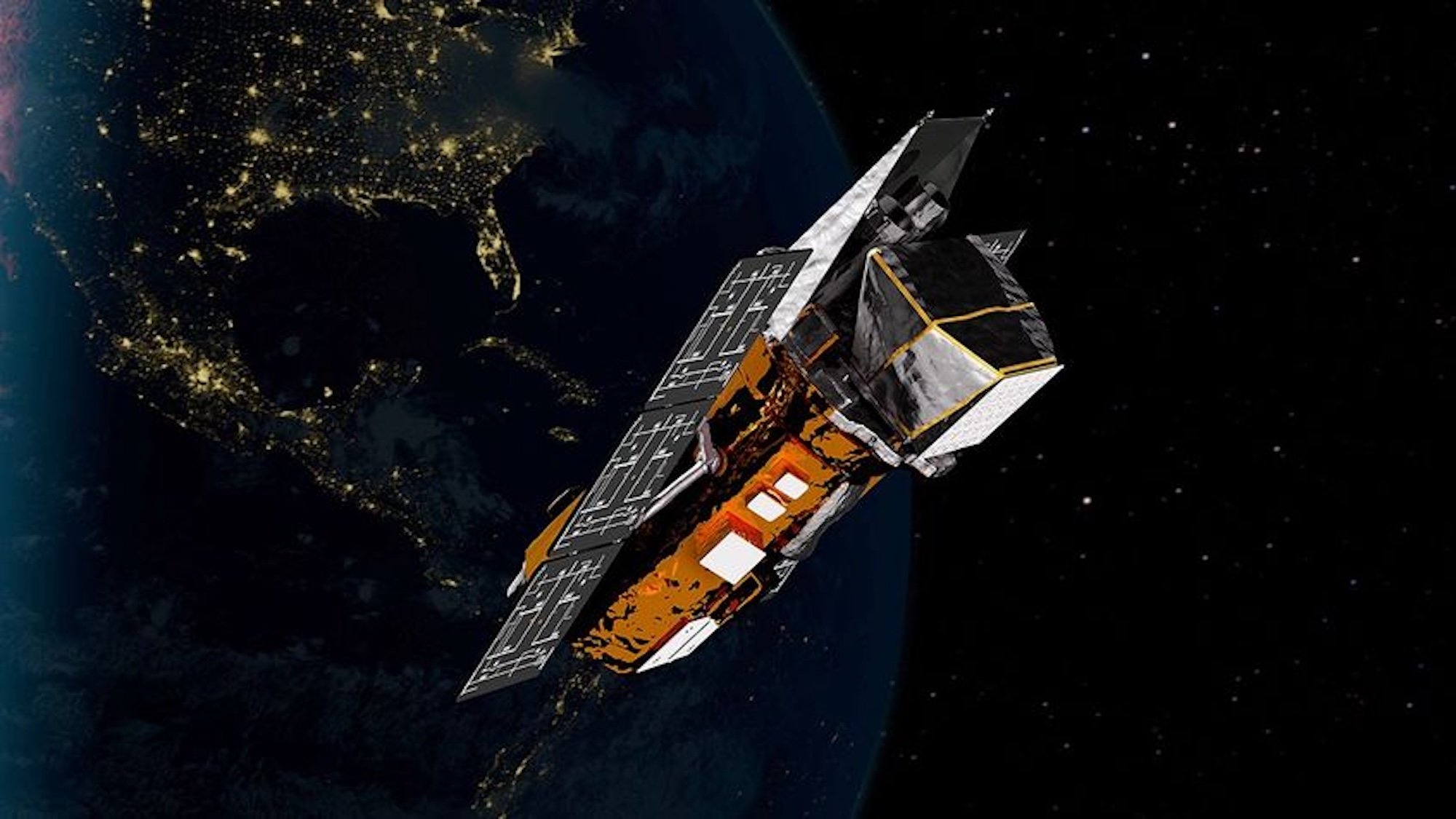
The final months of the mission were characterized by a desperate, high-stakes attempt to extend the observatory’s life. In July 2026, NASA partnered with Katalyst, a commercial space services provider, to deploy a robotic "tug" designed to rendezvous with Swift and boost its orbital altitude. This was intended to mitigate the natural orbital decay caused by atmospheric drag, a constant challenge for satellites in low-Earth orbit.
The project, which would have been a landmark for the future of in-orbit satellite servicing, suffered a critical technical failure during the transit phase. The failure of the robotic interceptor forced NASA to terminate the rescue effort. John Nousek, a professor at Pennsylvania State University and the lead for the Swift mission’s science operations, noted the inevitability of the situation. "We’ve known this day would come since before Swift was launched," Nousek stated. "At least in low-Earth orbit, what goes up must come down. And that end is catastrophic."
NASA’s leadership expressed gratitude for the dedicated team that maintained the spacecraft long past its expected retirement date. Shawn Domagal-Goldman, director of NASA’s Astrophysics Division, emphasized that the data collected by the satellite is effectively "timeless." He noted that the archives will continue to be a primary source for researchers studying the evolution of the universe for many decades to come.
Implications for Future Astrophysics
The re-entry of the Swift Observatory provides a sobering reminder of the finite nature of space infrastructure. As the number of objects in low-Earth orbit increases, the management of retired satellites—a process known as "de-orbiting"—is becoming a central concern for space agencies worldwide. Swift’s safe re-entry, while planned, highlights the importance of satellite design that ensures complete burn-up upon atmospheric entry to prevent surface damage.
Beyond the technical aspects of the mission’s end, the loss of Swift leaves a void in the global astrophysics community. While newer observatories are currently in development, the specific suite of instruments on Swift—particularly its ability to react autonomously to transient events—remains a benchmark for future mission planning.
The legacy of the Neil Gehrels Swift Observatory is not merely in the hardware that burned in the upper atmosphere, but in the paradigm shift it initiated. By turning the telescope into a responsive, real-time "alert" system, the mission transformed astronomy from a discipline of retrospective observation into a field of proactive, real-time exploration. The data harvested by Swift will continue to fuel discoveries, challenge existing cosmological models, and inspire the next generation of space telescopes that will eventually replace the "tenacious" observatory that spent over two decades keeping watch over the violent, shifting edges of our universe.

