
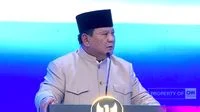
President Prabowo Subianto has issued a stern condemnation regarding the persistence of the "Indonesia Gelap" (Dark Indonesia) narrative, labeling it as a malicious political construct designed to undermine national stability. Speaking at the 15th-anniversary celebration of the NasDem Party in Jakarta on Wednesday evening, November 11, 2026, the President asserted that the architects behind these narratives have been identified, emphasizing that such rhetoric transcends legitimate political opposition and enters the realm of state sabotage.
The Context of the Indonesia Gelap Narrative
The term "Indonesia Gelap" emerged as a recurring theme in domestic political discourse, particularly within social media spheres and among certain opposition circles. The narrative suggests that the nation is spiraling into a state of economic despair, institutional collapse, and widespread social unrest under the current administration.
During his address, President Prabowo drew a sharp distinction between democratic critique and what he termed "malicious agitation." According to the President, while criticism of his personal performance or policy decisions is a fundamental component of the democratic process, the dissemination of doomsday scenarios—specifically those implying that the state is on the brink of chaos—poses a tangible threat to national security.
"If you wish to criticize me, calling me incompetent or questioning my policies, that is the essence of political rivalry. It is part of the game," Prabowo stated. "But to broadcast that ‘Indonesia is dark,’ to claim ‘Indonesia is in chaos,’ and to actively incite unrest, including the destruction of government infrastructure funded by the people’s taxes—that is not politics. That is evil."
Chronology of Escalating Rhetoric
The political climate leading up to this statement has been marked by a series of incidents that the administration views as coordinated efforts to destabilize the country.
- Mid-2026: Initial reports of "Indonesia Gelap" hashtags began trending on various social media platforms, often accompanied by misinformation regarding the state of the national budget and foreign debt sustainability.
- Late Q3 2026: Minor incidents of civil unrest occurred in several urban centers. While these were localized, they were framed by certain online influencers as the beginning of a nationwide uprising.
- October 2026: Several instances of vandalism targeting public service buildings were reported, sparking an investigation by law enforcement agencies into the coordination of these acts.
- November 11, 2026: President Prabowo’s address at the NasDem anniversary serves as the government’s strongest response to date, signaling a shift from ignoring these narratives to actively confronting their sources.
Economic and Security Implications
The concern expressed by the President is not merely rhetorical; it has measurable implications for Indonesia’s macroeconomic stability. Political stability is a cornerstone of the country’s Foreign Direct Investment (FDI) strategy. When narratives suggesting systemic collapse gain traction, they can lead to capital flight, currency volatility, and an increase in risk premiums for government bonds.
Data from the Indonesian Ministry of Finance and the central bank (Bank Indonesia) suggests that while the economy faces global headwinds—including fluctuating commodity prices and inflationary pressures—the fundamental indicators remain resilient. The GDP growth rate has held steady in the 5% range, and the debt-to-GDP ratio remains well within the legally mandated limit of 60%.
Economic analysts argue that the "Indonesia Gelap" narrative acts as a "self-fulfilling prophecy" if it discourages investors. By systematically painting the nation as unstable, those who propagate these views may inadvertently damage the very economic foundations they claim to represent.
The Moral and Ethical Dimension
President Prabowo anchored his rebuttal in both moral and cultural frameworks. By invoking the Quranic verse shiratal mustaqim (the straight path), he called for a return to ethical political conduct. Furthermore, he utilized the Javanese proverb “sing becik ketitik, sing ala ketara,” which translates to "the good will be noted, and the evil will eventually be revealed."
This cultural appeal serves two purposes: it positions the President as a leader committed to transparency and righteousness, and it serves as a warning to those behind the smear campaigns that their identities and motivations are known to intelligence and security services. The implication is that the government is closely monitoring the nexus between online agitation and physical acts of sabotage.
Official Responses and Political Reactions
The NasDem Party, as the host of the event, has historically navigated a complex position within the government coalition. By inviting President Prabowo to speak at their 15th anniversary, the party signaled a reaffirmation of its commitment to the current administration’s stability.
Other political figures and coalition members have largely echoed the President’s sentiments. Legal experts and civil society leaders have also noted that while freedom of speech is protected under the Indonesian Constitution, it does not extend to the incitement of violence or the destruction of public property. The government’s focus on the "criminalization" of the narrative suggests that law enforcement agencies may soon move to prosecute individuals found to be organizing or funding these efforts.
The Road Ahead: Transparency and Communication
The challenge for the Prabowo administration moving forward is to combat these narratives without infringing upon the democratic rights of its citizens. The administration is reportedly looking at a two-pronged strategy:
- Strategic Communication: Increasing the frequency of data-driven reports to the public to debunk misinformation regarding the national economy and state security.
- Law Enforcement: Utilizing existing Electronic Information and Transactions (ITE) laws to address instances of malicious disinformation that incite physical violence.
The President’s direct address indicates that the era of passive engagement with such narratives has ended. By naming the existence of "bad actors," the administration is shifting the discourse toward accountability. The success of this strategy will depend on the government’s ability to prove its claims of coordination and ensure that its actions are perceived as protecting the public interest rather than suppressing legitimate dissent.
As Indonesia navigates the remainder of the year, the tension between political rivalry and national stability will remain a critical metric for the country’s development. President Prabowo’s message is clear: the path forward for Indonesia requires a shared commitment to the "straight path" of constructive engagement, and those who seek to illuminate the nation’s future by burning its foundations will be met with the full force of the law.
Ultimately, the confrontation over the "Indonesia Gelap" narrative is a reflection of a maturing, yet fragile, democracy. As the nation approaches the end of 2026, the ability of the political establishment to distinguish between honest criticism and calculated subversion will be a definitive test of the stability of the current political order. Whether the "truth" mentioned by the President will indeed reveal itself in the coming months remains to be seen, but the warning has been delivered with undeniable gravity.

