
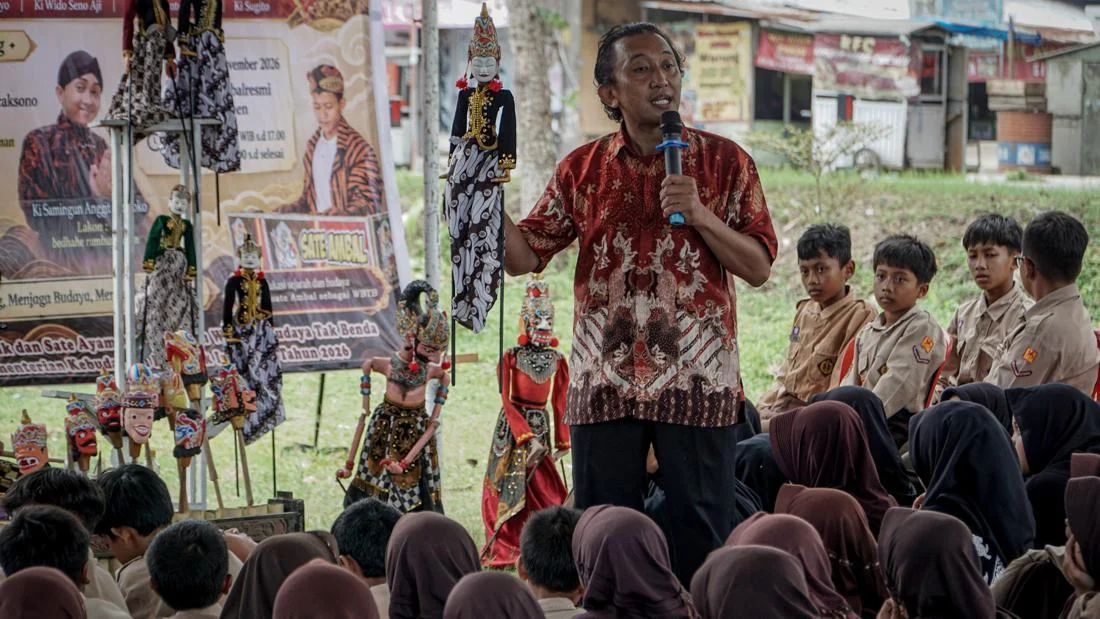
In an ongoing effort to safeguard Indonesia’s rich intangible cultural heritage, a dedicated educational initiative focusing on Wayang Golek Menak was recently convened in Kebumen, Central Java. The program, designed to introduce the historical significance and profound cultural values of the wooden puppet art form to younger generations, comes at a critical juncture for traditional performing arts in Southeast Asia’s largest economy. As modernization and digital media increasingly capture the attention of contemporary youth, local cultural custodians, educators, and regional authorities have intensified their collaborative efforts to ensure that classical art forms such as Wayang Golek Menak not only survive but remain relevant in the twenty-first century.
The comprehensive educational event in Kebumen featured interactive workshops, live demonstrations by master dalangs (puppeteers), and historical seminars detailing the unique origins of the Menak puppet tradition. By engaging students, local community members, and cultural enthusiasts directly, the program aimed to demystify the complex narratives associated with the craft, transforming passive spectators into active participants in cultural preservation.
Main Facts of the Cultural Initiative
The educational program in Kebumen centered specifically on Wayang Golek Menak, a distinct variant of the traditional Sundanese and Javanese rod puppet theater. Unlike the more commonly known Wayang Purwa—which draws its storylines from the Hindu epics the Mahabharata and the Ramayana—Wayang Golek Menak derives its narrative universe from the Serat Menak, a literary cycle inspired by the Arabic epic Amir Hamza. The stories traditionally chronicle the heroic adventures of Amir Hamza, an uncle of the Prophet Muhammad, as he spreads Islamic teachings and fights mythical and political adversaries across various distant lands.
The primary objective of the Kebumen initiative was twofold: to provide historical and philosophical education regarding the syncretic roots of the art form, and to offer hands-on technical training in the manipulation, carving, and painting of the wooden puppets. Organizers structured the event to appeal to a broad demographic, placing particular emphasis on school-aged children and adolescents who represent the future custodians of Indonesian heritage. Through close-up interactions with master artisans and puppeteers, attendees gained a deeper appreciation for the intricate craftsmanship required to construct a single puppet, as well as the vocal dexterity and narrative pacing demanded of a professional dalang.
Historical Context and Background of Wayang Golek Menak
To fully understand the significance of the educational program in Kebumen, it is essential to examine the historical trajectory of Wayang Golek Menak within the archipelago. The tradition dates back centuries, evolving as Islam spread throughout Java and intermingled with pre-existing indigenous belief systems and Hindu-Buddhist artistic traditions. Cultural historians note that local rulers and religious scholars utilized storytelling mediums like the Serat Menak to impart moral lessons, spiritual values, and historical consciousness to the populace in an engaging, accessible format.
Over generations, the craft of carving three-dimensional wooden puppets (golek) flourished in specific cultural hubs across West and Central Java, including regions like Kebumen, Cirebon, and Bandung. Each region developed distinct aesthetic characteristics, ranging from the shape of the headdresses and facial expressions to the ornate detailing of the traditional costumes (wadana and tasik). However, despite its historical prominence, Wayang Golek Menak has faced severe structural pressures in recent decades. The rise of global entertainment platforms, changing lifestyle preferences, and the economic vulnerabilities of traditional artisans have threatened to sever the intergenerational transmission of knowledge that keeps the art form alive.
Chronology of the Educational Event
The implementation of the Kebumen Wayang Golek Menak educational program followed a carefully structured multi-stage timeline designed to maximize community engagement and educational impact.
Planning for the initiative began several months prior to the main event, involving consultations between regional cultural bureaus, local educational institutions, and veteran practitioners of the art. Organizers conducted preliminary surveys in local schools to gauge student familiarity with traditional puppetry and to tailor the curriculum accordingly.
The main event unfolded over a intensive three-day schedule:
- Day One: Historical Symposium and Exhibition. The opening phase brought together historians, cultural anthropologists, and educators to discuss the literary roots of the Serat Menak and its socio-cultural evolution in Central Java. An accompanying exhibition showcased vintage puppets, rare manuscripts, and traditional gamelan instruments used in musical accompaniment.
- Day Two: Masterclasses and Technical Workshops. The second day shifted focus to the practical mechanics of the art. Master carvers demonstrated the delicate process of shaping albasia or mahoni wood into expressive human faces, while experienced dalangs instructed participants on the nuances of puppet manipulation, posture, and vocal characterization.
- Day Three: Student Performances and Policy Roundtables. The concluding day featured live performances by student groups who had participated in the workshops, showcasing newly acquired skills under the mentorship of professional dalangs. Simultaneously, local government officials and community leaders convened in a roundtable session to discuss long-term strategies for integrating traditional arts education into the formal school curriculum.
Supporting Data and Cultural Metrics
The urgency behind the Kebumen educational program is underscored by broader demographic and cultural data compiled by academic institutions and heritage organizations in Indonesia. According to cultural resource assessments, the number of active, full-time dalangs specializing in classical wooden puppet traditions has declined steadily over the past thirty years. Concurrently, the average age of traditional craftsmen and performers has risen significantly, signaling a generational gap in recruitment and training.
Surveys conducted among urban and semi-urban Indonesian youth indicate a concerning unfamiliarity with indigenous performance arts. While awareness of global media franchises remains near universal, regional art forms like Wayang Golek Menak often suffer from a perception of being outdated or inaccessible. Programs like the one in Kebumen serve as a vital countermeasure to this trend. Quantitative feedback collected from workshop participants revealed a dramatic shift in attitude: over 85 percent of student attendees reported a significantly higher appreciation for traditional puppetry after experiencing the hands-on demonstrations, with a notable percentage expressing a desire to learn more about local history.
Official Responses and Stakeholder Perspectives
Local authorities, cultural preservationists, and educational leaders have voiced strong support for the initiative, viewing it as an essential model for regional cultural policy.
Spokespersons for regional cultural offices emphasized that preserving traditional arts is not merely an exercise in nostalgia, but a crucial component of identity formation and social cohesion. In official statements following the event, organizers stressed that Wayang Golek Menak embodies values of resilience, diplomacy, moral integrity, and community solidarity—virtues that remain highly relevant in contemporary society.
"Art forms such as Wayang Golek Menak are living archives of our civilization," noted a prominent cultural coordinator involved in the Kebumen program. "When we teach a child how to move a wooden puppet or how to understand the complex ethical dilemmas faced by the characters in the Serat Menak, we are doing much more than teaching entertainment skills. We are anchoring them in their history, fostering critical thinking, and building cultural confidence."
Educators within the Kebumen district echoed these sentiments, highlighting the pedagogical value of experiential learning. Teachers pointed out that incorporating traditional arts into school programs helps bridge the gap between abstract academic subjects—such as history, literature, and ethics—and tangible, creative expression. Furthermore, local artisan communities expressed gratitude for the platform, noting that public-facing educational events help generate renewed economic interest in authentic handmade crafts, thereby supporting the livelihoods of local woodcarvers and costume makers.
Broader Impact and Socio-Economic Implications
The implications of the Kebumen educational initiative extend far beyond the immediate local community, offering valuable lessons for cultural preservation efforts across Indonesia and the wider region. As the nation navigates the challenges of rapid globalization, maintaining a distinct cultural identity has become a stated priority for cultural policymakers.
- Educational Integration: The success of the Kebumen workshops provides a scalable framework for integrating traditional arts into the national education system. By moving beyond traditional classroom lectures and embracing interactive, experiential pedagogy, schools can foster a more dynamic relationship between students and their cultural heritage.
- Economic Sustainability for Artisans: Cultural preservation is inextricably linked to economic viability. Educational programs that raise public awareness naturally stimulate demand for authentic handcrafted products, ranging from performance-grade puppets to miniature collectibles designed for tourism markets. This economic stimulus helps ensure that master artisans can pass their specialized skills down to apprentices without facing insurmountable financial hardship.
- Cultural Tourism Development: Initiatives that celebrate local heritage enhance the attractiveness of regional destinations for cultural tourism. Kebumen, already known for its diverse natural landscapes and historical sites, stands to benefit from positioning itself as a vibrant hub for traditional Javanese and Sundanese performing arts. Sustainable cultural tourism creates secondary economic benefits for hospitality, culinary, and creative industries in the region.
- Safeguarding Intangible Heritage for Future Generations: Ultimately, the primary impact of the program lies in its contribution to the continuous transmission of intangible cultural heritage as defined by international standards. By fostering local pride and ensuring that younger generations possess both the knowledge and the technical skills to engage with traditional arts, programs in regions like Kebumen lay a solid foundation for the long-term survival of Indonesia’s rich artistic legacy.

