
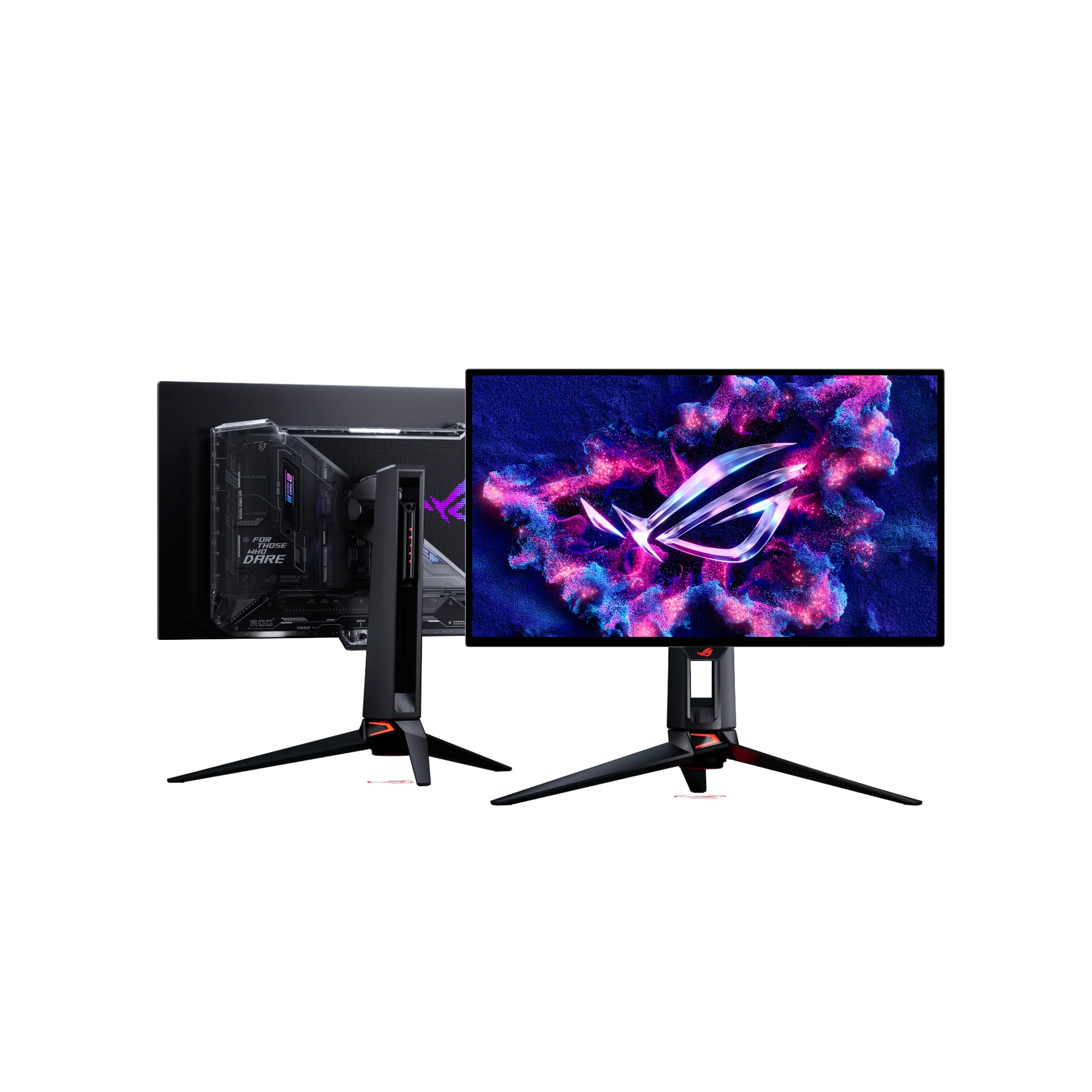
ASUS Republic of Gamers (ROG) has officially launched two of its latest premium gaming monitors, the ROG Swift OLED PG27UCWM and ROG Swift OLED PG32UCWM, into the Indonesian market. This significant introduction marks a new era for high-performance displays, bringing cutting-edge technology directly to competitive gamers and content creators who demand uncompromising visual fidelity and responsiveness. Both models leverage a groundbreaking 4K true Tandem RGB OLED panel architecture, promising a transformative experience with unparalleled contrast, vibrant saturation, and superior power efficiency that significantly surpasses conventional display technologies.
The strategic release of these monitors in Indonesia underscores the region’s growing importance as a hub for gaming and digital content creation. With a burgeoning esports scene and an increasing number of professional creators, the demand for hardware that can deliver both high resolution and blistering refresh rates has intensified. Historically, users faced a difficult trade-off between choosing a monitor optimized for stunning visual detail (high resolution) or one built for fluid, lag-free motion (high refresh rate). ASUS ROG aims to eliminate this dilemma, offering a harmonious blend of both in a single, formidable package. This innovation is further bolstered by the integration of an advanced antistatic layer, a novel thermal management system, and sophisticated artificial intelligence capabilities, all working in concert to provide absolute balance and reliability.
Unpacking the Visual Revolution: True Tandem RGB OLED
The primary allure of both the ROG Swift OLED PG27UCWM and PG32UCWM lies in their pioneering use of the True RGB Stripe OLED structure, complemented by a TrueBlack Glossy™ screen finish. This technical architecture represents a significant departure from the more common WOLED (White OLED) panels found in many existing OLED monitors. Traditional WOLED panels achieve brightness by adding a white subpixel alongside the red, green, and blue subpixels. While effective for brightness, this method can sometimes dilute color purity and accuracy, particularly at higher luminance levels.
In contrast, the True RGB Stripe OLED architecture, especially when combined with a "Tandem" stack (two OLED layers), entirely eliminates the white subpixel. This design choice yields a myriad of benefits that are immediately apparent to the user:
- Unrivaled Color Purity: By rendering colors directly through dedicated red, green, and blue subpixels without the interference of a white component, the monitors achieve exceptional color accuracy and vibrancy. This translates to more lifelike images, deeper reds, richer greens, and more accurate blues, crucial for both immersive gaming and professional content creation where color fidelity is paramount.
- Enhanced Sharpness and Clarity: The absence of the white subpixel also contributes to sharper text and crisper image edges. The conventional WOLED layout can sometimes lead to a slight "fringing" effect around high-contrast elements, which is virtually eliminated with the True RGB Stripe design, providing superior clarity for intricate details in games and applications.
- Superior Brightness Uniformity: The Tandem OLED structure, which layers two OLED emission layers, allows for significantly higher peak brightness levels and improved brightness uniformity across the screen, even at extreme viewing angles. This ensures that colors and luminance remain consistent, preventing shifts or inconsistencies that can detract from the visual experience, particularly in HDR content.
These visual enhancements are further amplified by an astonishingly low response time of merely 0.03ms (gray-to-gray). This near-instantaneous pixel response effectively eradicates motion blur and ghosting, phenomena that can severely impact competitive gaming by obscuring fast-moving targets or creating distracting visual artifacts. For esports professionals and serious gamers, this virtually eliminates the input lag associated with pixel transitions, providing a critical advantage in fast-paced titles where every millisecond counts. This response time is considerably faster than even the quickest IPS panels, cementing OLED’s position as the gold standard for motion clarity.
Engineering Resilience: Combating Burn-in and Heat
One of the most persistent concerns surrounding OLED technology, particularly in monitors where static elements (like UI overlays, taskbars, or game HUDs) are common, has been the risk of burn-in. Burn-in occurs when prolonged display of a static image causes permanent discoloration or ghosting on the screen. ASUS ROG has addressed this challenge head-on with a multi-faceted approach, combining revolutionary hardware design with intelligent software safeguards.
At the hardware level, ASUS has completely revamped the power module design, integrating advanced GaNFET (Gallium Nitride Field-Effect Transistor) technology. Gallium Nitride (GaN) is a wide-bandgap semiconductor material that offers significant advantages over traditional silicon-based transistors, particularly in high-power and high-frequency applications. GaNFETs exhibit much lower resistance and capacitance, enabling faster switching speeds and drastically improved power conversion efficiency. In the context of these monitors, this translates to a massive reduction in wasted energy, which directly correlates to heat generation. Specifically, the adoption of GaNFET technology leads to a remarkable reduction in heat production by up to 35 percent and a decrease in ventilation temperatures by 10 percent. By keeping the panel cooler, the degradation of OLED subpixels is significantly slowed, thereby extending the lifespan of the monitor and mitigating the risk of burn-in. This is a critical engineering feat that directly enhances the durability and longevity of these premium displays.
Beyond hardware, the monitors are equipped with the latest generation of ASUS’s proprietary OLED Care Pro software suite, a comprehensive set of intelligent features designed to proactively prevent burn-in and maintain panel health:
- AI-Driven Burn-in Prevention: This intelligent system continuously monitors pixel usage and display patterns, identifying static elements that could potentially lead to burn-in. It then dynamically adjusts pixel luminance in those specific areas to minimize stress without noticeably affecting the overall image quality for the user.
- Intelligent Pixel Cleaning: At regular intervals or when the monitor detects prolonged usage, the pixel cleaning function can be activated. This process refreshes individual pixels, correcting any minor uniformity issues that may arise over time and helping to prevent image retention. Users can often schedule this to run automatically when the monitor is in standby.
- Dynamic Screen Saver: An advanced screen saver automatically activates after a period of inactivity, displaying dynamic, non-static patterns or dimming the screen to protect the OLED panel from prolonged static image exposure.
- Uniform Brightness Mode: This feature allows users to maintain a consistent brightness level across the entire screen, preventing excessive peak brightness in certain areas that could accelerate pixel degradation. This is particularly useful for content creation or scenarios where consistent luminance is crucial.
- Logo Detection & Dimming: The software intelligently detects static logos or UI elements (common in games and applications) and subtly dims their luminance to reduce the risk of burn-in in those specific areas, often without the user even noticing the adjustment.
This combination of advanced GaNFET hardware and intelligent OLED Care Pro software provides a robust, multi-layered defense against burn-in, offering users peace of mind and ensuring the long-term pristine quality of their investment.
The Dawn of Intelligent Displays: AI Integration
Further distinguishing these new ROG Swift OLED monitors is their "AI agent-ready" status, signifying a leap towards truly intelligent display management. Through the integrated ASUS Display Control CLI (Command Line Interface) and Agent Skill functionality, users gain unprecedented control over their monitor settings using natural language commands. This innovative feature moves beyond traditional on-screen display (OSD) menus and physical buttons, ushering in a more intuitive and personalized user experience.
For example, a user can simply instruct the Artificial Intelligence (AI) system to "create a ‘Morning Profile’ that automatically increases brightness and turns off the blue light filter." The AI will then configure these settings and activate them at a specified time or under certain conditions. Conversely, a user could request a "’Night Profile’ that automatically changes the color temperature to 4000K for eye comfort," allowing the monitor to adapt dynamically to different times of day or usage scenarios. This level of intelligent automation streamlines workflow for creators and enhances comfort for gamers, allowing them to focus more on their tasks and less on manual adjustments. The AI learns user preferences over time, potentially offering even more tailored suggestions and adjustments, making the monitor a truly adaptive companion.
Seamless Integration and Future-Proof Connectivity
In an era where graphical fidelity continues to escalate, the importance of robust and high-bandwidth connectivity cannot be overstated. The ROG Swift OLED PG27UCWM and PG32UCWM are equipped with DisplayPort 2.1a, representing the cutting edge of display interface technology. DisplayPort 2.1a boasts an astounding bandwidth of 80Gbps, a significant leap from previous iterations. This immense bandwidth is critical for supporting the monitors’ native 4K UHD resolution at their high refresh rates (up to 240Hz, as confirmed for both models) without relying on Display Stream Compression (DSC). While DSC is an effective technology, transmitting uncompressed video ensures absolute fidelity and minimizes any potential processing latency, which is paramount for competitive gaming and color-critical work.
Furthermore, the inclusion of a USB-C port with 90-watt power delivery enhances versatility and declutters workspaces. This single cable connection can transmit video, data, and power simultaneously, allowing users to connect and charge compatible laptops, tablets, or other peripherals directly through the monitor. This minimalist cable configuration is ideal for streamlined setups and ensures that the monitors are ready to handle the rendering demands of next-generation graphics cards without any compromise in visual quality or performance. The combination of DisplayPort 2.1a and high-power USB-C ensures these monitors are future-proof, capable of supporting the most demanding hardware and creative workflows for years to come.
ASUS ROG’s Vision for the Premium Gaming Segment
The launch of the ROG Swift OLED PG27UCWM and PG32UCWM in Indonesia is not merely a product release; it’s a strategic declaration of ASUS ROG’s unwavering commitment to innovation and leadership in the premium gaming display market. ASUS ROG has a storied history of pushing boundaries, from introducing the world’s first 144Hz monitor to pioneering technologies like G-Sync and high-refresh-rate IPS panels. This latest generation of OLED monitors reinforces that legacy.
The Indonesian market, with its rapidly expanding gaming community and a growing appreciation for high-end technology, represents a crucial battleground for display manufacturers. Gamers are increasingly sophisticated, demanding not just raw performance but also refined user experiences, robust reliability, and cutting-edge features. ASUS ROG aims to capture this discerning segment by offering monitors that not only meet but exceed these expectations.
The competitive landscape for premium OLED gaming monitors is intensifying, with major players like LG, Samsung, Alienware, and MSI all vying for market share. ASUS ROG’s distinct advantage with the True Tandem RGB OLED panel, coupled with its comprehensive burn-in prevention strategies and AI-driven features, positions these new Swift OLED models as strong contenders, offering unique differentiators that appeal to both hardcore gamers and professional content creators. This move also aligns with a broader industry trend towards OLED technology, which is increasingly becoming the preferred choice for its superior contrast, response time, and color reproduction, despite its higher cost compared to traditional LCDs. ASUS’s investment in addressing OLED’s traditional weaknesses, particularly burn-in, is key to accelerating its mainstream adoption.
Model Specifics: ROG Swift OLED PG27UCWM and PG32UCWM
While both monitors share the core True Tandem RGB OLED technology and advanced features, they cater to slightly different preferences regarding screen size:
| Feature | ROG Swift OLED PG27UCWM | ROG Swift OLED PG32UCWM |
|---|---|---|
| Panel Size | 27-inch | 32-inch |
| Resolution | 4K UHD (3840 x 2160) | 4K UHD (3840 x 2160) |
| Refresh Rate | 240Hz | 240Hz |
| Response Time (GtG) | 0.03ms | 0.03ms |
| Panel Type | True Tandem RGB OLED | True Tandem RGB OLED |
| Peak Brightness (HDR) | 1300 nits (typical) | 1300 nits (typical) |
| Color Gamut | 99% DCI-P3 (typical) | 99% DCI-P3 (typical) |
| Color Accuracy | Delta E < 2 | Delta E < 2 |
| Connectivity | DisplayPort 2.1a, HDMI 2.1, USB-C (90W) | DisplayPort 2.1a, HDMI 2.1, USB-C (90W) |
| Adaptive Sync | G-Sync Compatible / FreeSync Premium Pro | G-Sync Compatible / FreeSync Premium Pro |
| HDR Standard | VESA DisplayHDR True Black 400 | VESA DisplayHDR True Black 400 |
| Burn-in Prevention | GaNFET, OLED Care Pro | GaNFET, OLED Care Pro |
| AI Features | AI Agent-ready, ASUS Display Control CLI | AI Agent-ready, ASUS Display Control CLI |
The PG27UCWM, at 27 inches, offers a more traditional desktop footprint while still delivering the immersive 4K 240Hz experience. This size is often preferred by competitive esports players who want to keep the entire screen within their immediate field of vision. The PG32UCWM, at 32 inches, provides an expansive canvas, ideal for content creators who benefit from extra screen real estate for timelines and toolbars, as well as gamers who desire maximum immersion. Both models come equipped with a comprehensive suite of ergonomic adjustments, including height, tilt, swivel, and pivot, ensuring optimal viewing comfort for extended sessions.
Redefining the Experience for Gamers and Creators
For competitive gamers, the combination of 4K resolution, 240Hz refresh rate, and 0.03ms response time is a game-changer. This translates into incredibly sharp visuals, fluid motion, and virtually no input lag, providing a distinct competitive edge. The vibrant and accurate colors enhance immersion, allowing players to fully appreciate the artistic vision of game developers. The robust burn-in prevention systems ensure that their investment remains pristine, even with long hours of gameplay featuring static HUD elements.
For content creators, particularly those involved in video editing, graphic design, or 3D rendering, these monitors offer an unparalleled tool. The True RGB Stripe OLED panel ensures color accuracy that rivals professional reference monitors, while the 4K resolution provides ample workspace and incredible detail. The high refresh rate, while often associated with gaming, also benefits creators by providing smoother scrolling, more fluid animations in design software, and a more responsive overall experience. The USB-C connectivity simplifies their setup, and the AI features allow for personalized display profiles that optimize for different creative tasks or lighting conditions.
The Road Ahead: A New Benchmark for OLED Gaming
The launch of the ROG Swift OLED PG27UCWM and PG32UCWM represents a significant milestone in the evolution of display technology. By addressing the historical limitations of OLED panels and pushing the boundaries of performance and intelligence, ASUS ROG has set a new benchmark for premium gaming and professional monitors. These displays are more than just an upgrade; they are a statement about the future of visual computing, where resolution, refresh rate, color fidelity, and intelligent user control converge to create an unparalleled experience. As the Indonesian market continues its rapid growth in both gaming and creative industries, these monitors are poised to become indispensable tools for those who demand nothing less than perfection from their visual hardware. This move by ASUS ROG not only strengthens its position as an industry leader but also propels the entire display market forward, inspiring further innovation and ultimately benefiting consumers globally.
—
Disclosure: This article was drafted with the assistance of AI and under editorial supervision.

